How to Protect Garden Plants During Summer Heat
Summer heat can place enormous pressure on garden plants. During a heatwave, leaves may wilt in the afternoon, flower buds may drop, and previously healthy vegetables can suddenly stop producing fruit. Container plants may dry out quickly, while tender foliage can develop pale or brown scorched patches.
These symptoms do not always mean a plant is dying. Many plants respond to hot conditions by reducing water loss, slowing growth, or temporarily changing the position of their leaves. Others experience genuine damage when extreme heat is combined with drought, intense sunlight, hot winds, or unsuitable root conditions. Before an extra watering during a heatwave, check moisture at root depth.
Protecting plants during summer is not simply a matter of watering more frequently. The best approach combines careful moisture monitoring, suitable shade, soil protection, sensible crop choices, and avoiding unnecessary stress when temperatures are unusually high.
This guide explains how summer heat affects garden plants, what to do before and during a heatwave, and how to help stressed flowers, vegetables, shrubs, and container plants recover when temperatures become more comfortable.
Quick Answer: How Can You Protect Garden Plants During Extreme Summer Heat?
During a heatwave, protect vulnerable garden plants by checking soil moisture regularly, watering thoroughly when needed, reducing intense afternoon sun exposure, and using suitable mulch to slow moisture loss from the soil.
Move portable containers away from extremely hot surfaces and provide temporary shade for sensitive vegetables, young plants, and recently transplanted seedlings when appropriate.
Where possible, avoid major pruning, repotting, transplanting, and unnecessary fertilizer or pesticide applications during the hottest weather. These activities can introduce additional stress or cause injury when plants are already struggling.
Most importantly, investigate the growing conditions before watering. Some plants wilt temporarily during hot afternoons even though the root zone remains adequately moist. Adding more water to saturated soil can make the problem worse.
Gardening Tip: Check your most vulnerable plants early in the morning. If leaves remain wilted after a cooler night, investigate root-zone moisture and overall plant health. A plant that temporarily droops in the afternoon but recovers overnight may be responding to heat rather than showing severe drought.
Common Signs of Heat Stress in Garden Plants
Heat stress can look different depending on the species, growth stage, soil conditions, and length of exposure. Some symptoms are temporary, while others indicate permanent injury to particular leaves, flowers, or fruits.
Leaves Wilting During the Afternoon
Wilting is one of the most noticeable signs of summer stress. During extreme heat, plants may lose water through their leaves faster than the roots can replace it.
Some plants recover their normal leaf firmness when temperatures fall in the evening. This temporary response does not necessarily indicate that more water is needed immediately.
Persistent wilting, particularly in the morning, is more concerning and should prompt an inspection of soil moisture, drainage, and root health.
Leaf Curling and Rolling
Tomatoes, corn, and several other plants may roll or cup their leaves during hot conditions. In some cases, this helps reduce exposed leaf surface or water loss.
Leaf rolling can be temporary and largely cosmetic. However, curling accompanied by severe distortion, mottled growth, visible pests, or continuing decline may have a different cause.
Brown, Dry, or Scorched Leaf Edges
Extreme heat and intense sunlight may contribute to leaf scorch. Affected tissue may become pale, yellow, tan, or brown and can eventually turn dry and brittle.
Scorched tissue does not generally become green again. However, preventing additional stress can help protect surviving foliage and support healthy new growth.
Flowers Dropping Without Producing Fruit
High daytime and nighttime temperatures can interfere with normal flower development, pollen function, pollination, and fruit set in some vegetables.
Tomatoes, peppers, beans, and certain other crops may shed flowers during sustained hot weather. Production may improve when temperatures return to a suitable range, provided the plants remain healthy.
Sunscald on Vegetables and Fruit
Fruit exposed to intense sunlight and high temperatures may develop pale, bleached, or discolored patches. The damage may later become dry, sunken, or leathery.
Sunscald can affect tomatoes, peppers, and other crops, particularly when developing fruit suddenly becomes exposed after leaf removal or canopy damage.
Bolting and Bitter-Tasting Leafy Vegetables
Cool-season crops such as lettuce and spinach may grow poorly or bolt when conditions become too hot. Bolting means the plant begins reproductive growth, often producing a flowering stem.
In some leafy crops, heat and advancing maturity can reduce eating quality or increase bitterness. Once significant bolting has occurred, returning the plant to cooler conditions may not restore its previous leaf quality.
Good to Know: Heat stress symptoms overlap with drought, root disease, fertilizer injury, and other plant problems. Examine the whole plant, soil moisture, recent weather, and symptom progression rather than relying on the appearance of one leaf.
How Does Excessive Summer Heat Affect Plants?
Plants depend on a balance between water uptake, water loss, photosynthesis, and the biological processes that support growth.
When temperatures rise above the range a plant can tolerate, these processes may become less efficient. Plant growth can slow, leaves may lose moisture rapidly, and reproductive structures such as flowers and developing fruits may be affected.
Transpiration and Plant Cooling
Plants lose water vapor through tiny openings in their leaves called stomata. This process, known as transpiration, can help cool foliage while also supporting water movement through the plant.
During drought or excessive heat, some plants reduce stomatal opening to conserve moisture. This protects against water loss but can also restrict carbon dioxide exchange and reduce evaporative cooling.
Hot Soil and Root Stress
Heat does not affect only the leaves. Exposed soil and containers can become very warm, potentially stressing roots and interfering with normal water and nutrient uptake.
Small pots, dark containers, and plants growing close to paving or heat-reflecting walls may experience especially strong root-zone temperature changes.
Why Heat and Drought Are Especially Difficult Together
High temperature alone can slow growth, but its effects often become more serious when soil moisture is inadequate.
A plant exposed to hot sun, dry soil, and strong wind may lose water rapidly while the roots struggle to replace it. These combined stresses can increase the risk of leaf injury, flower loss, and poor crop development.
How to Water Garden Plants During a Heatwave
Water management is one of the most important parts of summer garden care, but successful watering begins with understanding the needs of the plant and its growing medium.
Check the Soil Before Watering
Surface soil can become dry while deeper layers remain adequately moist. Before watering an established plant, examine the soil below the surface at a depth appropriate to its root system.
For many garden beds, checking several inches below the surface provides a more useful indication than touching only the top layer. Young seedlings have shallower roots and require more attention near the surface.
If the soil is already adequately moist, additional irrigation may not be needed, even if leaves appear temporarily wilted during the hottest part of the day.
Water Thoroughly When Necessary
For many established plants, watering deeply enough to moisten the active root zone is more useful than applying frequent light splashes that wet only the surface.
The correct amount depends on plant size, root depth, soil texture, recent rainfall, and weather conditions.
Sandy soils may need more frequent irrigation than moisture-retentive soils. Container-grown vegetables may dry much more quickly than plants growing in garden beds.
Do not use one fixed quantity or watering frequency for every plant.
What Is the Best Time of Day to Water?
Early morning is often a practical time to water because temperatures are lower and plants can use the moisture as the day warms.
Evening watering can also be suitable, particularly when water is directed toward the soil instead of keeping foliage wet overnight.
However, if a plant is genuinely suffering from dry soil during a hot afternoon, do not delay necessary watering simply because it is not morning. Watering the root zone when needed is more important than following a rigid clock-based rule.
Use Drip Irrigation or Soaker Hoses Where Appropriate
Drip irrigation and soaker hoses deliver water near the root zone, helping reduce unnecessary wetting of paths and foliage.
These systems can be useful for vegetable beds and regularly watered garden areas, provided they are correctly installed and checked for blocked emitters, leaks, and uneven coverage.
An automatic timer can make irrigation more convenient, but it should still be adjusted according to rainfall, soil moisture, and seasonal plant growth.
Prioritize the Plants That Need Water Most
During water restrictions or extreme drought, it may not be possible or necessary to irrigate every part of the garden equally.
Prioritize vulnerable seedlings, recently planted trees and shrubs, actively producing vegetables, and containers that dry quickly. Many established, appropriately selected landscape plants can tolerate temporary dry periods better than newly planted specimens.
Follow local water-use restrictions and avoid wasting water through runoff, leaks, or unnecessary irrigation.
Important Caution: Do not keep adding water to a plant simply because it is wilting. If the soil is already saturated, poor root aeration or root damage may be contributing to the problem. Excess watering can make an existing root issue worse.
How to Protect Plants With Shade Cloth and Temporary Shade
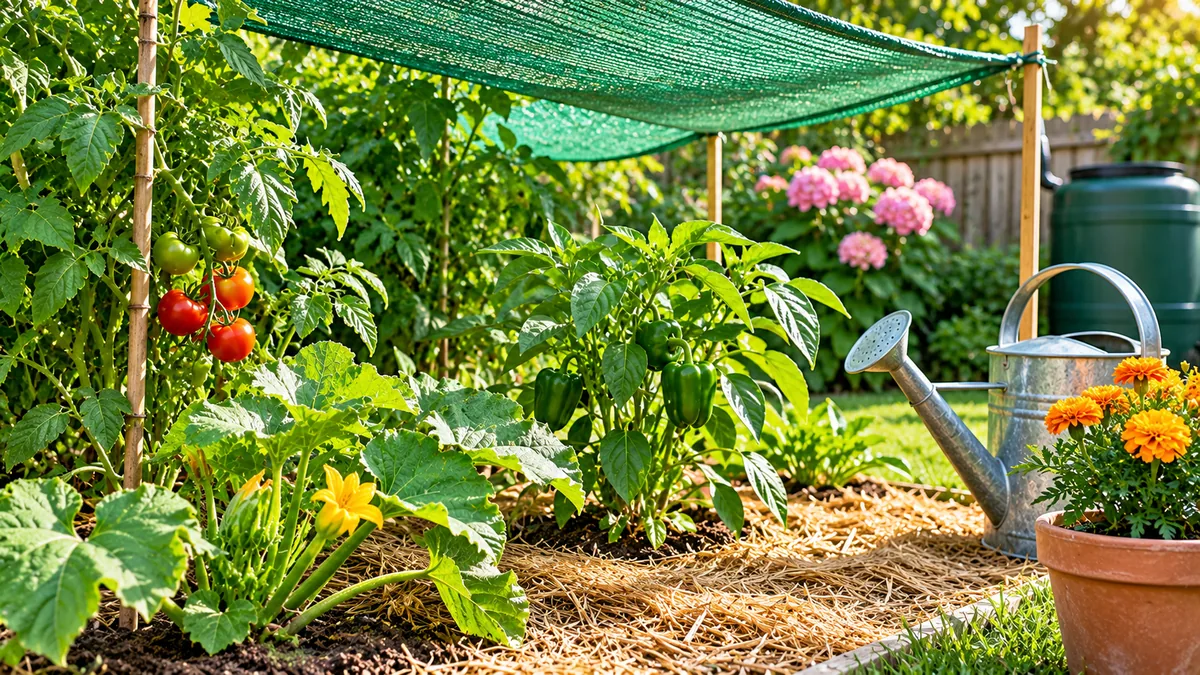
Temporary shade can reduce exposure to intense sunlight and help certain plants cope with extreme heat. It is particularly useful for young seedlings, cool-season crops, recently transplanted plants, and sensitive containers.
Use Suitable Horticultural Shade Cloth
Shade cloth is designed to reduce the amount of direct sunlight reaching plants while allowing air movement through the material.
For some vegetable crops, horticultural research and extension guidance have found that approximately 30% shade cloth can help reduce heat stress while allowing substantial light to reach the leaves.
However, the ideal shade level varies with crop type, climate, season, and local light intensity. Shade-loving plants and sun-demanding fruiting vegetables do not have identical requirements.
Install Shade Above the Foliage
Use a stable frame, hoops, or another suitable structure to hold shade material above vulnerable plants.
Maintaining space between the cloth and the leaves helps provide airflow and reduces rubbing or physical damage in windy weather.
Secure the material properly so that it does not collapse onto plants or become detached during strong winds.
Provide Afternoon Shade Where Appropriate
In extremely hot conditions, temporary shade during the most intense part of the day may help protect sensitive plants.
Movable containers can sometimes be placed where they receive morning sunlight and protection from extreme afternoon exposure.
For sun-loving vegetables, temporary shade should reduce excessive heat without unnecessarily eliminating the light needed for healthy growth and fruit production.
Avoid Heat-Trapping Covers
Ordinary frost fleece, solid plastic sheets, and enclosed transparent covers are not necessarily suitable substitutes for summer shade cloth.
Some row covers and cloches are designed to retain warmth and can make conditions underneath hotter during summer.
Choose materials intended for heat or light management and maintain adequate ventilation.
How Mulch and Healthy Soil Help Protect Plant Roots
Mulching is a useful way to reduce direct sunlight on bare soil, slow evaporation, and moderate changes in root-zone temperature.
Choose Suitable Mulching Materials
Depending on the planting area, useful materials may include clean straw, shredded leaves, composted bark, wood chips, or suitable finished compost.
The best material depends on the crop, soil, climate, and whether the planting is a vegetable bed, flower border, or landscape shrub area.
Use clean material appropriate for the site and avoid introducing weed seeds, contaminated waste, or plants affected by serious diseases.
Apply Mulch at an Appropriate Depth
For many established garden beds, an organic mulch layer of approximately 5–8 cm (2–3 inches) can help conserve soil moisture, depending on the material and planting.
Keep mulch away from direct contact with sensitive stems, woody trunks, and crowns. Piling mulch against plant bases can trap excess moisture and create other problems.
For newly germinated seedlings, use a lighter approach so the mulch does not bury or smother tender plants.
Improve Soil Before the Hottest Weather
Healthy garden soil with suitable organic matter can support moisture retention, infiltration, and root development.
Improving soil structure is best considered a long-term gardening practice rather than an emergency treatment during a heatwave.
Avoid digging or repeatedly disturbing established root zones during extreme heat unless intervention is genuinely necessary.
Control Weeds That Compete for Moisture
Weeds compete with garden plants for growing space, water, and nutrients. Removing troublesome weeds can reduce competition during dry weather.
Work carefully around established roots, and schedule labor-intensive weeding for cooler periods of the day.
Protecting Potted Plants and Hanging Baskets During Summer Heat
Container plants often need more frequent monitoring than equivalent plants growing in the ground because their roots occupy a limited volume of growing medium.
Small pots, hanging baskets, exposed balconies, and containers positioned on hot paving can become particularly difficult to manage during a heatwave.
Check Container Moisture Regularly
During very hot or windy weather, some actively growing container plants may need daily moisture checks or more frequent monitoring.
Insert a finger into the growing medium where appropriate, or compare the weight of a manageable container after watering with its weight as it dries.
Water according to the plant’s actual needs rather than assuming that every pot requires water several times per day.
Move Containers Away From Extremely Hot Surfaces
Dark paving, south- or west-facing walls in Northern Hemisphere locations, and other sun-exposed surfaces can absorb and radiate substantial heat.
Move suitable containers to cooler positions during extreme weather, maintaining adequate light for the species.
In the Southern Hemisphere, the direction of the strongest seasonal sun exposure differs, so observe the actual sunlight patterns in your growing area rather than relying on a universal compass direction.
Consider Root-Zone Insulation
Placing a suitable growing pot inside a larger outer container can provide some protection from direct heat, especially when the arrangement includes an insulating air gap.
Choose a stable setup that does not trap water around the inner pot or obstruct drainage.
Protect Hanging Baskets
Hanging baskets can dry quickly because their growing medium is exposed to air movement from multiple directions.
During extreme heat, consider moving lightweight baskets into temporary afternoon shade, checking moisture more frequently, or using an appropriate watering system.
Ensure that any repositioned basket remains securely supported and does not create a falling hazard.
How to Protect Vegetable Plants During a Heatwave
Vegetable crops respond differently to high temperatures. Some warm-season vegetables tolerate considerable summer warmth, while cool-season crops may quickly lose quality or stop producing.
Tomatoes: Leaf Curl and Flower Drop
Tomato plants may roll their leaves during hot weather. When the foliage remains otherwise healthy and growth continues normally, this can be a temporary physiological response.
Sustained high daytime and nighttime temperatures can also reduce successful pollination and fruit set. Flowers may fall without developing into tomatoes.
Keep the root zone appropriately moist, avoid unnecessary heavy pruning, and consider temporary shade in extremely hot locations.
If heat is the primary cause of flower drop, fruit set may improve as temperatures become more suitable.
Peppers: Protecting Fruit From Sunscald
Pepper fruits exposed to intense sunlight can develop pale, sunken, or damaged areas associated with sunscald.
Protect healthy foliage that provides natural shade to developing peppers. Avoid stripping leaves unnecessarily during extreme heat.
Maintain suitable soil moisture and provide temporary heat protection when the growing conditions justify it.
Cucumbers, Squash, and Other Vining Crops
Cucumbers and squash have large leaves that can lose considerable moisture during hot weather. They may wilt temporarily in intense afternoon heat.
Check whether leaves recover when temperatures decline and whether moisture remains available in the root zone.
Protect developing vines from severe drought while avoiding persistently saturated soil.
High temperatures can also influence flowering and fruit development in some cucurbit crops.
Lettuce, Spinach, and Other Leafy Greens
Many leafy vegetables grow best during cooler weather. High temperatures can cause rapid bolting, reduced leaf quality, and bitter flavors in certain crops.
Temporary shade may help reduce stress, but it cannot fully reverse the effects of prolonged unsuitable heat.
Where a major heatwave is expected, harvesting mature leaves or crops before temperatures rise may preserve quality.
In very hot climates, growing cool-season vegetables during a more favorable part of the year may be more productive than trying to maintain them through peak summer.
Newly Transplanted Vegetables
Young transplants are particularly vulnerable because their root systems are not yet fully established in the garden soil.
If possible, delay transplanting until conditions are less extreme. When planting cannot be delayed, provide suitable moisture, careful acclimatization, and appropriate temporary shade.
Do not assume that large amounts of fertilizer will help new transplants overcome heat. Their immediate priorities are suitable root conditions and protection from excessive environmental stress.
Protecting Flowers, Shrubs, and Trees From Extreme Heat
Annual Flowers and Tender Ornamentals
Annual flowers growing in exposed borders or containers may lose water quickly during hot weather. Some flowers fade more rapidly, while other plants reduce flowering under stress.
Check moisture carefully, protect sensitive specimens from extreme afternoon sun, and avoid unnecessary disturbance during the hottest period.
Established Shrubs and Perennials
Established plants with extensive root systems may tolerate temporary dry weather better than newly planted specimens.
However, tolerance varies with species, soil depth, previous growing conditions, and the severity of the heatwave.
Maintain appropriate mulch and assess soil moisture before irrigating. Prioritize plants showing persistent stress rather than watering every established shrub automatically.
Recently Planted Trees and Shrubs
Newly planted woody plants often require closer moisture monitoring because their roots have not yet spread into the surrounding soil.
Water the developing root zone thoroughly when needed, allowing time for water to penetrate and drain appropriately.
Keep mulch away from the trunk and avoid damaging roots through unnecessary digging or cultivation.
Avoid Heavy Pruning During a Heatwave
Major pruning can remove foliage that protects stems or developing fruit from intense sunlight. It may also introduce additional stress when the plant is already struggling with heat.
Unless pruning is necessary for immediate safety or to remove a clearly hazardous branch, postpone substantial work until more suitable conditions return.
Before and During a Heatwave: Garden Protection Checklist
The most effective time to prepare for extreme weather is before temperatures become dangerously high. Use the following checklist to organize essential tasks.
Before the Heatwave
- Review the weather forecast. Check expected daytime highs, nighttime lows, wind, and the likely duration of the heatwave.
- Identify vulnerable plants. Prioritize young seedlings, recent transplants, actively producing vegetables, and small containers.
- Check the root-zone moisture. Water plants that need it rather than soaking every bed indiscriminately.
- Prepare temporary shade. Install suitable shade cloth or movable protection for heat-sensitive plants.
- Inspect irrigation equipment. Look for blocked emitters, leaking hoses, or uneven watering.
- Check mulch coverage. Add suitable mulch where needed without burying crowns or stems.
- Postpone stressful garden jobs. Delay unnecessary transplanting, heavy pruning, repotting, and fertilizer treatments.
During the Heatwave
- Inspect vulnerable plants in the morning. Look for persistent wilting, unusually dry containers, and damaged foliage.
- Water appropriately. Replenish moisture where the soil or growing medium genuinely needs it.
- Keep shade structures secure. Ensure good airflow and prevent cloth from collapsing onto plants.
- Monitor containers. Small pots and hanging baskets may need special attention in hot, windy conditions.
- Harvest suitable produce. Collect mature vegetables or leafy crops before quality declines in intense heat.
- Keep garden work brief and safe. Avoid strenuous activity during the hottest hours, remain hydrated, and follow local extreme-heat advice.
How to Help Garden Plants Recover After a Heatwave
When temperatures become more comfortable, inspect the garden before making major changes.
Some plants recover quickly, while others may continue showing damage that developed during the hottest days.
Check for New Growth and Improved Leaf Firmness
Plants that resume normal leaf firmness and continue producing healthy new growth may be recovering from temporary heat stress.
Continue providing suitable growing conditions and avoid making several dramatic care changes simultaneously.
Do Not Expect Scorched Leaves to Become Green Again
Brown, dead leaf tissue does not generally return to normal. However, a leaf with some damage may still have healthy green areas that contribute to plant growth.
Do not remove large amounts of foliage simply because the edges have become dry. Wait until the plant’s overall condition is clearer, then prune appropriately if needed.
Resume Fertilizer Carefully
Plants stressed by excessive heat may not immediately benefit from additional fertilizer.
Wait until growing conditions stabilize and feeding is appropriate for the species, growth stage, and existing nutrient supply.
Avoid applying extra fertilizer to compensate for heat-related flower drop or scorched foliage.
Evaluate Fruit and Flower Damage
Some vegetables may resume flowering and fruit set when temperatures return to a suitable range.
Fruit with extensive sunscald or decay should be assessed carefully. Discard produce showing spoilage, and follow suitable food-safety guidance rather than assuming every damaged fruit is safe to eat.
Review What Worked
Make a note of which plants recovered well, which containers dried out fastest, and which parts of the garden were most exposed.
These observations can help you improve plant choice, irrigation, and shade planning before another period of extreme heat.
Heat Stress in Plants: Symptom Comparison Table
This table highlights common symptoms and sensible first checks. Similar symptoms can occur for reasons unrelated to heat, so the growing conditions should always be considered.
| What you notice | Possible explanation | What to do first |
|---|---|---|
| Leaves droop in the afternoon but recover overnight | Temporary heat-related water stress | Check soil moisture and monitor morning recovery |
| Leaves remain wilted early in the morning | Possible continuing moisture or root problem | Inspect root-zone moisture, drainage, and plant health |
| Leaves roll upward during hot weather | Possible physiological response to heat | Check for other symptoms before treating |
| Pale or brown patches appear on exposed leaves or fruit | Possible sunscald or heat injury | Review light exposure and protect vulnerable tissue |
| Tomato or pepper flowers drop without producing fruit | Heat may be affecting flowering or pollination | Maintain appropriate moisture and reduce excessive heat |
| Lettuce bolts or becomes bitter | Cool-season crop exposed to unsuitable heat | Harvest usable leaves and adjust future planting time |
| Container soil dries unusually quickly | Heat, wind, and limited root-zone volume | Check moisture and consider a cooler container position |
| Brown leaf edges appear after prolonged heat | Possible leaf scorch or combined moisture stress | Assess soil moisture, sunlight, and other causes |
How to Build a Garden That Handles Summer Heat Better
The most effective heat protection often begins long before temperatures rise. A well-planned garden can make better use of available water and reduce the number of plants exposed to unsuitable conditions.
- Choose plants suited to your climate. Consider seasonal heat, rainfall, and local growing conditions before selecting varieties.
- Match plants to sunlight exposure. Place heat-sensitive species where they receive appropriate protection without unnecessary shade.
- Improve soil structure over time. Use appropriate organic matter and avoid compaction to support healthy root development.
- Mulch suitable beds. Cover exposed soil to moderate temperature changes and reduce evaporation.
- Use efficient irrigation. Consider drip irrigation or other methods that apply water near the root zone.
- Protect young plants. Establish seedlings and transplants during weather favorable for root development.
- Choose appropriate container sizes. Avoid undersized pots that restrict roots and dry excessively quickly.
- Plan seasonal vegetable crops. Grow cool-season vegetables during milder periods when your climate allows.
- Reduce water competition. Control troublesome weeds while preserving desirable plants and useful ground cover.
- Keep useful garden records. Note extreme temperatures, plant responses, watering needs, and successful protective measures.
Remember that drought tolerance and heat tolerance are not identical. A plant capable of surviving dry soil may still suffer from extreme temperature or sun exposure, while a heat-tolerant vegetable may require reliable moisture to produce well.
Frequently Asked Questions About Protecting Plants From Summer Heat
How hot is too hot for garden plants?
There is no single temperature that is too hot for every plant. Heat tolerance depends on species, growth stage, humidity, soil moisture, sunlight, and exposure duration. Many commonly grown plants experience slower growth or stress during sustained temperatures above about 90°F (32°C), although some heat-adapted species tolerate higher temperatures.
Should I water my garden every day during a heatwave?
Not automatically. Young seedlings and some containers may require daily attention or frequent watering, while established plants in moisture-retentive soil may need less frequent irrigation. Check moisture at the appropriate root depth and water according to the plant’s needs.
Can I water plants in the middle of a hot day?
Yes, when water is genuinely needed. Early morning is often preferable because evaporation is lower, but a plant suffering from dry soil should not be left without necessary water simply because it is afternoon. Direct water toward the root zone and avoid unnecessary waste.
Why are my plants wilting even though the soil is wet?
Intense heat can cause temporary wilting when water loss exceeds the plant’s ability to replace it. However, persistently wet soil and damaged roots can also cause wilting. Check whether the plant recovers during cooler conditions and investigate the root zone before adding more water.
Does shade cloth help vegetable plants?
Yes, suitable shade cloth can reduce excessive sunlight and heat stress in some crops. Around 30% shade cloth is supported by certain vegetable-growing guidance, but the ideal level depends on crop type, growing conditions, and available light. Use a supported structure with good airflow.
Can too much shade damage tomatoes or peppers?
Excessive shade may reduce the light available for growth, flowering, and fruit production. The goal during a heatwave is to reduce damaging exposure while preserving sufficient light for the crop, not to keep sun-loving vegetables in deep shade permanently.
Why are my tomato flowers falling off in hot weather?
Sustained high daytime or nighttime temperatures can disrupt successful pollination and fruit set. Tomato flowers may drop without producing fruit. Appropriate watering and heat management can help reduce additional stress, and production may improve when temperatures return to a suitable range.
Can brown, scorched leaves recover?
Dead brown leaf tissue generally cannot become green again. However, the plant may recover if healthy roots, stems, and growing points remain. Protect the remaining foliage and monitor for healthy new growth rather than removing every damaged leaf immediately.
Should I fertilize my plants during extreme heat?
It is often sensible to postpone unnecessary fertilizer applications during severe heat, particularly when plants are visibly stressed. Excessive salts and stimulation of tender growth can create additional problems. Resume appropriate feeding when conditions improve and the plant is growing normally.
How do I protect potted plants from summer heat?
Check growing-medium moisture frequently, move suitable pots away from extremely hot surfaces, provide appropriate afternoon protection, and ensure drainage remains functional. Small pots and hanging baskets may need more frequent attention than plants growing in the ground.
Final Thoughts
Protecting garden plants during summer heat requires understanding how temperature, sunlight, water, and soil conditions work together.
Some plants temporarily wilt or roll their leaves during the hottest part of the day and recover when the weather cools. Others may develop permanent leaf scorch, lose flowers, or suffer reduced growth when severe heat continues.
The most useful actions are to check root-zone moisture, water thoroughly when necessary, provide appropriate temporary shade, mulch exposed soil, and give vulnerable containers and young plants additional attention.
It is also important to avoid creating new stress. Excess fertilizer, unnecessary pruning, poorly timed transplanting, and overwatering can make an already difficult situation worse.
With suitable plant choices, healthy soil, efficient irrigation, and a plan for extreme weather, your garden can become more resilient during hot summers while using water and other resources responsibly.
Explore more practical advice in our Seasonal Gardening guides. For help with irrigation and healthy growing media, visit Soil & Watering. You can also browse Vegetable Gardening for additional crop-specific advice.
Further Reading and Horticultural References
- Oregon State University Extension: Heat Wave in the Garden — How to Identify and Prevent Heat Stress in Plants — signs of heat stress, watering, mulching, shade, and recovery.
- Royal Horticultural Society: Watering Plants — checking moisture, watering methods, and adjusting irrigation to plant needs.
- Royal Horticultural Society: Heatwave Tips for Community Gardens — conserving soil moisture, managing containers, and avoiding unnecessary plant stress.
- University of Maryland Extension: Vegetable Garden Weather and Pest Protection — horticultural shade cloth, protective structures, and seasonal growing conditions.
- University of Minnesota Extension: How Excessive Heat Affects the Vegetable Garden — heat-related flower drop, tomato pollination, and crop productivity.
- University of Maryland Extension: Reducing Crop Heat Stress in Urban Farms — practical crop heat protection and environmental management.