Autumn Vegetable Gardening for Beginners

A good autumn vegetable garden starts with a harvest date. When an early crop finishes, count how many growing days the empty bed has left. That tells you whether to sow a row of radishes, buy young kale plants, or save the space for a crop that will overwinter.
Count back from the harvest you want
Look up the usual first autumn frost for your area and note when your bed starts losing afternoon sun. A sheltered urban plot can have a different growing window from an exposed plot nearby. Use the frost date to pencil in your plan, then follow the forecast as harvest approaches. In a mild climate with little frost, use your local cool-season sowing calendar and the light available in your bed.
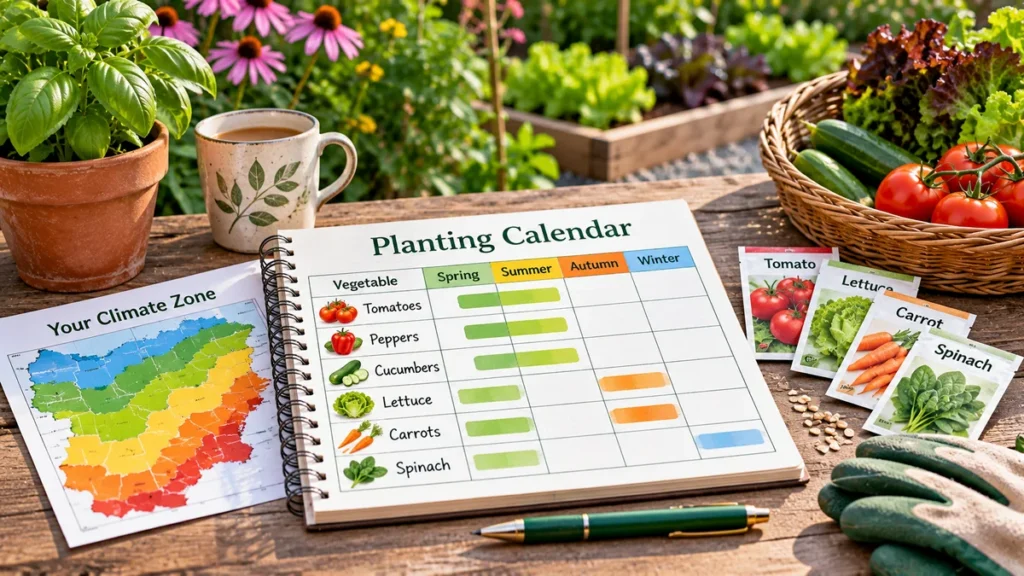
Read the variety’s seed packet. Check whether its days to maturity start at sowing or at transplanting, and whether they refer to baby leaves or a full-sized crop. Allow extra time for cooler soil and shorter days. For example, if you want radishes by 15 October and your packet says 30 days from sowing, 15 September leaves no margin. Sowing a small row on 1 September gives that variety about two extra weeks. Adjust the dates to your own conditions. You can use the same calculation to build a local planting calendar.
Choose a crop that fits the window
- For a quick harvest: Try a short row of radishes or cut a patch of salad leaves young. Check the variety’s harvest time and sow only what you can use. You can pick outer leaves while the rest of the patch develops.
- For an established autumn bed: Kale or cabbage transplants can use space freed by an early crop. Check the variety and harvest stage. A plant that will yield a few kale leaves in time may still have too little daylight to produce a full head of cabbage.
- For an overwintering crop: In a suitable climate, hardy spinach or winter salad varieties can establish before growth slows and resume growth as light returns. Choose a locally recommended variety and treat a spring picking as a different goal from an autumn harvest.
Sow roots directly and give slower crops a head start
Sow radishes and carrots where they will grow. Clear old stems from the row, loosen the surface, water the drill if it is dry, and sow at the packet depth. Mark the row so you can check for seedlings. Keep the seed zone evenly moist while seeds germinate, especially when the calendar says autumn but the bed still feels like summer.
For kale or broccoli, a healthy transplant can buy time if the seed-sowing window has closed. Pick a compact plant with several sound leaves. Water the plug before planting, set it at the spacing for its mature size, and check the root ball for moisture over the next few days. If the variety still needs more growing time than you have, choose a quicker crop or a younger harvest stage.
Adjust care as days shorten
Check which part of the bed stays sunny as shadows lengthen. Put a late sowing there and keep it clear of spent summer vines. Check moisture under the surface before watering. A windy container can dry out while a shaded bed nearby stays damp for days. Lift a few outer leaves and inspect underneath for slugs, caterpillars, or fresh feeding damage before deciding what needs protection.
Decide what to pick before a cold night
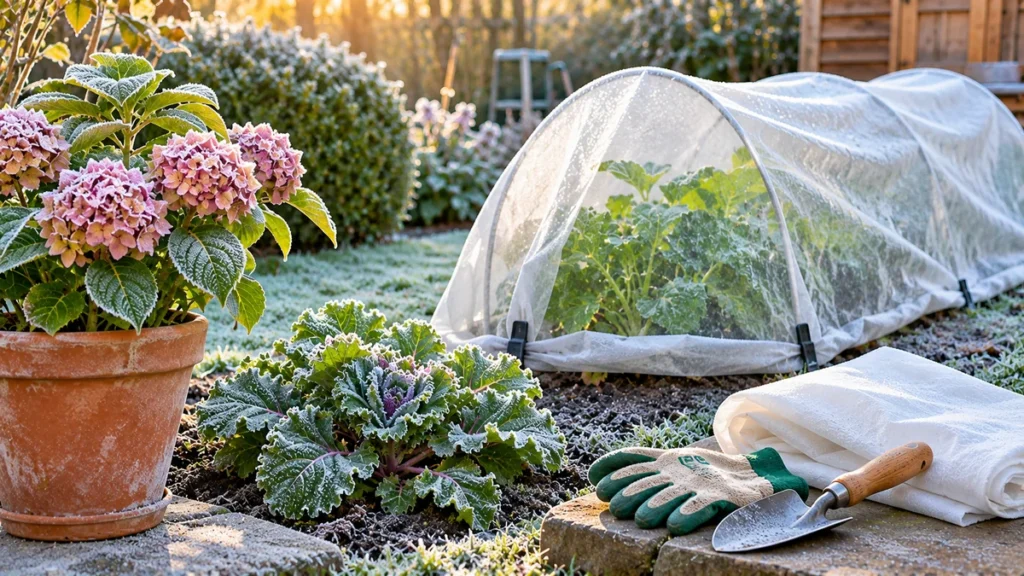
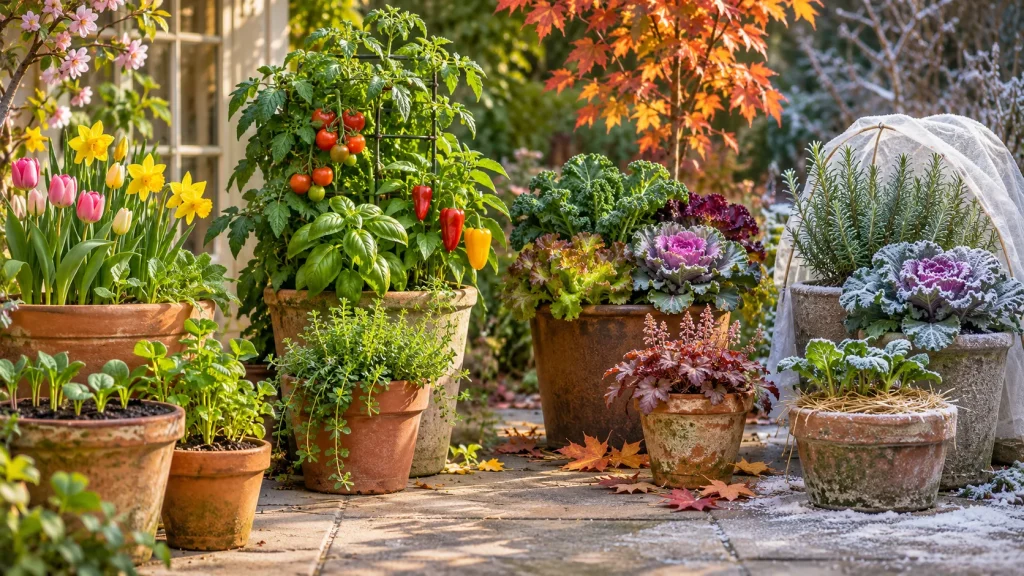
Before a frost forecast, harvest usable tender crops first. Check the hardiness of the remaining varieties. A lightweight cover can help protect suitable leafy crops during a light frost. Secure the edges before evening, ventilate a cloche when sunshine warms it, and check plants again the next morning. A cover offers limited protection in a prolonged freeze. See how to choose and use frost protection.
If you have one small bed, try two short rows and label each with its sowing date. Record the first picking and which plants were still too small when growth slowed. Next year you can move the slower row earlier using evidence from your own garden.
Regional growing guides
The University of Minnesota Extension fall harvest guide compares crop maturity and cold tolerance. The RHS guide to growing vegetables for winter covers establishing and protecting crops in UK conditions.