How to Tell When Garden Soil Needs Water

Knowing when garden soil needs water is one of the most useful skills a gardener can develop. Water too little, and plants may struggle to grow, wilt during warm weather, or produce fewer flowers and vegetables. Water too often, and the roots may remain in saturated soil without enough oxygen to function properly. If the ground stays saturated between waterings, check what is causing the soil to hold water.
The challenge is that soil moisture is not always obvious. The surface of a garden bed may look dry while the soil around the roots still contains enough water. After a brief rain shower, the surface may appear wet even though deeper layers remain dry.
Different plants also have different needs. Newly sown seeds require moisture close to the surface, established shrubs can often access water from deeper soil, and vegetables producing flowers or fruit may be especially sensitive to inconsistent watering. Container plants generally need more frequent attention because their roots are confined to a limited volume of growing medium.
Fortunately, you do not need expensive equipment to make better watering decisions. A finger, small garden trowel, or soil probe can help you check moisture below the surface. Learning how different soil types feel when wet and dry makes these methods increasingly useful.
This guide explains how to tell when garden soil needs water, how deeply to check, what plant symptoms mean, and how watering needs change with the weather. You’ll also learn how to avoid both underwatering and overwatering while using water more efficiently.
Quick Answer: How Do You Know When Garden Soil Needs Water?
The most reliable practical method for a home gardener is to check how moist the soil feels beneath the surface, at a depth relevant to the plant’s roots.
For a quick initial check, insert your finger approximately 2.5–5 cm (1–2 inches) into the soil. If it feels dry at that depth, investigate whether the plant needs watering.
For established garden plants, a deeper check is often more useful. Use a trowel or soil probe to examine the soil approximately 10–15 cm (4–6 inches) below the surface, or at a depth appropriate for the root system.
If the soil around the active roots still feels adequately moist, you may not need to water yet. If that area is dry and the plant requires moisture, it is generally time to water.
These depths are useful starting points, not universal watering thresholds. Seeds, small seedlings, mature trees, container plants, and drought-adapted species have different requirements.
- Dry surface, moist deeper soil: Watering may not be necessary for an established plant.
- Dry soil throughout the relevant root zone: Water if the plant needs additional moisture.
- Consistently damp or saturated soil: Delay watering and check drainage.
- New seeds and seedlings: Monitor the upper growing medium closely and prevent inappropriate drying.
- Vegetables flowering or fruiting: Pay particular attention to consistent root-zone moisture.
- Container plants: Check more frequently because their growing medium may dry quickly.
- Established drought-tolerant plants: Allow for their lower moisture requirements before watering.
Do not rely exclusively on a fixed schedule such as watering every morning or every three days. Weather, soil texture, plant growth, and rainfall determine when water is actually needed.
Gardening Tip: Before watering an established garden bed, push a small trowel into the soil and check moisture several inches below the surface. This simple habit can prevent both unnecessary watering and drought stress.
Why Soil Moisture Matters for Healthy Garden Plants
Water is essential for plant growth, but healthy roots also require air within the growing medium.
Garden soil contains spaces between mineral particles and organic materials. Some of these spaces hold water, while others contain air.
The goal is to maintain a suitable balance for the plants growing in that soil.
Plants Use Water for Several Important Functions
Water helps plants transport dissolved nutrients, maintain cell firmness, regulate temperature, and carry out photosynthesis.
Most of the water absorbed by roots eventually leaves through tiny openings in the leaves during a process called transpiration.
When moisture is insufficient, plants may reduce growth and close some leaf pores to conserve water.
With more severe water shortages, leaves may wilt and plant tissues can become damaged.
Roots Also Need Oxygen
Water is not the only requirement for healthy roots.
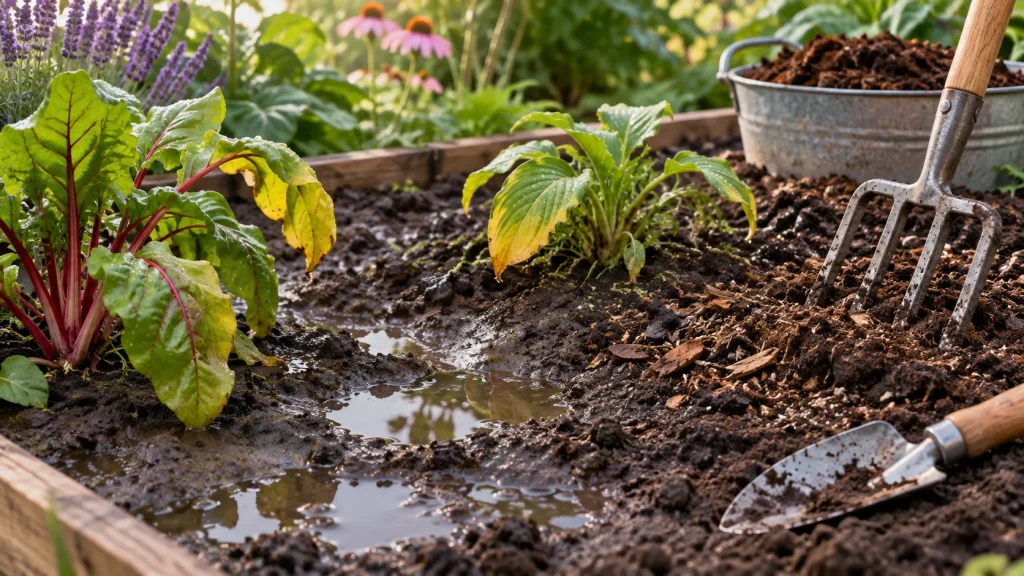
Roots need oxygen to support respiration and normal nutrient uptake. When the soil stays saturated for extended periods, water fills the pore spaces that would otherwise contain air.
This can restrict root function and contribute to yellow leaves, wilting, reduced growth, and root damage.
Overwatering is therefore not simply providing more water than a plant can use. It often means maintaining soil conditions that remain too wet for the roots to function properly.
What Is Plant-Available Water?
Not all water held in soil is equally accessible to plant roots.
After saturated soil drains, some water remains held in its smaller pore spaces. This moisture can be available to roots.
As soil dries, the remaining water is held more tightly by soil particles. Eventually, some plants can no longer extract enough water to maintain normal functioning.
The quantity of available water depends on soil texture, structure, organic matter, and root development.
This explains why sandy and clay-rich soils can feel very different even when supporting similar plants.
7 Signs Your Garden Soil May Need Water
Several visual and physical clues can indicate declining soil moisture, but none should be used without considering the soil and plant type.
1. The Soil Feels Dry Below the Surface
This is one of the strongest practical indicators.
If the upper soil is dry, check deeper into the active root zone rather than watering immediately.
If the relevant root-zone soil is also dry and the plant requires moisture, watering is likely appropriate.
2. The Soil Looks Paler Than Usual
Many soils become lighter in color as they dry.
For example, soil that appears dark brown after rain may become noticeably paler during dry weather.
However, soil color depends on texture, organic matter, and mineral content. Color alone cannot reliably show how much moisture remains around the roots.
3. Plants Begin to Wilt
Drooping leaves and stems can indicate that a plant is losing water faster than its roots can supply it.
When soil is dry, this can be a sign that irrigation is needed.
However, plants can also wilt because of waterlogged roots, disease, transplant stress, and extreme daytime heat.
Always check moisture before treating wilting as a watering problem.
4. Leaves Become Dull or Gray-Green
Some plants develop dull-looking foliage when water stress begins.
Certain lawn grasses can appear blue-green or gray-green before becoming brown during more severe drought.
These changes may provide an early warning, especially when accompanied by dry soil and hot weather.
5. Leaf Edges Become Dry or Crispy
Prolonged water shortages can lead to dry leaf margins, brown tips, or premature leaf loss in some plants.
However, similar symptoms can occur from sun scorch, salt accumulation, nutrient problems, and root damage.
Do not assume that every brown leaf tip means the garden needs more irrigation.
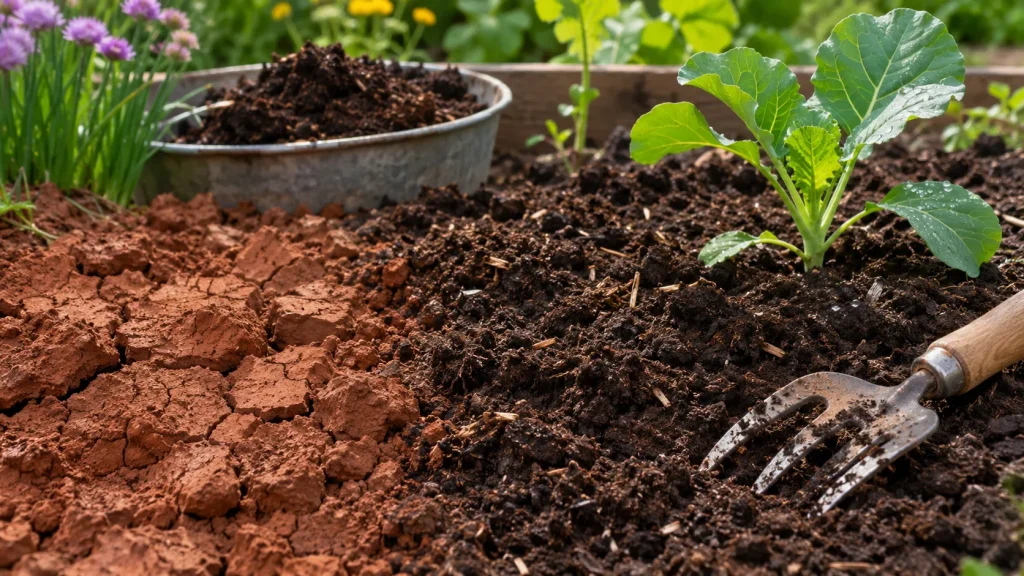
6. The Soil Shrinks or Develops Cracks
Some clay-rich soils shrink as they dry and develop visible cracks.
In container growing media, severe dryness may cause the material to pull away from the pot walls.
These are useful clues, but cracking does not occur in every soil. Assess moisture at the depth of the roots before deciding how much water is needed.
7. Plant Growth Slows During Dry Weather
When water becomes limiting, plants may reduce shoot growth, flower production, and fruit development.
Vegetables may remain smaller than expected, while flowering plants may produce fewer blooms.
However, reduced growth can also result from seasonal dormancy, insufficient light, temperature stress, or other problems.
Use soil moisture testing to determine whether watering is actually part of the solution.
How to Use the Finger Test to Check Soil Moisture
The finger test is one of the simplest ways to assess moisture in small garden beds, containers, and the soil around young plants.
It requires no equipment and becomes more useful as you learn how your own soil feels under different conditions.
Step-by-Step Finger Test
- Choose a representative spot. Test near the plant’s root zone without damaging the stem or major roots.
- Move surface mulch aside. Check the soil beneath the mulch instead of judging the dryness of the mulch itself.
- Insert your finger. Push approximately 2.5–5 cm (1–2 inches) into the soil, if the texture allows.
- Feel the moisture. Notice whether the soil feels dry, slightly cool and moist, damp, or saturated.
- Check deeper if needed. For established plants, use a trowel or probe to assess the active root zone.
- Compare several spots. Beds may dry unevenly due to sun, shade, wind, and irrigation coverage.
- Make a watering decision. Consider moisture, plant type, recent weather, and expected rainfall together.
What Does Dry Soil Feel Like?
Dry sandy soil may feel loose, gritty, and unable to hold together.
Dry clay-rich soil may become firm or hard and resist finger penetration.
Dry potting mix may feel light, loose, or unusually difficult to rewet, depending on its ingredients.
Because the textures differ, learn the characteristics of your particular growing medium rather than depending on one universal feeling.
What Does Adequately Moist Soil Feel Like?
For many garden plants, adequately moist soil feels slightly cool and damp without releasing excess free water when gently handled.
Loamy soil may form a weak ball that breaks apart easily.
Clay-rich soil can remain cohesive at moisture levels that would feel quite different in sandy soil.
Use the plant’s actual requirements and the soil’s behavior to decide whether the moisture level is suitable.
When Is the Finger Test Not Enough?
A shallow finger test may not reveal moisture around the deeper roots of mature shrubs, trees, or established vegetable plants.
It can also be misleading when mulch keeps deeper soil moist while the exposed surface dries.
Use a small trowel or soil probe when deeper information is needed.
How to Check Deeper Garden Soil With a Trowel or Probe
For established garden plants, checking below the surface is often more informative than examining only the top few centimeters.
A trowel or soil probe can help reveal whether moisture has reached the depth where many active roots are growing.
How to Perform a Trowel Test
- Choose a location near the active root zone, taking care to avoid damaging important roots or buried irrigation lines.
- Carefully remove a narrow sample of soil with a trowel.
- For many established garden plants, examine soil approximately 10–15 cm (4–6 inches) down.
- For deeper-rooted plants, assess a suitable deeper section where practical.
- Feel the soil with your fingers and observe its texture and cohesiveness.
- If the soil remains adequately moist, delay unnecessary watering.
- If the relevant root-zone soil is dry, water according to the plant’s requirements.
- Replace the soil gently without excessively compacting it.
Why Depth Matters
The upper few centimeters of exposed soil may dry quickly through evaporation.
However, established plants may still have access to moisture deeper down.
Conversely, a short rain shower can wet the surface without providing enough moisture to the roots below.
Checking the deeper soil helps avoid both unnecessary surface watering and irrigation that fails to reach the root zone.
Check Again After Watering
A trowel is also useful for checking whether irrigation reached the intended depth.
After watering has had time to soak in, examine the soil near the root zone.
If only the upper centimeter or two is wet while the deeper soil remains dry, the application may have been too shallow for the plant.
Adjust the watering method or duration accordingly, while avoiding runoff and prolonged saturation.
How to Use the Soil Squeeze Test
The soil squeeze test is a useful hands-on method for estimating moisture in soil collected from the root zone.
It is especially useful when you are learning to distinguish dry, adequately moist, and saturated soil.
Step-by-Step Soil Squeeze Test
- Collect a small soil sample from an appropriate root-zone depth.
- Remove stones, large roots, and other debris.
- Place the soil in your hand and squeeze it gently.
- Observe whether it forms a ball, falls apart, feels sticky, or releases free water.
- Open your hand and gently press the sample to see whether it crumbles.
- Compare the result with the expected behavior of your soil type.
How to Interpret the Result
Very dry sandy soil may fall apart immediately. Adequately moist loam may form a loose ball that crumbles easily when touched.
Wet clay may form a sticky, plastic mass, while saturated soil can sometimes release water when squeezed.
These are general observations, not precise measurements.
Because clay naturally holds together more strongly than sand, compare soil samples of similar texture rather than expecting all soils to respond identically.
How Sandy, Loamy, and Clay Soil Affect Watering Needs
Soil texture plays a major role in how quickly water moves, how much moisture remains available to roots, and how often irrigation may be necessary.
Sandy Soil
Sandy soil contains a relatively high proportion of large mineral particles and often drains quickly.
It generally stores less plant-available water than a well-structured loam of similar depth.
Vegetables growing in sandy soil may therefore need more frequent moisture checks and appropriately timed watering during dry weather.
Suitable organic matter can help improve water retention, but it is still important to monitor actual root-zone moisture.
Loamy Soil
Loam contains a balanced mixture of sand, silt, and clay, although the exact proportions vary.
Well-structured loam often provides a favorable balance of water retention, drainage, and aeration.
However, loamy soil can still dry during hot weather or become compacted after excessive traffic.
Use moisture checks rather than assuming that loam always needs watering at a particular interval.
Clay-Rich Soil
Clay-rich soil often holds substantial water because of its very fine particles and large combined surface area.
This can be beneficial during dry weather, but poorly structured or compacted clay may drain slowly and become waterlogged.
The surface may look dry or even form cracks while deeper soil retains moisture.
Check deeper layers before watering and avoid irrigating already saturated clay soil.
Suitable organic matter, mulching, and preventing compaction can help improve growing conditions over time.
Soil Type and Moisture: Quick Comparison
| Soil type | Typical moisture behavior | What to watch for | Watering approach |
|---|---|---|---|
| Sandy soil | Often drains quickly and stores less available water | Rapid drying during warm weather | Check moisture more frequently and adjust watering to root needs |
| Loamy soil | Often balances drainage and moisture retention | Seasonal drying or traffic-related compaction | Check the root zone and water when appropriate |
| Clay-rich soil | Can retain substantial water and drain slowly | Surface dryness with deeper moisture or persistent saturation | Check below the surface; avoid unnecessary frequent watering |
| Container potting mix | Depends strongly on ingredients, pot size, and exposure | Fast drying, uneven wetting, or poor drainage | Check individual containers and water according to the plant |
How to Tell When Different Garden Plants Need Water
Plants do not all use water at the same rate. Their needs change with root depth, leaf area, temperature, growth stage, and growing environment.
Vegetable Garden Plants
Many vegetables grow best when the root zone receives a reasonably consistent supply of moisture during active growth.
Young vegetables need particular attention while their root systems are developing.
Established crops may access moisture deeper in the soil, so a shallow surface test does not always show whether watering is required.
Check the root zone regularly, particularly during hot weather and important growth stages.
Tomatoes, Peppers, and Cucumbers
Fruiting vegetables such as tomatoes, peppers, and cucumbers can be sensitive to substantial fluctuations in soil moisture.
In tomatoes, irregular moisture availability during fruit development can contribute to blossom-end rot and certain fruit-quality problems.
Maintain suitable moisture around active roots, but do not keep the soil permanently saturated.
Mulching and appropriate irrigation can help reduce rapid drying between watering events.
Leafy Vegetables and Salad Crops
Lettuce, spinach, and many other leafy vegetables need reliable moisture during active growth.
These crops may have relatively shallow root systems and can become stressed when upper soil layers dry excessively.
Check moisture near the active roots and adjust watering to weather and plant development.
Seeds and Newly Germinated Seedlings
Seeds absorb water during germination, and young seedlings initially have very limited root systems.
The seedbed should maintain appropriate moisture during germination without becoming waterlogged.
Check the upper soil frequently because the germination zone can dry quickly in warm or windy weather.
Use a gentle watering can, fine spray, or suitable irrigation system to prevent seed displacement.
As roots grow deeper, adjust watering to reach the developing root zone rather than continuing shallow surface misting indefinitely.
Newly Planted Shrubs and Trees
Newly planted trees and shrubs need particular attention while their roots establish into the surrounding soil.
The original rootball can dry even when nearby garden soil appears moist, especially beneath tree canopies, near walls, or in areas sheltered from rainfall.
Check moisture around the original rootball and the surrounding root zone.
Water sufficiently deeply when needed, allowing the soil to drain appropriately between applications.
Established trees and shrubs adapted to local conditions often need much less routine irrigation, although severe drought may still require additional water.
Flower Beds and Perennials
Many perennial flowers can access moisture deeper in the ground once their root systems are established.
Newly planted perennials and fast-growing annual flowers generally require more frequent attention.
Check the root-zone soil and match watering to the species rather than applying the same amount to every flower bed.
Herbs and Drought-Tolerant Plants
Many Mediterranean herbs, including rosemary and thyme, prefer well-drained soil and can be damaged by prolonged saturation.
Other herbs, including basil and parsley, generally need more consistent moisture during active growth.
Check species-specific requirements before deciding how dry the soil should become between waterings.
Container Plants
Container plants often dry faster than plants in garden beds because their roots are confined to a limited amount of growing medium.
Check moisture below the potting mix surface and, when practical, compare the container’s weight when freshly watered and when it is approaching dryness.
Water appropriately until the growing medium is wetted and excess moisture can drain through the pot’s drainage holes.
Do not leave ordinary pots sitting in accumulated water for prolonged periods.
During extreme heat, small outdoor containers may need checking more than once per day. This is an inspection frequency, not an instruction to water every time.
Lawns
Lawn watering depends on grass species, local climate, soil conditions, and whether seasonal dormancy is acceptable.
Established cool-season lawns may become dormant during hot, dry weather, while warm-season grasses commonly enter dormancy during cool periods.
For actively growing turf, signs of moisture stress may include a dull blue-green color, folding leaves, and footprints that remain visible for longer than usual.
Use a soil probe or other suitable method to check the root zone before irrigation.
Newly seeded lawns require a different watering approach from established turf.
Watering Needs by Plant Type: Comparison Table
| Plant or growing situation | Where to check moisture | Main consideration |
|---|---|---|
| Newly sown seeds | Near the seed and germination zone | Prevent inappropriate surface drying without saturation |
| Young seedlings | Within the developing shallow root zone | Check frequently and use gentle watering |
| Established vegetables | At a suitable depth within the root zone | Match moisture to crop and growth stage |
| Tomatoes and cucumbers | Around active roots | Avoid major moisture fluctuations during fruiting |
| New shrubs and trees | Original rootball and surrounding root zone | Support root establishment without waterlogging |
| Established drought-tolerant shrubs | Deeper root-zone soil | Water mainly when suitable drought conditions justify it |
| Outdoor container plants | Below the potting mix surface and toward the roots | Check more often in hot and windy conditions |
| Herbs | Root zone appropriate to the species | Moisture requirements vary considerably |
| Established lawn | Active turfgrass root zone | Consider grass species, drought stress, and seasonal dormancy |
Should You Water Garden Soil After Rain?
Not necessarily. Rainfall may supply enough moisture for the garden, but the amount that actually reaches the root zone depends on several factors.
Light Rain May Only Wet the Surface
A brief shower can darken the soil surface without thoroughly wetting the growing area beneath.
After light rain, use a trowel to check whether moisture penetrated the active root zone.
If deeper soil remains dry and the plant needs water, supplementary irrigation may still be necessary.
Heavy Rain May Provide Enough Moisture
Prolonged rainfall can wet the soil to a useful depth, especially when the ground absorbs water effectively.
However, the amount of rainfall alone does not show exactly how much entered the root zone.
Runoff, compacted soil, sloping ground, and water-repellent surfaces can reduce infiltration.
Check soil moisture before resuming automatic irrigation.
Rain Shadows Can Leave Soil Dry
Areas beneath roof overhangs, walls, dense tree canopies, or covered patios may receive less rain than surrounding garden beds.
Plants growing in these locations may need watering even after significant rainfall elsewhere in the garden.
Check the actual root zone instead of assuming that every plant received the same amount of water.
Use a Rain Gauge if Helpful
A rain gauge can help you understand how much rain has fallen.
This information is useful for managing irrigation, but a rain gauge measures rainfall rather than the moisture available to plant roots.
Use rainfall information alongside soil checks and the needs of your plants.
Do Soil Moisture Meters and Garden Probes Work?
Several tools can help gardeners monitor moisture, ranging from simple hand tools to electronic sensors.
They are useful when interpreted correctly, but none should replace understanding the plant and growing conditions.
Finger Test
A finger provides a quick indication of moisture in the upper soil or potting mix.
It is especially useful for smaller containers and shallow-rooted plants.
Its main limitation is the shallow depth it can reach.
Garden Trowel
A trowel allows direct inspection of soil deeper in the root zone.
It is inexpensive, versatile, and useful in vegetable beds, perennial borders, and areas around shrubs.
Use it carefully to avoid damaging roots and buried irrigation equipment.
Soil Probe
A soil probe collects a narrow sample that can be examined for moisture at different depths.
It can be particularly useful for established vegetables and turfgrass where deeper moisture matters.
Soil probes provide useful physical observations but may not penetrate severely compacted or stony ground easily.
Screwdriver or Wooden Stick
Some gardeners use a long screwdriver or similar tool to estimate how easily the soil can be penetrated.
Moist soil often allows easier penetration than very dry soil.
However, this method is highly dependent on soil type. Compact clay can resist penetration even when moist, while sandy soil may remain relatively easy to penetrate when dry.
Use it only as a rough clue and confirm moisture by examining a soil sample.
Electronic Moisture Meters
Simple moisture meters may help track relative changes in a particular pot or garden bed.
However, inexpensive meters can give misleading readings because of soil texture, dissolved salts, probe contact, and other factors.
Do not treat a basic meter reading as a universal measurement of the water available to every plant.
For more accurate monitoring, professional soil-moisture sensors can measure moisture content or soil-water tension, but they require appropriate installation and interpretation.
Which Method Is Best for Beginners?
For most beginner gardeners, a finger and small trowel are enough to make considerably better watering decisions.
Use a probe when you need more information about deeper soil layers, and consider electronic tools only when they offer a clear practical benefit.
How to Decide When and How Much to Water: Step-by-Step Guide
A consistent decision process helps avoid guesswork and makes watering more efficient.
- Step 1 — Identify the plant. Learn whether it needs consistently moist soil, moderate drying between waterings, or very freely draining conditions.
- Step 2 — Consider its growth stage. New seedlings and recently transplanted plants generally need closer moisture monitoring than established plants.
- Step 3 — Check recent weather. Review rainfall, temperature, wind, and periods of strong sunlight.
- Step 4 — Move mulch aside. Examine the actual soil rather than the material covering it.
- Step 5 — Test moisture. Use a finger for shallow soil and a trowel or probe for deeper roots.
- Step 6 — Check more than one spot. Compare sunny, shaded, and exposed sections when watering a larger bed.
- Step 7 — Decide whether irrigation is necessary. Water when moisture in the relevant root zone is insufficient for the plant.
- Step 8 — Apply water slowly. Direct irrigation toward the root zone, allowing time for the soil to absorb it.
- Step 9 — Avoid runoff. Pause or reduce the application rate if water starts flowing away instead of soaking in.
- Step 10 — Check penetration. Once water has soaked in, inspect the soil to see whether the intended root depth became moist.
- Step 11 — Allow appropriate drainage. Do not keep the soil continuously saturated unless the plant is specifically adapted to such conditions.
- Step 12 — Monitor and adjust. Repeat moisture checks as weather and plant development change.
How Deeply Should You Water?
Water should reach the portion of soil containing the active roots that need moisture.
For many established vegetables and ornamental plants, checking whether water reaches approximately 15 cm (6 inches) into the soil can be a useful initial assessment.
Recently planted trees and shrubs may require attention to a deeper rootball, while seedlings initially need moisture much closer to the surface.
Do not assume that a long watering session always reaches deeper soil. Runoff, soil compaction, and uneven infiltration can prevent water from entering the intended root zone.
How Much Water Does a Vegetable Garden Need Per Week?
Many vegetable gardening resources use approximately 2.5 cm (1 inch) of water per week from rainfall and irrigation as a general starting point under moderate conditions.
However, this is not a universal requirement.
Hot, windy weather can increase water demand, while cool conditions and rainfall may reduce the amount of irrigation needed.
Sandy soils may need more frequent watering, and heavy soils may require slower applications to allow water to infiltrate without runoff.
Use soil-moisture checks and crop development to decide whether to adjust this approximate starting point.
Deep Watering vs. Frequent Shallow Watering
For many established garden plants, watering thoroughly when needed is generally better than repeatedly wetting only the soil surface.
Shallow watering may encourage roots to remain concentrated near the surface and can fail to replenish moisture deeper in the soil.
However, the recommendation to water deeply and less often does not apply identically to every situation.
Seeds, young seedlings, small pots, and some plants growing in very fast-draining sandy soil may need smaller or more frequent applications to maintain an appropriate moisture level.
The correct goal is suitable moisture in the active root zone, not simply maximizing the amount of water used in each session.
Good to Know: Checking the soil after watering can be just as useful as checking it beforehand. It shows whether water reached the roots or remained near the surface, helping you improve future irrigation without guessing.
What Is the Best Time of Day to Water Garden Plants?
Early morning is generally a good time to water many garden plants.
Temperatures are often cooler, wind may be lighter, and the plant has moisture available before the hottest part of the day.
Why Morning Watering Is Often Recommended
Morning irrigation can reduce some evaporative water losses compared with watering during the hottest period.
It also allows any foliage wetted during irrigation to dry during the day, which may help reduce conditions favorable to certain leaf diseases.
Where possible, use drip irrigation, a soaker hose, or careful hand watering to deliver moisture near the roots.
Can You Water in the Evening?
Evening watering can be appropriate when necessary, especially if it is the practical time available.
However, overhead irrigation late in the evening can leave foliage wet for a longer period in humid conditions.
When possible, direct water to the soil rather than unnecessarily wetting leaves.
Is It Bad to Water at Midday?
Watering during midday is not inherently harmful, although more moisture may be lost to evaporation in hot or windy conditions.
If a plant is genuinely suffering from severe dryness, supplying necessary water is more important than waiting for an ideal hour.
Apply water carefully to the root zone and avoid excessive runoff.
Underwatering vs. Overwatering: How to Tell the Difference
Underwatering and overwatering can produce similar symptoms, including wilting, yellowing leaves, and weak plant growth.
The condition of the soil and roots is therefore more reliable than leaf appearance alone.
Signs of Underwatering
- Dry soil at the depth of active roots.
- Wilting during prolonged dry weather.
- Leaves that become dull, dry, or crispy.
- Slower growth during water stress.
- Dry potting mix pulling away from container walls.
- Soil that may become difficult to rewet after severe drying.
Signs of Overwatering
- Root-zone soil that remains saturated for prolonged periods.
- Wilting despite wet growing conditions.
- Yellowing or declining leaves.
- Reduced growth and root development.
- Standing water or persistently wet potting mix.
- Damaged roots or increased risk of certain root diseases.
Neither symptom list proves a diagnosis by itself. Examine moisture, root health, drainage, and other growing conditions together.
Why Plants Can Wilt in Wet Soil
When the root zone remains waterlogged, oxygen movement is restricted and roots may become damaged.
Damaged roots can lose the ability to take up enough water, even though the soil around them is wet.
Adding additional water may make the situation worse.
Correct moisture and drainage conditions before considering fertilizer or other treatments.
What About Temporary Afternoon Wilting?
Some plants may droop during extreme afternoon heat and recover later when temperatures decline.
This can happen when the rate of water loss from leaves temporarily exceeds what the roots can supply.
If the soil remains adequately moist and the plant recovers overnight, the situation may not indicate an immediate need for additional irrigation.
However, persistent early-morning wilting, dry root-zone soil, or worsening symptoms deserve further investigation.
Important Caution: Never assume that a wilting plant needs more water. Plants can wilt in both dry and saturated soil. Check moisture below the surface before watering, especially when leaves are already yellowing or the soil has remained wet for several days.
How to Keep Garden Soil Moist Without Wasting Water
Efficient watering is not only about deciding when irrigation is necessary. It also involves helping soil retain useful moisture and delivering water to the places where plants can use it.
Use Organic Mulch
A suitable organic mulch layer helps reduce evaporation from exposed soil, moderate temperature changes, and suppress many weed seedlings.
For many established garden beds, a layer around 5–8 cm (2–3 inches) may be suitable, depending on the material and plant species.
Common options include shredded leaves, suitable bark, and clean straw.
Keep mulch away from sensitive stems and plant crowns.
Move mulch aside when checking soil moisture rather than relying on how dry the mulch itself feels.
Improve Soil Structure With Suitable Organic Matter
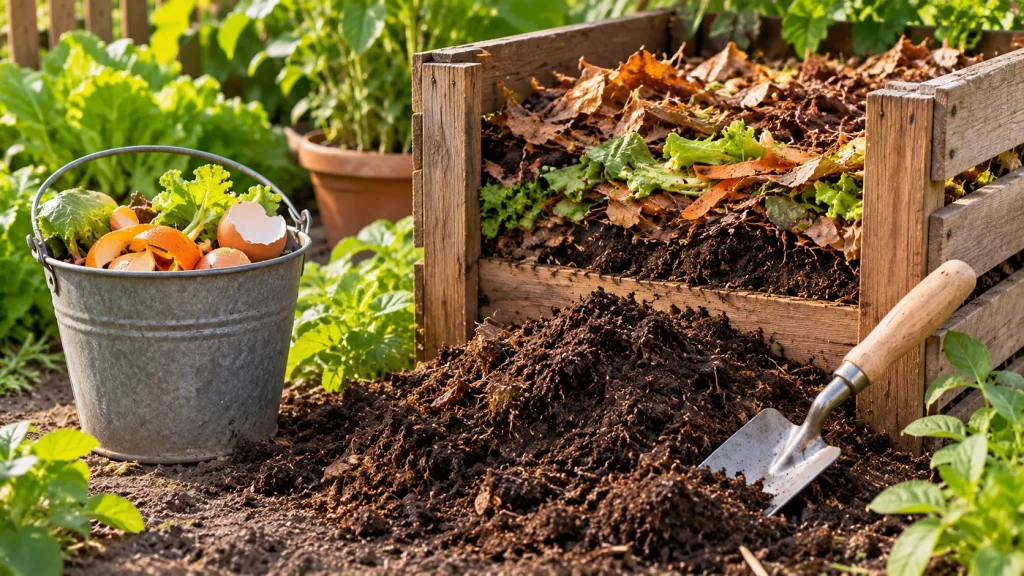
Finished compost and other appropriate organic materials can help improve soil aggregation and moisture management.
In sandy soil, organic matter may help increase water retention.
In clay-rich soil, better structure can improve the balance of water and air around roots.
However, excessive compost applications can create nutrient problems, so use amounts appropriate to the soil and garden.
Use Drip Irrigation or Soaker Hoses
Drip irrigation and soaker hoses can deliver water close to plant roots at relatively controlled rates.
They can reduce some evaporation and unwanted foliage wetting compared with poorly managed overhead irrigation.
However, these systems still need monitoring. A malfunctioning emitter, blocked line, or unsuitable timer setting can cause dry or waterlogged areas.
Periodically inspect soil moisture beneath the emitters to confirm that water reaches the intended root zone.
Group Plants With Similar Water Needs
Grouping plants according to their moisture requirements makes irrigation more manageable.
For example, herbs that prefer relatively dry, well-drained conditions may be easier to care for separately from vegetables that require consistently available moisture.
This reduces the likelihood of overwatering one plant while trying to meet the needs of another.
Reduce Competition From Weeds
Dense weed growth can compete with garden plants for water and nutrients.
Remove troublesome weeds before they become established, especially near young vegetables.
Suitable mulch and groundcover planting can help reduce unnecessary exposed soil and weed establishment.
Collect Rainwater Where Appropriate
Rainwater collected from suitable surfaces may provide a useful additional irrigation source.
Use appropriately designed and covered storage containers and follow local water-use and food-safety recommendations.
Stored rainwater should be managed to reduce contamination and prevent mosquito breeding.
Choose Plants Suited to Your Climate
Plants adapted to local rainfall, temperatures, and soil conditions often need less supplementary irrigation once established.
However, even drought-tolerant plants usually need appropriate watering during their establishment period.
Choose species and varieties that match your garden rather than relying on frequent irrigation to maintain unsuitable plants.
10 Common Mistakes When Deciding Whether to Water Garden Soil
1. Watering Only Because the Surface Looks Dry
The top layer may dry while deeper soil still holds sufficient moisture.
Better approach: Check at an appropriate root-zone depth before watering established plants.
2. Watering Every Plant on the Same Schedule
Different plants have different root depths and moisture requirements.
Better approach: Group plants with similar needs and water based on actual soil moisture.
3. Assuming Wilted Leaves Always Mean Drought
Wilting may also be associated with saturated roots, disease, and temporary heat stress.
Better approach: Check root-zone moisture and drainage before adding water.
4. Relying Only on Rainfall Amounts
A rain gauge measures rainfall but does not show exactly how much entered the root zone.
Better approach: Check actual soil moisture after rainfall, particularly in shaded, compacted, or covered areas.
5. Watering Too Shallowly
Repeatedly wetting only the surface may not supply sufficient moisture to established roots.
Better approach: Apply water at an appropriate rate and check how deeply it penetrates.
6. Overwatering Seeds and Small Seedlings
Although young plants require careful moisture management, constantly saturated growing media can deprive roots of oxygen.
Better approach: Maintain suitable moisture in the germination and root zones without keeping the medium waterlogged.
7. Ignoring Different Soil Types
Sandy soil, loam, and heavy clay do not store or release water in the same way.
Better approach: Learn how your own soil behaves and adjust checking frequency accordingly.
8. Trusting a Moisture Meter Without Checking the Soil
Inexpensive meters may be affected by soil salts, texture, and probe contact.
Better approach: Confirm important readings through direct soil inspection.
9. Forgetting That Containers Dry Differently
Small pots, terracotta containers, and exposed planters may dry much faster than garden beds.
Better approach: Check containers individually, especially during hot or windy weather.
10. Not Checking Whether Water Reached the Roots
A soil surface that looks wet immediately after irrigation does not prove that deeper roots received enough moisture.
Better approach: After water has soaked in, check the soil at an appropriate depth and adjust future applications.
Frequently Asked Questions About Knowing When Soil Needs Water
How can I tell if my garden soil is too dry?
Check beneath the surface with your finger, trowel, or soil probe. If the soil at the relevant root depth is dry and the plant requires moisture, watering is likely needed. Also consider plant symptoms, recent weather, and the soil type.
How deep should I check soil moisture before watering?
A finger test approximately 2.5–5 cm (1–2 inches) deep is useful for an initial assessment. For many established garden plants, checking around 10–15 cm (4–6 inches) down is more informative. Deeper-rooted plants and young seedlings require different monitoring depths.
Should I water when the top of the soil feels dry?
Not automatically. Exposed soil can dry at the surface while retaining useful moisture below. Check the root zone before watering established plants. Newly sown seeds are an important exception because their germination zone is much closer to the surface.
How often should I check garden soil moisture?
Check more frequently during hot, windy, or dry conditions and less frequently when the weather is cool and the soil remains moist. Seeds, seedlings, and outdoor containers may need daily monitoring during warm weather, while many established plants require less frequent checks.
Can garden soil be too wet for plants?
Yes. Prolonged saturation reduces oxygen in soil pore spaces and can harm roots. This may cause yellow leaves, poor growth, wilting, and root damage. Most ordinary garden plants need an appropriate balance of air and moisture around their roots.
Why do my plants wilt even when the soil is wet?
Waterlogged roots may not function normally because of insufficient oxygen or root damage. Plants can therefore wilt in wet soil. Examine moisture and drainage before adding more water. Temporary wilting during extreme heat is another possibility.
Is a soil moisture meter better than the finger test?
Not always. Inexpensive moisture meters can provide rough indications, but readings may be affected by soil conditions and dissolved salts. A finger, trowel, or soil probe allows direct inspection. More advanced sensors may offer useful measurements when properly installed and interpreted.
Should I water my garden every day during summer?
Not necessarily. Watering requirements depend on soil texture, crop type, root development, and weather. Newly sown seeds and small outdoor containers may need frequent attention, but established plants often benefit from appropriate root-zone watering when needed rather than automatic daily irrigation.
How do I know if rain watered my garden enough?
Use a trowel or probe after rainfall to check how far the moisture penetrated. Light rain may wet only the upper surface, while heavy rain may reach deeper roots. Runoff, compacted ground, and rain shadows can make moisture uneven.
Is it better to water in the morning or evening?
Early morning is generally recommended because conditions are often cooler and foliage can dry during the day. Evening watering can also be practical when needed, especially when water is directed toward the soil rather than leaves.
How much water does a vegetable garden need?
Approximately 2.5 cm (1 inch) of combined rainfall and irrigation per week is a common general starting point for many vegetable gardens under moderate conditions. Actual needs vary with heat, wind, soil texture, crop type, and growth stage. Use root-zone moisture checks to guide adjustments.
How can I keep garden soil moist for longer?
Use suitable organic mulch, maintain healthy soil structure with appropriate organic matter, reduce weed competition, and deliver water efficiently to plant roots. Choosing plants suited to the climate and grouping those with similar moisture needs also helps reduce unnecessary watering.
Final Thoughts
Learning how to tell when garden soil needs water can improve plant health while reducing unnecessary irrigation.
The most important habit is to check moisture below the surface, where roots actually absorb water. A finger test is useful for shallow soil and containers, while a trowel or probe provides more information about established garden plants.
Remember that dry-looking soil does not always need watering, and wilting leaves do not always indicate drought. Soil can retain adequate moisture beneath a dry surface, while plants growing in saturated soil may wilt because their roots lack oxygen.
Consider soil texture, plant species, root depth, rainfall, temperature, and growth stage before deciding when to irrigate.
For many established plants, careful watering that reaches the active root zone is more useful than frequent shallow applications. Seeds, seedlings, and small containers may require a different approach because their available growing medium can dry more quickly.
With a little regular observation, soil-moisture testing becomes a quick and practical gardening habit. It helps you provide water when plants genuinely need it, avoid harmful saturation, and build healthier growing conditions throughout the year.
For more guidance, explore Gardenivo’s Soil & Watering articles. You can also visit Vegetable Gardening for crop-growing advice and Seasonal Gardening for managing plants through changing weather.
Further Reading and Horticultural References
- Royal Horticultural Society: Watering Plants Wisely — checking moisture beneath the surface, watering established plants, and avoiding unnecessary irrigation.
- Royal Horticultural Society: Watering Vegetables and Fruit — irrigation requirements during crop growth and checking the depth of moisture in garden soil.
- Royal Horticultural Society: How to Water Containers — checking potting mix, container watering frequency, and drainage.
- Royal Horticultural Society: How Plants Absorb Water — root function, plant establishment, and soil moisture checks.
- Colorado State University Extension: Irrigating the Vegetable Garden — soil probes, root-zone moisture, screwdriver tests, and limitations of inexpensive moisture meters.
- University of Maryland Extension: Growing Vegetables in Containers and Salad Tables — monitoring container moisture and distinguishing underwatering from overwatering.
- University of Maryland Extension: Watering Indoor Plants — finger tests, pot-weight checks, and watering according to plant needs.
- University of Minnesota Extension: Water Wisely — Start in Your Own Backyard — water-efficient gardening, root-zone checks, mulch, and appropriate watering methods.
- University of Minnesota Extension: Growing Tomatoes — maintaining consistent soil moisture during fruit development.
- University of Minnesota Extension: Watering Established Trees and Shrubs — evaluating drought stress and checking deeper soil moisture.
- Oregon State University Extension: Soil Moisture Monitoring to Support Irrigation Scheduling — soil water availability and the hand-feel method for assessing moisture.
- Royal Horticultural Society: Garden Watering Methods — selecting practical irrigation methods and reducing unnecessary water use.