How to Control Common Garden Weeds
Weeds are a familiar challenge in almost every garden. They appear between vegetable seedlings, spread across flower borders, grow through paving cracks, and sometimes take over sections of the lawn. Left unmanaged, troublesome weeds may compete with garden plants for water, nutrients, sunlight, and growing space.
However, not every unexpected plant is harmful. Some volunteer plants provide flowers for pollinators, protect exposed soil, or contribute to garden biodiversity. The real problem begins when an unwanted plant interferes with what you are trying to grow, spreads aggressively, or creates a maintenance or safety concern.
Successful weed control begins with identifying the plant and understanding how it spreads. A young annual weed may be easy to remove by hand, while a creeping perennial can return repeatedly from underground roots or rhizomes. Applying the same treatment to every weed is rarely the most effective approach.
This guide explains how to identify and control common garden weeds using practical methods such as hand-pulling, careful hoeing, mulching, repeated cutting, and preventing seed production. It also covers stubborn perennial weeds, lawn management, vegetable gardens, and common mistakes that can make weed problems worse. In planted beds, choose and apply mulch to help limit new weed seedlings.
Quick Answer: What Is the Best Way to Control Garden Weeds?
The best way to control common garden weeds is to identify them early, remove unwanted plants before they produce seeds, and prevent new seedlings from becoming established.
For small annual weeds, hand-pulling or shallow hoeing is often effective. A suitable organic mulch layer can reduce the amount of light reaching weed seeds and help prevent many new seedlings from emerging.
Established perennial weeds require a different approach. Plants with deep taproots, creeping rhizomes, or underground storage structures may regrow after their visible leaves are removed. These weeds often need careful root removal, repeated cutting, or extended light exclusion.
For the most manageable long-term results, combine several preventive methods rather than depending on one treatment.
- Identify the weed before choosing a control method.
- Remove young weeds while their roots are still manageable.
- Prevent troublesome weeds from producing and spreading seeds.
- Keep suitable garden soil covered with mulch or desirable plants.
- Avoid unnecessary deep cultivation that brings buried seeds to the surface.
- Remove underground roots or rhizomes where the weed can regenerate from them.
- Inspect beds regularly and deal with new growth promptly.
Gardening Tip: A short weeding session before unwanted plants flower and set seed can prevent much more work later. Check vegetable beds, flower borders, and path edges regularly during active growing periods.
What Are Garden Weeds, and Why Do They Grow?
A weed is generally a plant growing where it is not wanted. This means the same species might be welcome in a wildlife garden but considered troublesome in a vegetable bed or carefully maintained lawn.
Weeds often establish quickly in disturbed or exposed soil. Gardening activities such as digging, planting, and removing old vegetation can create open spaces where seeds are able to germinate.
Many garden soils contain a supply of buried seeds known as the soil seedbank. Some seeds remain viable for years and germinate when favorable conditions occur.
Why Weeds Can Become a Problem
Unwanted weeds may cause several practical difficulties:
- Competition for water: Fast-growing weeds can use moisture that nearby vegetables and flowers also need.
- Competition for nutrients: Dense weed growth may compete with desirable plants for available soil nutrients.
- Reduced light: Taller weeds can shade seedlings or low-growing plants.
- Limited growing space: Aggressive weeds may crowd out young crops and ornamental plants.
- Maintenance difficulty: Dense vegetation can make harvesting, watering, and inspecting crops harder.
- Potential pest habitat: Some weeds host pests or plant pathogens, although others support beneficial organisms.
- Safety concerns: Certain plants have thorns, irritating sap, toxic tissues, or growth that obstructs paths.
Are All Weeds Bad for a Garden?
No. Some plants commonly described as weeds produce flowers visited by pollinators or provide shelter for small wildlife.
Low-growing vegetation can also cover otherwise exposed soil. In parts of a garden where it does not interfere with crops, create safety problems, or threaten native habitats, leaving selected volunteer plants may be appropriate.
However, a plant that spreads aggressively or is classified as invasive in your region may need active control even if it produces attractive flowers.
Decisions should consider the plant species, location, local ecological effects, and the purpose of the growing area.
How to Identify Common Garden Weeds
Accurate weed identification is the foundation of effective control.
Two weeds with similar-looking leaves may spread differently. One might complete its life cycle from seed in a single season, while another survives underground and returns year after year.
Before removing an unfamiliar plant, examine its leaves, stems, growth pattern, flowers, roots where safely visible, and the place where it is growing.
Chickweed
Common chickweed (Stellaria media) is a low-growing plant with small, usually oval leaves and delicate white flowers that appear star-shaped.
It often grows during cooler, moist periods and may form spreading patches in garden beds and lawns.
Management approach: Hand-pull or use shallow hoeing while plants are small. Remove unwanted plants before seed production, and use suitable mulch to suppress additional seedlings.
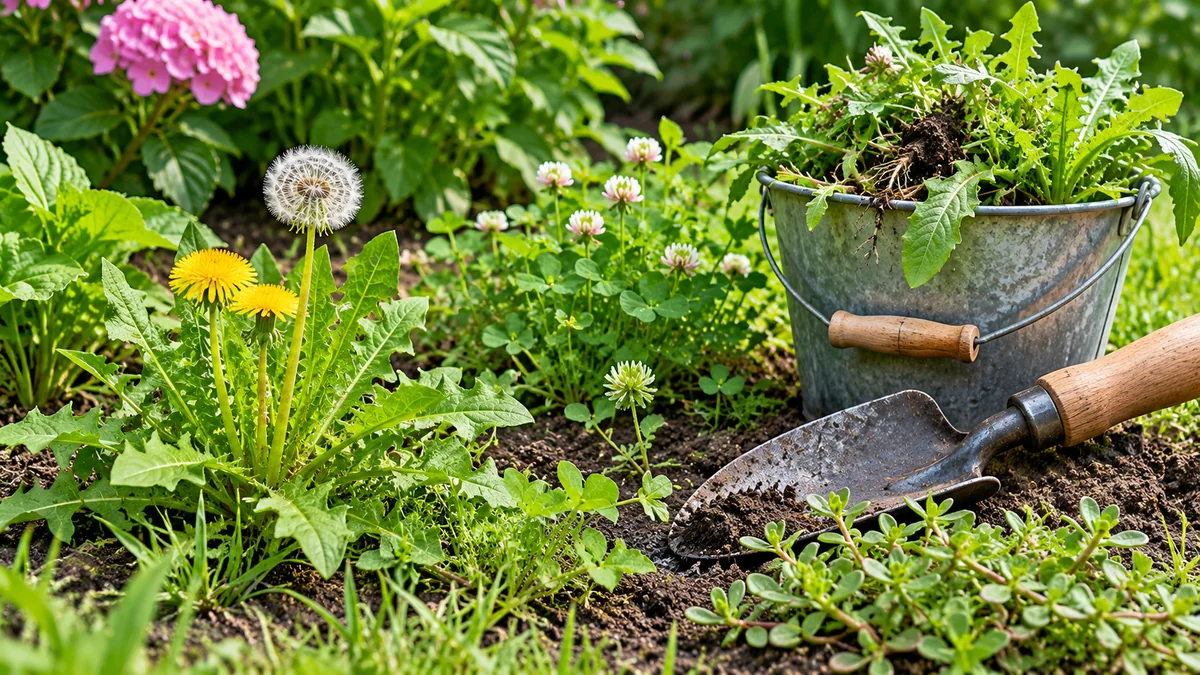
Dandelions
Common dandelions (Taraxacum species) typically have a basal rosette of toothed leaves, yellow flowerheads, and distinctive rounded seedheads.
They are perennial plants with substantial taproots that can support regrowth if enough root tissue remains.
Management approach: Use an appropriate hand fork or taproot weeding tool to remove as much of the root as practical. Prevent unwanted plants from producing seeds in areas where spread is a concern.
Because dandelion flowers can support pollinating insects, some gardeners choose to tolerate them in low-competition lawn or wildlife areas.
Crabgrass
Crabgrass (Digitaria species) is a warm-season annual grass commonly found in lawns, bare soil, and other open areas in regions where it occurs.
It often develops a low, spreading growth habit with stems that radiate outward.
Management approach: Remove young plants before they develop seedheads. In lawns, maintaining suitable turf density and reducing bare patches can help limit establishment.
Different grass species can look similar when young, so confirm identification before treating an unfamiliar grassy plant.
Purslane
Common purslane (Portulaca oleracea) is a low-growing annual with fleshy leaves and succulent-looking stems. It often appears in warm, disturbed garden soil.
It can produce numerous seeds and may also establish from suitable stem fragments under favorable conditions.
Management approach: Remove small plants before seeds mature. Collect uprooted material instead of leaving viable succulent stems on moist soil where they might root again.
Although purslane is used as a food plant in some cultures, never eat an unidentified volunteer plant. Some potentially hazardous species may resemble edible plants.
Field Bindweed and Hedge Bindweed
Bindweeds are climbing or twining perennial plants. Field bindweed (Convolvulus arvensis) and hedge bindweed (often Calystegia sepium) can produce funnel-shaped flowers and stems that wind around other plants.
Their underground root systems can make them difficult to remove completely.
Management approach: Remove roots carefully where practical, repeatedly cut unwanted regrowth, or use a suitable long-term smothering approach. Avoid chopping and scattering root fragments that may establish new growth.
Couch Grass and Other Creeping Grasses
Couch grass, also called quackgrass in some regions, is a spreading perennial grass with underground rhizomes.
It may invade vegetable beds and ornamental borders, forming a network of stems beneath the soil.
Management approach: Carefully lift and remove rhizomes using a garden fork. Avoid repeated rototilling or chopping of the underground stems because fragments can support further growth.
Nutsedge
Nutsedges (Cyperus species) resemble grasses but belong to a different plant family. Several species are persistent weeds in lawns and garden beds.
Some nutsedges spread through underground rhizomes and tubers, which can make control difficult once a large patch becomes established.
Management approach: Identify the species and investigate soil conditions. Carefully manage small patches before they spread, recognizing that pulling leaves alone may not remove underground structures.
The weed species found in your garden will depend on your climate and location. Use a regional weed identification guide when a plant does not match these examples.
Annual, Biennial, and Perennial Weeds: Why the Difference Matters
Understanding a weed’s life cycle makes it easier to choose a suitable control method and predict whether the plant will return.
Annual Weeds
Annual weeds normally germinate, grow, flower, produce seeds, and complete their life cycle within one growing season or year.
Some are most active in warm weather, while others germinate during autumn and grow through cooler periods.
Examples include crabgrass, common chickweed, and purslane.
For many annual weeds, preventing seed production is particularly important. Removing a young plant before it flowers can reduce its contribution to the soil seedbank.
Biennial Weeds
Biennial plants normally complete their life cycle over two growing seasons.
They often produce a low-growing rosette during the first year, then develop flowering stems and seeds during the second.
Where these plants are unwanted, removing young rosettes or preventing flowering and seed development can help manage their spread.
The exact life cycle may vary with growing conditions and species, so confirm local identification.
Perennial Weeds
Perennial weeds survive for multiple years. Some develop substantial taproots, while others spread through creeping underground stems, rhizomes, roots, or tubers.
Examples include dandelions, bindweed, couch grass, and certain nutsedges.
Removing their visible leaves may not kill the plant because stored energy in underground structures can support regrowth.
Management may require root removal, repeated cutting over an extended period, or suitable light-excluding covers.
Good to Know: Small annual weeds and established creeping perennial weeds should not be treated in the same way. Shallow hoeing can be effective against young seedlings but may spread some perennial weeds when underground stems are cut into fragments.
Common Garden Weeds: Identification and Control Comparison Table
Use this table as an initial guide. Similar-looking plants can require different management, so confirm the species using reliable local resources.
| Weed | Typical growth habit | Main challenge | Practical control approach |
|---|---|---|---|
| Common chickweed | Low-growing annual | Rapid seed production | Early hand-pulling, shallow hoeing, mulching |
| Crabgrass | Spreading annual grass | Seed establishment in open areas | Early removal and maintaining dense healthy turf |
| Common purslane | Low-growing succulent annual | Abundant seeds and possible stem rooting | Remove before seeding and collect viable fragments |
| Dandelion | Taprooted perennial | Regrowth from remaining root tissue | Careful taproot removal and seed prevention |
| Bindweed | Twining perennial | Extensive underground roots | Repeated removal, cutting, or long-term smothering |
| Couch grass | Creeping perennial grass | Rhizomes spread underground | Careful rhizome removal; avoid fragmenting roots |
| Nutsedge | Perennial grass-like sedge | Underground tubers and rhizomes in some species | Early identification and persistent, species-specific control |
How to Remove Garden Weeds by Hand or Hoeing
Hand removal and shallow cultivation are useful nonchemical weed-control methods for small home gardens.
The best technique depends on the size of the weed, its root system, and the location of desirable plants nearby.
Hand-Pulling Young Weeds
Young annual weeds are often easiest to remove when soil is slightly moist and workable.
Grasp the plant near the base and pull gently but firmly, aiming to remove the main root system rather than snapping off the stem.
For compacted soil or weeds with stronger roots, use a hand fork to loosen the surrounding ground.
Avoid pulling aggressively beside shallow-rooted vegetables or ornamentals, where unwanted disturbance could damage the desirable plants.
Using a Garden Hoe
A sharp hoe can efficiently remove small annual weeds from open beds and spaces between vegetable rows.
Use shallow movements to sever young weed stems near the soil surface. On a suitable dry day, detached small seedlings may dry out and die after being cut.
Hoeing should remain shallow, particularly where crop roots are near the surface.
Deep cultivation can damage desirable roots, bring buried weed seeds closer to the surface, and spread underground fragments of some perennial weeds.
Removing Deep-Rooted Weeds
Taprooted weeds may require a narrow weeding tool or garden fork.
Loosen the surrounding soil and lift as much of the root as practical. Follow-up inspection may be necessary if a portion remains capable of regenerating.
Do not assume that removing only the leaves will permanently eliminate a perennial plant.
A Simple Hand-Weeding Procedure
- Identify the plant. Make sure it is an unwanted weed rather than a crop seedling or desirable volunteer.
- Check the soil. Slightly moist, workable soil often makes root removal easier.
- Select an appropriate tool. Use your hands, a hand fork, taproot tool, or shallow hoe depending on the weed.
- Remove the root structure where needed. Perennial weeds may require more extensive removal than annual seedlings.
- Collect reproductive material. Avoid scattering mature seeds or viable root fragments.
- Minimize disturbance. Protect the roots of nearby garden plants.
- Inspect for regrowth. Return to the area regularly and remove new shoots when necessary.
How to Use Mulch and Ground Covers to Prevent Weeds
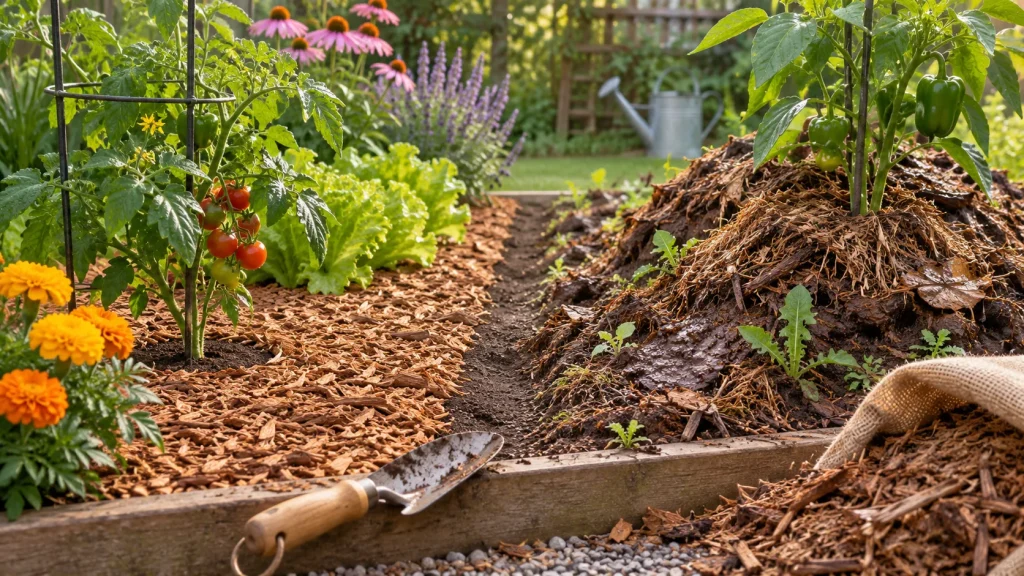
Mulching is one of the most practical ways to reduce weed establishment in vegetable gardens, ornamental beds, and areas around trees and shrubs.
It works mainly by reducing the light available to germinating weed seeds and protecting the soil surface.
Choose Suitable Organic Mulch
Depending on the planting area, common options include shredded leaves, clean straw, wood chips, bark, and suitable finished compost.
Wood chips can be useful around established trees and shrubs. Clean straw and shredded leaves may be practical around established vegetable crops.
The material should be suitable for the plants and free from concerning weed seeds, herbicide residues, or unwanted contamination.
Apply Mulch at an Appropriate Depth
For many established garden beds, an organic mulch layer of approximately 5–8 cm (2–3 inches) is a useful general starting point, adjusted for the material and crop.
Too little mulch may allow substantial light through to the soil, while excessive depth can interfere with water movement and create unsuitable moisture conditions.
Keep mulch away from sensitive stems, plant crowns, and tree trunks. Do not bury small seedlings or block the emergence of directly sown seeds.
Remove Established Weeds Before Mulching
Mulch is especially useful for preventing many new weeds from establishing. It is less reliable as a standalone treatment for vigorous perennial plants with extensive underground roots.
Remove or suppress troublesome perennial weeds before laying ordinary mulch, then monitor for shoots that grow through it.
Use Suitable Groundcover Plants
Appropriate groundcovers can occupy space that would otherwise remain bare. Once established, their foliage may reduce the light and growing space available to weed seedlings.
Choose plants suited to local conditions and avoid species that are invasive or likely to become another maintenance problem.
Remember that newly planted groundcovers may still need weeding until they fill the available space.
Are Landscape Fabrics a Permanent Solution?
Landscape fabric and other physical coverings can suppress weeds in certain situations, particularly during temporary bed preparation or selected hardscape installations.
However, weed seeds can eventually germinate in soil and organic material that accumulates above the fabric. Roots may grow through openings, and some creeping weeds can penetrate or bypass barriers.
In permanent planting beds, fabric can also make future planting, soil improvement, and root removal more difficult.
Consider long-term maintenance before installing it beneath organic mulch.
How to Control Stubborn Perennial Garden Weeds
Persistent perennial weeds often require more time than annual seedlings because their underground structures store energy and allow them to return after visible shoots are removed.
Successful control usually focuses on weakening or removing these underground systems while preventing further spread.
Carefully Remove Roots and Rhizomes
For manageable patches of creeping perennial weeds, use a garden fork to loosen the soil and trace the underground stems.
Try to remove as much viable root or rhizome material as possible without unnecessarily disturbing nearby desirable plants.
With species such as couch grass, cutting rhizomes into many fragments can make the problem harder to control.
Repeatedly Remove New Shoots
Where complete root removal is impractical, repeated removal of new shoots can weaken some perennial weeds over time.
Plants depend on their leaves to capture sunlight and replenish energy reserves. Repeatedly preventing new foliage from developing can gradually deplete underground stored energy.
This approach requires persistence. A well-established perennial weed may continue producing new shoots for a long period.
Use Long-Term Smothering Where Appropriate
For an empty or heavily infested area, a suitable opaque, securely anchored covering can block sunlight and suppress plant growth.
This approach is sometimes called occultation or light exclusion. Depending on the weed species, climate, and duration, it may weaken established plants and prevent new seedlings from growing.
Persistent perennial weeds may require extended coverage, and some can survive or regrow after the material is removed.
Do not cover established desirable plants that require light, and choose a method that avoids creating drainage or environmental problems.
Be Careful With Rototilling
Rototilling may appear to clear a weed-infested bed quickly, but it can break rhizomes or roots into fragments capable of producing new shoots.
It may also bring buried weed seeds closer to the surface, where they can germinate.
For known rhizomatous weeds such as couch grass or bindweed, consider careful root removal or controlled smothering rather than repeatedly cultivating the area.
When to Seek Specialist Advice
Some invasive plants have extensive root systems, strict disposal requirements, or legal restrictions related to their management.
If you suspect a regulated invasive species, such as Japanese knotweed in a region where it is controlled, obtain guidance from the relevant local authority or qualified professional before disturbing, transporting, or disposing of the material.
How to Control Weeds in Vegetable Gardens
Vegetable gardens often contain exposed soil and frequently disturbed planting areas, making them particularly vulnerable to weed establishment.
Young vegetables are especially sensitive to competition because their root systems and leaves are still developing.
Prepare Beds Before Planting
Remove visible weeds before sowing or transplanting vegetables. Pay particular attention to perennial weeds with underground stems that may be difficult to remove once crops are established.
Where the planting schedule allows, preparing the bed and waiting for a flush of weed seedlings before lightly removing them can reduce some early competition.
This approach is often called a stale seedbed. Minimize additional soil disturbance afterward so that fewer deeply buried weed seeds are exposed.
Weed Carefully Around Young Seedlings
Some vegetable seedlings resemble weeds during their first days of growth.
Label crop rows and learn how the first seed leaves and true leaves of your vegetables look before removing unfamiliar seedlings.
Use hand removal close to delicate crop roots rather than aggressive hoeing that could damage them.
Mulch Between Established Crops
Once suitable crops are established, spread appropriate organic mulch over exposed soil between plants.
Clean straw, shredded leaves, or similar materials can reduce weed establishment while helping conserve moisture.
Keep mulch from covering small seedlings or sensitive stems, and ensure water can reach the growing medium beneath.
Use Proper Crop Spacing
Healthy vegetable foliage can eventually shade some of the soil, reducing opportunities for certain weeds to establish.
However, overcrowding crops to suppress weeds can reduce airflow, increase competition, and interfere with harvests.
Follow suitable crop spacing rather than planting vegetables excessively close together.
Consider Suitable Cover Crops
Cover crops can protect soil between vegetable-growing periods and may help reduce some weed establishment.
Examples include particular grasses, legumes, and mixed cover-crop plantings selected for the local climate.
The cover crop should be managed before it interferes with the following vegetable planting. Some species require careful termination to prevent regrowth or unwanted self-seeding.
How to Manage Weeds in Lawns and Garden Pathways
Weed management in lawns differs from weed management in open vegetable beds. The aim may be to maintain healthy turf while removing particular unwanted plants.
Keep Lawn Grass Healthy
A dense lawn suited to its growing conditions can compete more effectively with certain weeds than thin, stressed turf.
Use suitable mowing heights, appropriate watering, and lawn-care practices matched to the grass species and local climate.
Avoid cutting turf excessively short, which may weaken the grass and expose more soil where weeds can establish.
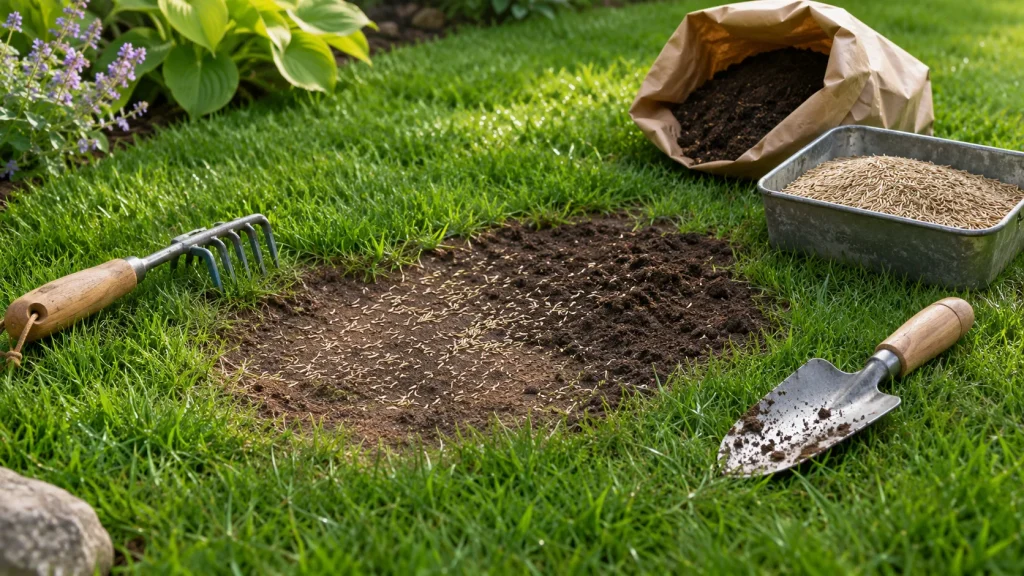
Repair Bare Patches
Bare areas provide opportunities for weed seeds to germinate.
Identify the cause of the bare patch, such as shade, compaction, drought, poor drainage, or heavy foot traffic, before repairing it.
Overseed or reestablish suitable turf during the appropriate season, or choose another groundcover if lawn grass is unsuited to the location.
Remove Individual Lawn Weeds
For scattered dandelions and similar weeds, careful hand removal can be practical.
Use a suitable weeding tool to lift the root while disturbing as little surrounding turf as possible.
Where low-growing flowering plants are compatible with the desired lawn use, some gardeners choose to tolerate them rather than pursuing a completely weed-free lawn.
Control Weeds Between Paving Stones
Small weeds growing in pavement joints may be removed with a narrow hand tool or appropriate mechanical brush.
Removing accumulated soil and organic debris from cracks can reduce suitable germination sites.
Repairing damaged joints or improving the paving design may provide a longer-lasting solution than repeatedly removing growth from the same gaps.
Be careful with methods that could damage nearby plants, pavement materials, or underground utilities.
How to Prevent Common Garden Weeds From Returning
Long-term weed management is most successful when it reduces new weed establishment rather than depending entirely on repeated removal.
1. Prevent Seed Production
Many weeds spread by seeds that may survive in soil for extended periods.
Remove troublesome annual weeds before flowering and seed development whenever practical.
If mature seeds are already present, collect the plant carefully to minimize dispersal.
2. Keep Suitable Soil Covered
Open, disturbed soil can provide favorable conditions for weed germination.
Use appropriate mulch, productive plantings, or suitable groundcovers to reduce prolonged exposure of bare soil.
Do not mulch so deeply that you damage desirable plants or interfere with watering and drainage.
3. Minimize Unnecessary Soil Disturbance
Repeated deep digging can bring buried weed seeds toward the surface, where light and suitable temperatures may encourage germination.
Use shallow cultivation where appropriate, and avoid fragmenting the underground structures of known creeping weeds.
4. Inspect Purchased Plants
Weed seedlings and underground fragments can sometimes arrive with purchased or shared plants.
Inspect containers and rootballs for suspicious growth before planting them in established beds.
Remove unwanted plants and identify any persistent species before introducing the material into your garden.
5. Use Clean Mulch, Compost, and Growing Materials
Unfinished compost, contaminated manure, and certain poorly handled mulches can introduce viable weed seeds.
Use reputable sources and avoid spreading material containing obvious seedheads or persistent roots.
Home composting systems do not always reach temperatures sufficient to destroy every weed seed or vegetative propagule.
6. Manage Garden Edges and Boundaries
Some creeping weeds spread from lawns, neighboring land, or unmanaged borders into cultivated beds.
Maintain suitable edging and monitor boundary areas for underground runners or invading stems.
Where persistent roots cross property boundaries, management may require cooperation with neighboring gardeners and a species-specific strategy.
7. Inspect the Garden Regularly
A short, regular inspection can help identify emerging weeds before they become large, flower, or spread into nearby beds.
Pay particular attention to recently disturbed soil, new planting areas, container surfaces, and the edges of vegetable beds.
Early intervention is often more manageable than removing established weeds with deep roots.
Safe and Responsible Weed Control: What Should You Avoid?
Weed control should protect desirable plants, people, animals, and the surrounding environment.
For many small home gardens, nonchemical methods such as hand removal, mulching, shallow hoeing, and repeated cutting can provide useful control without routine herbicide use.
Avoid Homemade Salt and Vinegar Mixtures
Household vinegar, salt, bleach, and other domestic chemicals are sometimes recommended online as homemade weed killers.
These mixtures can injure desirable plants, damage surrounding soil conditions, or create exposure risks. Salt can accumulate in soil and harm plant roots, while household vinegar may injure exposed tissues without reliably removing the underground structures of perennial weeds.
Do not mix household chemicals or apply unapproved substances to garden soil as an improvised weed-control treatment.
Use Herbicides Only When Appropriate and Legal
If you consider a commercial herbicide, first identify the weed and assess whether nonchemical management would be sufficient.
Any product used must be legally approved for the intended location and application. Follow all label requirements, including permitted uses, protective equipment, weather restrictions, storage, and protection of desirable plants.
Products intended for lawns may not be suitable for vegetable gardens or other edible plantings.
Be aware that spray drift and residues can damage neighboring plants, and some products may affect the environment or non-target organisms.
Wear Appropriate Protection
Some weeds have thorns, irritating hairs, toxic sap, or other hazardous properties.
Wear suitable gloves and protective clothing when handling unfamiliar or potentially irritating plants, and avoid direct contact until they are identified.
Do not use bare hands to remove plants suspected of causing severe skin irritation or other harmful reactions.
Dispose of Persistent Weeds Carefully
Some weeds should not be added to ordinary home compost if they contain mature seeds, viable rhizomes, tubers, or other parts likely to survive the composting process.
Use locally approved green-waste disposal methods where appropriate. For regulated invasive species, follow specific legal and environmental disposal requirements.
Avoid dumping weed material into natural areas, roadside spaces, or waterways.
Important Caution: Do not use homemade mixtures of salt, bleach, concentrated vinegar, or other household chemicals as weed killers. These treatments can damage soil, harm desirable plants, and create safety risks. For invasive or potentially toxic weeds, obtain accurate identification and follow local management guidance.
Seasonal Garden Weed-Control Checklist
Weed growth changes with temperature, rainfall, soil disturbance, and the species present.
This checklist gives a flexible routine for temperate gardens. In tropical, subtropical, or frost-free climates, organize tasks around local growing conditions rather than fixed calendar months.
Spring: Remove Young Weeds Early
- Identify new weed seedlings emerging in planting beds.
- Hand-pull small annual weeds before flowering.
- Use shallow hoeing in suitable open areas.
- Investigate perennial weeds returning from underground roots.
- Prepare clean planting beds before sowing vegetables.
- Apply appropriate mulch after removing established unwanted growth.
- Inspect new plants and compost for introduced weeds.
Summer: Prevent Weed Seeds and Competition
- Check vegetable beds regularly for vigorous new growth.
- Remove unwanted weeds before they develop mature seeds.
- Maintain suitable mulch coverage.
- Inspect paths, paving cracks, and lawn edges.
- Monitor persistent perennial weeds for regrowth.
- Reduce competition around young vegetables and newly planted shrubs.
- Schedule strenuous hand-weeding for cooler periods during extreme heat.
Autumn: Reduce the Next Weed Generation
- Remove unwanted annual weeds before their seeds disperse.
- Check perennial weed patches and remove new shoots as needed.
- Inspect finished vegetable beds before leaving them unused.
- Consider appropriate cover crops or mulch over exposed soil.
- Collect mature seedheads carefully where spread is a concern.
- Maintain boundaries and prevent creeping weeds from entering beds.
Winter: Plan and Protect the Soil
- Inspect garden areas during suitable frost-free periods.
- Identify persistent weeds that may require long-term management.
- Plan new beds and suitable groundcover planting.
- Check mulches and physical covers for damage.
- Avoid unnecessarily disturbing wet or frozen soil.
- Review what worked during the previous growing season.
A Simple Weekly Weed-Control Routine
During active weed growth, a short inspection can help you stay organized:
- Inspect: Walk around vegetable beds, borders, containers, and garden paths.
- Identify: Check unfamiliar plants before removing them.
- Prioritize: Focus on weeds that are flowering, spreading into crops, or returning from perennial roots.
- Remove: Hand-pull or hoe suitable weeds using the method appropriate to their growth habit.
- Prevent: Check mulch coverage and exposed soil.
- Monitor: Return to perennial weed patches to check for regrowth.
The frequency may need to increase during warm, wet growing conditions or decrease when weed growth slows.
Frequently Asked Questions About Controlling Garden Weeds
What is the best natural way to get rid of garden weeds?
For many small annual weeds, hand-pulling or shallow hoeing is effective. Suitable mulch helps prevent additional seedlings from establishing. Perennial weeds with underground roots or rhizomes may require careful root removal, repeated cutting, or longer-term light exclusion.
Is it better to pull weeds or cut them?
It depends on the weed. Pulling small annual weeds can remove the entire plant, while shallow cutting is effective for many young seedlings. Perennial weeds may regrow from underground structures even after their tops are removed. Repeated cutting can weaken some species over time but may not produce immediate eradication.
When is the easiest time to pull garden weeds?
Weeds are often easier to remove when they are young and the soil is slightly moist but not waterlogged. A hand fork can help loosen more established roots. Avoid walking heavily or cultivating saturated garden beds.
Does mulch stop weeds from growing?
Mulch can suppress many weed seedlings by reducing light at the soil surface. However, established perennial weeds may grow through it, and seeds can germinate in material that accumulates above the mulch. Correct depth, suitable materials, and regular monitoring are still important.
Why do weeds keep coming back after I pull them?
Some weeds regrow from roots, rhizomes, tubers, or other underground structures. New weeds may also germinate from seeds already present in the soil. Identify the species and determine whether the problem is regrowth from an existing plant or new seedlings.
Should I remove every weed from my garden?
Not necessarily. Some volunteer plants provide nectar, pollen, or habitat and may be tolerated where they do not interfere with desirable plants. However, aggressive, invasive, hazardous, or heavily competitive weeds may need control. The appropriate decision depends on the species and location.
Can I use vinegar or salt to kill weeds?
Homemade mixtures are not recommended as general garden weed-control treatments. Salt can damage soil and desirable roots, while household vinegar may injure leaves without reliably eliminating established perennial root systems. Use appropriate physical methods or legally approved products according to their labels when necessary.
Can I put pulled weeds into my compost bin?
Some young weeds without mature seeds or persistent underground structures can be composted appropriately. Avoid placing mature seedheads, invasive plant material, or viable rhizomes and tubers into home compost systems that may not reach sufficient temperatures. Follow local disposal advice where needed.
How do I control weeds without harming vegetable plants?
Identify the weeds and vegetables carefully, hand-remove unwanted plants near delicate crops, use shallow hoeing only where roots will not be damaged, and place suitable mulch between established plants. Avoid unapproved chemicals or treatments that may damage edible crops or contaminate growing areas.
How long does it take to get rid of perennial weeds?
There is no universal timeline. Some small patches can be removed through careful digging, while established bindweed, couch grass, or other persistent species may require repeated management over multiple growing seasons. The result depends on the plant, the extent of its underground structures, and how consistently regrowth is controlled.
Final Thoughts
Controlling common garden weeds becomes much easier when you understand what is growing and how it spreads.
Young annual weeds are often manageable with hand-pulling, shallow hoeing, and suitable mulching. Persistent perennial weeds require more attention because roots, rhizomes, and other underground structures may allow them to return after their leaves have been removed.
The most effective long-term strategy is prevention. Remove troublesome weeds before seed production, keep appropriate soil covered, minimize unnecessary disturbance, and inspect growing areas regularly.
Remember that not every unfamiliar plant needs to be eliminated. A healthy garden can support useful wildlife and diverse vegetation while keeping aggressive or unwanted weeds under control.
With accurate identification, appropriate removal methods, and consistent maintenance, you can reduce weed competition without relying on unnecessary chemical treatments or constant major garden work.
For more practical maintenance advice, explore our Lawn & Garden Care guides. You can also read Soil & Watering for advice on healthy soil management and visit Vegetable Gardening for crop-specific growing guidance.
Further Reading and Horticultural References
- University of Maryland Extension: Manage Weeds Without Chemicals — identifying weed life cycles, hand removal, mulching, barriers, and prevention.
- University of Maryland Extension: Weed Identification and Management in Home Landscapes — regional identification resources and control methods.
- University of Maryland Extension: Caring for Your Vegetable Garden — weed management in vegetable beds, mulching, hand-pulling, and hoeing.
- Royal Horticultural Society: Non-Chemical Weed Control — physical removal, cutting, smothering, and preventive management.
- Royal Horticultural Society: Bindweed — identifying and managing persistent creeping roots.
- Royal Horticultural Society: Couch Grass — managing perennial grass rhizomes and preventing spread.
- Royal Horticultural Society: Chickweed — managing annual weeds before seed production.
- University of Minnesota Extension: Reducing Tillage in Your Garden — weed seedbanks, soil disturbance, and perennial weed management.
- Oregon State University Extension: Mulching Woody Ornamentals With Organic Materials — mulch weed suppression, perennial weeds, and landscape fabric limitations.
- Royal Horticultural Society: Weeds in Lawns — managing lawn weeds and maintaining suitable turf conditions.