How to Grow Peppers from Seed
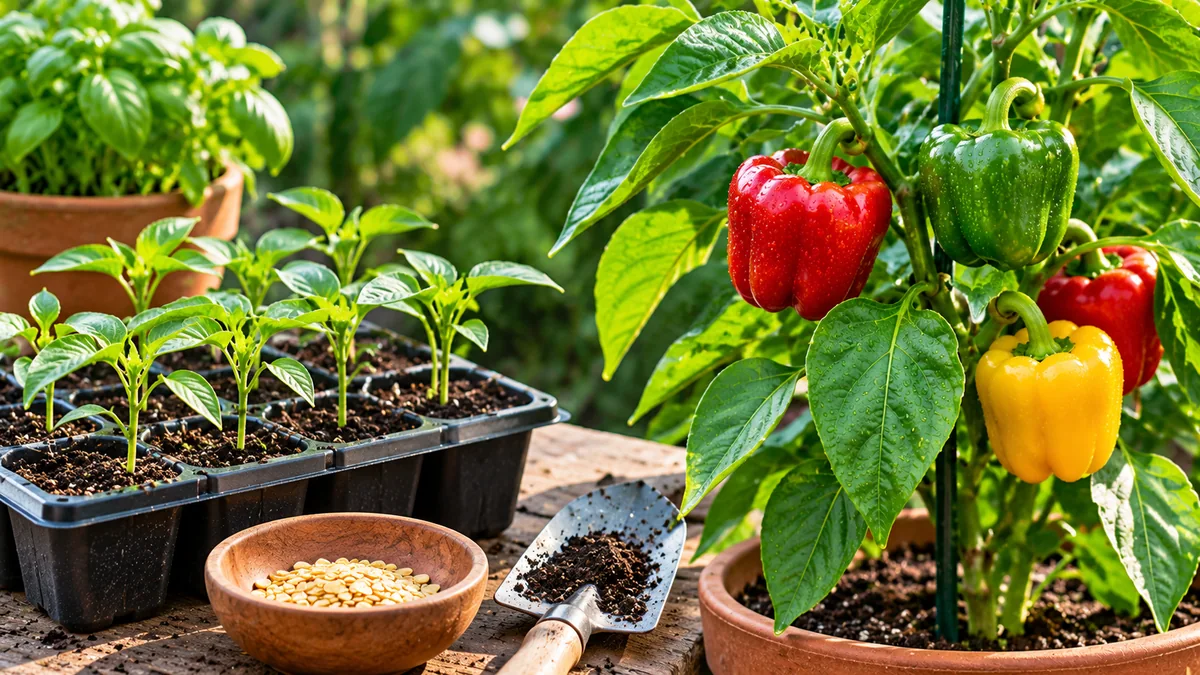
Growing peppers from seed is a rewarding way to produce sweet bell peppers, jalapeños, cayenne peppers, and many other varieties in your home garden. Starting with seeds gives you access to a wider selection of colors, flavors, shapes, and heat levels than you might find at a local plant nursery. To choose a sowing date, work backward from your local transplanting window.
However, peppers need a little more patience than some beginner vegetables. Their seeds require warmth to germinate reliably, young plants need strong light to develop sturdy stems, and outdoor growth can slow dramatically when temperatures are too low.
One of the most common mistakes is starting pepper seeds in cold potting mix and assuming they have failed when no seedlings appear after a few days. Others sow too early without adequate indoor lighting, leaving them with weak, overcrowded plants long before outdoor temperatures are suitable.
With the right timing, clean seed-starting mix, consistent moisture, and an appropriate growing temperature, pepper seeds can develop into healthy seedlings ready for the garden or containers.
In this guide, you’ll learn how to grow peppers from seed step by step, including when to sow, how deep to plant, what temperatures encourage germination, how to care for young plants, and how to move them outdoors safely. You’ll also find advice on growing peppers in pots, feeding and watering established plants, harvesting fruit, saving seeds, and solving common problems.
Quick Answer: How Do You Grow Peppers From Seed?
To grow peppers from seed, sow them in clean seed-starting mix approximately 8–10 weeks before you expect to transplant them outdoors. Plant seeds about 6 mm (¼ inch) deep, maintain warm growing-medium temperatures, and keep the mix evenly moist without making it soggy.
Many pepper seeds germinate well when the growing medium is around 24–29°C (75–85°F), although suitable temperatures vary by variety and guidance. A thermostatically controlled seedling heat mat can be useful when the room is cool.
After seedlings emerge, provide strong light, moderate warmth, and appropriate moisture. Move seedlings into larger pots when their roots and true leaves develop. Gradually harden them off before transplanting outdoors after frost danger has passed and the soil has warmed sufficiently.
Here are the essential steps:
- Choose pepper varieties suited to your climate and available growing space.
- Plan the sowing date according to your expected outdoor transplanting time.
- Use clean seed trays or pots with drainage holes.
- Fill containers with suitable seed-starting mix.
- Sow the seeds approximately 6 mm (¼ inch) deep.
- Maintain suitable warmth and consistently light moisture during germination.
- Provide bright overhead light as soon as seedlings emerge.
- Allow seedlings to develop true leaves before moving them into larger containers.
- Water and fertilize carefully according to their growth and the nutrient content of the mix.
- Harden plants off gradually over approximately 7–14 days.
- Transplant into warm, well-drained soil or appropriately sized containers.
- Maintain sufficient sunlight, root-zone moisture, and nutrients while peppers flower and fruit.
- Harvest when fruits reach the appropriate size and color for the variety.
Peppers are frost-sensitive warm-season plants. Starting seeds early does not mean they should be planted outside early. Healthy transplants need warm soil, suitable nighttime temperatures, and protection from sudden environmental changes.
Gardening Tip: Use a soil thermometer when starting pepper seeds. A room that feels comfortably warm to you may still have cool potting mix, especially near windows. Warm root-zone conditions can make germination more predictable than guessing from air temperature alone.
Choosing the Best Pepper Varieties to Grow From Seed
Before sowing, decide what kind of peppers you want to grow.
Sweet peppers and hot peppers belong to the genus Capsicum. Many familiar types, including bell peppers and jalapeños, are varieties of Capsicum annuum. Other popular hot peppers, including many habaneros, belong to Capsicum chinense.
Different varieties vary in growth rate, mature size, fruiting season, flavor, and heat level.
Bell Peppers
Bell peppers are popular sweet peppers with thick walls and little to no pungency.
They are suitable for home vegetable gardens and large containers when provided with warmth, strong sunlight, and adequate root space.
Fruit may be harvested at an immature green stage or allowed to ripen to red, yellow, orange, or another mature color, depending on the cultivar.
Jalapeño Peppers
Jalapeños are commonly grown hot peppers that produce relatively compact, thick-walled fruits.
Many cultivars can be productive in containers, making them a practical choice for gardeners with a sunny patio or small growing area.
The fruits are often harvested green, but they can continue ripening to red.
Cayenne Peppers
Cayenne varieties typically produce elongated, relatively thin-walled hot peppers.
They can be used fresh or dried according to safe food-handling practices.
Plants may require support when carrying a substantial number of fruits.
Serrano Peppers
Serrano peppers are commonly valued for their firm texture and hot flavor.
They generally need the same basic warm-weather conditions as other common peppers, although harvest timing varies by cultivar.
Habanero Peppers
Habaneros are hot peppers frequently associated with Capsicum chinense.
Many habanero cultivars have a relatively long growing period compared with common bell peppers or jalapeños.
They may require an earlier sowing date and a longer period of favorable warmth before mature fruits are ready.
Compact and Patio Pepper Varieties
If you have limited space, look for peppers described as dwarf, patio, compact, or container-friendly.
These descriptions can help identify plants with a manageable growth habit, although container dimensions and plant care still matter.
Choose a cultivar that has enough time to mature during your local growing season.
Pepper Type Comparison Table
| Pepper type | General flavor | Growing consideration | Beginner suitability |
|---|---|---|---|
| Bell pepper | Sweet, non-pungent | Needs warmth, root space, and sufficient season length | Good with suitable growing conditions |
| Jalapeño | Moderately hot; cultivar dependent | Often suitable for containers | Good choice for gardeners wanting hot peppers |
| Cayenne | Hot | May need support as fruit develops | Suitable when enough warmth is available |
| Serrano | Hot | Provide strong light and consistent growing conditions | Suitable with appropriate care |
| Habanero | Very hot | Often takes longer to mature; may need an earlier start | More demanding in short growing seasons |
| Compact patio peppers | Varies by cultivar | Selected for smaller growing spaces | Often practical for containers |
When Should You Start Pepper Seeds Indoors?
Pepper seeds are commonly started indoors before outdoor planting conditions are suitable.
This gives young plants time to develop while they are protected from cold weather.
Start Most Peppers 8–10 Weeks Before Transplanting
For many common pepper varieties, sowing indoors approximately eight to ten weeks before the expected outdoor transplant date is a useful starting point.
University of Maryland Extension recommends eight to ten weeks before the average frost-free date for most peppers, while noting that some cultivars may need around twelve weeks.
The best timing depends on germination speed, indoor light, growth rate, and when local outdoor soil and nighttime temperatures become suitable.
Do not treat the last expected frost date as automatic permission to transplant. A frost-free night may still be too cold for vigorous pepper growth.
Slow-Growing Hot Peppers May Need More Time
Some hot peppers, particularly longer-season Capsicum chinense varieties, can benefit from an earlier start.
However, starting seeds extremely early without adequate light and growing space may produce weak, overcrowded, or root-bound plants.
Plan based on the specific variety and the expected transplanting date rather than starting everything at the same time.
What if You Live in a Warm Climate?
Gardeners in mild or warm climates may have a longer growing season than those in regions with severe winter frost.
However, unusually high temperatures can also interfere with pepper flowering and fruit development.
Choose sowing and transplanting dates that allow plants to establish during favorable warm conditions without exposing seedlings to extreme heat or cold.
In regions with distinct wet and dry seasons, take rainfall and soil drainage into account as well.
What Do You Need to Grow Peppers From Seed?
You do not need a large greenhouse or an expensive growing system to start a small number of pepper plants.
However, suitable equipment makes the process more reliable.
- Quality pepper seeds: Choose fresh seed from a reliable supplier.
- Seed trays or small pots: Use clean containers with suitable drainage holes.
- Seed-starting mix: Choose a lightweight, clean, well-draining propagation medium.
- Plant labels: Record the pepper variety and sowing date.
- Watering equipment: A gentle watering can, spray bottle, or bottom-watering tray can be useful.
- Warm growing location: Select a stable indoor area away from cold drafts.
- Seedling heat mat: Optional, but useful for maintaining appropriate growing-medium warmth.
- Grow lights: Helpful when natural daylight is insufficient for strong seedling growth.
- Small larger pots: Prepare containers for potting up after true leaves develop.
- Suitable potting mix: Use an appropriate medium when transferring seedlings into larger containers.
- Thermometer: A soil thermometer helps monitor germination conditions.
Why Clean Seed-Starting Mix Matters
Seedlings are vulnerable to diseases that can damage or kill them before their roots become established.
A clean, suitable seed-starting mix generally provides a more predictable environment than ordinary soil collected from the garden.
Commercial seed-starting media are commonly lightweight and formulated to retain enough moisture without becoming unnecessarily dense.
Avoid using previously contaminated growing material or dirty seed trays.
Should You Soak Pepper Seeds Before Sowing?
Some gardeners soak seeds before sowing in an attempt to speed water absorption.
However, soaking is not generally essential for fresh pepper seeds planted into suitable warm, moist growing medium.
Prolonged soaking or poorly managed handling can create additional problems, including seed damage or contamination.
For beginners, following the seed supplier’s instructions and providing suitable germination conditions is usually simpler.
How to Plant Pepper Seeds Step by Step
Follow this process to sow peppers indoors using seed trays or individual small pots.
Step 1: Prepare Clean Containers
Choose individual cell trays or small pots with functional drainage openings.
If containers were used previously, clean and disinfect them according to an appropriate horticultural sanitation method.
Allow the containers to be suitable for use before filling them.
Step 2: Fill With Seed-Starting Mix
Fill the containers with clean seed-starting medium.
Moisten the medium so it is evenly damp but not dripping or saturated.
Gently settle the mixture without compressing it heavily.
Step 3: Sow the Pepper Seeds
Place a seed in each cell or small pot.
If seed quality is uncertain, you may sow an extra seed and later thin to the strongest healthy seedling.
Follow the depth stated on the seed packet. For many common peppers, approximately 6 mm (¼ inch) deep is appropriate.
Cover the seeds lightly with growing medium and gently firm the surface to improve seed-to-medium contact.
Step 4: Label the Varieties
Add a durable label showing the variety and date of sowing.
This becomes particularly useful when growing several sweet and hot pepper varieties whose seedlings look similar.
Step 5: Provide Suitable Warmth
Place the trays in a location where the growing medium remains appropriately warm.
A seedling heat mat with a suitable thermostat can help maintain consistent soil temperature.
Follow the manufacturer’s instructions and protect electrical equipment from water.
Step 6: Maintain Moisture Without Waterlogging
Keep the growing medium lightly and consistently moist during germination.
A transparent propagation cover can help retain moisture temporarily, but it should not create prolonged, excessively wet conditions.
Check the trays regularly for drying, excessive condensation, or mold.
Remove or appropriately vent covers when seedlings emerge.
Step 7: Provide Bright Light Immediately After Sprouting
Once the first seedlings appear, make sure they receive sufficient illumination.
Weak lighting can cause seedlings to stretch into tall, thin plants with fragile stems.
Use properly positioned grow lights if natural daylight is insufficient.
Step 8: Thin Extra Seedlings
If more than one seed germinated in a cell, retain the strongest suitable seedling once plants have developed enough to assess.
Cut unwanted seedlings near the surface with clean scissors rather than pulling them out and disturbing nearby roots.
Continue monitoring light, moisture, and temperature while seedlings grow.
Pepper Seed Germination: Temperature, Depth, and Timing
Pepper seeds germinate most reliably when they receive sufficient warmth and moisture.
Soil temperature is particularly important because germination may slow when the growing medium is too cool.
What Temperature Do Pepper Seeds Need to Germinate?
Many common pepper varieties germinate well in growing media around 24–29°C (75–85°F).
University of Maryland Extension lists approximately 27°C (80°F) as a suitable germination temperature for peppers, while other extension guidance recommends warm seedling trays near 27–29°C (80–85°F) or somewhat higher under controlled conditions.
The exact optimum depends on the cultivar and the seed-starting system.
Avoid exposing seeds to uncontrolled high heat, which can dry the growing medium or damage germination.
How Long Do Pepper Seeds Take to Germinate?
Under suitable conditions, some common peppers emerge within approximately 5–10 days.
However, many home gardeners see emergence take around one to three weeks, particularly when temperatures vary or when growing slower-germinating varieties.
Some hot peppers can take longer.
Do not discard a seed tray after only a few days without checking soil warmth, moisture, seed age, and the expected timing for the specific cultivar.
Can Pepper Seeds Germinate in Cool Soil?
Some seeds may eventually germinate at temperatures below their preferred range, but the process is often slower and less predictable.
Prolonged cool and wet conditions also increase the risk of seed deterioration and certain seedling diseases.
Providing stable, suitable warmth is generally better than keeping trays on a cold windowsill.
Do Pepper Seeds Need Light to Germinate?
Common pepper seeds do not usually require direct light to initiate germination when sown at an appropriate depth.
However, seedlings need adequate illumination as soon as they emerge.
Prepare the light source in advance so young plants are not left growing in darkness after sprouting.
How Much Light and Warmth Do Pepper Seedlings Need?
Germination is only the first stage. Young pepper plants need strong light and favorable temperatures to produce compact stems and healthy leaves.
Use Suitable Grow Lights
Supplemental grow lights can be valuable when starting peppers during winter or early spring.
Appropriate LED or fluorescent growing fixtures can provide more consistent illumination than a dim windowsill.
Seedlings commonly benefit from approximately 14–16 hours of sufficient artificial light daily, depending on the fixture and natural daylight available.
Provide a regular dark period rather than leaving the lights on continuously.
Position Lights Correctly
Light intensity decreases with distance from many fixtures.
Position grow lights according to their manufacturer’s recommended height and coverage area.
Adjust the lights as plants grow so the leaves receive adequate illumination without excessive heat or light stress.
Adequate light is more important than using a particular lamp color or relying on brightness as judged by your eyes.
Keep Seedlings at Suitable Temperatures
Once seedlings emerge, they generally do not need the same high root-zone temperature used to encourage germination.
Moderately warm conditions, adequate illumination, and gentle airflow help produce healthy transplants.
Utah State University Extension describes growing transplants at approximately 24°C (75°F) during the day and 18°C (65°F) at night as useful greenhouse conditions.
Exact temperatures can vary according to the variety and growing system.
Why Are My Pepper Seedlings Tall and Thin?
Tall, weak, stretched seedlings are commonly described as leggy.
The most frequent cause is insufficient light, although overcrowding and excessively warm conditions relative to available light can contribute.
Improve illumination, allow appropriate spacing, and maintain suitable temperatures.
Severely weakened seedlings may be difficult to recover completely, so preventing stretching from the beginning is preferable.
How to Water and Fertilize Pepper Seedlings
Young pepper plants need an appropriate moisture supply, but they are vulnerable to prolonged saturation.
Water When the Growing Medium Needs It
Check the surface and internal moisture of the seed-starting mix regularly.
Water gently when the medium begins to dry beyond what the young roots can tolerate.
A small watering can or controlled bottom-watering method can be useful, provided the trays are drained after the growing medium absorbs enough moisture.
Avoid keeping seedlings permanently submerged in standing water.
Do Not Water Only the Surface
Repeated light misting may make the surface appear moist while the main root zone remains dry.
Check whether moisture has reached the roots without turning the medium soggy.
Drain excess water from trays and monitor conditions more frequently when a heat mat is used.
When Should You Start Fertilizing Seedlings?
Pepper seeds contain stored energy that supports the earliest stages of germination and growth.
Young seedlings do not generally need immediate fertilizer before they have developed true leaves.
If the seed-starting mix contains little available nutrition, a dilute, suitable complete fertilizer may be useful once seedlings have developed several true leaves.
University of Minnesota Extension suggests a weak solution of general-purpose water-soluble fertilizer for seedlings grown in a nutrient-poor soilless medium.
Follow appropriate product guidance and do not apply concentrated fertilizer to tiny seedlings.
What Is Damping Off?
Damping off is a seedling disease associated with several fungal and fungus-like pathogens.
Young seedlings may develop dark, thin, collapsing stems near the growing-medium surface and fall over.
It is more likely to become a problem when seedlings grow under unfavorable conditions such as excessive moisture, poor airflow, and contaminated growing media.
Use clean containers and seed-starting mix, water appropriately, provide sufficient light, and avoid overcrowding.
Once seedlings are severely affected, recovery may not be possible.
When and How to Move Pepper Seedlings Into Larger Pots
Pepper seedlings often begin in small cells but need more root space as they develop.
Look for True Leaves
The first leaves that emerge from a pepper seed are seed leaves, also called cotyledons.
True leaves develop afterward and begin to resemble the foliage of a mature pepper plant.
When seedlings have developed a suitable set of true leaves and their roots begin occupying the original cell, they may be ready for larger containers.
Choose a Reasonable Pot Size
For many small pepper seedlings, an individual pot approximately 7.5–9 cm (3–3.5 inches) wide can be a useful intermediate stage.
Larger growing seedlings may later need another potting-up step if outdoor conditions remain unsuitable.
Avoid immediately placing a tiny seedling into a much larger container filled with moisture-retentive mix.
Handle Roots Carefully
Moisten the growing medium appropriately before transplanting.
Lift the seedling gently with its rootball, using a small tool or the base of the container for support.
Avoid pulling or carrying seedlings by their delicate stems.
Move the rootball into a suitable fresh potting mix and plant at approximately the same depth as before.
Water gently and provide suitable light and warmth during recovery.
Do Pepper Seedlings Need Pruning?
Young pepper plants do not automatically require pruning or topping.
Removing the main growing tip may encourage branching in some varieties, but it also removes growing tissue and can delay development.
For beginners, healthy light conditions, suitable root space, and appropriate watering are more important than aggressive pruning.
Plants that form flower buds very early while still small may benefit from removal of those early buds, particularly when they have not yet established a strong root system.
How to Harden Off Pepper Plants Before Moving Them Outside
Hardening off is the gradual process of adjusting indoor-grown seedlings to outdoor sunlight, wind, and temperature changes.
Plants raised under indoor lights or protected conditions may be damaged if moved directly into full sun and strong wind.
Begin With Sheltered Outdoor Exposure
Start on a mild day with a short period outdoors in a protected location.
Provide gentle light and protection from strong wind.
Bring plants back into suitable shelter before temperatures fall below their tolerance.
Increase Exposure Gradually
Over approximately one to two weeks, gradually increase the time seedlings spend outside and their exposure to appropriate direct sunlight.
Monitor leaves for wilting, scorch, and other signs of stress.
If weather becomes excessively hot, cold, or windy, slow the process rather than following a rigid schedule.
Avoid Cold Nights
Pepper plants are sensitive to chilling.
University of Minnesota Extension recommends bringing young plants indoors if nighttime temperatures fall below approximately 13°C (55°F) during hardening off.
Do not expose them to frost.
The goal is to produce sturdy plants adapted to suitable outdoor conditions, not to force tender seedlings to tolerate damaging cold.
When and How to Transplant Pepper Seedlings Outdoors
Transplanting too early is a common reason peppers stop growing or become stressed.
Pepper plants need adequate warmth in both the air and soil.
Wait for Warm Soil
University of Maryland Extension recommends waiting until the soil is thoroughly warm, noting that planting before soil temperatures approach approximately 18°C (65°F) can result in poor early growth.
Even if frost danger has passed, cold ground can delay root establishment.
Transplanting when nighttime temperatures are reliably mild generally supports better growth.
Choose a Sunny Site
Peppers are sun-loving crops and generally need at least six hours of direct sunlight each day.
Many varieties perform best with approximately eight or more hours under suitable conditions.
Choose a well-drained location with fertile soil and enough room for mature plants.
Space Plants Appropriately
Depending on variety and growing method, many home-grown peppers are planted approximately 30–60 cm (12–24 inches) apart.
Compact cultivars may need less space than vigorous plants.
Follow seed-packet or locally appropriate guidance rather than crowding plants while they are still small.
Transplant at the Correct Depth
Make a planting hole large enough for the rootball.
Remove the seedling gently and position it so the rootball sits at approximately the same depth as in its original container.
Avoid unnecessarily burying large sections of the pepper stem.
Firm the soil lightly around the roots and water to settle the growing area.
Provide Temporary Protection When Needed
Recently transplanted peppers may benefit from protection against strong wind or unexpectedly cool weather.
Suitable row covers can help under certain conditions, but enclosed covers must be ventilated to prevent overheating.
Do not leave plants under a hot, unventilated plastic cover during strong sunshine.
How to Grow Peppers From Seed in Containers
Peppers can be productive container crops, especially when compact varieties are selected.
However, a mature pepper plant needs considerably more root space than a newly germinated seedling.
Choose a Suitable Final Container
The Royal Horticultural Society recommends a container at least approximately 30 cm (12 inches) wide for many sweet pepper plants.
For standard pepper varieties, a container of approximately 19 liters (5 US gallons) provides a practical starting volume, although compact cultivars may be suited to smaller pots.
Large or heavily fruiting plants may benefit from additional root volume.
Use a stable container capable of safely supporting the mature plant.
Use Suitable Potting Mix
Choose a quality container potting medium that provides a balance of moisture retention and aeration.
Ordinary dense garden soil can become compacted in pots and restrict drainage.
Use pots with functional drainage holes and avoid adding a thick gravel layer beneath the growing medium.
Position Containers for Adequate Sunlight
Place pepper containers where plants receive strong sunlight and suitable temperatures.
Protect small plants from sudden exposure to harsh wind and intense heat.
In very hot climates, observe whether dark containers and nearby walls are causing excessive root-zone temperatures.
Manage Watering Carefully
Container-grown peppers may dry more quickly than plants established in large garden beds.
Check the growing medium and water when the root zone needs moisture.
During flowering and fruit development, avoid repeated severe drying followed by excessive watering.
Consistent moisture helps reduce unnecessary stress.
How to Care for Pepper Plants After Transplanting
Once pepper seedlings establish outdoors, proper watering, nutrition, temperature management, and pest monitoring become important.
Water Deeply but Avoid Waterlogging
Established peppers generally benefit from watering that reaches the active root zone.
Garden soil should be allowed to drain appropriately between applications.
Do not rely on surface appearance alone, and adjust irrigation to rainfall, temperature, soil texture, and plant size.
In containers, water needs can change quickly during hot weather.
Fertilize According to Actual Needs
Peppers need nutrients to support leaf development, flowering, and fruit production.
However, excessive fertilizer can create problems.
Too much nitrogen may encourage heavy leafy growth without improving fruit yield proportionately.
For garden beds, soil testing can help identify nutrient needs. For containers, follow suitable growing-medium and fertilizer instructions.
Support Heavy Pepper Plants
Plants carrying numerous fruits may become top-heavy.
Use appropriate stakes, cages, or supports where necessary, especially in windy locations.
Install supports early enough to avoid damaging large established root systems.
Why Are Pepper Flowers Falling Off?
Pepper flowers can drop when environmental conditions interfere with normal fruit development.
Potential causes include extreme daytime heat, unusually cool nighttime temperatures, insufficient moisture, and other plant stress.
Utah State University Extension notes that unsuitable temperatures during flowering can reduce fruit set.
Check the overall growing conditions rather than assuming flowers need a special treatment.
Do Peppers Need Hand Pollination?
Pepper flowers are generally self-fertile and can produce fruit through self-pollination.
Wind and insects may assist pollen transfer, but hand pollination is not normally required for healthy outdoor plants.
In protected indoor growing systems, gentle movement or suitable assisted pollination may help when pollen transfer is limited.
However, temperature stress and poor plant health can still prevent fruit set even when pollen is available.
Watch for Pests and Diseases
Common pepper problems may include aphids, spider mites, whiteflies, bacterial diseases, fungal problems, and various fruit disorders.
Inspect the undersides of leaves, new growth, stems, and developing fruits regularly.
Identify the actual cause before applying a treatment.
Use suitable integrated pest management practices and follow all relevant product directions for edible crops.
When and How to Harvest Homegrown Peppers
Harvest timing depends on the pepper variety and whether you prefer immature or fully ripe fruits.
Harvesting Green Peppers
Many bell peppers, jalapeños, and other varieties can be harvested when they reach an appropriate mature but still green stage.
These are often physiologically immature fruits, but they are widely used in cooking.
Check the cultivar’s expected size, firmness, and appearance before harvesting.
Harvesting Fully Ripe Peppers
Many peppers change color as they ripen.
For example, a green pepper may eventually turn red, orange, yellow, or another color depending on its genetics.
Ripe peppers often develop a different balance of sweetness, aroma, and flavor than their immature counterparts.
Some varieties take considerably longer to reach their full mature color.
How Many Days Until Peppers Are Ready?
Seed packets often list days to maturity from transplanting rather than from the original seed-sowing date.
University of Maryland Extension notes that many sweet and hot peppers may produce usable fruit approximately 70–85 days after transplanting under suitable conditions.
Some habanero varieties can take approximately 90–120 days from transplanting to ripen.
Actual timing depends on variety, temperature, sunlight, and plant development.
Use Clean Pruning Tools
Harvest peppers with clean scissors or pruners when necessary rather than pulling forcefully on the fruits.
Pulling can break stems or damage nearby flowers and developing peppers.
Handle harvested fruits gently and follow suitable food-safety and storage practices.
Important Caution: Hot pepper flesh and internal membranes can contain capsaicinoids that irritate skin, eyes, and other sensitive tissues. Wear suitable gloves when cutting very hot peppers, avoid touching your face, and wash tools and hands carefully afterward. Keep hot peppers and seeds away from children and pets.
Can You Grow Peppers From Seeds Saved From Fresh Peppers?
Yes. Pepper seeds can be collected from healthy, mature fruits and used for future planting when they are properly handled and stored.
However, the results depend on the type of pepper, seed maturity, and whether the original plant was an open-pollinated variety or a hybrid.
Choose Fully Mature Healthy Fruits
For seed saving, select healthy fruits that have reached full maturity.
University of Minnesota Extension recommends allowing suitable peppers to become fully ripe before collecting their seeds.
Extract the seeds carefully and spread them out to dry under appropriate conditions.
Do not save seed from fruits showing signs of serious disease or rot.
Open-Pollinated vs. Hybrid Pepper Seeds
Seeds collected from open-pollinated varieties are more likely to produce plants similar to their parents when unwanted cross-pollination has been prevented.
Seeds from hybrid peppers may germinate successfully but produce plants with different growth habits, fruit colors, flavors, or yields.
For predictable results, choose properly labeled seed from a reliable supplier.
What About Seeds From Supermarket Peppers?
Seeds from a fully ripe supermarket pepper may germinate, but the original cultivar and its genetic background are often unknown.
Some supermarket fruits may have been harvested before their seeds reached full maturity.
Growing supermarket pepper seeds can be an interesting experiment, but it is less predictable than using a named seed variety.
Store Saved Seeds Correctly
Allow collected seeds to dry thoroughly under suitable conditions.
Store them in a labeled container in a cool, dry location protected from moisture and excessive heat.
Record the variety, collection year, and any useful growing observations.
Seed viability generally declines with age, so test or replace older seeds when germination becomes unreliable.
Pepper Growing Timeline: From Seed to Harvest
Starting pepper seeds is easier when you understand the major stages of development.
The following timeline is an example for many common pepper varieties. Exact timing varies with cultivar, germination conditions, growing temperature, and transplanting date.
| Growing stage | Typical timing or condition | What to do |
|---|---|---|
| Plan seed starting | Approximately 8–10 weeks before expected outdoor transplanting | Choose suitable varieties and prepare clean equipment |
| Sow seeds | Day 0 | Plant around 6 mm (¼ inch) deep and provide warmth |
| Germination | Often 5–21 days; some cultivars take longer | Keep medium appropriately moist and warm |
| Seedling establishment | After emergence | Provide strong light and suitable growing temperatures |
| True-leaf development | Several weeks after sowing, depending on conditions | Thin seedlings and pot up when needed |
| Growing transplants indoors | Until outdoor conditions are suitable | Maintain light, root space, water, and nutrition |
| Hardening off | Approximately 7–14 days before planting outdoors | Gradually increase suitable outdoor exposure |
| Outdoor transplanting | After frost risk and once soil is adequately warm | Plant at suitable spacing and water in |
| Flowering and fruit development | Variety and weather dependent | Maintain healthy growth, moisture, and nutrients |
| Harvest | Often around 70–85 days after transplanting for many types; longer for some | Pick according to cultivar size and ripeness |
Pepper Seed Germination Conditions at a Glance
| Factor | Practical starting recommendation |
|---|---|
| Seed-starting lead time | About 8–10 weeks before expected transplanting; longer for some varieties |
| Seed depth | Approximately 6 mm (¼ inch), unless the packet states otherwise |
| Germination medium temperature | Commonly around 24–29°C (75–85°F) |
| Time to emerge | Often 5–21 days, with cultivar and temperature differences |
| Growing medium | Clean, lightweight, suitable seed-starting mix |
| Watering | Keep medium lightly moist, not continuously saturated |
| Light after emergence | Strong natural or supplemental grow lighting |
| Typical artificial light period | Approximately 14–16 hours daily, depending on fixture and available daylight |
| Potting up | After suitable true-leaf and root development |
| Hardening off | Approximately 7–14 days, adjusted for weather |
| Outdoor planting | After frost danger and when soil and night temperatures are sufficiently warm |
Pepper Seed and Seedling Problems: Causes and Solutions
Starting peppers from seed sometimes involves slow germination or unexpected seedling problems.
Use this table to identify possible explanations before changing the growing setup.
| Problem | Possible cause | What to check or change |
|---|---|---|
| Seeds have not sprouted | Cool growing medium, old seeds, excess water, or insufficient moisture | Check soil temperature, seed age, and moisture conditions |
| Germination is uneven | Temperature variation or differences in seed viability | Improve consistency and follow cultivar guidance |
| Seedlings become tall and thin | Insufficient light or overcrowding | Improve grow lighting and spacing |
| Seedlings collapse near the soil line | Possible damping off | Use clean media, avoid excess moisture, and improve growing conditions |
| Leaves turn yellow | Excess moisture, nutrient problems, weak light, or root stress | Check drainage, root-zone moisture, lighting, and fertilizer use |
| Leaves become pale or scorched after moving outdoors | Insufficient hardening off or sudden sun exposure | Provide gradual acclimatization and suitable protection |
| Plants stop growing after transplanting | Cold soil, damaged roots, or other transplant stress | Review soil temperature, watering, and root condition |
| Flowers drop without setting fruit | Extreme temperatures, moisture stress, or other unfavorable conditions | Check day and night temperatures and overall plant health |
| Plants produce leaves but little fruit | Insufficient sun, nutrient imbalance, or unsuitable flowering conditions | Review light exposure, fertilizer history, and temperatures |
| Fruit develops dark, sunken patches at the blossom end | Possible blossom-end rot associated with calcium transport and moisture irregularity | Improve consistent water supply and assess soil conditions before adding calcium |
| Fruit has pale, bleached patches on exposed surfaces | Possible sunscald | Protect foliage and avoid unnecessary heavy leaf removal |
| Small insects gather on new leaves | Possible aphids or other sap-feeding pests | Identify insects and use appropriate management methods |
12 Common Mistakes When Growing Peppers From Seed
1. Starting Seeds Too Late
Peppers need time to develop before they can produce a useful harvest.
Better approach: Plan sowing approximately eight to ten weeks before outdoor transplanting, adjusting for slow-growing varieties.
2. Starting Seeds Far Too Early
Very early sowing without enough indoor growing space can produce overcrowded, root-bound seedlings.
Better approach: Work backward from a realistic transplanting date and plan suitable indoor lighting and pot space.
3. Using Cold Potting Mix
Low growing-medium temperatures can delay germination.
Better approach: Monitor soil temperature and provide controlled warmth when necessary.
4. Planting Seeds Too Deeply
Seeds sown too deeply may have difficulty emerging.
Better approach: Use the seed packet’s recommended depth, often around 6 mm (¼ inch) for common peppers.
5. Overwatering Germination Trays
Waterlogged growing media can restrict oxygen and favor seedling diseases.
Better approach: Maintain gentle moisture with adequate drainage.
6. Using Dirty Containers or Garden Soil
Contaminated materials may introduce seedling pathogens.
Better approach: Use clean trays and fresh seed-starting mix.
7. Providing Too Little Light
Weak light encourages tall, thin seedlings.
Better approach: Provide strong overhead lighting immediately after emergence.
8. Fertilizing Seedlings Too Soon or Too Heavily
Concentrated fertilizer can damage young roots.
Better approach: Wait until seedlings develop appropriate true leaves and feed only when the mix and plant require it.
9. Pulling Seedlings by Their Stems
Young stems are easily damaged during transplanting.
Better approach: Handle plants gently by the rootball and use a small tool for support.
10. Skipping the Hardening-Off Process
Indoor seedlings may suffer leaf scorch or wind damage when moved abruptly outside.
Better approach: Introduce outdoor conditions gradually over approximately one to two weeks.
11. Transplanting Into Cold Soil
Frost-sensitive peppers grow poorly when soil and air temperatures are unsuitable.
Better approach: Wait for reliably warm conditions rather than relying only on the calendar.
12. Ignoring Mature Plant Size and Fruit Production
Small transplants can develop into large, heavily fruiting plants that need more space and support.
Better approach: Choose suitable spacing, container size, and supports before plants become mature.
Frequently Asked Questions About Growing Peppers From Seed
Are peppers easy to grow from seed?
Peppers can be grown successfully from seed by beginners, but they require warmth, adequate light, and patience. Their seedlings usually develop more slowly than some other common vegetables, so starting at the appropriate time is important.
How long do pepper seeds take to germinate?
Some common peppers emerge within approximately five to ten days under suitable warm conditions. Others take one to three weeks or longer, especially when growing-medium temperatures are lower or varieties germinate more slowly.
What temperature is best for germinating pepper seeds?
Many peppers germinate well with a growing-medium temperature around 24–29°C (75–85°F). Approximately 27°C (80°F) is a common starting target. Exact preferences vary, and excessive heat can also be harmful.
How deep should I plant pepper seeds?
Approximately 6 mm (¼ inch) deep is commonly recommended for pepper seeds. Follow the specific instructions on the seed packet when available.
Do pepper seeds need sunlight to germinate?
Pepper seeds generally do not require direct sunlight to germinate when planted at an appropriate depth. Warmth and moisture are especially important at this stage. Once seedlings emerge, they need sufficient light for healthy growth.
Can I grow peppers from supermarket seeds?
Seeds from a sufficiently mature supermarket pepper may germinate, but the resulting plants may not match the original fruit. Seed maturity, hybrid parentage, and unknown growing characteristics can make the outcome unpredictable.
Should pepper seeds be soaked before planting?
Soaking is not usually necessary for fresh pepper seeds. Clean, suitable seed-starting mix, appropriate warmth, and consistent moisture are generally sufficient for successful germination.
When should I transplant pepper seedlings into larger pots?
Pot up seedlings when they have developed suitable true leaves and their roots are beginning to occupy the original growing cell. Move them carefully into an appropriately sized container without damaging the stem or rootball.
How many hours of light do pepper seedlings need?
Under artificial growing lights, approximately 14–16 hours of adequate illumination daily is a common starting range. The correct duration depends on the fixture and available natural daylight. Provide a regular dark period.
When can pepper seedlings go outside?
Move pepper seedlings outdoors permanently only after frost danger has passed, plants have been hardened off, and soil and nighttime temperatures are sufficiently warm. A soil temperature around 18°C (65°F) is a useful target for transplant establishment.
Can peppers grow in pots instead of garden beds?
Yes. Many peppers grow well in suitable containers. Choose enough root volume for the mature variety, use quality potting mix with adequate drainage, provide strong sunlight, and monitor watering and fertilizer needs during fruit production.
How long does it take to grow peppers from seed to harvest?
The total time depends on the variety and growing conditions. Many common peppers take approximately eight to ten weeks to produce transplants and another 70–85 days after planting outdoors to reach a usable harvest. Longer-season hot peppers may take substantially more time.
Final Thoughts
Growing peppers from seed gives home gardeners access to a wide variety of sweet and hot peppers and makes it possible to raise plants suited to different garden sizes and climates.
The most important early steps are choosing appropriate seeds, starting them at the right time, and providing warm, moist growing conditions for germination.
For many common peppers, sowing indoors approximately eight to ten weeks before outdoor transplanting gives plants a useful head start. Some slower-growing varieties need a longer preparation period.
After the seeds sprout, strong lighting and careful moisture management help produce healthy, sturdy seedlings. Pot them up when their true leaves and roots develop, and avoid overfertilizing or overcrowding.
Before planting outdoors, gradually harden off young peppers and wait until the soil and nighttime temperatures are reliably warm. Rushing this stage can slow growth or expose tender plants to unnecessary stress.
Once established, peppers benefit from adequate sunlight, appropriate watering, balanced nutrition, and suitable support as their fruits develop.
Whether you are growing bell peppers for cooking, jalapeños for fresh dishes, or longer-season hot peppers, careful seed starting creates the foundation for a healthier plant and a more reliable harvest.
Explore more growing advice in Gardenivo’s Vegetable Gardening guides. You can also visit Soil & Watering for moisture and nutrient management, Small-Space Gardening for container growing, and Seasonal Gardening for planning planting dates around your climate.
Further Reading and Horticultural References
- University of Minnesota Extension: Growing Peppers in Home Gardens — starting seeds, germination warmth, transplanting, spacing, and plant care.
- University of Maryland Extension: Growing Peppers in a Home Garden — seed-starting lead time, soil temperature, sunlight, harvest timing, and cultivar differences.
- Royal Horticultural Society: How to Grow Sweet Peppers — sowing, seedling care, potting on, planting, and harvesting.
- Royal Horticultural Society: How to Grow Chilli Peppers — starting hot pepper seeds, warmth, indoor growing, and fruit production.
- University of Maryland Extension: Starting Vegetable Seeds Indoors — choosing growing media, sowing depth, seedling care, and transplanting.
- University of Minnesota Extension: Starting Seeds Indoors — clean containers, germination conditions, lighting, watering, and potting up.
- University of Minnesota Extension: Lighting for Indoor Plants and Starting Seeds — supplemental lighting and preventing weak, leggy seedlings.
- University of Minnesota Extension: How to Prevent Seedling Damping Off — sanitation, watering, airflow, and prevention of common seedling diseases.
- Utah State University Extension: Transplant Production — pepper seed germination temperature, seedling lighting, growing conditions, and hardening off.
- University of Minnesota Extension: Saving Vegetable Seeds — harvesting and drying pepper seeds, open-pollinated varieties, and seed storage.