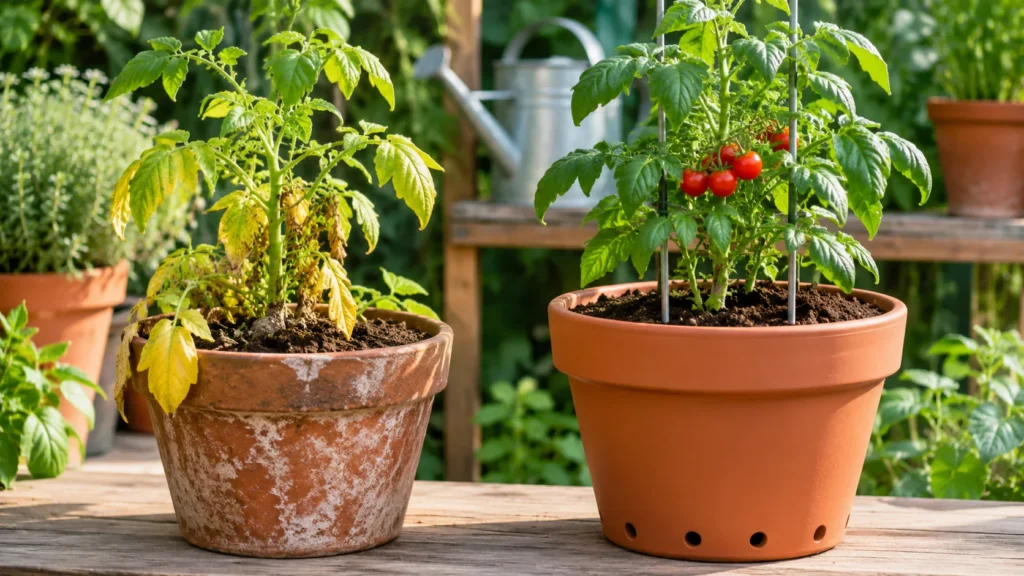
How to Start a Balcony Garden
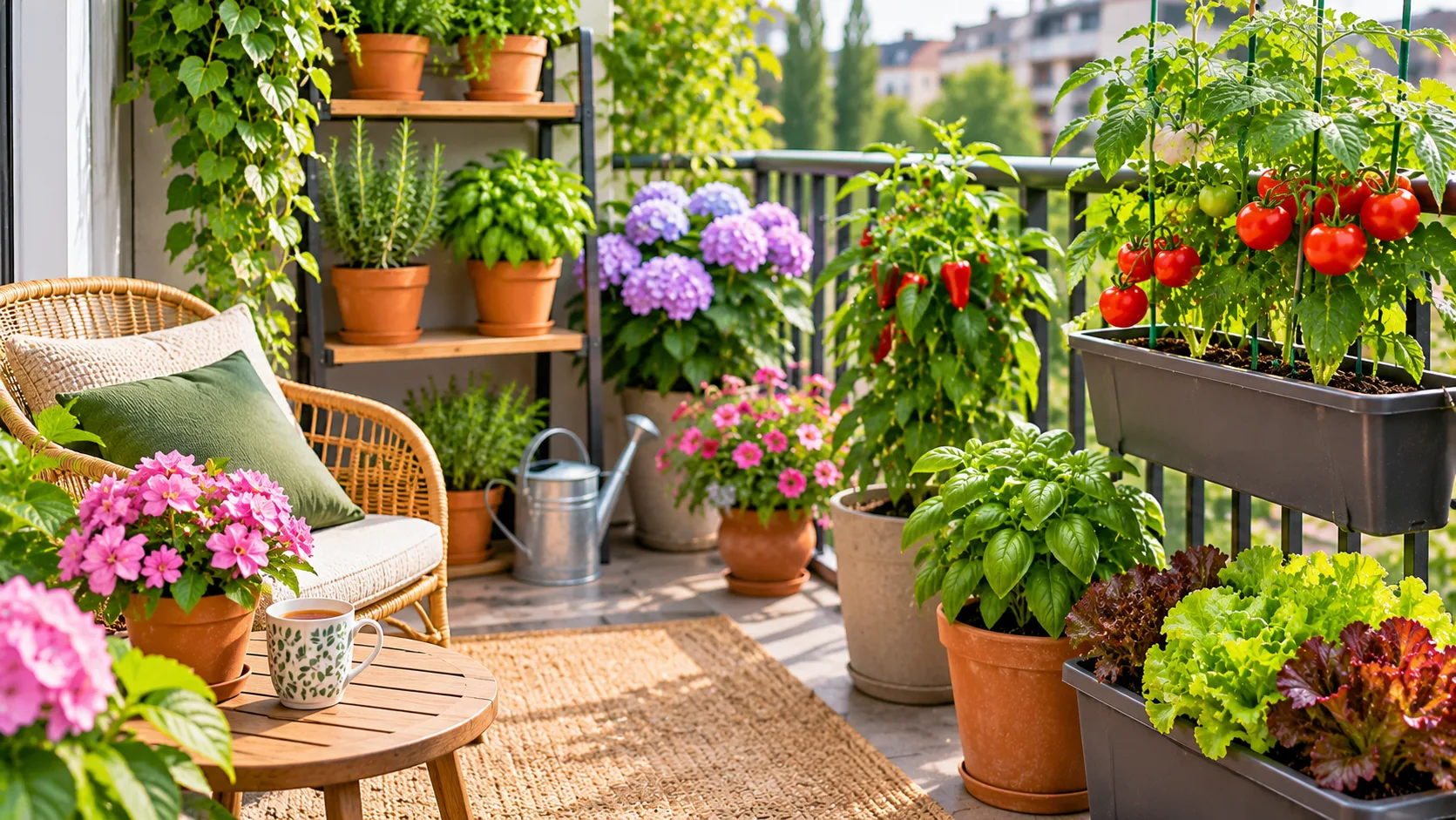
A balcony garden can turn a small outdoor space into a place to grow fresh herbs, colorful flowers, leafy vegetables, and even compact fruiting plants. You do not need a large backyard or traditional garden beds to enjoy growing your own plants. Once you know how much sun the balcony gets, choose vegetables that suit your containers.
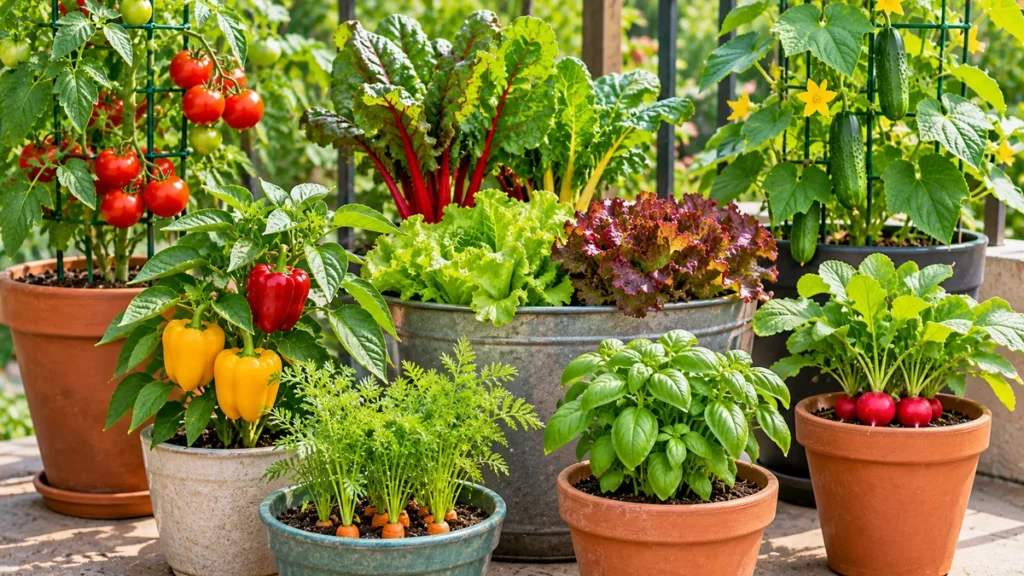
With the right containers and a little planning, even a modest apartment balcony can support a useful collection of plants. A sunny balcony might accommodate tomatoes, peppers, basil, and flowering plants, while a partially shaded balcony could be better suited to leafy greens and ornamentals adapted to lower light.
However, balcony gardening presents challenges that are different from growing plants at ground level. Containers have limited soil volume, strong winds can damage foliage or overturn pots, and walls or paving can create intense reflected heat. Watering also requires care because excess runoff may affect neighboring balconies or building surfaces.
Safety is another important consideration. Pots filled with wet growing medium can be heavy, and poorly secured railing planters or trellises may become dangerous in high winds. Before adding plants, it is essential to understand your building’s rules, the balcony’s structural limits, and how the space can be used safely.
The good news is that a balcony garden does not need to be expensive or complicated. Starting with a few appropriate plants, lightweight containers, quality potting mix, and a manageable watering routine is often the most practical approach.
This guide explains how to start a balcony garden step by step. You’ll learn how to evaluate sunlight and wind, choose safe containers, select beginner-friendly plants, arrange a compact growing area, manage watering and fertilizer, and maintain your balcony garden throughout the year.
Quick Answer: How Do You Start a Balcony Garden?
To start a balcony garden, first confirm that your building permits planters and that the balcony can safely support the proposed containers. Then observe how much sunlight the space receives, assess wind exposure, and choose plants that match those conditions.
Begin with a small number of stable containers with functional drainage. Fill them with lightweight, suitable potting mix rather than ordinary dense garden soil. Choose manageable plants such as herbs, leafy vegetables, compact flowers, or dwarf fruiting varieties appropriate for your climate.
Arrange the containers so they are secure, accessible for watering, and unlikely to create hazards or unwanted runoff. Check moisture regularly and adjust care according to the weather.
Here is a beginner-friendly starting plan:
- Check permissions: Review building and rental rules before installing planters or fixtures.
- Confirm safe loading: Account for the combined weight of containers, wet growing media, plants, water, and other items.
- Observe sunlight: Record direct sunlight during the growing season.
- Assess wind: Choose sheltered locations and stable containers.
- Choose your goal: Decide whether you want vegetables, herbs, flowers, greenery, or a mixture.
- Start small: Begin with three to five manageable pots if space and safety conditions allow.
- Use proper drainage: Choose suitable containers and manage excess irrigation water.
- Select the right potting mix: Use lightweight container media suited to the plant.
- Plant at the correct spacing: Allow enough room for mature roots and foliage.
- Check moisture regularly: Do not assume every container requires daily watering.
- Keep the space accessible: Preserve clear access, building drainage, and emergency routes.
- Expand gradually: Add more plants only after you understand the care required.
A successful balcony garden is not measured by the number of pots. A few healthy, well-positioned plants can make a small space attractive and productive without creating unnecessary maintenance or safety problems.
Gardening Tip: Before buying plants, spend several days observing your balcony. Note where direct sunlight falls, which corners become windy, and where water can be used safely. This simple planning step can prevent many common balcony gardening problems.
Balcony Garden Safety: What to Check Before You Begin
Balcony gardening should begin with safety rather than plant selection.
Unlike a ground-level garden, an elevated balcony has structural limits, exposed edges, drainage arrangements, and sometimes specific building regulations.
Check Building and Rental Rules
Apartment buildings, housing associations, and landlords may restrict balcony alterations.
Rules may cover hanging baskets, railing planters, climbing structures, permanent fixtures, irrigation systems, floor coverings, and changes to drainage.
Before installing anything, review applicable building rules and obtain permission when required.
Do not drill into the balcony floor, railing, or external walls without proper authorization and assurance that the work will not damage waterproofing or structural components.
Understand Balcony Weight Limits
Containers can be much heavier than they appear, particularly after watering.
The total load includes the container itself, saturated growing medium, plants, stored irrigation water, furniture, people, shelves, and other equipment.
A large pot filled with moist growing medium may weigh tens of kilograms, depending on its dimensions and materials.
There is no safe universal pot-weight allowance that applies to every balcony.
Ask the building manager or owner for verified loading information. If the proposed installation is substantial or structural capacity is uncertain, consult a qualified structural engineer before proceeding.
Do not assume that placing heavy planters near a wall automatically makes the load safe. Weight distribution must be assessed according to the actual structure.
Secure Pots and Planters Against Falling
Wind can overturn tall containers and dislodge unsecured objects.
Use stable pots with a relatively broad base and avoid balancing heavy planters on narrow ledges.
Railing planters should only be used when the building allows them and when a suitable mounting system is securely installed according to the manufacturer’s instructions.
Where possible, keep planters on the inside of the balcony rather than projecting above public areas or neighboring property.
Never rely on loose hooks, improvised rope, or unstable furniture to support containers at height.
Keep Emergency Routes and Drainage Clear
Do not block balcony doors, fire escape access, building drains, or other essential routes.
Leave enough room to move safely while carrying watering equipment or maintaining plants.
Do not cover drainage openings with potting mix, planters, decking, or stored materials.
Water accumulating against building walls or doors can cause damage, so drainage arrangements must remain functional.
Consider Children and Pets
Some ornamental plants are toxic if eaten, and certain containers or furniture may create climbing hazards near balcony railings.
Choose plants with household safety in mind and check species-specific toxicity information where relevant.
Avoid positioning large planters, benches, or shelving where children could use them to reach or climb over a railing.
Store fertilizers, sharp tools, and pest-control materials securely.
Important Caution: Do not install heavy raised beds, large water reservoirs, unsecured railing planters, or tall trellises on a balcony without confirming that the structure and mounting methods are suitable. Never compromise railings, waterproofing, fire exits, or building drainage to create garden space.
How to Assess Your Balcony Before Choosing Plants
Every balcony has its own growing conditions.
A sheltered ground-floor balcony may receive limited sunlight and little wind, while an upper-level balcony can experience intense afternoon sun, strong gusts, and rapid drying.
Measure the Usable Area
Begin by measuring the balcony’s approximate length and width.
Then consider how much space must remain clear for access, furniture, building fixtures, and everyday activities.
A balcony that measures several square meters may have much less usable planting area once its access requirements are considered.
Draw a simple plan showing doors, railings, shaded corners, exposed sections, and existing drainage points.
Observe the Balcony’s Microclimate
A microclimate is a local set of growing conditions that differs from the surrounding area.
On a balcony, nearby walls, glass, paving, railings, and building overhangs can influence temperature, sunlight, rain exposure, and wind.
For example, a sunny balcony enclosed by reflective walls may become much hotter than a garden a few floors below.
Conversely, a balcony sheltered by the floor above may remain dry even after significant rainfall.
Check Access to Water
Plan how you will water the containers before buying them.
A small watering can may be suitable for a few herbs and flowers. A larger collection may require several trips to refill it.
Do not install a hose connection, automatic irrigation system, or water-storage tank without checking building permissions and safe drainage requirements.
Choose a manageable number of containers for the water access available.
Consider the View and Everyday Use
A balcony garden should improve the space rather than making it difficult to use.
Position plants so they can be reached comfortably without leaning dangerously over railings.
Leave suitable access for cleaning, inspecting containers, and maintaining the building’s drainage system.
How Much Sunlight Does a Balcony Garden Need?
Sunlight determines which plants are likely to grow successfully on your balcony.
A location that supports lettuce, mint, or certain shade-tolerant ornamentals may provide too little light for productive tomatoes or peppers.
Full-Sun Balconies
A full-sun growing location generally receives six or more hours of direct sunlight per day.
Many warm-season fruiting vegetables, including tomatoes, peppers, and eggplants, grow best with approximately six to eight hours of direct sun or more.
Rosemary, thyme, lavender, and many sun-loving flowers also benefit from bright conditions.
However, intense reflected summer heat may stress plants even when they have enough light.
In hot climates, choose suitable varieties and consider temporary protection during extreme heat.
Partially Shaded Balconies
Balconies receiving approximately three to five hours of direct sunlight may support some leafy vegetables and herbs under suitable growing conditions.
Possible crops include leaf lettuce, spinach, Asian greens, parsley, chives, and selected mint varieties.
The exact results depend on sunlight intensity, temperature, crop selection, and season.
These crops may still grow more slowly than they would in a location with more suitable light.
Mostly Shaded Balconies
A balcony that receives little or no direct sunlight can still support greenery, but productive vegetable choices are more limited.
Depending on climate and brightness, some shade-tolerant ornamentals may be suitable.
Examples may include certain ferns, hostas, begonias, and other plants selected for lower-light conditions.
However, shade tolerance is not the same as the ability to grow in complete darkness.
Observe the actual light available and choose species accordingly.
Does Balcony Direction Matter?
Yes, but its effect depends on the hemisphere, season, and surrounding buildings.
In the Northern Hemisphere, south-facing balconies generally receive more direct sun than north-facing balconies.
In the Southern Hemisphere, the pattern is generally reversed.
East-facing balconies may receive gentler morning sunlight, while west-facing balconies can experience stronger afternoon heat.
Nearby buildings and overhangs can change these patterns substantially, so direct observation is more reliable than compass direction alone.
How to Measure Balcony Sunlight
- Choose a representative clear day during your intended growing season.
- Observe when direct sunlight first reaches the balcony.
- Record approximately how long it remains on the main growing area.
- Check whether walls or railings shade containers at different heights.
- Repeat observations if weather or seasonal sun angles change the result.
- Choose plants according to the actual exposure rather than assumptions.
Remember that a balcony can have more than one light environment. A sunny outer edge and a shaded corner may support completely different plants.
How to Protect Balcony Plants From Wind, Heat, and Rain
Weather exposure can be one of the biggest challenges in balcony gardening.
Higher floors, exposed building corners, and open railings may experience stronger gusts than sheltered ground-level gardens.
Wind Can Damage Plants and Dry Containers
Strong wind increases moisture loss from leaves and growing media.
It can also break tender stems, damage large leaves, dislodge plant supports, and overturn unstable pots.
Choose stable, low containers where possible and avoid exposing delicate seedlings directly to strong gusts.
Group suitable containers in sheltered locations, provided they remain stable and do not obstruct access or drainage.
Use Wind Screens Only When Safe
Suitable slatted or mesh screens can reduce wind speed while allowing some airflow through.
Solid barriers may create turbulence under certain wind conditions.
However, balcony screens can themselves catch wind like sails and may impose substantial forces on fixings or railings.
Only install screens when the building permits them and the structure and mounting method have been confirmed suitable for local wind exposure.
Watch for Reflected Heat
Concrete, brick, metal, glass, and dark surfaces can absorb or reflect heat.
As a result, a balcony may become significantly warmer than the surrounding air during sunny weather.
Roots inside dark containers may become especially warm.
Consider lighter-colored pots, suitable plant placement, and shade for heat-sensitive species when necessary.
Do not reduce sunlight so much that sun-loving vegetables can no longer grow properly.
Balconies May Receive Less Rain Than Expected
A roof or overhanging balcony above your growing area may prevent rainfall from reaching the containers.
Even after substantial rain, pots positioned near a sheltered wall may remain dry.
Check the actual growing medium rather than assuming rain has watered every plant.
Prepare for Storms and Extreme Weather
Before forecast strong winds, inspect containers and supports and secure or relocate vulnerable objects where this can be done safely.
Do not leave unsecured watering cans, tools, lightweight decorations, or empty pots where they could fall from the balcony.
Avoid going onto an exposed balcony during dangerous weather to rescue a plant.
Safety is more important than saving an individual container.
How to Plan a Practical Small Balcony Garden Layout
A good balcony layout makes the space attractive without creating excessive weight, clutter, or maintenance.
Think about how the garden will function before deciding how many plants to buy.
Start With a Simple Layout
For a small balcony, begin with a few stable containers positioned in approved, accessible locations.
Keep frequently harvested herbs within convenient reach and place larger vegetables where they have enough light and space.
Preserve a clear walkway and avoid filling every available surface.
Group Plants by Watering Needs
Plants with similar moisture preferences are easier to manage when positioned together.
For example, basil, parsley, and many leafy vegetables may need more consistent moisture than rosemary and thyme.
Grouping compatible plants can make watering more efficient and reduce the likelihood of overwatering drought-adapted herbs.
Use Different Heights Carefully
Different plant heights can create visual interest and make efficient use of a small space.
However, shelves, plant stands, and hanging arrangements must be stable and approved for the location.
Keep heavy containers low rather than placing them on tall, unsecured furniture.
Ensure that taller plants do not shade shorter crops that require strong sunlight.
Keep Maintenance Simple
Every container needs some attention.
A balcony filled with numerous tiny pots may require more frequent watering than a smaller number of appropriately sized containers.
Choose an arrangement that you can care for consistently.
Choosing the Best Containers for Balcony Gardening
The right container affects plant growth, watering frequency, stability, and overall balcony weight.
Choose pots according to mature root size, drainage requirements, exposure, and verified structural limits.
Lightweight Plastic Containers
Plastic pots are often practical for balcony gardening because they are relatively lightweight and available in many sizes.
They also tend to retain moisture longer than porous unglazed terracotta.
Choose sturdy outdoor-rated containers that can withstand sun exposure and temperature changes.
Remember that the growing medium and water may account for much more of the total weight than the empty container.
Terracotta Pots
Unglazed terracotta pots are attractive and porous, allowing moisture to evaporate through their walls.
They can be useful for certain herbs that prefer well-drained conditions.
However, terracotta is heavier than many plastic alternatives and may require more frequent watering during warm, windy weather.
Some terracotta pots can also crack during freezing conditions unless designed for outdoor winter use.
Grow Bags
Fabric grow bags are flexible containers that may be useful for certain vegetables and seasonal crops.
They can provide good aeration but may dry more quickly than nonporous containers.
Choose durable bags appropriate for the crop and keep them in stable positions where water can be managed safely.
Do not assume a grow bag is safe for a balcony simply because the empty bag is lightweight.
Window Boxes and Railing Planters
Long, narrow planters can provide room for compact flowers, small herbs, and leafy greens.
They may be useful where floor space is limited.
However, elevated planters require approved mounting systems designed for the filled load and local wind conditions.
Do not position planters where they could fall onto people, vehicles, or neighboring property.
Self-Watering Planters
Purpose-designed self-watering containers use a reservoir to supply water gradually to a suitable growing medium.
They can be useful for plants that need consistent moisture, particularly during hot weather.
However, they require correct setup, suitable potting mix, and regular monitoring.
They also contain stored water that adds weight, and their reservoirs must be managed according to the manufacturer’s instructions.
Choosing the Right Pot Size
Small herbs and leafy vegetables may grow in relatively compact containers, while mature tomatoes, peppers, and cucumbers require more root space.
For many peppers and standard tomatoes, University of Maryland Extension lists containers of at least approximately 19 liters (5 US gallons) as a starting point, with larger containers often supporting bigger plants.
Compact cherry tomato varieties may grow in smaller containers when specifically selected and managed for that purpose.
Do not buy a large container based on plant requirements alone if the balcony’s structural loading cannot safely accommodate the filled weight.
What Soil and Drainage Do Balcony Plants Need?
Balcony plants depend on the growing medium inside their containers for water, nutrients, support, and oxygen around roots.
Choosing suitable potting mix is more reliable than filling containers with ordinary garden soil.
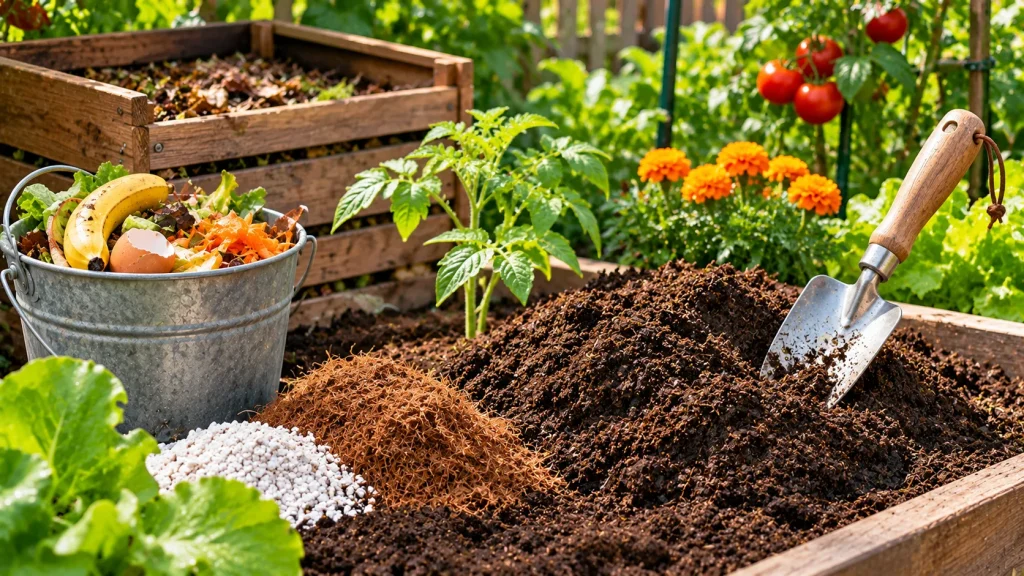
Choose a Lightweight Potting Mix
Commercial potting mixes are generally designed to provide a useful balance of moisture retention and drainage.
Ingredients may include coconut coir, composted bark, perlite, wood fiber, peat, or other materials.
Choose a mixture suited to the type of plant and the container.
For a balcony, consider both the growing medium’s quality and its weight after watering.
Avoid Using Dense Garden Soil Alone
Ordinary garden soil can become compacted in containers and may restrict oxygen and water movement around roots.
It is also often heavier than a suitable lightweight potting mix.
Use a product intended for container growing unless a specialist growing system calls for another material.
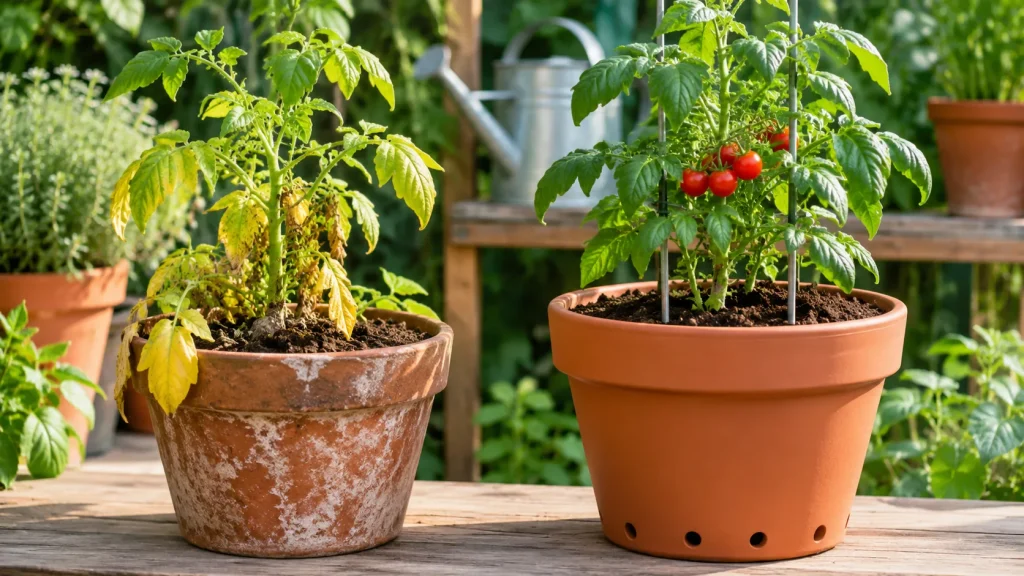
Make Sure Drainage Holes Work
Most ordinary plant containers need functional drainage openings.
These allow excess water to escape rather than accumulating around roots.
Check whether the pot base is blocked by debris or positioned directly against a surface that obstructs the holes.
Suitable stable pot feet may help keep openings clear, provided they are safe for the balcony surface and container weight.
Do Not Add a Thick Gravel Layer
Adding gravel, stones, or broken pottery beneath a layer of finer potting mix does not improve drainage in an ordinary container.
The coarse layer can raise the saturated zone within the growing medium and reduce the space available for roots.
Use suitable potting mix throughout the main growing volume instead.
Prevent Water From Dripping Onto Neighbors
Water draining from balcony containers can stain floors, damage building surfaces, or drip onto people and spaces below.
Use suitable collection trays or approved drainage-management systems.
However, do not allow ordinary pots to remain standing in accumulated water for extended periods.
Empty collected water safely and follow building requirements for disposing of runoff.
Best Plants to Grow on a Balcony for Beginners
The easiest balcony plants are those that match the available light, temperature, wind exposure, and container space.
Start with a few manageable plants rather than choosing large, demanding crops immediately.
1. Basil
Basil is a useful culinary herb for a warm, sunny balcony.
It prefers adequate moisture, well-draining potting mix, and protection from cold conditions.
Regular harvesting of healthy growing tips can encourage branching and provide fresh leaves for cooking.
2. Parsley and Chives
Parsley and chives are practical options for container gardening and can tolerate somewhat less direct sunlight than many fruiting vegetables.
They need suitable growing media, adequate moisture, and enough root space to develop.
Choose plants according to the actual balcony temperature and season.
3. Mint
Mint can grow vigorously in a suitable pot and often tolerates partial sun.
It prefers reasonably consistent moisture but should not remain permanently waterlogged.
Growing mint separately makes it easier to manage its spreading root system and prevents it from overwhelming smaller herbs.
4. Leaf Lettuce and Salad Greens
Leaf lettuce and selected salad greens can be useful crops for small balcony planters.
They often grow best during cool to mild weather and may tolerate partial sunlight.
In hot climates, choose suitable planting seasons and avoid exposing sensitive leafy vegetables to severe afternoon heat.
5. Radishes
Many radish varieties mature relatively quickly and can fit into smaller growing spaces.
They need suitable soil depth, spacing, and consistently appropriate moisture.
Radishes generally perform best in favorable cool-season conditions rather than extreme heat.
6. Compact Tomatoes
Compact or dwarf cherry tomatoes can be productive on balconies with strong sunlight and sufficient space.
Choose varieties specifically suited to containers and provide enough root volume, moisture, nutrients, and support.
Even compact tomato plants can become heavy and require appropriate staking.
Grow them only where containers and supports can be safely accommodated.
7. Peppers
Peppers can grow well in suitable containers on warm, sunny balconies.
They need enough root space, sunlight, and appropriate moisture during flowering and fruit development.
Choose compact varieties when space is limited, and protect plants from unsuitable cold temperatures and extreme heat.
8. Strawberries
Certain strawberry varieties are suitable for containers and hanging planters when grown under appropriate conditions.
They benefit from suitable sunlight, drainage, nutrient availability, and consistent moisture during fruit development.
Choose cultivars suited to the local climate and growing season.
9. Compact Flowering Plants
Seasonal flowers can add color and visual interest to a balcony garden.
Depending on climate and exposure, suitable choices may include petunias, marigolds, pelargoniums, and begonias.
Some are better suited to full sun, while others appreciate protection from intense afternoon heat.
Use plant-specific guidance and consider the safety of children and pets before choosing ornamentals.
10. Drought-Tolerant Ornamentals
For sunny and relatively dry balcony conditions, certain small succulents and drought-tolerant ornamental plants may be practical.
Examples include suitable houseleeks (Sempervivum) and other species selected for the local climate.
These plants still need sufficient light, appropriate containers, drainage, and protection from weather beyond their tolerance.
Balcony Plants Compared: Sunlight, Containers, and Care
Use the following table to shortlist plants for your balcony. The recommendations are general starting points and should be adjusted for local climate, plant variety, and available growing space.
| Plant | Light preference | Container consideration | Main care priority |
|---|---|---|---|
| Basil | Strong light and warmth | Medium pot with suitable drainage | Consistent moisture without waterlogging |
| Parsley | Bright light to suitable partial sun | Enough depth for root development | Moisture and suitable growing temperatures |
| Chives | Bright light | Compact to medium container | Regular moderate harvesting |
| Mint | Bright light or partial sun | Separate container with room to spread | Adequate moisture and growth control |
| Leaf lettuce | Partial sun to strong light, depending on season | Suitable shallow-to-medium planter | Cooler growing conditions and consistent moisture |
| Radishes | Suitable direct sunlight | Enough depth and spacing for roots | Proper thinning and timely harvest |
| Compact tomatoes | Usually 6–8 hours or more of direct sun | Large stable container appropriate for cultivar | Support, water, and nutrient management |
| Peppers | Usually 6–8 hours of direct sun | Adequate root volume and stability | Warmth and balanced moisture |
| Strawberries | Generally sunny conditions | Container suited to root size and cultivar | Moisture and fruit care |
| Petunias and pelargoniums | Generally strong light | Suitable flowering-plant pots | Watering and feeding during active growth |
| Selected begonias | Bright shade or suitable partial sun | Well-draining container | Avoiding intense unsuitable heat and saturation |
| Selected hardy succulents | Generally strong light | Freely draining medium and secure pot | Avoiding prolonged wet conditions |
How to Set Up a Balcony Garden: Step-by-Step Beginner Guide
Once you have checked safety, sunlight, and plant needs, you can begin creating your balcony garden.
The following process is intended for a small beginner setup using ordinary containers rather than permanent structural installations.
Step 1: Confirm Permissions and Safe Capacity
Check building rules and confirm that the proposed containers and their filled weights are appropriate for the balcony.
Do not proceed with heavy installations when structural capacity is unknown.
Step 2: Measure the Growing Area
Measure the usable space and identify locations that must remain clear.
Leave room for safe movement, watering, and maintenance.
Step 3: Record Sunlight and Wind Exposure
Observe direct sunlight and identify sheltered areas.
Use these observations to choose plants that can tolerate the actual growing conditions.
Step 4: Decide What You Want to Grow
Choose whether your main goal is fresh herbs, edible vegetables, flowering plants, or decorative greenery.
For a beginner, a small mixed collection may be easier to maintain than several large fruiting crops.
Step 5: Select Safe, Stable Containers
Choose suitable pots with drainage holes and enough growing space for each plant.
Avoid unstable tall containers, unsupported railing planters, and heavy installations beyond the balcony’s verified capacity.
Step 6: Prepare the Potting Mix
Use an appropriate lightweight growing medium for the plants selected.
Moisten very dry mixes when necessary and avoid packing them tightly.
Do not add a thick gravel layer beneath the growing medium.
Step 7: Plant Seeds or Healthy Transplants
Follow seed-packet instructions for sowing depth, spacing, and temperature.
When transplanting, place the plant at an appropriate depth for its species and firm the growing medium gently around the roots.
Leave enough room below the pot rim for watering.
Step 8: Position Containers Securely
Place plants where they receive suitable light without blocking essential access.
Keep heavier containers in approved stable positions and ensure tall plants have suitable support.
Do not place pots on narrow external ledges.
Step 9: Water Carefully
Water planted containers gently and allow excess moisture to drain.
Collect runoff as required so it does not drip onto neighboring areas or damage building surfaces.
Empty collected water when appropriate.
Step 10: Monitor Moisture and Weather
Check the growing medium regularly, particularly during warm or windy weather.
Adjust watering to actual plant needs rather than automatically watering every pot every day.
Step 11: Feed and Harvest When Appropriate
Review the nutrient content of the potting mix and apply suitable fertilizer only when necessary.
Harvest herbs and vegetables at the appropriate stage while leaving enough healthy foliage for continued growth.
Step 12: Review Your Garden Before Expanding
After several weeks, assess how well the plants are growing and whether watering and maintenance fit your routine.
If the setup is manageable and structural capacity permits, add more suitable plants gradually.
Do not increase the number of containers simply because empty floor space remains.
How Often Should You Water a Balcony Garden?
Balcony plants can dry faster than plants growing in garden beds, particularly in small containers exposed to wind, sun, and reflected heat.
However, watering frequency varies considerably according to plant type, container size, potting medium, temperature, and rainfall.
Check Soil Moisture Instead of Following a Fixed Schedule
Use a finger or suitable probe to check moisture below the surface.
For many containers, a finger test a few centimeters beneath the surface is a useful initial check.
Larger pots may require a deeper check because the surface can dry while the lower root zone remains moist.
Water when moisture becomes insufficient for the particular plant.
Why Small Pots Dry So Quickly
Small containers hold a limited amount of growing medium and therefore have less stored water available to roots.
Sunlight, wind, and plant growth can use that moisture quickly.
Appropriately larger containers may reduce rapid moisture fluctuations, although their total weight must remain within verified balcony limits.
Water Slowly and Thoroughly
When watering is needed, apply water slowly enough for the potting medium to absorb it.
For ordinary containers, excess water should be able to leave through drainage holes.
Check that the central rootball is adequately wetted rather than assuming water running out of the bottom always means the whole mix has absorbed moisture.
Managing Runoff on a Balcony
Place suitable trays under containers when required to protect the surface and prevent unwanted dripping.
Empty accumulated water safely after irrigation.
Do not leave ordinary pots submerged in water for prolonged periods, as this can restrict oxygen around roots.
Use drainage-management practices approved for the building rather than directing water over the balcony edge.
Watering During Heatwaves
During hot, dry, windy weather, some balcony plants may need moisture checks daily or more often.
However, checking is not the same as watering.
Plants in larger, more moisture-retentive containers may remain adequately moist while smaller pots dry.
Morning watering is generally practical because temperatures are often cooler and plants have access to moisture before the hottest part of the day.
Can Mulch Help Balcony Containers?
A modest layer of suitable organic mulch can help reduce evaporation from the growing medium.
However, loose material may blow away from exposed balconies.
Choose suitable materials, secure them where practical, and keep mulch away from sensitive plant crowns.
Do not add unnecessarily heavy decorative stones simply to cover the soil, especially when weight is a concern.
Fertilizer and Nutrient Management for Balcony Plants
Plants growing in containers have access to a limited volume of nutrients.
Fast-growing vegetables and flowering plants may need additional feeding when the original nutrient supply becomes insufficient.
Check the Potting Mix Label First
Some commercial mixes contain starter fertilizer or controlled-release nutrients.
Adding another fertilizer immediately may not be necessary.
Read product instructions before selecting a feeding schedule.
Feed According to Plant Needs
Tomatoes, peppers, and some other fruiting crops may require supplementary nutrients during active growth and production.
Slower-growing ornamental plants and drought-tolerant herbs may need less fertilizer.
Select a suitable product and apply only the recommended amount.
Avoid Overfertilizing
Excess nutrients can cause salt accumulation, root injury, and unbalanced growth.
Large amounts of nitrogen can encourage leafy growth without necessarily improving fruit production.
Do not combine several fertilizers simply because the plants are growing slowly.
Check light, root space, moisture, temperature, and possible pests before assuming fertilizer is the solution.
Use Fertilizer Safely in Small Spaces
Store fertilizers in their original labeled containers, away from children, pets, and food preparation areas.
Prevent fertilizer spills and avoid washing excess product into building drains or neighboring spaces.
For edible crops, follow product instructions for the intended plant and growing system.
How to Use Vertical Gardening on a Small Balcony
Vertical gardening can help use limited space efficiently, but balcony safety must remain the first consideration.
The goal is to arrange suitable plants at different heights without relying on unsafe attachments or creating a falling-object hazard.
Freestanding Plant Shelves
A compact plant stand can organize small pots and make a balcony garden easier to maintain.
However, exposed balconies may experience wind strong enough to overturn tall shelving.
Choose sturdy structures, follow manufacturer load limits, and use only approved methods of securing them.
Keep heavy items low and do not place shelving close to railings where it could create a climbing hazard.
Trellises for Compact Climbers
Selected climbing beans, compact cucumbers, and suitable ornamental vines may grow vertically on supports.
However, mature foliage can catch wind and place additional force on the support.
Use a trellis only when its base and fixings are suitable for the weight and local wind exposure.
Do not attach it to railings or building surfaces without appropriate permission and structural assessment.
Wall-Mounted Planters
Wall-mounted systems may provide growing space for compact plants, but they require secure attachment to suitable structural surfaces.
They can also affect waterproofing and exterior finishes.
Use them only when the building permits the installation and the mounting system is appropriate for the full wet load.
Choose Compact Plants for Vertical Displays
Small herbs, compact flowering plants, and other relatively lightweight species may be easier to accommodate than large, vigorous crops.
Ensure the plants receive enough light and can be reached safely for watering and harvesting.
A vertical garden that is difficult to maintain may create more problems than an equivalent arrangement of accessible floor-level pots.
How to Maintain a Balcony Garden Through the Seasons
Balcony gardening conditions can change substantially throughout the year.
Sunlight, temperature, wind, rainfall, and plant growth all influence maintenance needs.
Spring: Prepare and Plant
In climates with a distinct spring season, this is often a good period to begin planting suitable herbs, flowers, and vegetables.
- Review building permissions and inspect any existing garden equipment.
- Check container drainage and structural stability.
- Refresh deteriorated potting media where needed.
- Choose suitable plants for local temperatures and light.
- Harden off indoor-grown seedlings before permanent outdoor placement.
- Wait until frost risk has passed before moving cold-sensitive crops outside.
- Check safe watering and runoff arrangements.
Summer: Manage Heat, Wind, and Water
Warm weather can increase plant water use and cause growing media to dry rapidly.
- Check moisture frequently in exposed containers.
- Review whether reflected heat is affecting sensitive plants.
- Keep supports and containers stable.
- Harvest herbs and vegetables regularly where appropriate.
- Inspect for pests and unusual leaf symptoms.
- Provide suitable temporary heat protection when necessary.
- Keep drainage and water-collection systems functional.
Autumn: Adjust Care to Slower Growth
As days shorten and temperatures decline, many plants require less water and fertilizer.
- Reduce watering when growing media remain moist longer.
- Remove finished seasonal crops.
- Consider suitable cool-season greens where the climate allows.
- Inspect plants for overcrowded roots and deteriorating media.
- Secure loose equipment before periods of strong wind.
- Prepare tender perennials for colder conditions if necessary.
Winter: Protect Containers and Roots
In cold climates, container roots may be more vulnerable to freezing than roots growing in the ground.
Some plants need additional protection or relocation to a suitable sheltered location.
- Choose containers appropriate for freezing temperatures.
- Protect tender plants according to species requirements.
- Check drainage during extended wet periods.
- Monitor evergreen plants for moisture needs during suitable nonfreezing conditions.
- Avoid leaving unsecured objects exposed to winter storms.
- Plan suitable crops for the following growing season.
In tropical, subtropical, or monsoon climates, follow the local cool, hot, wet, and dry seasons rather than using a temperate seasonal calendar without adjustment.
12 Common Balcony Gardening Mistakes to Avoid
1. Ignoring Building Restrictions
Some balcony installations require permission or are prohibited by building rules.
Better approach: Confirm permitted uses and fixing methods before buying or installing equipment.
2. Overloading the Balcony
The combined weight of saturated growing media, containers, water, furniture, and people may be substantial.
Better approach: Obtain reliable structural loading information and professional advice where required.
3. Using Unsecured Railing Planters
Unstable containers can fall in strong winds and create serious hazards.
Better approach: Use approved, properly rated mounting systems or keep stable pots in safe floor-level positions.
4. Choosing Plants Without Checking Sunlight
Sun-loving fruiting vegetables may grow poorly on a heavily shaded balcony.
Better approach: Observe actual sunlight before selecting species or varieties.
5. Ignoring Strong Wind
Wind can cause rapid drying, broken stems, and overturned pots.
Better approach: Use stable containers and suitable sheltered positions, with only approved wind protection.
6. Buying Too Many Plants at Once
A crowded balcony can become difficult to maintain and may create access and weight concerns.
Better approach: Begin with a few manageable containers and expand only when practical and safe.
7. Using Pots Without Drainage
Trapped irrigation water can leave roots saturated and cause plant decline.
Better approach: Use functional drainage holes and appropriate runoff collection.
8. Watering Every Pot on the Same Schedule
Different plants and containers dry at different rates.
Better approach: Check root-zone moisture and water according to the species and weather.
9. Letting Water Drip Onto Neighbors
Runoff can create inconvenience, stains, building damage, and potential disputes.
Better approach: Follow approved drainage practices and manage excess water safely.
10. Using Unsuitable Heavy Garden Soil
Ordinary garden soil can become compacted in pots and may add unnecessary weight.
Better approach: Use suitable lightweight potting media and monitor moisture.
11. Forgetting Mature Plant Size
A small tomato seedling or climbing plant may eventually become much larger and heavier than expected.
Better approach: Plan for mature growth, support requirements, and full container weight from the beginning.
12. Neglecting Regular Maintenance
Balcony plants still need attention to watering, feeding, pests, harvesting, and seasonal changes.
Better approach: Establish a manageable inspection routine and keep the growing area accessible.
Balcony Garden Problems and Solutions: Troubleshooting Table
Use this table to identify possible causes when balcony plants are not growing as expected. Symptoms are clues rather than confirmed diagnoses.
| What you notice | Possible reason | What to check first |
|---|---|---|
| Containers dry very quickly | Small pots, strong wind, intense heat, or fast-draining mix | Pot volume, sunlight, wind exposure, and moisture |
| Plants wilt even though the mix is wet | Possible waterlogging or damaged roots | Drainage holes, root-zone moisture, and trapped water |
| Leaves turn yellow | Moisture problems, insufficient light, nutrient limitations, or pests | Growing medium, light, and plant condition |
| Tomatoes produce little fruit | Low sunlight, temperature stress, inadequate nutrition, or other growing conditions | Sun exposure, variety, temperatures, and feeding history |
| Leaf edges become dry or scorched | Wind, drought, reflected heat, or salt stress | Exposure, moisture, fertilizer, and pot temperature |
| Containers repeatedly fall over | Unstable pots or excessive wind exposure | Safety, stability, and approved mounting arrangements |
| Water drips onto the balcony below | Uncontrolled drainage or overflowing collection trays | Runoff management and building requirements |
| Herbs grow tall and weak | Insufficient sunlight or overcrowding | Light duration and plant spacing |
| Growing medium stays wet for days | Oversized pot, dense mix, low light, or poor drainage | Root volume, mix condition, and drainage outlets |
| Small insects appear around plants | Aphids, fungus gnats, or other pests | Actual pest identification and growing conditions |
| Plants are damaged after moving outside | Sudden changes in sun, temperature, or wind | Whether plants were hardened off appropriately |
| Balcony plants stop growing in winter | Lower light, cooler temperatures, or natural seasonal slowdown | Species requirements and seasonal growing conditions |
Frequently Asked Questions About Starting a Balcony Garden
Can I start a garden on a small apartment balcony?
Yes, provided gardening is permitted by the building and the balcony can safely support the proposed installation. Start with a few suitable containers, choose plants that match the sunlight and wind exposure, and preserve safe access and drainage.
What are the easiest plants for balcony gardening?
Depending on light and climate, beginner-friendly choices may include basil, parsley, chives, mint, leaf lettuce, radishes, and compact flowering plants. Sun-loving balconies may also support dwarf tomatoes, peppers, and strawberries when enough root space and safe support are available.
How much sunlight does a balcony vegetable garden need?
Many warm-season fruiting vegetables grow best with approximately six to eight hours of direct sunlight per day. Some cool-season leafy vegetables can grow with around three to five hours under suitable conditions. Actual needs depend on the crop, season, and sunlight intensity.
Can I grow vegetables on a shaded balcony?
Some leafy vegetables and herbs may grow with partial sunlight, particularly during favorable temperatures. Deep shade substantially limits productive edible crops. When little direct sunlight is available, shade-tolerant ornamentals may be a more practical choice.
How many pots should I start with?
Three to five manageable containers can be a useful beginner starting point when space, structural loading, and building rules permit. The exact number is less important than ensuring each pot can be safely positioned, watered, and maintained.
Are railing planters safe for balconies?
Only when the building permits them and they are installed using an appropriate, secure mounting system rated for the expected filled load and wind exposure. Unsecured or improvised railing planters can create serious falling-object hazards.
What soil should I use for balcony plants?
A suitable lightweight container potting mix is generally more practical than ordinary garden soil. Choose a mixture that balances moisture retention and drainage for the plant, and consider its weight after watering.
How often should I water balcony plants?
There is no fixed schedule. Check the growing medium and plant requirements. Small pots exposed to strong sun and wind may need frequent watering during summer, while sheltered containers may remain moist longer. Avoid watering automatically when the root zone is already wet.
How can I stop water dripping onto the balcony below?
Use appropriate collection trays or an approved runoff-management arrangement. Water carefully, monitor collected water, and empty trays when required without directing runoff over the balcony edge. Follow the building’s drainage rules.
Can I grow tomatoes and peppers on a balcony?
Yes, when the balcony provides sufficient sunlight, appropriate temperatures, adequate container volume, and safe support. Compact cultivars can be particularly useful. However, large pots and mature plants are heavy, so the filled load must be suitable for the balcony.
How can I protect balcony plants from strong winds?
Choose stable containers, sheltered positions, and plants suited to the exposure. Approved and properly secured wind-filtering screens may help in some locations. Avoid unsecured tall plants, lightweight objects, or improvised attachments that could become dangerous in a storm.
Can a balcony garden grow all year?
Some balcony gardens can provide greenery or seasonal harvests throughout much of the year, depending on climate, light, and plant selection. Warm-season vegetables may need replacing with cool-season crops, and plants in cold climates may require winter protection. Plan around local weather rather than expecting the same crops to perform year-round.
Final Thoughts
Starting a balcony garden is an excellent way to enjoy plants, flowers, and homegrown herbs or vegetables without a traditional backyard.
However, the most successful balcony gardens begin with careful planning. Confirm building permissions, understand structural limitations, and ensure that containers, supports, and irrigation arrangements are safe for an elevated space.
Next, observe sunlight, wind, and temperature conditions before choosing plants. A bright, sunny balcony may support fruiting vegetables, while a partially shaded area may be better suited to leafy crops and selected ornamentals.
Use appropriate containers with functional drainage holes, lightweight potting mix, and enough root space for the plants you select. Check soil moisture regularly and avoid unnecessary watering or fertilizer applications.
Keep the layout manageable. A few stable, accessible pots are often easier to care for than a crowded collection that blocks pathways or makes watering difficult.
As your experience grows, you can refine your plant selection, try compact vegetables, introduce suitable seasonal flowers, or explore safe vertical-growing arrangements when your building permits them.
With suitable planning, consistent care, and attention to safety, even a small balcony can become an enjoyable and productive garden.
For more growing ideas, explore Gardenivo’s Small-Space Gardening guides. You can also visit Vegetable Gardening for edible crops, Soil & Watering for container moisture and drainage, and Seasonal Gardening for managing plants through changing weather.
Further Reading and Horticultural References
- Royal Horticultural Society: Roof Gardens and Balconies — balcony conditions, building restrictions, wind, sunlight, plant selection, and maintenance.
- Royal Horticultural Society: Greening Balconies and Roof Gardens — design inspiration, wind protection, stable planters, and suitable ornamental plants.
- Royal Horticultural Society: Growing Plants in Containers — choosing containers, drainage, growing media, and care.
- Royal Horticultural Society: How to Water Containers — moisture testing, irrigation, and efficient watering.
- Royal Horticultural Society: How to Plant Up a Container — planting preparation, positioning, and suitable growing media.
- Royal Horticultural Society: Container Maintenance — watering, feeding, repotting, and seasonal care.
- University of Maryland Extension: Growing Vegetables in Containers — balcony placement, sunlight requirements, container weight, and beginner crop choices.
- University of Maryland Extension: Growing Vegetables in Containers and Salad Tables — crop selection, container volumes, drainage, potting media, and irrigation.
- University of Maryland Extension: Growing Media for Containers — growing-medium structure, aeration, and reasons to avoid ordinary garden soil in pots.
- University of Maryland Extension: Types of Containers for Growing Vegetables — choosing container materials, drainage, double potting, and temperature effects.
- University of Illinois Extension: Container Size — pot stability, wind exposure, root space, and structural weight considerations on balconies.
- University of Maryland Extension: Planting Vegetables in Containers — preparing potting mix, drainage, seed spacing, and crop support.