How to Improve Drainage in Plant Pots

Good drainage is essential for healthy plants growing in pots. When excess water cannot leave a container, the potting mix may remain saturated for too long, restricting oxygen around the roots and creating conditions that can lead to root damage. If the outlet is clear but water still drains slowly, check whether your potting mix suits the plant.
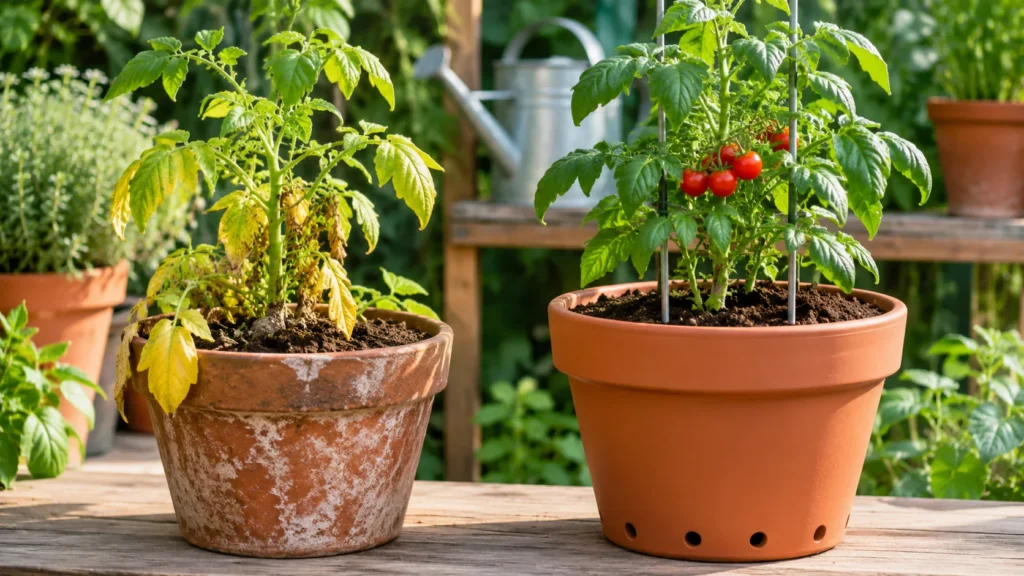
You might notice yellow leaves, slow growth, a persistently wet potting mix, or a plant that wilts even though you have watered it regularly. These symptoms can be confusing, especially when the plant appears to need more water but the real problem is that its roots are staying too wet.
Improving drainage does not necessarily mean using a different pot or adding more materials. Sometimes the solution is as simple as clearing a blocked drainage hole, emptying a decorative outer pot, or changing your watering routine.
In other situations, the plant may need a more suitable growing medium. A mixture that works well for leafy vegetables may remain too wet for certain succulents, while an extremely coarse mix designed for orchids may dry too quickly for other houseplants.
This guide explains how drainage works in containers, why gravel at the bottom of a pot is not an effective solution, and how to choose the right potting mix and container. You’ll also learn how to recognize waterlogging, rescue an overwatered plant, and prevent drainage problems from returning.
Quick Answer: What Is the Best Way to Improve Drainage in Plant Pots?
The best way to improve drainage in an ordinary plant pot is to use a container with functional drainage holes, fill it with a suitable potting mix, and water according to the plant’s actual moisture needs.
If a pot drains poorly, first check whether the holes are blocked or the container is sitting in accumulated water. If drainage remains slow, examine whether the potting mix has become excessively compacted or is inappropriate for the plant.
Some mixtures can be made more open by adding suitable ingredients such as horticultural perlite, pumice, or appropriately sized bark. However, these materials should be mixed through the growing medium rather than placed in a separate layer at the bottom.
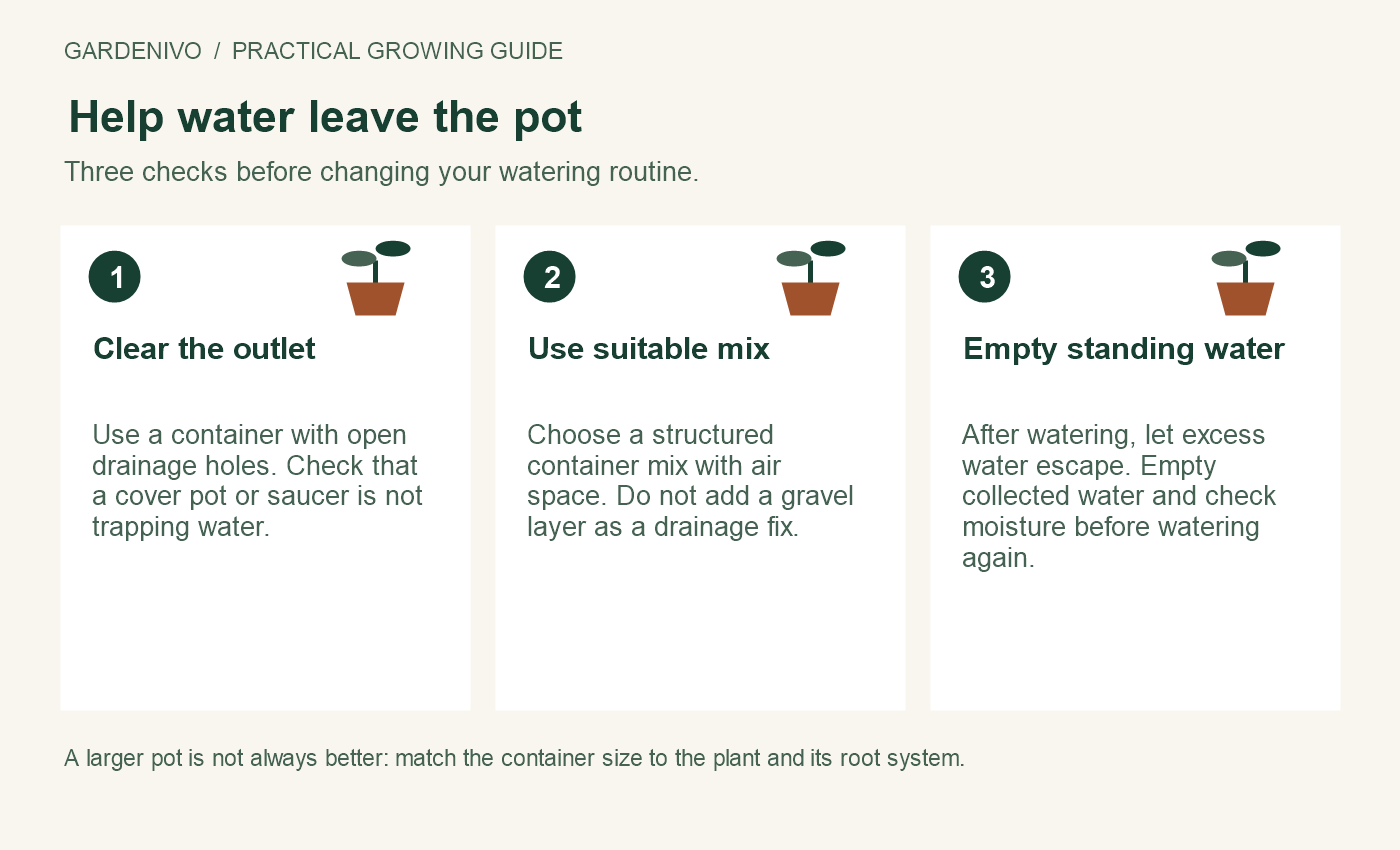
Follow these practical steps:
- Check that the pot has enough functional drainage openings for its size and design.
- Remove any blockage caused by soil, roots, or debris.
- Keep drainage holes from being sealed against a flat surface.
- Empty water from saucers and decorative outer containers when appropriate.
- Use a container-formulated potting mix rather than ordinary dense garden soil.
- Choose a mix that suits the roots and moisture requirements of the plant.
- Avoid placing a gravel or stone layer beneath the potting mix.
- Use a suitably sized container rather than placing a small root system into an unnecessarily large pot.
- Check moisture below the surface before watering again.
- Repot into fresh, suitable growing medium if the existing mix has deteriorated or remains persistently saturated.
These recommendations apply to most ordinary houseplant, herb, flower, and vegetable containers. Specialized systems such as hydroponic growing, water gardens, and properly designed self-watering planters operate differently and require their own instructions.
Gardening Tip: Before adding anything to a poorly draining pot, lift it out of its decorative container and inspect the bottom. Blocked drainage holes or water trapped in an outer pot may be the problem, even when the potting mix itself is suitable.
Why Is Good Drainage Important for Potted Plants?
Plant roots require both water and oxygen to function properly.
In a suitable growing medium, some pore spaces hold moisture while others contain air. Roots use available water and nutrients while obtaining the oxygen needed for normal respiration.
When a growing medium remains saturated, water fills many of the spaces that would normally contain air. Oxygen movement becomes restricted, and the roots may struggle to function.
Healthy Roots Need Oxygen
Roots use oxygen for respiration, which supports the energy-dependent processes involved in growth and nutrient uptake.
If the root zone remains waterlogged for an extended period, roots may become damaged or die.
This is why more water does not always help a wilting plant. Damaged roots may fail to absorb water effectively even when the surrounding mix is wet.
Drainage Helps Prevent Prolonged Saturation
Functional drainage holes allow excess water to leave a container after irrigation or rainfall.
However, even a pot with drainage holes retains some water within the growing medium. That is normal and helps provide moisture between waterings.
The aim is not to remove every drop of water, but to create a suitable balance between moisture retention and aeration.
Drainage Can Help Manage Fertilizer Salts
Water moving through a container can carry away some dissolved salts that accumulate from irrigation water and fertilizers.
Containers without an appropriate outlet may accumulate salts over time, particularly when concentrated fertilizers are used.
Good drainage does not eliminate the need for careful feeding, but it supports suitable moisture and salt management.
7 Signs Your Plant Pot Has Poor Drainage
Several symptoms may indicate that excess water is not leaving the container or that the growing medium remains too wet.
1. Potting Mix Stays Wet for Too Long
If the mix remains saturated for an unusually long time after watering, it may be too moisture-retentive, compacted, or poorly matched to the plant’s growing conditions.
Low light, cool temperatures, and a small root system can also cause a pot to dry slowly.
Check moisture below the surface rather than relying only on the top layer.
2. Water Collects in the Outer Pot or Saucer
Decorative planters sometimes conceal water that has drained from an inner nursery pot.
If the inner pot sits in this water for prolonged periods, the growing medium may remain excessively wet.
Lift the inner pot out and empty accumulated water when appropriate.
3. Leaves Turn Yellow
Yellowing leaves can be associated with poor root function caused by prolonged waterlogging.
However, yellow leaves can also result from insufficient nutrients, natural aging, low light, drought, pests, and other causes.
Examine the growing medium and roots before concluding that drainage is responsible.
4. The Plant Wilts Despite Wet Soil
Leaves may droop even when the potting medium contains abundant water.
Waterlogged or damaged roots may not function properly, leaving the plant unable to maintain normal leaf firmness.
Do not automatically add more water. Check root-zone moisture first.
5. Roots Become Dark, Soft, or Damaged
Healthy roots vary in color and texture depending on the species, but severely damaged roots may become soft, decayed, or easily broken apart.
Persistent saturation may contribute to root damage or create conditions favorable to certain root diseases.
Do not diagnose a particular root pathogen based on color alone. If serious decline continues, consider appropriate plant-health advice.
6. The Growing Medium Smells Unpleasant
An unusually sour or rotten smell may indicate that organic materials are decomposing under poorly aerated conditions.
However, potting mixes naturally have different earthy odors, so smell alone is not a reliable diagnosis.
Check drainage and the condition of the roots if the odor is accompanied by persistently wet soil and declining growth.
7. Water Takes a Long Time to Leave the Container
If water collects on top of the mix and remains there, the medium may be overly dense, compacted, or poorly permeable.
A blocked drainage hole can also prevent water from leaving the pot.
Remember that a completely dry, water-repellent mix can create a different problem: water may run down the sides of the pot without properly wetting the center.
Check the actual moisture throughout the rootball before deciding what needs to change.
What Causes Poor Drainage in Plant Pots?
Poor drainage may result from the container, the growing medium, watering practices, or a combination of these factors.
Missing or Blocked Drainage Holes
Some decorative planters have no openings at the bottom.
Others have holes that become obstructed by roots, compacted potting mix, or debris.
When water cannot escape, the growing medium may remain saturated longer than intended.
Dense or Unsuitable Growing Medium
Ordinary garden soil can become dense inside containers and may restrict drainage and aeration.
Some commercial mixes can also retain more moisture than a particular plant needs.
Choose a growing medium formulated for container use and suited to the root structure of the plant.
Old or Decomposed Potting Mix
Organic ingredients gradually break down over time.
As the mix deteriorates, its particles may become finer and settle more closely together, reducing air spaces.
When the medium has substantially lost its original structure, repotting into suitable fresh material may be beneficial.
An Oversized Container
A small plant placed into a much larger pot may be surrounded by a substantial volume of growing medium that contains few active roots.
This unused medium can remain wet for longer, especially indoors under low-light conditions.
Choose a pot size appropriate for the plant’s root system rather than assuming that a very large container will always improve growth.
Overwatering or Inappropriate Watering Frequency
Even a properly designed container can remain too wet if water is applied more frequently than the plant needs.
Water demand changes with temperature, light, season, plant growth, and container size.
Check moisture before watering instead of following one fixed schedule for every plant.
Poor Placement or Blocked Pot Bases
An outdoor pot positioned directly against a flat surface may have drainage openings that are partly obstructed.
Heavy planters may also sit in puddles after rainfall.
Where necessary, suitable pot feet can help keep drainage openings clear and provide space for water to move away.
How to Check and Improve Drainage Holes in Plant Pots
Functional drainage holes are an essential feature of most ordinary plant containers.
They provide a route for excess irrigation water to leave the pot and help prevent prolonged saturation.
Step 1: Inspect the Bottom of the Pot
Check whether the pot has drainage holes and whether they are open.
Some plastic nursery containers contain removable plugs that must be opened before ordinary use.
If the pot is inside a decorative outer container, remove it to inspect the bottom.
Step 2: Remove Obstructions Carefully
If potting mix or debris blocks a drainage opening, remove it carefully without damaging major roots.
A small, suitable hand tool may help clear accessible material.
If roots have densely filled the bottom of the pot, the plant may need repotting rather than repeated attempts to clear openings around the root system.
Step 3: Add Suitable Drainage Openings if Necessary
Some plastic containers can be modified to provide appropriate drainage openings.
However, the correct tools and method depend on the material and the manufacturer’s instructions.
Drilling ceramic or glazed containers can cause cracking or injury. Wear appropriate protection, secure the empty container properly, and seek professional assistance where necessary.
Do not attempt to drill a pot while holding it in your hands or while a plant is inside unless the method has been specifically assessed as safe.
Step 4: Keep the Pot Elevated if Necessary
Outdoor planters positioned on flat paving may benefit from suitable pot feet or another stable support.
This helps keep openings from being sealed against the ground and allows water to escape more freely.
Choose supports that safely carry the weight of the filled container.
What if the Decorative Pot Has No Drainage Holes?
One practical solution is double potting.
Grow the plant inside a suitable nursery pot with drainage holes and place that pot inside the decorative container.
When watering, remove the inner pot or make sure accumulated water can be emptied afterward.
Do not allow the inner pot to remain standing in trapped water for long periods.
Why Putting Gravel at the Bottom of a Pot Does Not Improve Drainage
One of the most common gardening myths is that adding gravel, stones, pebbles, or broken pottery beneath the potting mix improves drainage.
Although this may sound logical, it does not work as many gardeners expect.
What Happens to Water Inside Potting Mix?
Water movement through a container is influenced by gravity and the capillary properties of the growing medium.
After watering, some water remains held in the finer pore spaces of the potting mix.
This can create a relatively wet or saturated zone near the bottom of a container, sometimes described as a perched water table.
A Gravel Layer Can Raise the Wet Zone
When fine-textured growing medium sits above a coarse gravel layer, water may remain in the finer mix immediately above the boundary.
Instead of making the potting mix drain more effectively, the gravel layer can reduce the usable depth of growing medium and raise the saturated zone closer to the roots.
This is why horticultural extension publications generally discourage gravel layers as a drainage solution for ordinary potted plants.
What Should You Use Instead?
Use an appropriate potting mix through the main growing volume of the pot.
If a plant needs a more open medium, suitable coarse ingredients can be mixed throughout rather than placed in a separate layer.
Keep drainage holes functional and adjust the watering routine to the plant’s needs.
Can You Cover a Large Drainage Hole?
Yes, when necessary to prevent excessive loss of growing medium.
A small piece of suitable mesh or a carefully placed piece of broken terracotta may retain potting mix over an unusually large opening without blocking water movement.
This is different from filling the bottom several centimeters of a pot with stones.
Small ordinary drainage holes often do not require any covering at all.
Good to Know: Gravel can be useful in some decorative top-dressings or specialized planting systems, but a thick gravel layer beneath ordinary potting mix is not a reliable drainage solution. The important factors are the growing medium’s structure, functional drainage openings, and proper watering.
How to Choose a Better-Draining Potting Mix
The growing medium has a major influence on how much water a pot retains and how much oxygen remains available around plant roots.
Choose a mixture suited to the plant rather than assuming every plant benefits from the fastest possible drainage.
Start With a Quality Container Potting Mix
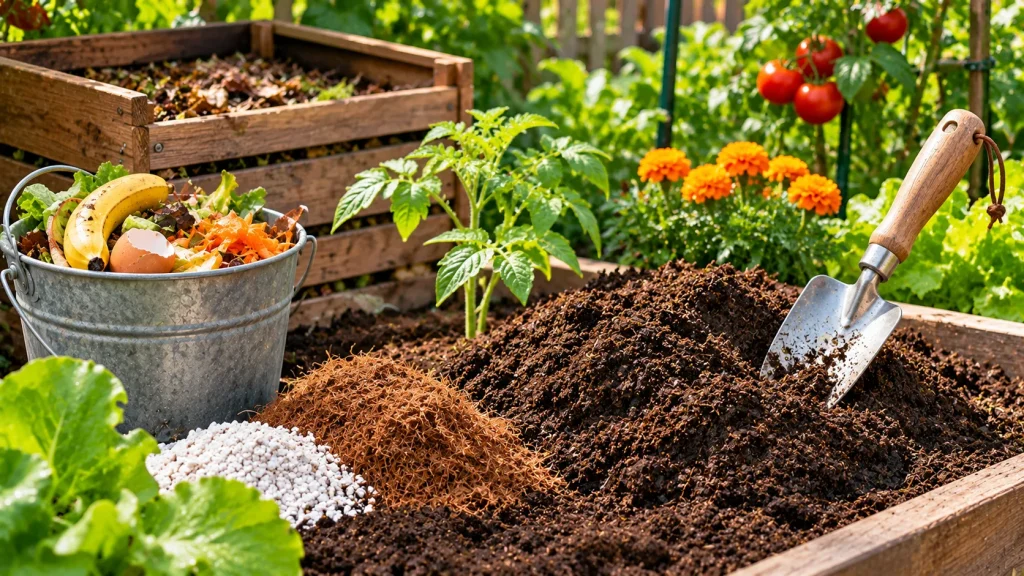
Many ordinary houseplants, flowers, and container vegetables perform well in a lightweight commercial potting mix designed for container use.
Such mixes may contain coconut coir, peat-free wood fiber, composted bark, perlite, and other materials.
The best mixture retains enough water to support roots while providing suitable drainage and aeration.
Perlite
Perlite is a lightweight expanded volcanic material often visible as small white particles in potting mixes.
It can help maintain open pore spaces and improve aeration when combined appropriately with other ingredients.
Adding perlite may be useful when an otherwise suitable potting mix needs a more open structure.
However, too much perlite may reduce moisture retention more than a particular plant can tolerate.
Pumice and Suitable Mineral Particles
Pumice and certain horticultural mineral materials can contribute to the physical structure of potting media.
These materials are particularly useful in some mixtures for cacti and drought-adapted succulents.
Use horticultural-grade products suitable for plant growing. Avoid adding unknown construction materials or contaminated aggregates.
Orchid Bark and Composted Bark
Bark particles help create larger air spaces in certain potting mixes.
Coarser orchid bark is particularly useful for many epiphytic orchids and may be included in suitable mixes for certain tropical aroids.
However, a very chunky bark mixture may be unsuitable for fine-rooted seedlings or plants that need a more consistently moist growing medium.
Coconut Coir and Moisture-Retaining Materials
Coconut coir is frequently included in peat-free potting mixes because it can retain moisture while contributing to a lightweight structure.
It is useful for many plants, but the proportions of coir and other components should match the desired drainage and moisture characteristics.
Choose suitable horticultural-grade materials rather than assuming all coconut fiber products have identical properties.
Why Ordinary Garden Soil Is Often Unsuitable
Garden soil may become too dense inside a pot, especially when it contains substantial clay.
It can restrict aeration and drainage and may introduce weeds or plant pathogens.
For most ordinary household containers, a purpose-made potting medium is a more practical choice.
Some long-term container plants can benefit from specialist soil-based composts, but these are formulated differently from simply filling a pot with unmodified garden soil.
Should You Add Sand to Potting Mix?
Suitable washed horticultural grit or coarse sand may be included in certain specialist growing media.
However, fine sand can fill pore spaces and create an undesirably dense texture in some mixtures.
Do not add ordinary beach sand or unknown builder’s sand simply because the pot drains slowly.
Using a suitable commercial mix or adding appropriate perlite or pumice is often easier for beginners.
How Pot Size, Shape, and Material Affect Drainage
The behavior of a potting mix is influenced by the container holding it.
Pot size, shape, material, and exposure can all affect how quickly the growing medium dries between waterings.
Avoid Pots That Are Much Too Large
A small root system inside a large pot may use water slowly compared with the volume of growing medium available.
This can leave parts of the mix wet for extended periods, particularly in cool or low-light conditions.
For many typical houseplants, moving up one reasonable pot size when repotting is better than choosing an excessively large container.
Fast-growing vegetables and larger permanent plants may need more generous root space, so use species-specific container recommendations.
Does Pot Depth Matter?
Container depth affects the relationship between the growing medium and the relatively wet zone that forms near the bottom after watering.
For the same uniform potting mix, a deeper container can provide a greater proportion of growing medium above the wettest zone than a very shallow container.
However, this does not mean every plant should be moved into a very deep or oversized pot.
Root size, plant species, medium composition, and watering must all be considered together.
Terracotta Pots
Unglazed terracotta is porous and can allow moisture to evaporate through the pot walls.
This may help the growing medium dry more quickly than in a comparable nonporous plastic container.
Terracotta can be useful for certain plants that prefer drying between waterings, but it does not replace the need for suitable drainage holes.
Plastic Pots
Plastic containers generally lose less moisture through their walls than porous terracotta pots.
This can be beneficial for plants that need consistent moisture, but it may also mean that the growing medium dries more slowly.
Adjust watering according to the plant rather than assuming plastic pots are automatically unsuitable.
Glazed Ceramic and Decorative Pots
Glazed ceramic pots can provide stability and visual appeal, but some lack drainage holes.
When a decorative container does not drain, use it as an outer cover for a suitable draining nursery pot.
Empty collected water after watering and inspect the inner pot regularly.
How to Fix a Plant Pot That Drains Slowly: Step by Step
If a pot remains too wet or water takes unusually long to drain, begin with the simplest checks before disturbing the roots.
Step 1: Stop Unnecessary Watering
Check the moisture level and avoid adding more water when the root zone is already saturated.
Remember that wilting can occur in waterlogged soil as well as dry soil.
Step 2: Inspect the Container Base
Lift the pot carefully and check for blocked or missing drainage holes.
If the plant is in an outer decorative pot, remove it and check for trapped water.
Empty excess water and ensure the inner container can drain properly.
Step 3: Check the Potting Medium
Examine whether the mix remains excessively wet, has become compacted, or has broken down into fine particles.
Compare its behavior with what the plant needs.
A cactus and a moisture-loving fern will not necessarily thrive in the same growing medium.
Step 4: Assess the Pot Size
If a small plant occupies an unusually large container, the growing medium may retain more water than the roots can use efficiently.
Consider moving the plant to a more suitable size if poor moisture management persists.
Step 5: Repot if the Mix Is Unsuitable
If the medium is severely compacted, degraded, or persistently saturated, repotting into suitable fresh material may be necessary.
Handle the root system gently and avoid removing large quantities of healthy roots unnecessarily.
Choose a growing medium appropriate for the plant and use a pot with functional drainage holes.
Step 6: Adjust Watering and Placement
After correcting the container and growing medium, check moisture regularly and water according to the plant’s needs.
Make sure the plant receives suitable light and temperature conditions. A plant growing in low light may use water more slowly than the same species growing under brighter conditions.
Do not expose a sensitive indoor plant to harsh direct sunlight simply to force the soil to dry faster.
How to Rescue an Overwatered Plant With Poor Drainage
An overwatered plant may recover if enough healthy root tissue remains and suitable growing conditions can be restored.
Recovery depends on the plant species, the severity of root damage, and how long the growing medium has remained saturated.
Check Whether the Plant Is Actually Waterlogged
Insert a finger or suitable probe into the medium and examine moisture beneath the surface.
Check whether water is trapped inside the outer pot.
If the medium is dry, wilting may have another cause and the rescue approach will be different.
Allow Excess Water to Drain
Place the inner pot somewhere it can drain safely.
Remove accumulated water from saucers and decorative containers.
Do not leave the pot sitting in a pool of water while waiting for the plant to recover.
Examine Roots if Severe Damage Is Suspected
If the plant continues declining and the potting mix remains saturated, carefully remove it from the container if this can be done without excessive damage.
Inspect the roots for signs of deterioration.
Remove clearly dead or decayed root material with clean, appropriate tools if necessary, while preserving healthy roots.
Because roots naturally vary among species, avoid unnecessary pruning based on color alone.
Repot Into Suitable Fresh Medium
When the existing growing medium has become unsuitable or substantial root decay is present, use fresh, appropriately formulated potting mix.
Choose a container with adequate drainage and a size suited to the remaining healthy root system.
Do not pack the mixture tightly around the roots.
Provide Gentle Aftercare
Place the plant in light and temperature conditions suitable for the species.
Monitor soil moisture and avoid both severe drying and renewed waterlogging.
Do not apply heavy fertilizer to a plant whose roots are damaged.
Recovery can take time, and severely affected plants may not survive.
Important Caution: Do not pour bleach, hydrogen peroxide, or homemade chemical mixtures into a waterlogged pot as a routine treatment. These substances can injure roots or create exposure risks. Correct the drainage and growing-medium conditions first, and seek an accurate plant-health diagnosis if severe root disease is suspected.
How to Water Plant Pots Without Causing Waterlogging
Even a well-draining container can become unhealthy when the watering routine does not suit the plant.
Check Moisture Before Watering
Use your finger, the weight of the pot, or a suitable moisture-checking tool to assess the growing medium.
For many ordinary houseplants, checking several centimeters beneath the surface is useful.
For larger containers, check moisture deeper in the pot where possible.
The appropriate level of dryness depends on the species. Succulents and moisture-loving ferns should not necessarily be watered at the same point.
Water at an Appropriate Rate
Apply water slowly enough that it can soak into the growing medium rather than immediately running over the surface.
For many ordinary potted plants, watering until the medium is suitably moistened and the first water begins to drain is a useful approach.
Avoid continuing to pour large amounts of water through the pot unnecessarily.
Some specialized potting media and plant types require different watering techniques.
Empty Saucers When Necessary
After watering, inspect saucers and outer pots for accumulated water.
For most ordinary houseplants, do not leave the rootball standing in excess water for prolonged periods.
Purpose-designed self-watering systems and some wetland plants are exceptions, but these require appropriate management.
Adjust Watering to the Season
Plants often use more water during warm, bright, actively growing periods.
During cooler, darker periods, growth and water use may decline.
Reduce watering when the medium remains moist for longer, while continuing to meet the plant’s actual needs.
Outdoor pots may also experience heavy rainfall, so pause irrigation when natural moisture is sufficient.
Do Not Confuse Water-Repellent Mix With Good Drainage
Extremely dry organic growing media can sometimes become difficult to rewet.
Water may run quickly down the inside wall of the container and escape through the drainage holes while the central rootball remains dry.
This does not necessarily indicate that the mix is draining correctly throughout.
Check the center of the growing medium and rewet gradually using a method suitable for the plant.
Drainage Needs for Different Types of Potted Plants
There is no single potting mix or watering approach suitable for every plant.
Use the following examples to understand how growing-medium drainage should match different root systems.
Cacti and Succulents
Many popular cacti and drought-adapted succulents prefer growing media that drain freely and do not remain saturated around the roots.
A specialist cactus or succulent mix containing appropriate mineral materials is often useful.
Use functional drainage holes and avoid watering before the mix has dried to a suitable level for the particular species.
Monstera, Philodendron, and Other Aroids
Many climbing tropical aroids grow well in an open, aerated mixture that retains some moisture while allowing excess water to escape.
Suitable potting base, bark particles, and aeration materials may provide an appropriate balance.
However, aroids vary in their growing habits, so a very coarse mix is not automatically ideal for every species.
Pothos and Common Foliage Houseplants
Many common foliage plants grow well in a quality lightweight indoor potting mix.
The mixture should provide useful moisture retention without becoming persistently saturated.
Pot size, light exposure, and watering frequency are often as important as the precise mix ingredients.
Ferns and Moisture-Loving Houseplants
Some ferns and other moisture-loving houseplants require more consistent moisture than succulents.
However, consistently moist conditions are not the same as permanently waterlogged conditions.
Choose a medium that retains sufficient moisture while allowing oxygen around the roots.
Moth Orchids
Common moth orchids (Phalaenopsis) are often grown in coarse bark-based media that provide substantial air spaces around their roots.
Ordinary dense potting compost may retain too much water for these epiphytic orchid roots.
Choose a suitable specialist orchid growing medium and container.
Other orchids have different requirements, so do not assume all orchid species need the same material.
Container Vegetables
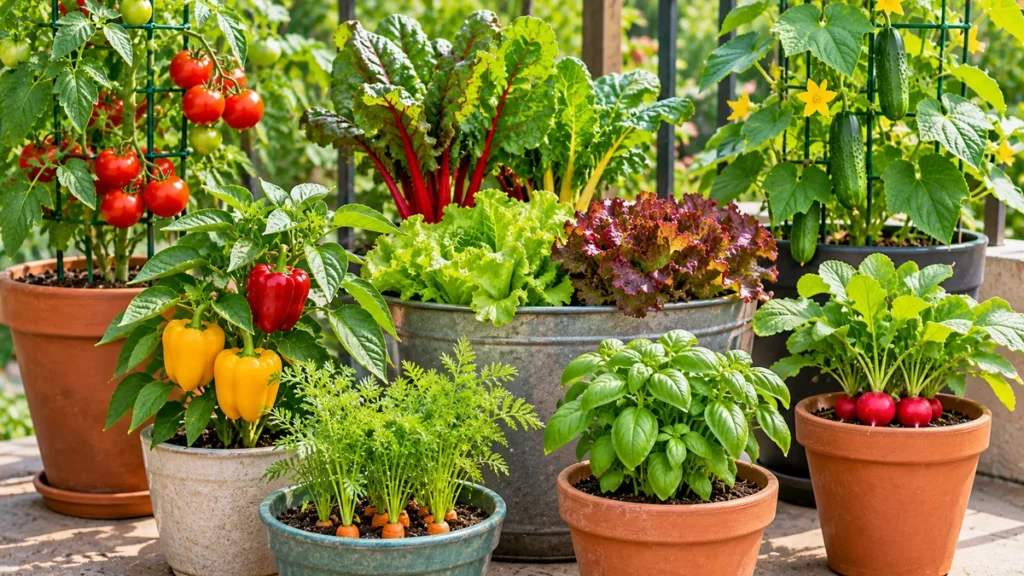
Tomatoes, peppers, cucumbers, and other container vegetables need adequate root space, consistent moisture, and sufficient nutrients.
A suitable lightweight vegetable potting mix should retain useful water without remaining saturated.
During warm weather, large fruiting vegetables may use water rapidly, so a mix that drains too quickly can also create problems.
Avoid treating maximum drainage as the only objective.
Culinary Herbs
Many Mediterranean herbs, including rosemary and thyme, grow best in freely draining conditions.
Basil, parsley, and certain other leafy herbs generally require more regular moisture availability.
Choose potting media according to each herb’s needs instead of planting all herbs in one identical mix.
How to Improve Drainage in Outdoor Pots and Planters
Outdoor containers face additional challenges, including heavy rainfall, exposed paving, seasonal temperature changes, and rapid drying during hot weather.
Raise Pots Off Flat Ground
Suitable pot feet or supports can help prevent drainage holes from being blocked against patios or other solid surfaces.
They also allow water to move away from the container base.
Ensure the pot remains stable, especially in windy locations or where children and pets may be present.
Check Outdoor Pots After Heavy Rain
Even plants that normally tolerate frequent watering can suffer when their growing medium remains saturated for extended periods.
After heavy rain, inspect drainage openings, saucers, and the moisture level of the growing medium.
Remove water trapped in decorative containers and pause automatic irrigation when appropriate.
Consider Winter Drainage
During cool, wet periods, many container plants grow more slowly and use less water.
Outdoor planters may therefore remain wet longer, particularly in shaded locations.
Keep drainage holes clear and avoid leaving pots standing in water.
In cold climates, choose containers suitable for freezing conditions and follow plant-specific winter protection advice.
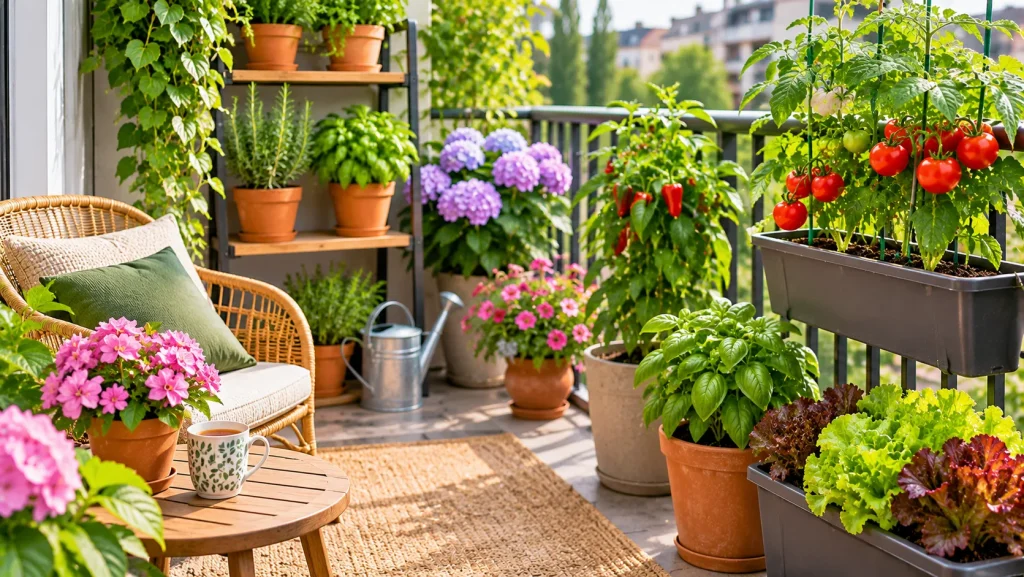
Hanging Baskets and Balcony Planters
Hanging baskets and balcony containers need adequate drainage while preventing water from creating hazards below.
Check building rules and local requirements when installing overhead or balcony planters.
Use suitable trays or drainage-management systems without leaving roots permanently submerged.
Containers should be securely installed and light enough for the supporting structure.
Are Self-Watering Containers Different?
Yes. Properly designed self-watering planters use a reservoir and a wicking system to provide moisture to the growing medium.
Many include an overflow outlet or other features that control water levels.
They should be used according to the manufacturer’s instructions and the needs of the crop.
A decorative pot with no drainage hole is not automatically a safe self-watering planter.
Common Pot Drainage Problems and Solutions: Comparison Table
Use the following table to identify practical first steps when a plant pot appears to drain poorly.
| Problem | Possible cause | Practical solution |
|---|---|---|
| Water remains inside the outer pot | Decorative container has no drainage outlet | Remove the inner pot and empty collected water |
| Water cannot leave the pot | Missing or blocked drainage holes | Inspect openings and use an appropriately draining container |
| Potting mix stays wet for a long time | Dense mix, low water use, or oversized pot | Check roots, pot size, growing conditions, and mix structure |
| Growing medium becomes compacted | Decomposition or unsuitable original mix | Repot in suitable fresh medium when needed |
| Succulent roots remain too wet | Mix retains excessive moisture for the species | Use suitable specialist succulent media and appropriate watering |
| Orchid roots deteriorate in regular compost | Medium lacks suitable air spaces | Use an appropriate specialist orchid mix |
| Water flows out while the rootball stays dry | Severely dry or water-repellent growing medium | Check internal moisture and gradually rewet appropriately |
| Outdoor pot holes are obstructed | Container sits directly against paving or soil | Use suitable pot feet or stable supports |
| Newly repotted plant remains waterlogged | Pot is too large or watering has not been adjusted | Review container size, root volume, and moisture needs |
| Yellow leaves and wet mix | Possible root stress from prolonged saturation | Check drainage and root health before applying treatments |
10 Common Mistakes That Make Pot Drainage Worse
1. Adding Gravel at the Bottom of the Pot
A gravel layer can raise the saturated zone within the potting mix instead of improving drainage.
Better approach: Use an appropriate growing medium throughout the pot and functional drainage holes.
2. Using Pots Without Drainage Holes
Excess water can accumulate when the container has no suitable outlet.
Better approach: Use a draining nursery pot inside a decorative outer container or select another suitable pot.
3. Filling Pots With Ordinary Garden Soil
Garden soil may become too dense for reliable aeration and drainage inside a container.
Better approach: Choose a purpose-made potting medium or specialist container compost.
4. Choosing an Oversized Pot
A small root system surrounded by a large amount of unused growing medium may experience prolonged wet conditions.
Better approach: Use a container size suited to the root system and expected growth.
5. Adding Too Many Coarse Materials
An excessively open mixture can dry too quickly for plants that need more consistent moisture.
Better approach: Match the mix to the species rather than maximizing drainage without considering water retention.
6. Packing Potting Mix Too Tightly
Heavy compression can reduce pore spaces and interfere with healthy root growth.
Better approach: Firm the growing medium gently without making it dense and compacted.
7. Leaving Pots Standing in Water
Saucers and decorative pots can retain water that keeps the bottom of the rootball excessively wet.
Better approach: Empty accumulated water after watering unless using a suitable specialist system.
8. Watering Without Checking Moisture
Fixed schedules often fail to account for changes in plant growth, temperature, and light.
Better approach: Check the growing medium and adjust watering to actual plant needs.
9. Ignoring Deteriorating Potting Mix
Old media may break down and lose the physical structure that originally provided aeration.
Better approach: Repot when the medium becomes unsuitable, using fresh material matched to the plant.
10. Treating Every Wilting Plant as Underwatered
Plants can wilt when roots are damaged by prolonged saturation.
Better approach: Check root-zone moisture before watering or applying fertilizer.
Frequently Asked Questions About Improving Drainage in Plant Pots
What is the easiest way to improve drainage in a plant pot?
Start by checking that the container has functional drainage holes and is not sitting in accumulated water. Use suitable potting mix, avoid unnecessary watering, and consider repotting only when the medium is too dense or has deteriorated.
Does putting gravel at the bottom of a pot improve drainage?
No. A layer of gravel beneath finer growing medium can raise the saturated zone in the potting mix. It also reduces the depth of usable growing medium. Choose suitable potting mix and functional drainage openings instead.
Can plants grow in pots without drainage holes?
Some specialist water-growing systems are designed differently, but most ordinary potted houseplants and container crops are safer in pots with functional drainage. A decorative pot without holes can hold a separate draining nursery pot, provided collected water is emptied appropriately.
Does adding perlite improve pot drainage?
Perlite can improve aeration and help maintain open pore spaces in certain potting mixes. It should be used in suitable proportions and blended into the growing medium. Adding excessive perlite can reduce water retention more than some plants need.
Is sand good for drainage in plant pots?
Suitable washed horticultural grit or coarse sand can be useful in some specialist mixes. However, fine sand may fill pore spaces and create a dense mixture. Do not automatically add builder’s sand or beach sand to a poorly draining container.
Why is my potting mix staying wet for several days?
Possible causes include an oversized container, dense growing medium, blocked drainage holes, cool temperatures, low light, or watering more frequently than the plant requires. Check root-zone moisture and growing conditions before deciding whether repotting is necessary.
How many drainage holes should a plant pot have?
There is no single number suitable for every pot. The necessary opening size and arrangement depend on the container design, material, and growing medium. The key requirement is that excess water can escape effectively without the openings becoming blocked.
Can I fix poor drainage without repotting?
Sometimes. If drainage holes are blocked, the outer pot contains water, or the watering schedule is excessive, these problems may be corrected without disturbing the roots. Repotting is more appropriate when the growing medium itself is severely compacted, degraded, or unsuitable.
Are terracotta pots better for drainage than plastic pots?
Unglazed terracotta can lose moisture through its porous walls, allowing the growing medium to dry more quickly than in some plastic pots. However, both materials can support healthy plants when the container has suitable drainage and the watering routine matches the plant’s needs.
What is the best potting mix for plants that need fast drainage?
It depends on the species. Many cacti and drought-adapted succulents benefit from specialist mixes containing suitable mineral particles. Epiphytic orchids often require bark-based growing media, while some tropical aroids prefer an open mixture that still retains some moisture.
Can an overwatered plant recover after improving drainage?
Some plants recover when excess water is removed, appropriate root-zone conditions are restored, and enough healthy roots remain. Severely damaged plants may not survive. Recovery depends on the plant species, the severity of root injury, and the aftercare provided.
Should I elevate outdoor plant pots?
Elevating outdoor pots can be helpful when drainage holes are obstructed by flat paving or when containers stand in puddles. Use stable pot feet or other suitable supports and make sure the filled container is safely supported.
Final Thoughts
Improving drainage in plant pots is primarily about creating suitable conditions around the roots.
Functional drainage holes allow excess water to escape, while an appropriate growing medium provides a useful balance of moisture retention and aeration.
If a plant pot drains poorly, begin by inspecting the container base, checking for trapped water, and examining whether the growing medium is too dense or has deteriorated.
Remember that adding gravel beneath potting mix does not solve drainage problems. Mixing suitable aeration materials into the growing medium, choosing an appropriate container, and adjusting watering practices are generally more effective approaches.
Different plants also need different conditions. A cactus may prefer a much more freely draining mix than a leafy vegetable or moisture-loving fern, while orchids and certain tropical houseplants have their own root requirements.
With suitable containers, the right potting mix, and regular moisture checks, you can reduce the risk of waterlogging and support healthier root growth in indoor and outdoor plants.
Explore more gardening advice in Gardenivo’s Small-Space Gardening guides. You can also visit Soil & Watering for guidance on moisture management and Plant Problems & Solutions for identifying common plant-health symptoms.
Further Reading and Horticultural References
- University of Maryland Extension: Growing Vegetables in Containers and Salad Tables — drainage holes, suitable containers, elevating pots, and why gravel layers do not improve drainage.
- University of Maryland Extension: Types of Containers for Growing Vegetables — pot materials, drainage design, double potting, and container selection.
- University of California Master Gardeners: Drainage in Containers — water movement, saturated zones, and the limitations of gravel layers.
- University of Illinois Extension: Container Drainage Options — drainage holes, root health, and excess-water management.
- Royal Horticultural Society: Growing Plants in Containers — choosing containers and growing media, preventing waterlogging, and maintaining drainage.
- Royal Horticultural Society: How to Plant Up a Container — preparing containers, handling drainage openings, and positioning plants.
- Royal Horticultural Society: Container Maintenance — checking drainage holes, watering practices, and seasonal container care.
- Royal Horticultural Society: How to Water Containers — moisture checks, appropriate watering, and avoiding unnecessary water use.
- Royal Horticultural Society: How to Grow Houseplants — suitable containers, drainage, repotting, and growing-medium deterioration.
- University of Illinois Extension: Getting Started With Houseplants — pot sizing, root health, growing media, and drainage problems.
- University of Maine Cooperative Extension: FAQs About Houseplants — potting mix drainage, overpotting, and perched water tables.
- Rutgers Cooperative Extension: Outdoor Container Gardening With Flowering and Foliage Plants — potting mix preparation, physical structure, and water movement in containers.