Why Are Plant Leaves Turning Yellow?

Yellow leaves can be worrying, especially when a plant seemed healthy only a few days ago. The good news is that yellowing does not always mean your plant is dying. Sometimes it is a normal part of growth. In other cases, it is an early sign that the plant’s growing conditions need attention.
The challenge is finding the reason. Too much water, too little water, insufficient light, nutrient problems, temperature stress, and certain pests can all cause leaves to lose their green color. Each problem requires a different response, so guessing can make matters worse.
This guide explains what yellow leaves can mean, how to look for useful clues, and which practical checks to make before changing your plant-care routine.
Quick Answer: Why Do Plant Leaves Turn Yellow?
Plant leaves often turn yellow because something is affecting the production or retention of chlorophyll, the green pigment involved in photosynthesis. This yellowing is called chlorosis.
Common reasons include excess moisture around the roots, dry soil, unsuitable light, nutrient availability, temperature changes, and pest damage. Older leaves can also yellow naturally before falling away. If yellow leaves appear while the potting mix stays wet, inspect the roots for signs of rot.
Gardening Tip: Before reaching for fertilizer or watering again, check the soil and look at which leaves are changing color. These observations are often more helpful than the yellow color alone.
Start by Looking at the Yellowing Pattern
Not all yellow leaves look the same. The location and pattern of discoloration can help narrow down possible causes, although neither provides a diagnosis on its own.
- Only a few older, lower leaves are yellow: This may be normal aging, particularly when the rest of the plant remains vigorous.
- Many leaves are yellowing together: Check moisture, drainage, temperature, and recent changes in care.
- New leaves are yellow but veins remain green: Nutrient availability or soil pH may be involved, depending on the plant.
- Leaves have yellow speckles or mottled patches: Inspect both leaf surfaces for insects, mites, or signs of disease.
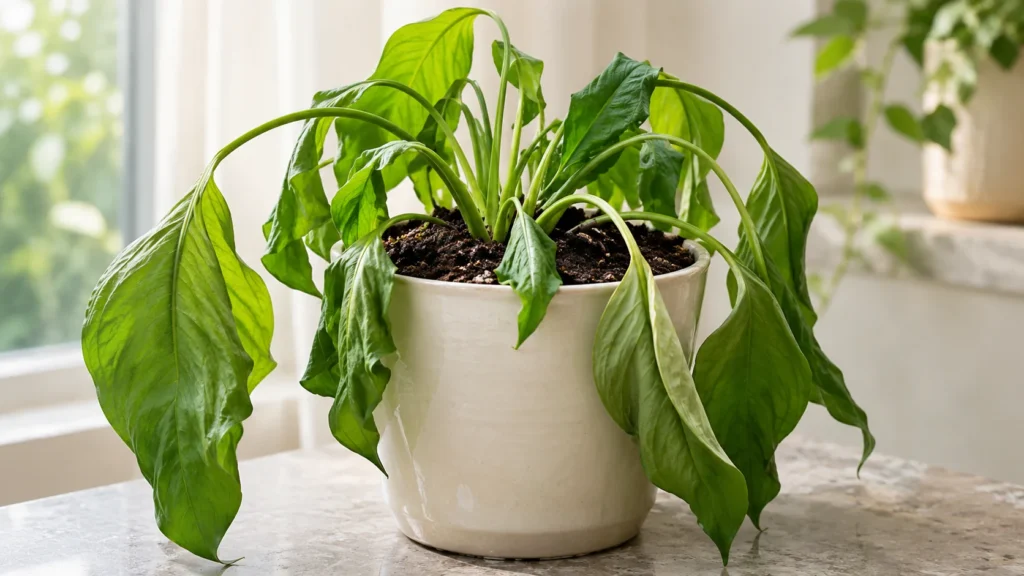
- Yellow leaves also look wilted: Both drought and excessively wet roots can cause wilting, so examine the soil before watering.
Pay attention to how quickly the problem develops. One yellow leaf over several weeks is different from widespread yellowing that appears after a period of heavy rainfall or a sudden move to a different room.
7 Common Causes of Yellow Leaves
1. Too Much Water or Poor Drainage
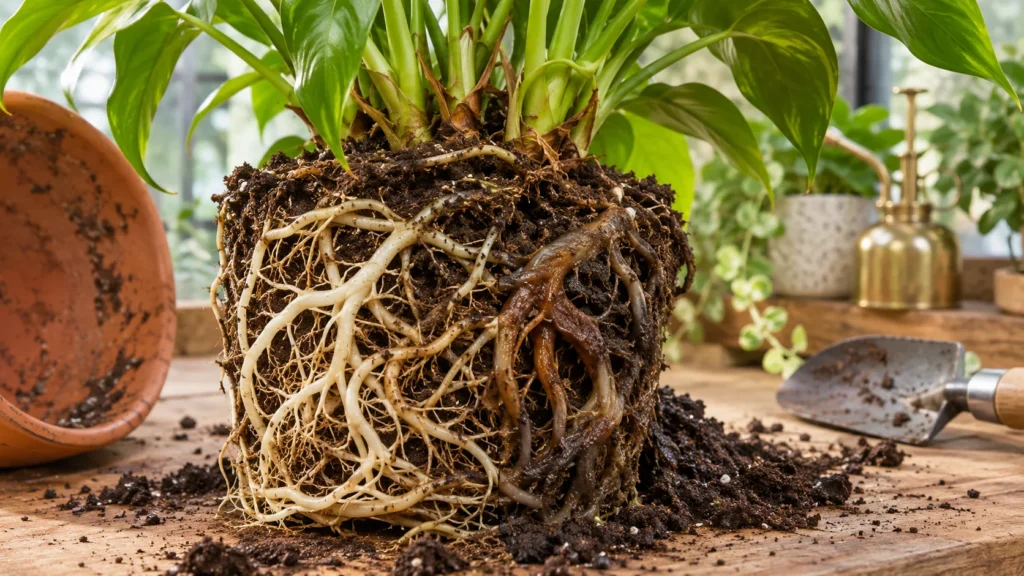
Excessively wet soil is a frequent cause of yellowing in container plants. Roots need oxygen as well as water. When a potting mix remains saturated, air spaces fill with water and roots may struggle to function normally.
Possible warning signs include consistently wet soil, yellowing lower leaves, wilting despite moist conditions, and water collecting in a saucer beneath the pot. Prolonged waterlogging can contribute to root damage and root rot.
What to check: Feel the potting mix below the surface and confirm that water can escape through drainage holes. Do not assume a plant needs more water simply because its leaves droop.
Important Caution: If a plant is wilting in consistently wet soil, repeatedly watering it may worsen the problem. Check drainage and root health before taking further action.
2. Not Enough Water
Plants also turn yellow when they cannot obtain enough moisture. Dry conditions may first cause drooping, curled foliage, brown leaf edges, or slower growth. Yellowing can follow when stress continues.
Containers dry at different rates depending on their size, material, potting mix, temperature, and the plant growing inside them. A plant in a small terracotta pot may require a different watering routine from one in a large plastic container.
What to check: Assess soil moisture below the surface and notice whether the container feels unusually light. If the root zone is dry and the plant needs water, water thoroughly enough to moisten the root zone, allowing excess water to drain where appropriate.
3. Too Little or Too Much Light
Light requirements vary greatly between plants. A sun-loving tomato plant and a shade-tolerant houseplant should not receive identical treatment.
Insufficient light can weaken growth and contribute to pale or yellow foliage. Strong direct sunlight can cause bleaching or scorched patches on plants that are not adapted to those conditions.
What to check: Identify the plant and compare its actual light exposure with its requirements. If a change is necessary, move the plant gradually rather than shifting it abruptly from deep shade into intense sunlight.
4. Nutrient Deficiencies or Soil pH Problems
Plants need nutrients to produce healthy foliage. When nutrients are unavailable, leaves may become pale, yellow, or patterned with green veins.
For example, nitrogen deficiency may first affect older leaves, while iron-related chlorosis often appears on younger leaves. Magnesium-related yellowing frequently develops between the veins of older foliage. However, these patterns can overlap with watering problems and other stresses.
Soil pH matters because it influences nutrient availability. A plant may show deficiency symptoms even when a nutrient is present in the soil but cannot be absorbed effectively.
What to check: Review the plant’s feeding history, soil conditions, and expected pH range. For persistent problems in an outdoor garden, a suitable soil test can help guide amendments.
Good to Know: Yellow leaves are not proof that a plant needs fertilizer. Overfeeding can damage roots and make nutrient imbalances worse. Correct the underlying growing conditions before adding nutrients unnecessarily.
5. Temperature Stress or Sudden Changes
Plants can respond to cold drafts, excessive heat, frost, or sudden changes in their surroundings by yellowing or dropping leaves.
For indoor plants, moving from a bright outdoor position into a darker room can trigger temporary leaf loss. Transplanting or repotting may also disturb roots and temporarily slow growth.
What to check: Think about recent changes in temperature, location, sunlight, or handling. Provide conditions appropriate to the species and avoid making several major care changes at once.
6. Pests and Plant Diseases
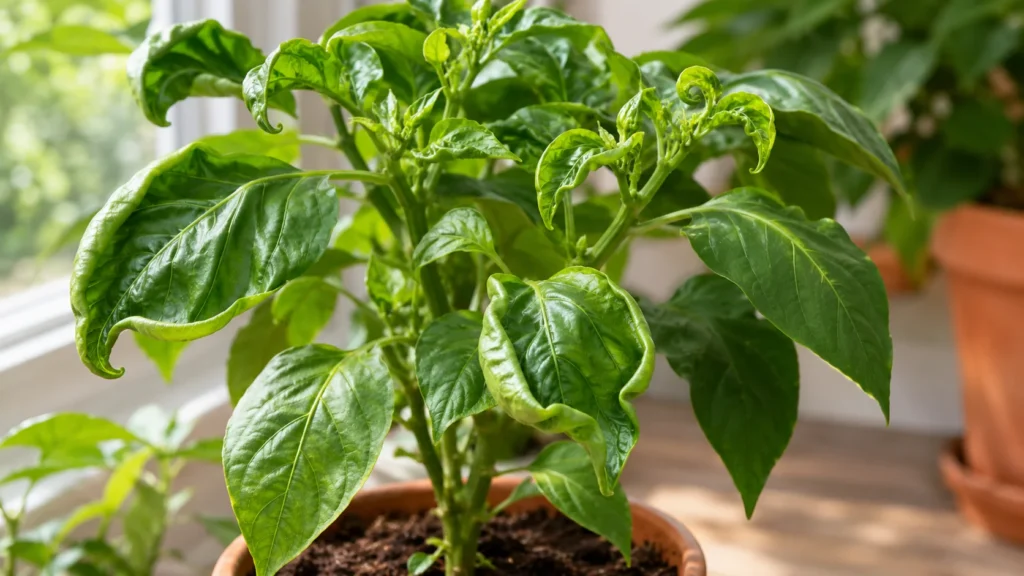
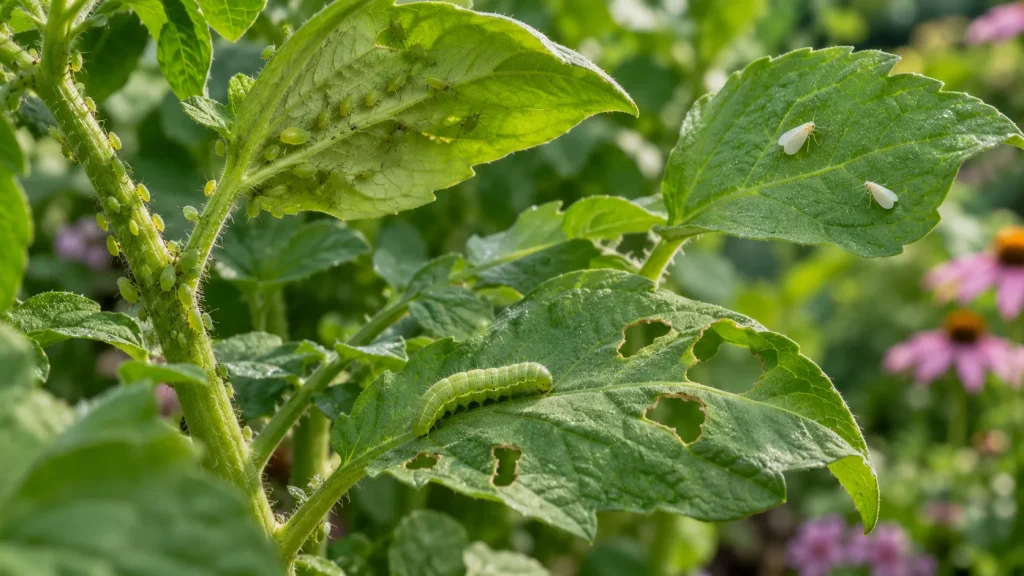
Some insects and mites feed on plant tissues and leave yellow spots, patches, or weakened foliage. Aphids, spider mites, whiteflies, and scale insects are among the pests worth checking for, depending on the plant and growing environment.
Look closely at the undersides of leaves, along stems, and around new growth. Fine webbing, clusters of insects, sticky residue, or unusually mottled leaves may provide clues.
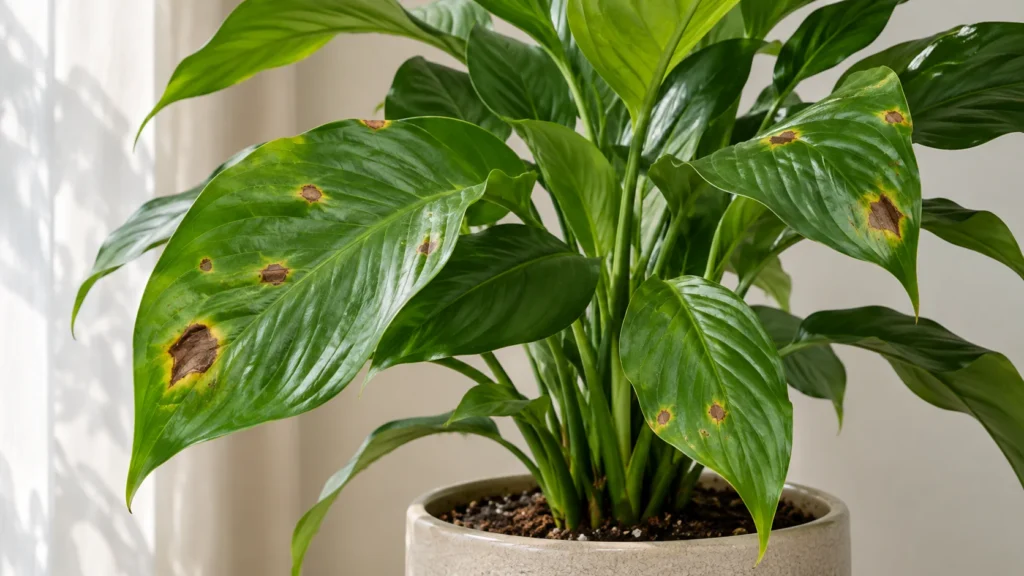
Plant diseases can also cause discoloration, often alongside distinct spots, lesions, wilting, or dieback. Those symptoms should be evaluated together rather than treating every yellow leaf as a disease.
What to check: Inspect the entire plant, isolate a potentially infested houseplant when practical, and identify the pest or disease before choosing a treatment. Follow the product label for any treatment used on plants.
7. Normal Leaf Aging
Sometimes yellow leaves are entirely normal. Older foliage eventually ages and is shed as a plant grows. In deciduous plants, seasonal color changes and leaf loss are part of the annual growth cycle.
If only an occasional older leaf turns yellow while new growth remains healthy, immediate treatment may not be necessary.
What to check: Look at the plant as a whole. Healthy new leaves, steady growth, and the absence of other symptoms are reassuring signs.
Yellow Leaf Symptoms: What to Check
Use this comparison as a starting point, not a definitive diagnosis. Different problems can produce similar symptoms.
| What you notice | Possible explanation | First check |
|---|---|---|
| Yellowing and persistently wet soil | Excess moisture or poor drainage | Drainage holes and root-zone moisture |
| Yellowing with very dry soil | Water shortage | Moisture below the surface |
| Young leaves yellow, veins remain green | Possible nutrient availability problem | Soil pH, feeding history, plant species |
| Yellow speckles or sticky leaves | Possible pest feeding | Leaf undersides and new growth |
| Leaves yellow after moving the plant | Environmental change | Light, temperature, and recent handling |
| Only a few oldest leaves yellow | Natural aging may be involved | Overall health and new growth |
What to Do When Your Plant Leaves Turn Yellow
Instead of trying several treatments at once, follow this practical checklist.
- Identify the plant. Find out whether it prefers consistently moist soil, drying periods between watering, full sun, or shade.
- Check the soil. Examine moisture below the surface. If the plant is in a container, confirm that excess water can drain.
- Look at the leaf pattern. Note whether old or young leaves are affected and whether the color change is uniform, spotted, or between the veins.
- Inspect for pests. Check both sides of the leaves, stems, and growing tips for insects, webbing, or sticky deposits.
- Review recent changes. Consider repotting, transplanting, a new location, temperature extremes, fertilizing, or changes in watering.
- Correct the most likely problem carefully. Make a targeted adjustment suited to the plant, rather than changing every aspect of its care.
- Monitor new growth. Watch whether additional leaves yellow, whether wilting improves, and whether healthy new foliage develops.
Gardening Tip: Taking a photograph of the affected leaves can help you compare symptoms over time. Record when the problem began and whether it spreads to new growth.
If the plant continues to decline rapidly, has widespread lesions or stem collapse, or appears to have severely damaged roots, seek species-specific advice from a reputable horticultural resource or local extension service.
Can Yellow Plant Leaves Turn Green Again?
It depends on the cause and how much the leaf tissue has changed. Some mild chlorosis can improve when the underlying nutrient or growing-condition problem is corrected. However, leaves that have aged, become severely damaged, or developed dead tissue usually will not return to their original condition.
Healthy new growth is often a more useful sign of recovery than whether an already yellow leaf regains its color.
Do not rush to remove every yellow leaf. Where a leaf is still functioning or the plant is recovering from stress, unnecessary removal may not help. Remove dead or diseased material as appropriate, using clean tools and plant-specific guidance.
How to Prevent Yellow Leaves in the Future
Not every case of yellowing can be prevented, but appropriate care reduces many avoidable problems.
- Choose plants suited to the location. Match light and temperature conditions to the species instead of forcing a plant into an unsuitable spot.
- Water according to need. Use soil moisture and plant requirements rather than following a rigid calendar.
- Maintain good drainage. Choose suitable containers, potting mixes, or soil-improvement methods for the growing situation.
- Feed responsibly. Apply fertilizer when appropriate, following plant requirements and product directions.
- Inspect plants regularly. Catching pests or changes in leaf color early makes it easier to investigate before the problem becomes widespread.
- Adapt to the season. Rainfall, temperature, daylight, and growth rates change across the year, so care routines may need adjusting.
A simple routine of observing the plant, checking the soil, and making measured adjustments is usually more helpful than constantly changing products or treatments.
Frequently Asked Questions
Should I remove yellow leaves from my plant?
Not automatically. An occasional aging leaf can be left until it dries naturally. Dead, badly damaged, or clearly diseased material may need removing, depending on the plant. Avoid stripping large amounts of foliage from a stressed plant without good reason.
Do yellow leaves always mean overwatering?
No. Overwatering is a common problem, particularly with houseplants, but underwatering, light conditions, nutrient availability, pests, temperature stress, and natural aging can cause similar symptoms.
Can too much sunlight turn leaves yellow?
Yes. Plants exposed to stronger light than they tolerate may develop pale, bleached, yellow, or scorched areas. Look for damage on the most exposed foliage and consider whether the plant was recently moved.
Should I add fertilizer when leaves become yellow?
Only when there is a reasonable basis for suspecting a nutrient problem. First examine soil moisture, drainage, light, and the plant’s general health. Fertilizer will not correct root damage caused by waterlogging and may worsen some problems if applied unnecessarily.
Why are only the bottom leaves turning yellow?
Older, lower leaves naturally age on many plants. However, lower-leaf yellowing can also occur with excess moisture, drought, or nutrient-related problems. Look at the number of affected leaves and whether the rest of the plant is growing normally.
How long does a plant take to recover from yellow leaves?
Recovery depends on the species, cause, severity of damage, and growing conditions. Some plants improve relatively quickly after a minor care adjustment, while root damage or prolonged stress can take much longer. Monitor healthy new growth rather than expecting every yellow leaf to become green again.
Final Thoughts
Yellow leaves are a useful signal, but they do not tell you exactly what is wrong. Start with the basics: identify the plant, examine the soil, assess its light, and look for patterns or other symptoms. A few careful observations can prevent unnecessary watering, feeding, or treatments.
Healthy gardening is not about finding one universal solution. It is about understanding what each plant needs and responding to the conditions in which it grows.
Further Reading and Horticultural References
- Royal Horticultural Society: Chlorosis — causes and patterns of yellowing leaves.
- Royal Horticultural Society: Nutrient Deficiencies — recognizing nutrient-related plant symptoms.
- University of Maryland Extension: Diagnose Indoor Plant Problems — symptoms, pests, and growing-condition problems.
- University of Maryland Extension: Yellowing Leaves on Vegetable Plants — causes of leaf yellowing in vegetable gardens.
Want to understand more common plant symptoms? Explore our Plant Problems & Solutions guides for practical advice on identifying problems and improving plant care./category/plant-problems/