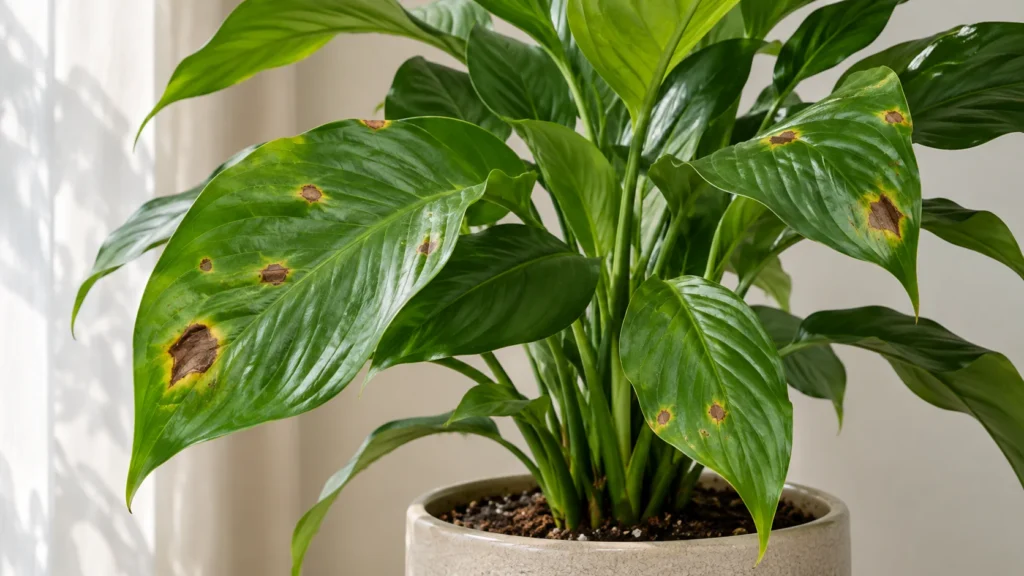
Common Garden Pests and How to Identify Them
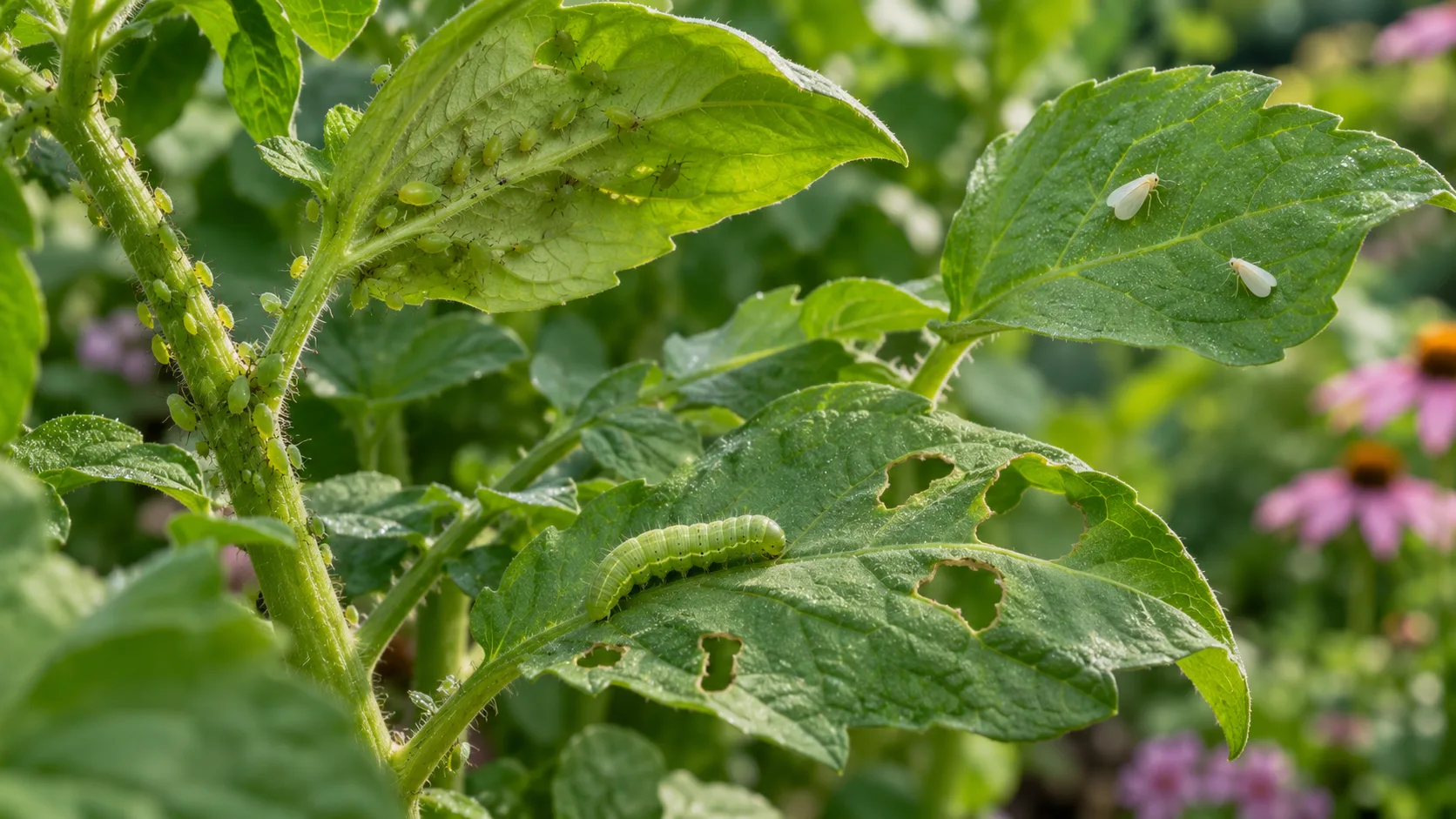
Finding holes in your vegetable leaves, clusters of tiny insects on new shoots, or sticky residue on a favorite garden plant can be frustrating. But seeing damage does not always mean you need to spray something immediately. The first step is to identify what is actually happening.
Gardens contain an enormous variety of insects, mites, and other small creatures. Some feed on plants, others eat the pests that damage plants, and many are important pollinators or decomposers. Even a plant-feeding insect may cause only minor damage that a healthy plant can tolerate.
This guide introduces common garden pests, explains the signs they leave behind, and shows how to investigate a problem before deciding whether intervention is necessary. It focuses on practical identification rather than treating every insect as an enemy.
Quick Answer: How Can You Identify Garden Pests?
Start by examining the damaged plant closely. Look at the undersides of leaves, growing tips, stems, and the soil around the plant. Search for living pests, eggs, shed skins, feeding marks, webbing, or sticky deposits.
Different pests often leave recognizable clues. Aphids cluster on soft new growth, flea beetles make small holes in leaves, leafminers produce pale winding trails, and slugs often create irregular holes while feeding at night.
However, damage alone rarely proves which pest is responsible. Disease, hail, nutrient stress, and physical injury can sometimes produce similar symptoms. Whenever possible, identify the actual organism before selecting a control method.
Gardening Tip: Use your phone camera to photograph the whole plant, the damaged area, and any insect you find. A small magnifying lens can make it easier to distinguish mites, eggs, and tiny feeding insects.
What Different Types of Pest Damage Can Tell You
Chewed Holes and Missing Leaf Tissue
Caterpillars, beetles, slugs, and snails can remove parts of a leaf as they feed. Some create small round holes, while others leave large irregular gaps or damage around the edges.
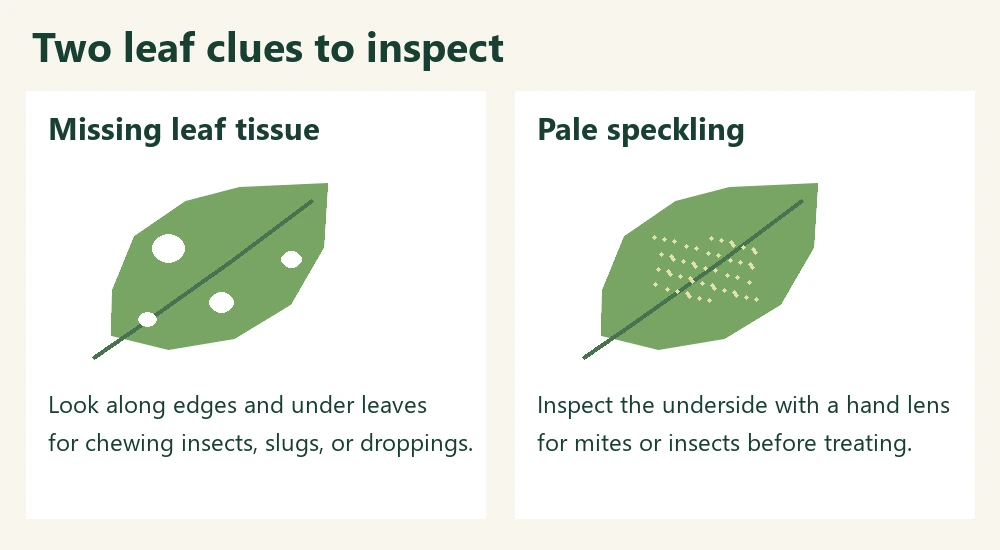
The size and shape of a hole offer clues, but young leaves can expand after being damaged, making an old feeding mark look different from the original injury.
Curled or Distorted New Growth
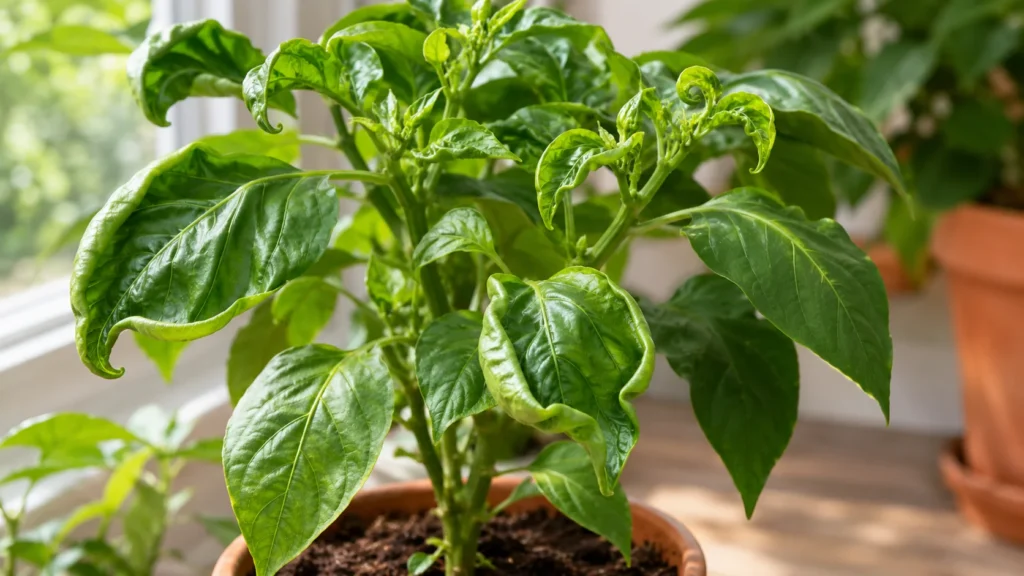
Aphids, certain mites, and other feeding pests may damage tender leaves as they develop. The leaves can emerge curled, puckered, or unusually small. Similar distortion can also result from herbicides or unfavorable growing conditions, so look for pest evidence rather than assuming infestation.
Tiny Pale Dots or Silvery Scars
Mites and some insects damage plant cells, producing pale dots known as stippling. Heavy feeding can make a leaf appear bronzed or faded. Thrips may also leave silvery scars, sometimes accompanied by small dark droppings.
Sticky Leaves and Black Surface Growth
Aphids, whiteflies, and certain scale insects excrete a sugary substance called honeydew. It can make foliage sticky and encourage the growth of black sooty mold on leaf surfaces.
Honeydew is useful evidence, but it is important to identify which insect is producing it.
9 Common Garden Pests and Their Identification Clues
1. Aphids
Aphids are small, soft-bodied, usually pear-shaped insects that occur in colors including green, black, yellow, brown, and pink. They frequently gather on tender shoots, flower buds, and the undersides of leaves.
They feed on plant sap. Large populations may cause curling or distorted leaves, while honeydew can attract ants and encourage sooty mold. Many aphid populations cause little lasting harm, especially when natural predators are present.
Look for: Groups of small insects around new growth, sticky leaves, and sometimes white shed skins. On suitable sturdy plants, a gentle stream of water or careful hand removal may reduce localized populations.
2. Whiteflies
Adult whiteflies resemble tiny white moths. They often rest on the undersides of leaves and may fly up in a small cloud when the plant is disturbed. Their immature stages are flatter and much less noticeable.
Whiteflies commonly affect greenhouse plants and certain vegetables, including tomatoes, cucumbers, and eggplants. Heavy feeding may contribute to yellowing or weakened growth, and their honeydew can support sooty mold.
Look for: Tiny flying white insects, pale immature stages attached beneath leaves, and sticky deposits. Inspect new transplants carefully before bringing them into a greenhouse or growing area.
3. Spider Mites
Spider mites are not insects; they are tiny arachnids. Many species are difficult to identify without magnification. Their feeding removes the contents of plant cells, leaving pale speckles that may eventually merge into bronzed or dry areas.
Some spider mite species increase rapidly during hot, dry conditions. Heavy populations can produce fine webbing around leaves and growing tips, although an ordinary spider web is not evidence of spider mite damage.
Look for: Fine stippling, tiny moving mites on leaf undersides, and delicate webbing containing numerous tiny mites. Do not confuse them with beneficial predatory mites.
4. Thrips
Thrips are very small, slender insects that often feed within flowers, on tender leaves, or in sheltered growing points. Their feeding may create silvery scarring, pale streaks, distorted growth, and small dark droppings.
Some thrips species are pests, while others feed on other small arthropods. Certain pest species can also transmit plant viruses.
Look for: Narrow moving insects, silvery patches, flower damage, or dark dots on injured surfaces. Tap a suspect flower over a light-colored sheet of paper to make small insects easier to see.
5. Leaf-Eating Caterpillars
Caterpillars are the larvae of butterflies and moths. Some feed on vegetable leaves, including cabbage-family crops, while others attack tomatoes, ornamental plants, or developing fruits.
Damage can range from small feeding holes to large sections of missing foliage. Certain caterpillars leave visible droppings, sometimes called frass, on leaves or the soil below.
Look for: Caterpillars on the undersides of leaves, chewed foliage, eggs, and dark pellet-like droppings. Hand removal may be practical for small, identifiable populations, but avoid handling hairy or unfamiliar caterpillars with bare hands.
6. Flea Beetles
Flea beetles are small leaf beetles that jump when disturbed. Many species are dark and shiny, although their markings vary. They commonly feed on vegetables such as eggplant, radishes, and cabbage-family crops.
Their feeding often produces many small holes, sometimes described as a shot-hole pattern. Young seedlings can be more vulnerable than mature, vigorous plants.
Look for: Tiny holes scattered across leaves and small beetles jumping away as you approach. Properly secured insect netting or row covers can protect susceptible seedlings when installed before infestation, provided crop pollination needs are considered.
7. Slugs and Snails
Slugs and snails are mollusks rather than insects. They often feed at night or during damp weather and can damage seedlings, strawberries, leafy vegetables, and ornamental foliage.
They may leave irregular holes, damaged edges, or shiny mucus trails. Their activity is often greater in sheltered, moist areas where they can hide during the day.
Look for: Fresh feeding damage in the morning, slime trails, and slugs or snails beneath boards, containers, or dense vegetation. Nighttime inspection with a flashlight may reveal the culprit.
8. Leafminers
Leafminers are larvae of certain flies, moths, and other insects that feed between the upper and lower surfaces of leaves. Their tunnels can appear as winding pale trails or irregular blotches.
On many established plants, minor leafminer damage is mainly cosmetic. Heavy infestations can be more serious on small seedlings or crops grown for their leaves.
Look for: Serpentine trails or blotches inside the leaf tissue rather than holes through it. A dark line of waste material may be visible within some mines.
9. Scale Insects
Scale insects may appear as small bumps, waxy patches, or shells attached to stems and leaves. Some species have a hard protective covering, while soft scales may produce honeydew.
They can be easy to mistake for part of the plant because many adult scales remain fixed in one location. Heavy populations may weaken growth, especially on houseplants, fruit trees, and ornamentals.
Look for: Numerous similarly shaped bumps on stems or leaf veins, sticky honeydew where produced, and evidence of crawling young stages. Confirm identification before scraping or treating anything that resembles scale.
Garden Pest Identification Comparison Table
| Common pest | Typical clue | Where to inspect |
|---|---|---|
| Aphids | Clusters of soft insects, honeydew, curled new leaves | Growing tips and leaf undersides |
| Whiteflies | Tiny white adults fly up when disturbed | Undersides of leaves |
| Spider mites | Pale stippling and sometimes fine webbing | Leaf undersides and buds |
| Thrips | Silvery scars and dark droppings | Flowers and developing foliage |
| Caterpillars | Chewed leaves and frass | Leaves, stems, and sheltered folds |
| Flea beetles | Small shot-holes and jumping beetles | Seedlings and tender leaves |
| Slugs and snails | Irregular holes and mucus trails | Moist hiding places and nighttime foliage |
| Leafminers | Pale winding tunnels inside leaves | Affected leaf blades |
| Scale insects | Fixed waxy or shell-like bumps | Stems and leaf veins |
Not Every Garden Insect Is a Pest
Many useful garden organisms help keep pest numbers in balance. Lady beetles and their larvae eat aphids. Lacewing larvae feed on various soft-bodied pests. Hoverfly larvae can consume aphids, while adult hoverflies often visit flowers. Predatory spiders and many parasitoid wasps also contribute to pest regulation.
Some beneficial insects have unfamiliar or intimidating appearances. Lady beetle larvae, for example, look very different from adult lady beetles. Removing them by mistake can reduce natural pest control.
Flowering plants, habitat diversity, and avoiding unnecessary broad-spectrum pesticide use can support beneficial species. The aim is usually a healthier garden ecosystem, not a garden completely free of insects.
Good to Know: Some leaf damage can be tolerated without affecting the harvest or long-term health of a plant. A few holes in an established plant are not automatically a reason to apply a pesticide.
How to Inspect a Plant for Pests: 6 Simple Steps
- Identify the affected plant. Pest species often prefer particular plant families, so the host plant can narrow the possibilities.
- Record the damage. Note whether leaves have holes, spots, sticky deposits, trails, curling, or stunted growth.
- Inspect both leaf surfaces. Many small pests feed on the undersides of leaves or hide within folded foliage.
- Check the appropriate time of day. Slugs may be easier to find at night, while flying insects can be more obvious when foliage is disturbed.
- Look for beneficial organisms. Predators, parasitoids, and pollinators may already be helping control the problem.
- Assess the severity. Compare a few damaged leaves with the health of the whole plant. Watch whether fresh damage is increasing.
If identification remains uncertain, share clear photographs with a local extension service or trusted horticultural diagnostic resource. Include the plant name, growing conditions, and when the damage first appeared.
How to Manage Garden Pests Without Unnecessary Spraying
Integrated Pest Management, or IPM, combines prevention, monitoring, accurate identification, and targeted action. It recognizes that not every pest population needs to be eliminated.
Begin With the Least Disruptive Suitable Option
Depending on the pest and plant, options may include removing a few caterpillars, washing aphids off sturdy foliage, protecting seedlings with insect netting, or adjusting growing conditions that make plants more vulnerable.
Some measures are more effective when taken before pests appear. Row covers, for instance, must be installed correctly and may need to be removed or opened when insect pollination is required.
Protect Natural Enemies
Beneficial insects frequently suppress small pest populations without intervention. Broad-spectrum sprays can remove these predators along with the pests, sometimes contributing to later outbreaks.
Use Pesticides Only When Justified
If pests are correctly identified and damage is serious enough to require treatment, choose a product labeled for the specific plant, pest, and use site. Follow the directions, protective measures, harvest intervals, and local regulations.
Important Caution: Avoid homemade insecticide mixtures involving household cleaners, detergents, essential oils, or other untested ingredients. Such mixtures can injure plants or beneficial wildlife. Never assume a product is safe for edible crops simply because it is described as natural.
How to Reduce Common Pest Problems
- Inspect new plants before introducing them to an existing collection or garden.
- Choose suitable plant varieties and provide the light, moisture, and spacing they need.
- Avoid excessive nitrogen fertilizer, which can encourage soft growth attractive to some pests.
- Check young leaves and growing tips regularly during active growth.
- Manage weeds where they compete with crops or provide pest habitat, while preserving useful habitat elsewhere where appropriate.
- Encourage a variety of flowering plants that support beneficial insects.
- Keep records of recurring seasonal pests so preventive measures can be timed more effectively.
- Use barriers suited to the crop and local pests, and check regularly that they remain secure.
When Should You Seek Help Identifying a Pest?
Expert identification is worthwhile when serious damage continues without an obvious culprit, a valuable plant is rapidly declining, or an unfamiliar insect may be an invasive species. Some regulated pests must be reported under local rules.
Professional guidance is also useful when an apparently minor infestation is associated with disease transmission or when a proposed treatment might affect edible crops, pollinators, pets, or nearby waterways.
Frequently Asked Questions
What pest makes tiny holes in garden leaves?
Flea beetles are one possibility, especially when the holes are small and numerous. Other insects and earlier feeding damage can look similar, so inspect the affected plant for small jumping beetles before deciding on the cause.
What causes sticky leaves on garden plants?
Aphids, whiteflies, and certain scale insects produce honeydew that can make leaves sticky. Confirm which pest is present by examining the undersides of leaves, stems, and young shoots.
Are all caterpillars harmful to garden plants?
No. Caterpillars feed on plants, but their ecological roles vary. Some may cause serious crop damage, while others are important parts of local butterfly and moth populations. Identify the species and evaluate the damage before taking action.
How do I know whether I have spider mites?
Look for fine pale speckles and tiny mites, particularly on leaf undersides. Some species produce fine webbing in heavy infestations. A magnifying lens or diagnostic photographs can help distinguish mites from other causes of stippling.
Can a healthy plant tolerate a few pests?
Often, yes. Established plants can tolerate some feeding without significant harm. The decision to intervene depends on the pest, the crop, the plant’s condition, and whether damage is increasing.
Should I spray insecticide as soon as I see an insect?
No. Many insects are harmless or beneficial. Identify the organism, determine whether it is damaging the plant, and assess whether management is necessary before selecting a treatment.
Final Thoughts
Successful pest management starts with observation. A chewed leaf, sticky shoot, or pale trail is a clue, but the most useful next step is to look for the organism responsible and consider how much damage it is actually causing.
By learning to recognize common pests, protecting beneficial insects, and choosing targeted measures only when needed, you can support healthier plants without turning every small garden problem into an emergency.
For more help investigating unusual foliage symptoms, explore our Plant Problems & Solutions guides, including Why Are Plant Leaves Turning Yellow?
Further Reading and Horticultural References
- University of Maryland Extension: IPM — Prevent, Identify, and Manage Plant Problems — monitoring, identification, prevention, and targeted management.
- University of Maryland Extension: Aphids in Home Gardens — aphid appearance, symptoms, and control options.
- University of Maryland Extension: Mites in Home Gardens — pest and beneficial mites, feeding damage, and management.
- University of Maryland Extension: Whiteflies on Vegetables — identifying adults, immature stages, and plant symptoms.
- University of Maryland Extension: Flea Beetles on Vegetables — shot-hole feeding and protective measures.
- University of Minnesota Extension: Yard and Garden Insects — pest identification and information on beneficial garden insects.