How to Fix Waterlogged Garden Soil

Waterlogged garden soil can cause serious problems for plants. After heavy rainfall, a garden bed may remain muddy for days, water may collect around vegetables, and plants that previously looked healthy can begin turning yellow or wilting.
It may seem strange that plants can wilt when surrounded by water. However, roots need oxygen as well as moisture. When soil remains saturated, water fills the spaces that normally contain air, making it difficult for many plants to absorb water and nutrients effectively.
Not every wet garden is badly drained. Temporary puddles after a heavy downpour may disappear without causing lasting damage. The greater concern is soil that stays saturated for prolonged periods, particularly when waterlogging happens repeatedly or during warm weather.
There is no single solution for every waterlogged garden. Compacted soil may benefit from careful loosening and improved organic matter management. A vegetable bed that regularly becomes saturated may be easier to manage as a raised bed. Persistent groundwater or runoff problems may need more extensive drainage work.
This guide explains how to identify waterlogged soil, find the underlying cause, protect struggling plants, and improve drainage safely. You’ll also learn which common remedies to avoid and how to prevent future waterlogging without damaging healthy soil structure.
Quick Answer: How Do You Fix Waterlogged Garden Soil?
To fix waterlogged garden soil, first stop unnecessary watering and identify where the excess water is coming from. Keep people and equipment off saturated beds because walking or digging on wet soil can make compaction worse.
Allow temporarily waterlogged soil to drain naturally when possible. Once it is sufficiently workable, investigate compaction, soil texture, surface runoff, and any restrictive layers that may be preventing water from moving away.
For moderately poorly drained soil, suitable organic matter, mulching, reduced cultivation, and permanent garden paths may improve soil structure over time.
Where the ground remains saturated regularly, raised beds can provide a more suitable root-growing environment for many vegetables and flowers. Severe drainage problems may require professional assessment and a suitable outlet for excess water.
Start with these practical actions:
- Stop irrigation until the root zone actually needs water again.
- Check for blocked surface drains, leaking pipes, and excess runoff.
- Avoid walking, digging, or rototilling saturated soil.
- Observe whether puddles disappear promptly after rainfall.
- Protect vulnerable plants from further root damage.
- Use a drainage test when conditions are safe and suitable.
- Improve compacted soil and add appropriate organic matter once the ground is workable.
- Consider raised beds or planting mounds for poorly drained sites.
- Choose moisture-tolerant plants where wet conditions cannot reasonably be corrected.
- Seek specialist advice for persistent flooding, a high water table, or drainage problems near buildings.
Gardening Tip: The safest first response to waterlogged soil is usually to stop adding unnecessary water and avoid further compaction. Do not rush to dig deeply into saturated beds. Wait until the soil can be worked without forming sticky, compressed clods.
Signs Your Garden Soil Is Waterlogged
Waterlogging occurs when soil remains saturated enough that the normal supply of air around plant roots becomes severely restricted.
The symptoms vary depending on the soil type, weather, plant species, and length of time the roots remain saturated.
1. Water Remains on the Surface
Standing water is one of the most visible signs of a possible drainage problem.
Puddles may collect in planting beds, near pathways, around trees, or in low sections of the lawn.
Brief puddling after exceptionally heavy rain does not always mean that a garden has a serious drainage problem. However, water that remains for long periods or returns after ordinary rainfall deserves further investigation.
2. Soil Remains Sticky and Saturated
Very wet clay-rich soil may stick heavily to shoes and gardening tools.
When squeezed, saturated soil may form a dense, shiny mass rather than breaking apart into smaller crumbs.
Remember that clay naturally retains more moisture than sandy soil. The important question is whether the root zone remains excessively saturated for the plants being grown. If water stands on dense clay after rain, look at ways to improve clay soil structure.
3. Plants Develop Yellow Leaves
Yellowing leaves can occur when prolonged saturation interferes with healthy root function and nutrient uptake.
Some plants may develop dull, pale foliage before showing more extensive damage.
However, yellow leaves have many possible causes, including natural aging, nutrient deficiencies, disease, drought, and insufficient light.
Check the soil and roots before assuming that waterlogging is responsible.
4. Plants Wilt Even Though the Ground Is Wet
Wilting in saturated soil can be particularly confusing.
Waterlogged roots may not absorb or transport enough water because oxygen shortages interfere with their normal functioning.
As a result, leaves can droop even though the soil contains plenty of moisture.
Adding more water in this situation can make the original problem worse.
5. Roots Become Damaged or Decayed
When soil remains saturated for an extended period, root tissues can become damaged.
Certain root diseases, including some caused by water-mold organisms such as Phytophthora, are also favored by excessively wet growing conditions.
Affected roots may become soft, darkened, or reduced in number, although root appearance alone may not identify the exact cause.
If plant decline is severe or recurring, an appropriate plant-health diagnosis may be needed.
6. Plants Stop Growing Normally
Waterlogging can reduce root activity, nutrient uptake, and overall plant growth.
Vegetables may remain small, newly planted shrubs may establish poorly, and sensitive flowers may produce less vigorous growth.
The symptoms can resemble nutrient problems, which is why soil moisture and drainage should be checked before fertilizer is applied.
7 Common Causes of Waterlogged Garden Soil
The right solution depends on why water is accumulating in the first place.
1. Heavy or Prolonged Rainfall
Intense rainfall can temporarily exceed the rate at which water enters or moves through garden soil.
After prolonged wet weather, even reasonably structured soil may become saturated.
When the rainfall ends, well-drained soil generally begins recovering as excess water moves away.
If water remains for an unusually long period, investigate whether another problem is preventing drainage.
2. Heavy Clay Soil
Clay-rich soil contains very small mineral particles and can retain considerable water.
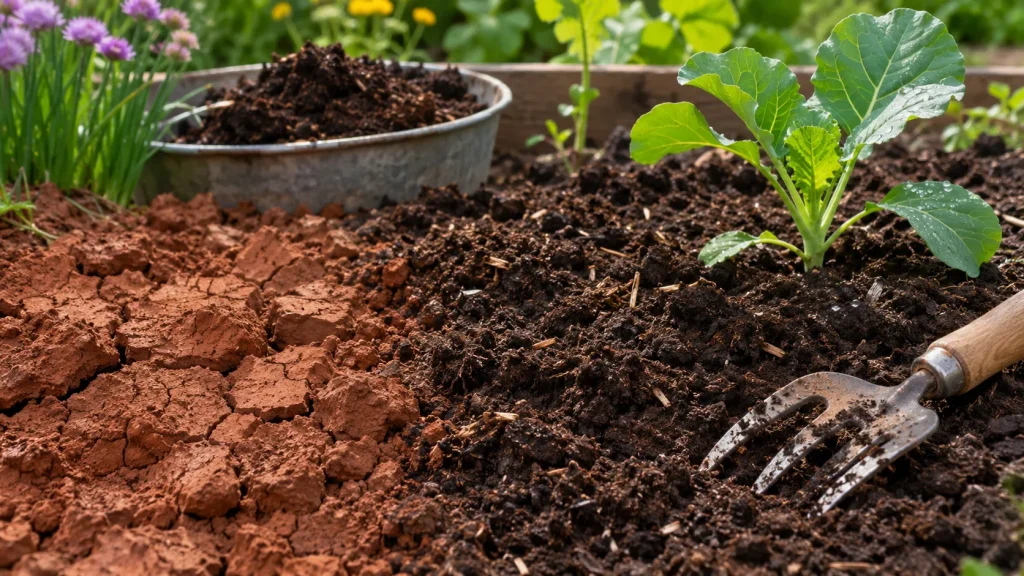
When clay soil has poor structure or is heavily compacted, water may move through it slowly.
However, not all clay soil is permanently waterlogged. Well-structured clay-rich soil can support productive gardens and retain useful moisture during dry weather.
The aim is to improve soil structure and water movement rather than remove all the clay.
3. Soil Compaction
Walking, driving, or working heavy equipment over garden soil can compress particles and reduce pore spaces.
This limits both water infiltration and the movement of air into the root zone.
Compaction is particularly damaging when the ground is wet.
Newly developed gardens can also contain compacted layers left by construction work.
4. Low-Lying Garden Areas
Water naturally moves toward lower ground.
A garden bed located at the bottom of a slope or in a shallow depression may collect runoff from surrounding areas.
This problem can become worse when neighboring paved surfaces, roofs, or pathways direct additional water toward the same location.
The soil itself may not be the only problem. Changing how water reaches the area may be necessary.
5. A High Water Table
The water table is the upper level of groundwater in the soil or underlying ground.
When groundwater rises close to the surface, the root zone may remain saturated even when water is not being applied from above.
Seasonal water-table changes can produce gardens that are very wet during the rainy season but considerably drier during other periods.
Ordinary surface compost applications cannot reliably correct a high groundwater level.
6. Excessive Irrigation or Leaking Pipes
Garden beds can become waterlogged when irrigation continues despite adequate rainfall or saturated soil.
Leaking irrigation pipes, broken sprinkler heads, or poorly positioned emitters may also keep one area constantly wet.
Review the watering system before assuming that the native soil is responsible.
7. Restrictive Underground Layers
Some gardens contain compacted subsoil, a dense hardpan, shallow rock, buried building material, or another layer that restricts downward water movement.
Even if the upper soil is loose, water may accumulate above a restrictive layer.
In these cases, adding organic matter only to the upper surface may provide limited improvement until the deeper drainage problem is understood.
Why Does Waterlogged Soil Damage Plant Roots?
Healthy soil contains both water and air within the spaces between soil particles.
Plant roots need oxygen for respiration, a process that helps provide the energy required for normal growth and nutrient uptake.
When excess water fills most available pore spaces, oxygen movement becomes restricted.
Roots Lose Access to Oxygen
Roots generally absorb oxygen from air in the surrounding soil.
Water contains dissolved oxygen, but it does not usually provide enough oxygen movement for the roots of ordinary garden plants during prolonged saturation.
Without sufficient oxygen, root activity slows and tissues may become damaged.
Water and Nutrient Uptake Can Decline
Damaged roots cannot function efficiently.
This can reduce the movement of water and nutrients into the plant, causing wilted or yellowing foliage despite abundant moisture in the soil.
Applying fertilizer without correcting the saturated conditions will not restore normal root function.
Root Diseases May Become More Likely
Prolonged moisture and stressed roots can favor certain root and crown diseases.
However, not all waterlogged plants have an infectious disease. Oxygen deprivation itself can damage roots.
The management priority is to correct growing conditions and investigate infectious problems only when supporting symptoms are present.
Some Plants Tolerate Wet Soil Better Than Others
Plants adapted to wetlands or pond margins may have specialized structures that help them survive saturated conditions.
Many vegetables, Mediterranean herbs, and plants adapted to freely draining soil lack the same tolerance.
Choosing the right species is therefore important where soil remains wet for prolonged periods.
Temporary Wet Soil vs. Persistent Waterlogging: What Is the Difference?
Not every wet garden requires drainage construction or major soil alteration.
Temporary Saturation After Heavy Rain
A short period of saturation after exceptionally heavy rainfall may not seriously damage established plants, particularly when the water drains away relatively quickly.
In these situations, reducing soil disturbance and allowing drainage to recover may be enough.
Monitor sensitive plants and avoid irrigation until it is needed.
Repeated Seasonal Waterlogging
Some gardens become saturated every rainy season because of heavy clay, recurring runoff, compacted soil, or seasonal groundwater levels.
These sites benefit from a longer-term management plan that considers planting choice, soil structure, raised beds, and drainage.
The best solution may vary between winter-wet and summer-dry gardens and those affected by intense monsoon rainfall.
Permanently Wet Soil
Ground that remains wet throughout much of the year may be influenced by groundwater or a naturally wet landscape position.
Attempting to grow drought-adapted plants in such conditions may require extensive interventions.
Where appropriate, a moisture-tolerant planting scheme, rain garden, or carefully designed wetland-style area may be more sustainable than repeatedly trying to dry out the whole site.
What to Do Immediately When Garden Soil Is Waterlogged
If a garden has recently become waterlogged, begin with low-risk actions that prevent further damage.
Step 1: Stop Unnecessary Watering
Turn off automatic irrigation in affected areas and check whether leaking equipment is adding water.
Do not water simply because plants look wilted. Check whether the root zone is already saturated.
Step 2: Identify Where the Water Came From
Determine whether the problem followed heavy rainfall, irrigation, overflowing drains, groundwater, or a damaged water pipe.
Look for blocked surface outlets, debris covering drain grates, or downpipes directing runoff into beds.
If sewage, contaminated floodwater, or an unknown chemical spill may be involved, avoid direct contact and obtain appropriate local health or environmental guidance.
Step 3: Keep Off Saturated Soil
Wet soil is vulnerable to compaction from footsteps, wheelbarrows, and machinery.
Keep traffic off planting beds until the soil is workable.
If essential access is required, use an appropriate established path or another suitable surface that avoids unnecessary pressure on the root-growing area.
Step 4: Allow Water to Drain Where Possible
Temporary waterlogging may improve naturally when rainfall stops.
Clear accessible, safe surface drainage obstructions where appropriate, but avoid digging channels through saturated soil without knowing where the water can discharge.
Do not pump or divert water toward neighboring properties, buildings, or public drainage systems without appropriate permission and a suitable plan.
Step 5: Protect Affected Plants
Inspect plants for broken stems, collapsed growth, and signs of severe root damage.
Remove clearly dead or damaged above-ground growth when appropriate, but avoid unnecessary heavy pruning while the plant is stressed.
For valuable plants in unsuitable low-lying areas, relocation to an appropriately drained site may be considered once conditions allow, especially if repeated flooding is expected.
Moving established plants during severe stress can cause additional injury, so consider their species, age, and root condition.
Step 6: Avoid Immediate Fertilizer Applications
Yellow leaves and weak growth may tempt gardeners to add fertilizer.
However, plants struggling in saturated soil may be unable to use nutrients effectively because their roots lack oxygen.
Allow drainage to improve, assess plant recovery, and use soil testing if nutrient problems remain likely.
Step 7: Monitor the Garden After Water Recedes
Watch for new growth, improving leaf condition, and whether the soil continues to drain normally.
Root-damaged plants may later become more vulnerable to dry weather because they have fewer functioning roots.
Once the soil is no longer saturated, return to watering based on the plant’s actual moisture needs.
Important Caution: If a garden has flooded with sewage, wastewater, or potentially contaminated runoff, do not assume edible crops are safe because the water has disappeared. Avoid harvesting or consuming potentially contaminated produce until appropriate local food-safety guidance has been obtained. Keep children and pets away from contaminated areas.
How to Test and Diagnose Poor Garden Soil Drainage
A simple drainage test can help you determine whether water moves through your soil at a suitable rate.
However, the test does not identify every possible cause of waterlogging. Soil compaction, underground restrictions, and a high water table may require additional assessment.
A Basic Garden Drainage Test
University of Maryland Extension describes a practical soil percolation test using a hole approximately 30 cm (12 inches) deep and wide.
- Choose a representative area. Avoid locations with buried utilities, irrigation pipes, unstable ground, or known contamination.
- Dig a test hole. Where it is safe and suitable to do so, make the hole approximately 30 cm deep and wide.
- Fill it with water. Allow water to soak into the surrounding soil.
- Refill the following day. This helps account for initially dry soil absorbing water.
- Observe the water level. Measure how quickly the water drains during the second test.
- Compare with local guidance. A hole that still contains water after approximately eight hours suggests slow drainage and warrants further investigation.
If the measured water level falls more slowly than about 2.5 cm (1 inch) per hour, the site may have restricted drainage caused by compaction, clay-rich soil, an underground barrier, or groundwater.
The test result is a useful clue, not a complete engineering assessment.
How to Check for Soil Compaction
When soil is moist but not saturated, examine whether a garden fork or suitable probe enters the ground with reasonable effort.
Dense resistance within the root-growing zone may indicate compaction or a restrictive layer.
However, stones, natural rock, dry clay, or buried material can create similar resistance.
A physical inspection of the soil profile may be required to determine the cause.
How to Recognize a Possible High Water Table
Water entering a safely excavated inspection hole from the surrounding ground, especially when the hole has not been filled with irrigation water, may indicate shallow groundwater.
A water table can rise and fall during the year, so one inspection may not show seasonal conditions.
Where groundwater is suspected, professional site investigation may be more reliable than repeated small planting-bed amendments.
Keep a Drainage Record
Photograph problem areas after rainfall and record how long they remain wet.
Note whether water enters from a roof, path, neighboring slope, irrigation system, or the ground itself.
These observations are useful when deciding whether the problem can be managed through soil improvements or requires a more extensive drainage solution.
How to Improve Soil Structure and Reduce Compaction
Where waterlogging is caused partly by poor soil structure or moderate compaction, improving the growing environment may help.
These methods are most effective when the soil has somewhere for excess water to move.
Use Suitable Finished Compost
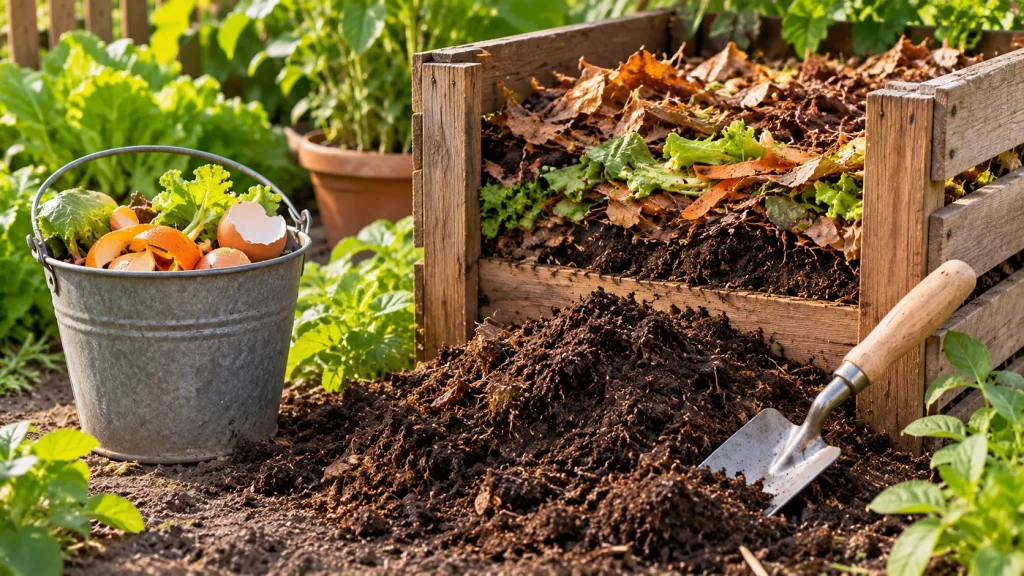
Appropriate compost can improve soil structure by contributing organic matter and supporting the formation of stable soil aggregates.
In suitable clay-rich soils, this can help maintain pore spaces and improve conditions for roots, air, and water.
When establishing a new bed, finished compost may be incorporated carefully into workable soil where this is appropriate.
For an established garden, surface applications can be more practical than repeatedly disturbing plant roots.
Use compost in amounts suitable for the soil’s organic matter and nutrient levels. More compost is not always better, especially when it contains substantial nutrients or salts.
Loosen Compacted Soil When It Is Workable
In garden beds with moderate compaction, a garden fork may be used to loosen soil without fully turning over the entire area.
Push the fork into suitable moist soil, gently rock it to create spaces, then move to the next area.
Do not attempt this method when the ground is saturated. Working wet soil can smear and compress the sides of the openings.
Deep compaction, buried hardpan, and established tree-root zones may need specialized techniques or professional assessment.
Maintain Organic Mulch
Appropriate organic mulch can protect the soil surface from direct rain impact, reduce crusting, and support gradual organic matter additions.
Materials such as shredded leaves, bark, and other suitable organic mulch can help maintain better surface conditions.
However, mulch is not a direct replacement for drainage. It will not remove a high water table or repair a broken pipe.
Avoid unnecessarily deep layers and keep mulch away from sensitive plant crowns and tree trunks.
Use Permanent Paths
Repeated walking on planting beds can undo soil improvements by compressing pore spaces.
Create paths that allow you to reach vegetables and flowers without stepping into the growing area.
Raised beds or narrower planting beds can make this easier.
Grow Suitable Cover Crops
Cover crops can help protect soil from erosion and contribute roots and organic material.
They may also support better soil structure over time when used as part of a suitable management program.
However, cover crops cannot grow effectively in every saturated site.
Choose species suited to your climate, planting season, and drainage conditions.
Why Adding Sand or Gravel Often Fails
Adding a small amount of sand to heavy clay usually does not produce the drainage improvement gardeners expect.
Fine sand may fill existing pore spaces and make the growing medium denser.
Changing clay soil texture would generally require large quantities of appropriately graded material, which is impractical for many home gardens.
Similarly, scattering gravel into a waterlogged bed cannot create a suitable drainage outlet.
Use amendments according to the actual soil problem rather than assuming that adding coarse material automatically removes excess water.
Can Raised Beds Help With Waterlogged Garden Soil?
Raised beds can be one of the most practical solutions for growing vegetables and flowers in soil that regularly becomes too wet.
They provide a root-growing area above the surrounding soil and allow greater control over the growing medium.
Why Raised Beds Can Improve Growing Conditions
A raised bed increases the depth of suitable growing material available above poorly drained ground.
It may also help prevent compaction because the gardener can work from surrounding paths.
Raised beds can be particularly useful for crops that struggle with prolonged root saturation.
How Deep Should a Raised Bed Be?
The ideal depth depends on plant roots, the underlying soil, and the severity of the drainage problem.
Some modestly raised beds improve conditions for shallow-rooted crops, while deeper beds may be needed where the native ground remains saturated or compacted.
A bed around 20–30 cm (8–12 inches) above the surrounding ground can provide a useful starting point for some vegetables, but this is not a universal solution.
If groundwater rises into the raised material, more height or a different management strategy may be required.
Choose the Right Soil for Raised Beds
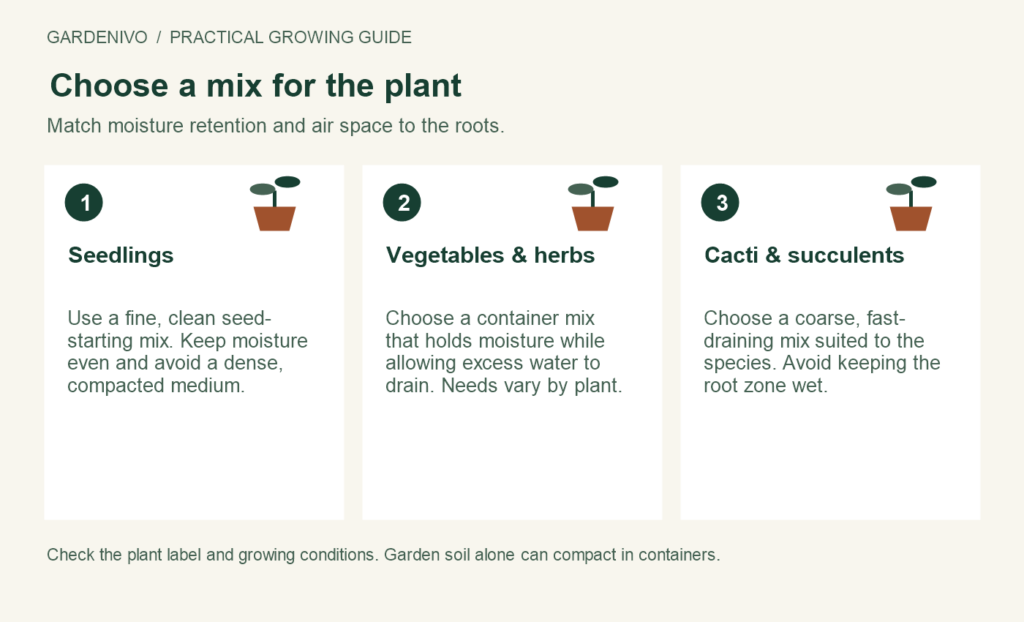
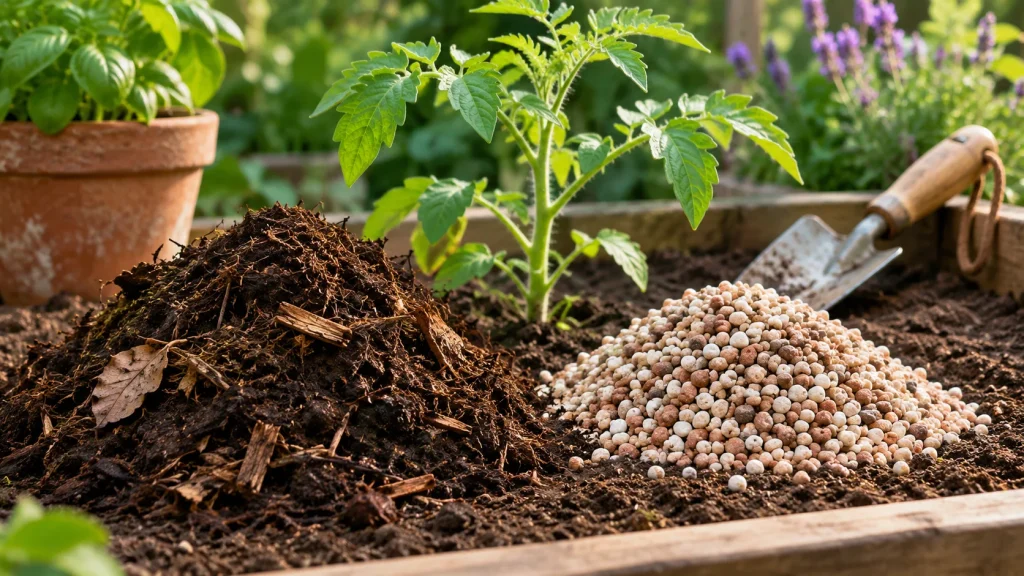
Use a suitable mixture of quality topsoil and appropriate finished compost, or another growing medium recommended for raised beds.
Do not fill a permanent vegetable bed with untested pure compost or dense garden clay alone.
Consider the bed’s drainage connection to the soil beneath and avoid creating a sealed structure that allows water to accumulate.
Where compacted native soil can be safely loosened, prepare the underlying surface during workable conditions before adding the bed material.
Raised Planting Mounds for Trees and Shrubs
Some trees and shrubs benefit from planting on a broad, slightly raised mound when the surrounding soil becomes wet seasonally.
Keep the root flare at an appropriate level and avoid burying the base of the trunk.
The mound should be broad enough to support root establishment rather than forming a narrow cone that leaves roots exposed.
This method is not appropriate for every species or every groundwater problem, so use plant-specific guidance.
Good to Know: Raised beds improve the growing environment by lifting roots above problematic native soil. They do not necessarily remove water from the rest of the garden. If runoff or groundwater continues to rise, the broader drainage issue may still need attention.
Long-Term Drainage Solutions for a Waterlogged Garden
Some gardens remain wet despite improved soil management. In these situations, the problem may involve how water moves across the landscape or through the ground.
Redirect Roof and Pathway Runoff
Check whether roof downpipes, patios, driveways, or paths direct excessive water toward planting beds.
Where appropriate, water may be redirected to a properly designed, permitted drainage or infiltration area.
Any change must avoid water damage to buildings, neighboring properties, and public infrastructure.
Consider a Rain Garden
A rain garden is a landscaped area designed to receive and temporarily hold runoff while water infiltrates or moves through a suitable drainage system.
It can be useful for managing rainfall from appropriately sized paved or roofed surfaces.
However, a rain garden needs suitable siting, soil conditions, drainage capacity, and plant selection.
It is not simply an ordinary flower bed dug into an already permanently flooded area.
Use Suitable Permeable Surfaces
Large areas of impermeable paving increase surface runoff because rainfall cannot soak into the ground beneath.
Where appropriate, permeable paving and well-designed paths may help reduce concentrated runoff.
However, a permeable surface alone may not solve a problem if the underlying soil cannot accept water or groundwater is already close to the surface.
Consider Engineered Drainage When Necessary
Persistent waterlogging may require a properly designed system that collects and moves excess water to an acceptable outlet.
Depending on the site, a professional may consider subsurface drains, surface channels, grading improvements, or other engineered methods.
The system must account for soil conditions, slope, water volume, local regulations, and where the collected water can safely discharge.
A drain without a suitable outlet may not solve the problem.
When Should You Contact a Drainage Professional?
Seek expert help if:
- Water regularly accumulates beside a house or retaining wall.
- The garden remains saturated despite suitable soil management.
- Floodwater enters from neighboring land or a public drainage system.
- Groundwater is suspected close to the surface.
- A major underground restriction or damaged drain may be present.
- Extensive grading, excavation, or drainage installation is being considered.
- The water may be contaminated by sewage or other hazardous substances.
Professional investigation can help avoid costly changes that move the problem somewhere else rather than solving it.
What Plants Can Grow in Wet or Poorly Drained Soil?
Where drainage improvements are limited, choosing plants adapted to moist ground can help create a healthier and more manageable garden.
However, there is an important difference between soil that stays moist and soil that remains completely saturated for prolonged periods.
Some moisture-loving garden plants still need oxygen around their roots and will not tolerate permanent flooding.
Shrubs for Moist or Seasonally Wet Sites
Depending on climate and site conditions, suitable choices may include certain:
- Dogwoods, including selected Cornus species.
- Hydrangeas, including certain Hydrangea paniculata cultivars.
- Weigelas, where soil is seasonally moist but conditions remain suitable.
- Ninebarks, including selected Physocarpus opulifolius cultivars.
These plants are not guaranteed to survive continuously submerged roots. Select species according to actual water depth, duration of saturation, light, temperature, and local growing conditions.
Perennials for Moist Ground
Suitable plants for some moist or seasonally wet garden beds may include selected:
- Astilbes.
- Hostas.
- Siberian irises (Iris sibirica).
- Japanese irises (Iris ensata).
- Cardinal flowers (Lobelia cardinalis).
- Moisture-tolerant sedges and other suitable ornamental grasses.
Some irises and marginal plants tolerate very wet conditions, while plants such as astilbes generally prefer consistently moist but adequately aerated soil.
Check species-specific requirements and local invasive-plant restrictions before planting.
Plants That Often Struggle in Waterlogged Soil
Many drought-adapted plants are especially sensitive to prolonged root saturation.
Examples include many Mediterranean herbs such as rosemary and thyme, as well as numerous cacti, succulents, and alpine plants.
These plants are usually better suited to freely draining soil, appropriate containers, or raised planting areas.
Consider a Bog Garden for Persistently Wet Ground
If part of the garden is naturally wet for much of the year, a bog-style planting area may be appropriate.
This involves selecting species adapted to consistently moist or saturated growing conditions.
However, bog garden design requires attention to water levels, seasonal fluctuations, planting depth, and safety.
Use locally suitable plants and avoid introducing potentially invasive wetland species into nearby waterways or natural habitats.
How to Help Waterlogged Vegetables and Container Plants
Vegetables and container plants often need a different response because their roots may be concentrated within a small growing area.
Waterlogged Vegetable Beds
Many vegetables require well-aerated soil for healthy root development.
Repeated waterlogging can reduce growth, damage seedlings, and increase the risk of certain root diseases.
Allow saturated beds to drain before attempting cultivation.
Once the ground is workable, assess compaction, soil structure, and whether raised beds would improve future growing conditions.
Do not apply extra fertilizer simply because vegetable leaves are yellow.
What If Vegetable Seedlings Have Died?
Young seedlings are often less able to recover from prolonged oxygen deprivation than vigorous established plants.
If seedlings have collapsed or died, remove the damaged material and investigate the soil conditions before sowing again.
Replant only when drainage, soil temperature, and weather are suitable for the crop.
If flooding involved potentially contaminated water, obtain food-safety advice before growing or harvesting edible produce.
Waterlogged Potted Plants
Container plants can become waterlogged when the potting mix remains saturated or excess water cannot escape.
Check that drainage holes are open and remove accumulated water from decorative outer pots or saucers where appropriate.
Allow the growing medium to dry to a suitable level for the species before watering again.
If the potting medium has become severely compacted or roots are significantly damaged, repotting into a suitable fresh mix may be necessary.
However, repeatedly disturbing roots can add stress, so evaluate the plant’s condition and species before repotting.
Do Gravel Layers Improve Pot Drainage?
No. Placing a layer of gravel at the bottom of an ordinary plant pot does not reliably improve drainage in the potting medium above it.
Water can remain suspended above the coarse layer rather than draining more freely.
Choose a suitable growing medium throughout the main root zone and ensure that the container has functional drainage holes.
How to Prevent Waterlogged Garden Soil From Returning
Prevention depends on keeping soil structure healthy and managing how rainfall and irrigation move through the garden.
1. Avoid Walking on Wet Soil
Compaction from footsteps and equipment can make water movement worse.
Use permanent paths and avoid unnecessary garden work while soil is saturated.
2. Keep the Surface Appropriately Covered
Suitable mulch and living plant cover can protect soil from heavy rainfall and reduce erosion.
They can also support gradual improvements to soil structure.
Use suitable materials and avoid excessive mulch around sensitive plants.
3. Improve Soil Gradually
Use finished compost and appropriate organic matter according to soil conditions and nutrient needs.
Limit unnecessary cultivation and maintain healthy roots and soil biological activity.
Improving structure is a gradual process, not an immediate cure for major groundwater problems.
4. Monitor Your Irrigation System
Check sprinklers, drip lines, timers, and soil moisture during the growing season.
Reduce unnecessary watering after rainfall and repair leaks promptly.
Water according to plant needs and actual soil conditions rather than a fixed daily schedule.
5. Design Beds for Local Rainfall
In climates with intense seasonal rainfall, choose suitable planting elevations, pathways, and drainage arrangements.
Consider raised vegetable beds in locations that regularly remain too wet for ordinary crops.
Keep drainage outlets clear and avoid directing runoff into vulnerable planting areas.
6. Choose Plants That Suit the Site
Select species suited to the soil’s actual moisture conditions throughout the year.
A plant that tolerates moist soil may still fail in prolonged standing water.
Match the plant to the site rather than depending on repeated emergency interventions.
7. Inspect Drainage Before the Main Wet Season
Before periods of expected heavy rainfall, inspect accessible surface drains, downpipes, and areas where water has accumulated previously.
Remove debris safely, check that irrigation is functioning correctly, and plan necessary repairs in advance.
Avoid undertaking major excavation during active flooding or when ground conditions are unsafe.
Waterlogged Garden Soil Solutions: Comparison Table
The following table compares common methods, the situations in which they may help, and their main limitations.
| Method | When it may help | Important limitation |
|---|---|---|
| Stop excess irrigation | Overwatering and irrigation-related waterlogging | Will not correct a high water table or blocked drainage |
| Repair leaks and clear drains | Localized water accumulation from damaged or blocked systems | Other site drainage problems may remain |
| Finished compost | Clay-rich soil with poor structure and low suitable organic matter | Cannot immediately correct deep restrictions or groundwater |
| Careful fork loosening | Moderate compaction in workable garden soil | Working wet soil can worsen damage |
| Organic mulch | Surface protection and gradual soil improvement | Does not directly remove excess water |
| Permanent paths | Preventing repeated compaction of growing beds | Existing severe compaction may still need correction |
| Raised beds | Growing vegetables above poorly drained ground | May not resolve site-wide flooding or shallow groundwater |
| Raised planting mounds | Selected trees and shrubs on seasonally wet sites | Must suit the plant and site conditions |
| Rain gardens | Managing appropriately directed surface runoff | Need suitable design, drainage capacity, and location |
| Engineered drainage | Persistent excess water with a suitable drainage outlet | Requires correct design, permissions, and installation |
| Moisture-tolerant plants | Gardens where wetter conditions are a permanent feature | Not all wet-soil plants tolerate continuous flooding |
10 Common Mistakes When Trying to Fix Waterlogged Soil
1. Digging While the Soil Is Saturated
Digging or rototilling wet soil can compress and smear soil particles, damaging structure.
Better approach: Wait until the ground is workable before cultivating.
2. Adding More Water to Wilting Plants
Waterlogged roots may fail to absorb water despite having plenty of moisture around them.
Better approach: Check root-zone moisture and drainage before watering.
3. Assuming Sand Will Fix Heavy Clay
Small amounts of unsuitable sand may fail to improve drainage and can worsen density.
Better approach: Prioritize soil structure, organic matter management, and prevention of compaction.
4. Adding Gravel Without Providing an Outlet
Gravel alone cannot make excess water disappear.
Better approach: Identify where water is coming from and where it can safely move.
5. Applying Gypsum as a Universal Drainage Treatment
Gypsum can be useful for certain sodium-affected soils, but it does not improve every clay soil.
Better approach: Use appropriate soil testing and local recommendations before applying gypsum.
6. Fertilizing Without Correcting Root Conditions
Roots lacking oxygen may not function normally even when sufficient nutrients are present.
Better approach: Restore suitable drainage and assess whether fertilizer is actually needed.
7. Planting Sensitive Crops in Permanently Wet Ground
Some vegetables, herbs, and ornamentals struggle when roots remain saturated for long periods.
Better approach: Improve drainage, use raised beds, or select plants adapted to wetter soil.
8. Creating a Poorly Drained Planting Hole
A planting hole filled with loose material but surrounded by dense, poorly drained soil can collect water and create unfavorable root conditions.
Better approach: Assess the wider planting area and avoid sharply contrasting pockets of growing media in problematic ground.
9. Installing Drainage Without a Suitable Discharge Point
Drainage pipes and trenches may be ineffective if collected water has nowhere acceptable to go.
Better approach: Plan drainage according to site conditions, local regulations, and a suitable outlet.
10. Expecting Immediate Recovery From Root Damage
Plants with damaged roots may take time to recover, and some severely affected plants will not survive.
Better approach: Correct the growing conditions, avoid unnecessary additional stress, and monitor new growth during a suitable recovery period.
Frequently Asked Questions About Waterlogged Garden Soil
What is the quickest way to fix waterlogged garden soil?
The first steps are to stop unnecessary watering, check for blocked drains or leaks, and avoid compaction. If the problem is temporary rainfall, allow the soil to drain naturally. Persistent waterlogging may require raised beds, changes to runoff, or a properly designed drainage system.
How long does waterlogged soil take to dry out?
There is no universal drying time. Soil texture, rainfall, temperature, evaporation, groundwater level, and drainage conditions all affect recovery. Some beds drain relatively quickly after rainfall stops, while others remain saturated for prolonged periods and need further investigation.
Can waterlogged soil kill plants?
Yes. Prolonged saturation can restrict oxygen to roots, reduce their ability to absorb water and nutrients, and cause root damage or death. Certain root diseases may also develop more readily in excessively wet conditions.
Why are my plants wilting when the soil is wet?
Waterlogged roots may be unable to function properly because they lack oxygen. As a result, the plant can wilt even though the soil contains water. Check drainage and root health instead of immediately adding more water.
Does adding compost help waterlogged soil?
Suitable finished compost can improve soil structure over time, particularly where poor aggregation contributes to restricted drainage. However, compost cannot necessarily correct a high water table, impermeable underground layer, or serious site-wide flooding.
Should I add sand to waterlogged clay soil?
Usually not as a routine home-garden solution. Small quantities of sand may fail to improve drainage and can reduce pore space when mixed into heavy clay. Appropriate organic matter management, reducing compaction, and properly designed raised beds or drainage may be more practical.
Does gypsum improve drainage in clay soil?
Gypsum may help certain sodium-affected soils when supported by appropriate testing and drainage conditions. It is not a universal treatment for clay soil and may provide little benefit where sodium is not the underlying problem.
Can I plant vegetables in waterlogged soil?
Most ordinary garden vegetables require sufficiently aerated soil for healthy roots. Wait until the ground drains and becomes workable before planting. Raised beds may help where poor drainage is persistent. If the site was flooded with potentially contaminated water, obtain appropriate food-safety guidance before using it for edible crops.
Will raised beds solve waterlogging?
Raised beds can provide an improved growing area above the surrounding soil, especially for vegetables. However, they do not necessarily correct a high water table, severe flooding, or problems with runoff across the rest of the garden.
What plants grow well in wet soil?
Depending on climate and the degree of wetness, certain dogwoods, hydrangeas, hostas, Siberian irises, and other moisture-tolerant perennials may perform well. However, soil that remains moist is different from soil that is permanently flooded. Always match the species to the actual site conditions.
How do I improve drainage without digging?
Useful approaches may include correcting irrigation problems, redirecting inappropriate surface runoff, maintaining suitable organic mulch, keeping soil covered with plants, and preventing traffic-related compaction. Raised beds can also provide an improved growing area. Deep restrictions or groundwater problems may still require specialized intervention.
Can waterlogged plants recover after the soil drains?
Some plants recover when drainage improves and enough healthy roots remain. Recovery depends on the species, temperature, duration of saturation, and severity of damage. Monitor new growth and avoid unnecessary fertilizer or further overwatering while the plant recovers.
Final Thoughts
Waterlogged garden soil can damage roots, reduce plant growth, and make vegetable or ornamental beds difficult to maintain. However, the best solution depends on the actual reason the soil remains wet.
Temporary saturation after heavy rain may improve naturally. More persistent problems can involve compacted soil, heavy clay, low-lying ground, excessive irrigation, restrictive underground layers, or a high water table.
Start by stopping unnecessary watering, keeping traffic off saturated soil, and checking where excess water comes from. Once the ground is workable, appropriate compost, careful soil loosening, and permanent paths can help improve certain poorly structured beds.
Raised beds can provide better root-growing conditions for many vegetables, while moisture-tolerant plants may be a practical choice for naturally wet areas. Severe or recurring flooding may require properly designed drainage and professional investigation.
Avoid relying on quick fixes such as adding small amounts of sand, scattering gravel, or applying fertilizer without understanding the problem.
By protecting soil structure, matching plants to the site, and managing water carefully, you can create healthier growing conditions and reduce the risk of repeated waterlogging.
For more practical guidance, explore Gardenivo’s Soil & Watering articles. You can also browse Vegetable Gardening for growing vegetables in suitable beds and Seasonal Gardening for managing the garden through periods of heavy rainfall and changing weather.
Further Reading and Horticultural References
- Royal Horticultural Society: Waterlogging and Flooding — symptoms, root damage, immediate plant protection, and long-term drainage options.
- Royal Horticultural Society: Gardening on Wet Soils — identifying drainage problems, investigating groundwater, organic matter, and raised planting areas.
- University of Maryland Extension: Common Soil Problems — soil compaction, drainage testing, soil structure, and limitations of sand and gypsum.
- University of Maryland Extension: Soil Health, Drainage, and Improving Soil — practical soil drainage assessment and soil improvement methods.
- University of Maryland Extension: Growing Vegetables in Raised Beds — managing compacted growing areas, preparing raised beds, and choosing suitable growing media.
- Royal Horticultural Society: Plants for Wet Soils — selecting shrubs and perennials suited to moist or poorly drained growing conditions.
- Royal Horticultural Society: Plants for Seasonally Wet and Dry Soils — managing gardens with seasonal waterlogging and summer drought.
- Royal Horticultural Society: Rain Gardens — managing runoff with appropriately designed planting areas.
- Royal Horticultural Society: No-Dig Gardening — reducing soil disturbance and using organic matter to maintain soil health.