Signs of Overfertilizing Plants

Fertilizer can support healthy plant growth, but applying too much can cause the very problems gardeners are trying to prevent. A plant that once had healthy green leaves may suddenly develop brown tips, dry edges, yellowing foliage, or slow growth after being fed.
Overfertilization is especially concerning in containers, where soluble fertilizer salts can accumulate in the growing medium. These salts may interfere with the roots’ ability to absorb water and, at high concentrations, damage sensitive root tissues. Plants growing in garden beds can also suffer fertilizer injury, particularly after excessive applications or during hot, dry conditions.
However, brown leaves do not automatically mean a plant has received too much fertilizer. Drought, unsuitable watering, poor drainage, sun exposure, and other conditions can produce similar symptoms.
This guide explains how to recognize possible signs of overfertilizing plants, investigate fertilizer salt buildup, distinguish it from other problems, and choose sensible steps to help an affected plant recover.
Quick Answer: What Are the Signs of Overfertilizing Plants?
Possible signs of overfertilization include brown or scorched leaf tips, dry leaf margins, yellowing or dropping leaves, wilting despite adequate soil moisture, stunted growth, and damaged roots. Some heavily fertilized plants may also produce excessive soft, leafy growth.
In containers, a white or pale crust on the surface of the potting mix or around the pot may indicate a buildup of dissolved minerals, including fertilizer salts.
The most useful diagnostic clue is a combination of symptoms and recent fertilizer history. Did you apply more than the product label recommends? Was a concentrate mixed incorrectly? Have several products been used together? Did the damage begin after feeding?
If you suspect fertilizer injury, stop additional feeding while you investigate. Do not immediately water repeatedly or repot every affected plant; the appropriate response depends on root health, drainage, growing medium, and how severe the problem is.
Gardening Tip: Write down the fertilizer name, application date, dilution, and amount used. Compare this information with the product label. A clear feeding history can be more valuable than the appearance of a single damaged leaf.
What Happens When Plants Receive Too Much Fertilizer?
Plants need nutrients such as nitrogen, phosphorus, and potassium, along with smaller quantities of other essential elements. Fertilizers supply nutrients in different forms and concentrations.
Many fertilizers contain soluble salts. When dissolved in water, these substances make nutrients available to plants. But excessively high concentrations of dissolved salts in the root zone can create difficulties with water absorption.
When the concentration of salts outside the roots becomes too high, plants may struggle to take up water even though the soil appears moist. Severe conditions can cause direct damage to delicate root tissues.
This helps explain why an overfertilized plant sometimes looks thirsty. Its leaves may wilt because the roots cannot supply water effectively, rather than because the growing medium is dry.
Fertilizer Burn and Salt Buildup Are Related but Not Identical
The term fertilizer burn describes plant tissue injury associated with fertilizer exposure. It may follow a concentrated application to the roots or direct contact between certain fertilizers and leaves.
Salt buildup refers to the accumulation of dissolved minerals in soil or potting medium. It may occur gradually through repeated fertilization, water evaporation, poor drainage, or mineral-rich irrigation water.
Not every fertilizer problem develops from one unusually large application. Smaller doses can also accumulate under unsuitable conditions.
Does Too Much Nitrogen Cause Different Problems?
Excess nitrogen may encourage lush, soft growth, particularly when other growing conditions are favorable. This can sometimes make plants less resilient and more susceptible to particular pests or diseases.
In certain flowering and fruiting plants, excessive nitrogen may favor leaf and stem development at the expense of the desired harvest or flowers. However, poor flowering and fruiting have many possible causes, including light, temperature, and pollination.
Excessive application of other nutrients can also create problems, including nutrient imbalances and reduced availability of particular elements. The effects depend on which nutrient is excessive, the plant species, and the growing medium.
7 Common Signs of Overfertilizing Plants
1. Brown or Burned Leaf Tips
One of the most recognizable possible signs of fertilizer injury is browning at the ends of leaves. The tips may begin yellowing before becoming dry, brown, or brittle.
Excessive soluble salts can interfere with root water uptake, leading to moisture stress that affects leaf tissues. In some cases, the tips are among the first visible areas to develop scorch.
What to check: Are several leaves showing similar damage? Did browning begin after fertilizer was applied? Has the plant received frequent feeding or a concentrated solution?
Remember that low humidity, drought, and irrigation-water quality may also contribute to brown leaf tips. Tip damage is not a standalone test for overfertilization.
2. Brown, Dry, or Scorched Leaf Edges
Leaf scorch can appear along the margins rather than only at the tips. The affected edges may become yellow, then brown and dry. Severe injury can involve larger sections of the leaf.
Fertilizer-related leaf scorch is often more noticeable when plants are under additional moisture stress. Hot, dry weather can increase the effects of high salt concentrations in the root zone.
What to check: Examine the pattern across several leaves, recent weather, soil moisture, and fertilizer history. Compare affected leaves with foliage that developed before the most recent feeding.
3. Yellowing Leaves and Premature Leaf Drop
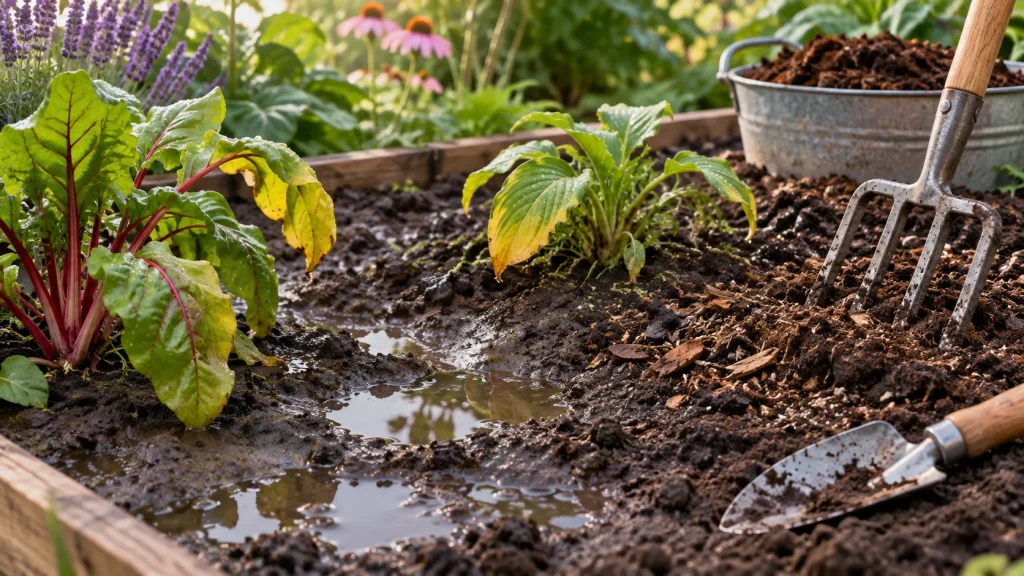
Overfertilized plants may develop yellowing foliage or lose leaves as root health declines. Lower leaves can sometimes be affected, although the pattern depends on the species and severity of injury.
Yellowing is particularly difficult to diagnose because it also occurs with insufficient light, waterlogging, natural aging, pest damage, and nutrient deficiencies.
What to check: Review the plant’s overall growing conditions. If the leaves turned yellow soon after repeated fertilizer applications, excess feeding is worth investigating, but do not rule out other causes.
4. Wilting Despite Moist Soil
Wilting may seem surprising in an overfertilized plant. If water is present, why are the leaves drooping?
The explanation may involve high dissolved salt concentrations interfering with water uptake, damage to fine roots, or another problem affecting root function.
What to check: Feel the growing medium below the surface. If it is already wet, avoid automatically adding more water. Consider poor drainage and root disease as alternative explanations.
Wilting alone cannot distinguish excessive fertilizer from overwatering, drought, heat, or root rot.
5. Slow Growth or Stunted New Leaves
Plants experiencing significant fertilizer injury may stop growing normally. New leaves can remain unusually small, shoots may grow slowly, and the plant may fail to produce the expected amount of foliage.
This can result from damage to the root system or nutrient imbalances that interfere with normal growth.
What to check: Look for several symptoms occurring together, rather than relying only on growth rate. Seasonal dormancy, low light, cold temperatures, and restricted roots can also slow development.
6. White Crust on Potting Soil or Containers
A pale, powdery, or crystalline residue sometimes develops on potting mix, container rims, or the outside of porous pots.
The residue may contain fertilizer salts, but it may also come from mineral-rich irrigation water. Its presence suggests that dissolved minerals are accumulating or being deposited as water evaporates.
What to check: Review the feeding schedule and water source. Notice whether the container has drainage holes and whether water regularly moves through the growing medium or remains trapped.
White residue alone does not prove that harmful fertilizer concentrations are present. Testing the growing medium may help clarify the situation.
7. Root Damage and Declining Plant Health
In more severe cases, excess soluble salts can injure fine root tips. Damaged roots may lose their ability to absorb water and nutrients, causing the entire plant to decline.
Affected roots may show dieback, and the plant may develop widespread wilting, leaf loss, or stunting.
What to check: Investigate drainage, moisture, fertilizer history, and whether the decline is continuing. Carefully inspect roots only when necessary and appropriate for the species.
Root decay can also result from waterlogging or infectious diseases, so damaged roots do not automatically confirm fertilizer injury.
Important Caution: Do not respond to yellowing, wilting, or slow growth by automatically applying more fertilizer. These symptoms may already reflect excessive feeding or an unhealthy root system. Additional fertilizer could make the damage worse.
Overfertilization Symptoms: Quick Comparison Table
Use this table to decide what to investigate first. No single symptom provides a definitive diagnosis.
| What you notice | Possible explanation | What to investigate |
|---|---|---|
| Brown tips after frequent feeding | Possible fertilizer salt injury | Application rate, frequency, and moisture |
| Brown or yellow leaf margins | Salt stress, drought, or other leaf scorch | Recent feeding, weather, and watering |
| Wilting while soil remains moist | Impaired root function | Salt buildup, drainage, and root health |
| White crust on potting mix | Accumulated dissolved minerals | Fertilizer use and irrigation-water quality |
| Slow growth and premature leaf drop | Possible root injury or nutrient imbalance | Root-zone conditions and feeding history |
| Very lush soft growth | Possible excessive nitrogen supply | Fertilizer formulation and application rate |
| Localized scorch after fertilizer touched leaves | Possible direct fertilizer contact injury | Recent granular or foliar applications |
Overfertilization or Another Plant Problem?
Several common growing problems can resemble fertilizer injury. Making the distinction matters because the wrong response can increase plant stress.
Underwatering
Severely dry growing medium can cause wilting, crispy tips, leaf scorch, and slowed growth. In this case, the immediate issue may be insufficient available moisture rather than excessive fertilizer.
Check the root zone instead of judging soil moisture only by the surface. Note that drought and high fertilizer salt concentrations can occur together, potentially increasing injury.
Overwatering and Poor Drainage
Roots need access to oxygen. When the growing medium remains saturated, roots can become stressed or damaged, resulting in yellowing, wilting, and declining growth.
If the potting mix is already soggy, repeated flushing without considering drainage may make root conditions worse.
Sunscald and Heat Injury
Strong sunlight or sudden exposure to hot conditions can cause dry, pale, or brown patches on leaves. This damage may be concentrated on foliage facing the most intense light.
Consider whether the plant was recently moved into a brighter position or exposed to unusually high temperatures.
Nutrient Deficiencies
A plant lacking an essential nutrient may develop yellowing, unusual coloring, or slow growth. Yet similar symptoms can also appear when roots are damaged or when excessive amounts of one nutrient interfere with the uptake of another.
Adding a general fertilizer without identifying the cause may be ineffective or harmful. Soil or growing-medium testing can provide a more reliable basis for changing nutrition.
Root Rot and Other Diseases
Root diseases can lead to wilting, yellow leaves, and poor growth even when sufficient moisture is present. They require different investigation and management from simple fertilizer salt buildup.
Root color, firmness, drainage, symptoms, and possible disease history should be considered together. Specific infectious root diseases may require professional diagnostic testing.
Good to Know: More than one problem can affect a plant at the same time. For example, excessive fertilizer salts combined with a dry rootball can create more severe stress than either issue alone.
How to Check Whether You Have Overfertilized a Plant
Work through the following checks before attempting treatment.
- Review your fertilizer records. Identify the product, concentration, amount, application method, and date of each recent feeding.
- Compare the amount with label instructions. Check whether fertilizer was mixed too strongly, applied too often, or combined with other products supplying the same nutrients.
- Examine the pattern of damage. Note whether browning affects leaf tips, margins, or areas that fertilizer contacted directly.
- Check root-zone moisture and drainage. Determine whether the plant is dry, appropriately moist, or persistently saturated.
- Look for mineral deposits. Inspect the potting mix and container for crusts, while remembering that irrigation water can also cause them.
- Consider other recent changes. Review extreme temperatures, sun exposure, repotting, pests, and possible chemical contact.
- Use testing when appropriate. A laboratory can measure soluble salts or electrical conductivity in soil or growing media. Interpretation should follow the testing method and the requirements of the crop or plant species.
Can Electrical Conductivity Testing Help?
Electrical conductivity, usually abbreviated as EC, is a measurement related to the concentration of dissolved ions in a solution. It can help assess soluble salt levels in certain soils, growing media, and irrigation water.
However, a single EC reading does not identify which salts are present or prove that fertilizer is the source. Different testing methods also produce results that should not be compared without accounting for the method used.
For valuable plants, persistent problems, or suspected severe salt buildup, a suitable laboratory test interpreted with local horticultural guidance is more useful than relying on an arbitrary universal EC target.
What to Do If You Have Overfertilized a Plant
If the evidence suggests excess fertilizer or soluble salts, the recovery approach depends on the plant species, root condition, and whether it is growing in a container or in the ground.
Step 1: Stop Additional Fertilizer Applications
Pause fertilizing while you investigate. Adding more nutrients to a stressed root system may increase injury or make an existing imbalance worse.
Check for slow-release fertilizer granules already mixed into the growing medium. Their presence matters because nutrient release may continue even after liquid feeding stops.
Step 2: Remove Excess Surface Fertilizer When Practical
If you recently spilled granular fertilizer onto the surface or applied an obvious excess that has not yet dissolved, carefully remove loose material without unnecessarily disturbing roots.
Do not scrape deeply into the root zone or attempt to remove fertilizer that has already dissolved by aggressively digging around an established plant.
Step 3: Assess Whether Leaching Is Appropriate
Leaching means moving water through soil or growing medium to carry dissolved salts away from the roots. For some container plants with confirmed or strongly suspected high soluble salts, flushing with clear, suitable-quality water can reduce salt concentration.
The container must have effective drainage, and excess water needs to leave the root zone. The process should not be treated as a universal solution for every damaged plant.
If the medium is already waterlogged, drainage is poor, or the plant has severely damaged roots, large amounts of water may worsen the situation. First address the root-zone conditions and consider whether professional or species-specific advice is needed.
Important Caution: Do not repeatedly flood a pot without drainage holes or a garden bed that cannot drain. Waterlogging can injure roots, and uncontrolled runoff from fertilized soil may carry nutrients into waterways. Use a recovery method suited to the plant, site, and drainage conditions.
Step 4: Consider Replacing Contaminated Potting Mix
For some small container plants with very high salt levels, replacing unsuitable growing medium may be more practical than repeatedly flushing it.
Use fresh, species-appropriate potting mix, a clean container, and gentle handling. Avoid tearing apart healthy roots more than necessary.
Repotting is not always the correct response. Certain plants are sensitive to root disturbance, and repotting a severely stressed plant can introduce additional injury. Assess the situation before proceeding.
Step 5: Provide Appropriate Light, Temperature, and Moisture
After the immediate fertilizer problem is addressed, keep the plant in conditions suited to its species. Avoid unnecessary environmental changes, extreme temperatures, and additional chemical applications.
Water according to actual moisture needs rather than following an automatic daily schedule. The aim is to support surviving roots without creating another stress.
Step 6: Avoid Unnecessary Pruning
Brown, dead leaf tissue will not regain its original green color, but leaves with substantial healthy tissue may continue supporting the plant.
Do not strip away large amounts of foliage solely to improve appearance. Remove completely dead material when appropriate, using clean tools, while preserving healthy growth.
Step 7: Monitor New Growth Before Feeding Again
Look for stable leaf condition, continued growth, and new leaves developing without fresh damage. These signs may indicate that growing conditions are improving.
Do not resume feeding simply after an arbitrary number of days. Wait until the plant has recovered sufficiently and nutrition is appropriate for its species, growth stage, and growing medium.
Gardening Tip: Photograph the plant before making corrections, then monitor newly developing leaves. Old scorch marks usually remain even when the root-zone problem has been resolved, so healthy new growth is often a more useful measure of recovery.
Overfertilization in Potted Plants vs. Garden Soil
Potted Houseplants and Container Vegetables
Container plants grow in a limited volume of medium, so fertilizer concentration, irrigation-water quality, and drainage can have a strong influence on root conditions.
Potential problems include repeated liquid feeding, incorrectly diluted concentrates, applying fertilizer despite slow plant growth, and allowing dissolved minerals to accumulate in pots that drain poorly.
Some commercial potting mixes already contain fertilizer or controlled-release nutrients. Adding extra feed immediately after planting may be unnecessary, depending on the product and crop.
If high soluble salts are confirmed, an appropriate response may involve leaching or replacing the potting medium, taking the plant’s condition and drainage into account.
Vegetables, Flowers, Shrubs, and Other In-Ground Plants
In-ground plants can experience fertilizer injury after excessive application of concentrated products, especially if granules are placed directly against roots or stems or if soils are dry.
The appropriate response depends on soil type, rainfall, drainage, the fertilizer involved, and whether soluble salts are actually elevated. A laboratory soil test can help guide decisions.
Repeatedly soaking a large garden bed is not always advisable, particularly in poorly drained locations or near waterways where nutrient runoff is a concern.
For valuable shrubs, trees, or crops showing serious decline, consult a qualified local horticultural professional rather than applying additional amendments without a diagnosis.
Can an Overfertilized Plant Recover?
Yes, some plants can recover from fertilizer injury, particularly when the problem is recognized early and a functioning root system remains.
The outlook depends on how severe the damage is, the plant species, which fertilizer or salts are involved, and whether the root-zone conditions can be corrected.
Signs of Possible Recovery
- New leaves emerge without developing additional scorch.
- Wilting becomes less severe when suitable root-zone conditions are restored.
- The plant resumes normal growth for its species and season.
- Previously unaffected foliage remains healthy.
- Root function improves sufficiently to support new growth.
When Recovery May Be Difficult
A severely damaged root system, widespread leaf loss, prolonged decline, or additional stresses may reduce the chances of recovery. Some plants tolerate salt exposure better than others.
No single recovery timeline applies to every plant. Established woody plants may respond differently from young vegetable seedlings or small houseplants.
Focus on stopping new injury and restoring appropriate growing conditions rather than expecting existing brown leaf tissue to become green again.
How to Prevent Overfertilizing Plants
The most effective prevention strategy is to supply fertilizer only when the plant needs it and at a rate appropriate for the product, species, and growing conditions.
- Read fertilizer labels carefully. Follow instructions for mixing, application amount, frequency, and permitted uses.
- Consider what is already in the soil. Soil tests can help determine whether additional nutrients are necessary.
- Account for pre-fertilized potting mixes. Some growing media contain nutrients that continue releasing after planting.
- Avoid combining feeds without a reason. Multiple fertilizers, composts, and amendments can contribute overlapping nutrients.
- Adjust feeding to active growth. Many plants need less fertilizer when growth slows, although requirements depend on species and growing conditions.
- Maintain appropriate drainage. Container drainage and suitable watering reduce the risk of excessive soluble mineral buildup.
- Keep fertilizer off sensitive foliage. Unless a product is designed and labeled for foliar feeding, avoid direct contact with leaves.
- Measure rather than guess. Use appropriate measuring equipment for concentrated fertilizers instead of estimating doses.
- Keep a feeding record. Write down each application so that you do not accidentally repeat a recent dose.
- Consider the environment. Excessive fertilizer can also contribute to nutrient runoff and water pollution.
Does Organic Fertilizer Prevent Overfertilization?
No. Organic fertilizers and nutrient-rich amendments can also be overapplied. Their nutrient release and salt characteristics vary, but using more than a plant or soil needs may still create imbalances or environmental problems.
Compost, manure-based materials, and organic feeds should be applied according to their properties, soil conditions, and appropriate gardening guidance rather than assuming that natural products are unlimited or harmless.
Frequently Asked Questions About Overfertilizing Plants
What happens if you put too much fertilizer on a plant?
Excess fertilizer can increase soluble salt concentrations, interfere with water uptake, injure roots, and cause symptoms such as brown leaf margins, wilting, slow growth, or leaf loss. The effect depends on the amount applied, product formulation, plant species, and growing conditions.
Can fertilizer burn appear overnight?
Some plants may develop noticeable injury soon after a concentrated fertilizer application or direct contact with sensitive tissues. In other cases, salt buildup develops gradually and symptoms appear over time. Recent application history is important when investigating the cause.
Do brown leaf tips always mean too much fertilizer?
No. Brown tips can also result from drought, unsuitable humidity, irrigation-water quality, root stress, and other environmental problems. Consider fertilizer history and additional symptoms before concluding that excessive feeding is responsible.
Should I flush the soil after overfertilizing?
Leaching with suitable-quality water can help reduce soluble salts in some well-drained containers. However, flushing is not appropriate for every plant or situation. Waterlogged soil, inadequate drainage, severe root damage, and environmental runoff concerns must be considered first.
Is the white crust on potting soil fertilizer?
It may contain fertilizer salts, but mineral-rich irrigation water can also leave white deposits. The appearance of a crust does not prove that fertilizer levels are toxic. Review water quality, feeding practices, and growing-medium conditions.
Can too much fertilizer cause yellow leaves?
Yes. Excessive fertilizer salts can damage roots and contribute to yellowing or dropping leaves. However, yellow leaves have many other possible causes, including watering problems, insufficient light, and nutrient deficiencies.
How long does it take a plant to recover from fertilizer burn?
Recovery varies with plant species, severity of damage, root health, and growing conditions. There is no reliable universal timeline. Look for healthy new growth and reduced progression of injury rather than expecting existing brown tissues to recover.
Is it better to use less fertilizer than more?
The goal is not to underfeed plants but to supply an appropriate amount. Use plant-specific recommendations, soil tests where relevant, and product label instructions. Applying more fertilizer than needed rarely improves growth and can increase injury and environmental risks.
Final Thoughts
Overfertilizing plants can cause leaf scorch, root injury, wilting, and poor growth, but these symptoms should not be interpreted in isolation. The most reliable starting point is to review recent fertilizer applications, inspect moisture and drainage, and consider whether another growing problem may be responsible.
If excess fertilizer salts are likely, stop additional feeding and choose a response appropriate to the plant and its growing medium. Some well-drained container plants may benefit from carefully managed leaching, while others may require fresh potting mix or more specialized guidance.
Most importantly, remember that fertilizer is a tool for meeting plant nutrient needs, not a substitute for suitable light, water, soil, and healthy roots. Thoughtful feeding and regular observation are usually more effective than applying extra nutrients whenever growth slows.
For more advice on caring for the root zone, explore our Soil & Watering guides. If your plant is showing unusual foliage symptoms, you can also read Why Are Plant Leaves Turning Yellow?.
Further Reading and Horticultural References
- University of Maryland Extension: Fertilizer Toxicity or High Soluble Salts in Indoor Plants — symptoms of excessive salts and container plant management.
- University of Maryland Extension: Fertilizer or Pesticide Burn on Vegetable Leaves — fertilizer-related leaf scorch and contributing conditions.
- University of Maryland Extension: Mineral and Fertilizer Salt Deposits on Indoor Plants — identifying mineral residue and managing excessive buildup.
- Royal Horticultural Society: How to Feed Plants — choosing fertilizer appropriately and avoiding overfeeding.
- University of Maryland Extension: Excess Fertilizer or Salt Damage on Flowers — leaf and root symptoms associated with salt injury.
- Royal Horticultural Society: Nutrient Deficiencies — distinguishing nutrient problems from environmental stress.