How to Improve Clay Soil for Gardening

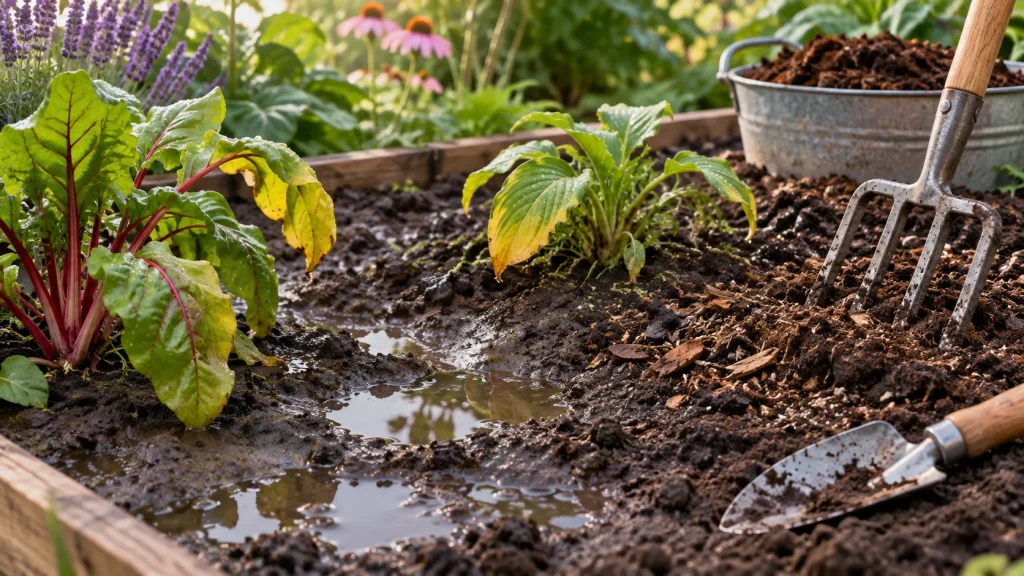
Clay soil can be frustrating to work with. After heavy rain, it may become sticky, compacted, and difficult to dig. During hot, dry weather, the same ground can harden into dense clods or develop cracks across the surface.
These conditions can make vegetable growing, planting flowers, and establishing healthy roots more challenging. Seedlings may struggle in waterlogged beds, while some plants develop weak roots because the soil does not provide enough air or suitable drainage. If puddles persist after rain, trace the source of the waterlogging before adding amendments.
However, clay soil is not necessarily poor soil. In fact, many clay-rich soils naturally hold substantial amounts of water and plant nutrients. With appropriate management, they can support productive vegetable gardens, attractive perennial borders, shrubs, trees, and lawns.
The key is improving soil structure rather than trying to remove every clay particle. Adding suitable organic matter, keeping the soil covered, preventing compaction, and managing excess water can gradually create better growing conditions.
This guide explains how to identify clay soil, improve its structure, choose appropriate amendments, and manage drainage throughout the growing season. It also covers common mistakes, including why adding ordinary sand or applying gypsum without testing may not solve the problem.
Quick Answer: What Is the Best Way to Improve Clay Soil?
For most home gardens, the best way to improve clay soil is to add suitable organic matter over time, protect the soil from compaction, and maintain a protective surface covering.
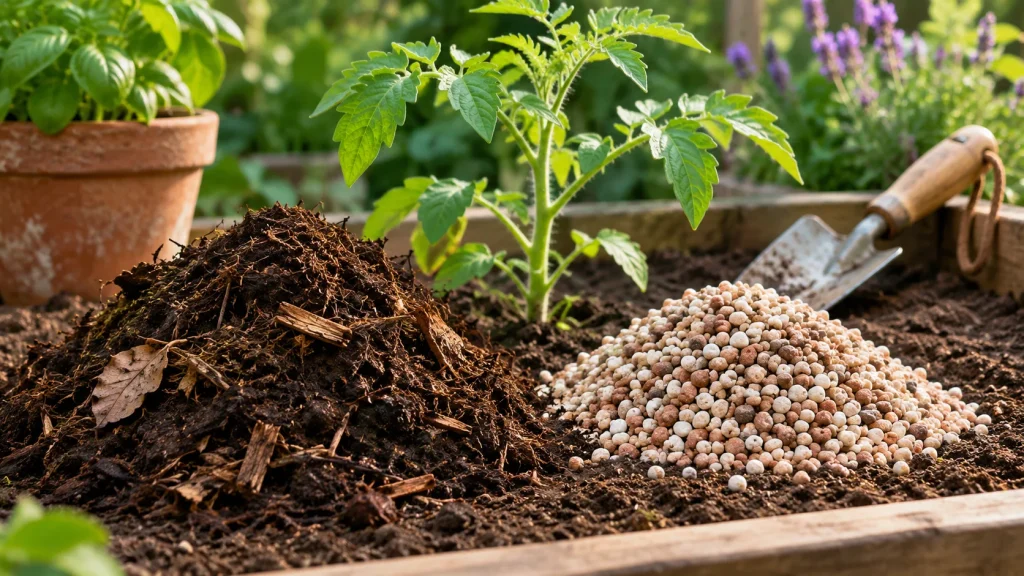
Well-finished compost, composted bark, and other appropriate organic materials can improve soil aggregation. This helps create a better balance of air and water around plant roots without changing the soil’s fundamental clay content.
Mulching the surface can reduce drying, erosion, and temperature extremes while supporting gradual improvements as organic matter decomposes.
For particularly wet or compacted areas, raised beds, permanent paths, and appropriate drainage solutions may provide additional benefits.
Start with these practical steps:
- Confirm that your soil is clay-rich and identify any additional drainage problems.
- Test soil pH and nutrient levels before adding lime or large quantities of fertilizer.
- Incorporate suitable finished organic matter into new beds when the soil is workable.
- Apply appropriate organic mulch to established beds and permanent plantings.
- Avoid walking, digging, or rototilling clay soil while it is saturated.
- Use raised beds or slightly elevated planting areas where drainage is a serious limitation.
- Keep growing areas covered with plants, mulch, or suitable cover crops.
- Select plants that tolerate the moisture and drainage conditions of your site.
- Avoid adding ordinary sand or gypsum without a specific, evidence-based reason.
Improving clay soil is generally a gradual process. The aim is to develop better structure and healthier root conditions over successive growing seasons, not to transform the soil into sand.
Gardening Tip: If you can improve only one garden bed this season, start there. Apply appropriate organic matter, keep the bed mulched, and avoid walking on it. Observe how the soil responds before extending the same approach across the whole garden.
How to Identify Clay Soil in Your Garden
Soil contains different proportions of sand, silt, and clay. These mineral particles differ in size, and their proportions determine the soil’s texture.
Clay particles are extremely fine. Their large combined surface area helps explain why clay-rich soil can retain substantial water and nutrients while sometimes draining slowly.
You do not need specialized equipment to recognize many common signs of clay-rich soil, although laboratory analysis is more reliable when precise soil texture information is needed.
1. Clay Soil Feels Sticky When Wet
Moist clay-rich soil often feels smooth, sticky, or plastic when rubbed between your fingers.
Unlike sandy soil, which generally feels gritty, clay may form a cohesive mass when squeezed.
Very wet clay can stick to shoes, spades, and gardening tools.
2. The Soil Becomes Hard When Dry
Some clay soils develop hard surfaces or large clods as they dry.
Soils containing certain expansive clay minerals may shrink and form visible cracks during prolonged dry periods.
However, not every clay soil cracks, and hard soil can also result from severe compaction or other structural problems.
3. Water Drains Slowly After Rain
Clay-rich soils often allow water to move more slowly than sandy soils, especially when the soil is compacted or has poor structure.
Puddles may remain after heavy rain, and garden beds can stay wet for longer than expected.
However, poor drainage does not always mean that clay is the only problem. A high water table, buried debris, compacted subsoil, and unsuitable site grading can produce similar symptoms.
4. Try a Simple Soil Ribbon Test
A basic hand-texture test can help you determine whether your soil contains a substantial amount of clay.
- Collect a small soil sample and remove stones, roots, and large debris.
- Add a little water if needed until the sample is moist but not excessively wet.
- Squeeze the soil into a ball.
- Press the ball gently between your thumb and forefinger, allowing a narrow ribbon of soil to extend outward.
- Observe how smooth and sticky it feels and how well the ribbon holds together.
Soil with a relatively high clay content often forms a longer, more stable ribbon than sandy soil.
This is a useful practical clue, but it is not an exact measurement of clay percentage. If your site has significant drainage or construction-related problems, a professional soil assessment may be more informative.
Advantages and Challenges of Gardening in Clay Soil
Clay soil has characteristics that can be both useful and difficult for gardeners. Understanding its strengths helps you choose management practices that improve the soil without sacrificing its natural benefits.
Advantages of Clay Soil
- Water retention: Clay-rich soil can hold substantial moisture for plant use.
- Nutrient retention: Many clay minerals can retain positively charged nutrients that might otherwise be lost more quickly from sandy soils.
- Potential fertility: Properly managed clay soil can support productive vegetables, shrubs, and ornamental plants.
- Summer moisture reserves: Clay soil may hold useful water during moderate dry periods, depending on root access and soil structure.
- Long-term improvement potential: Suitable organic matter and biological activity can improve aggregation and workability over time.
Challenges of Clay Soil
- Slow drainage: Water may move slowly through densely packed or compacted clay.
- Compaction risk: Wet clay is particularly vulnerable to damage from footsteps, wheels, and cultivation.
- Poor aeration when saturated: Prolonged waterlogging reduces oxygen available to roots.
- Slow spring warming: Wet clay soils may warm later than lighter soils in cool climates.
- Difficult cultivation: Clay can be sticky when wet and hard or cloddy when dry.
- Surface crusting: Some soils form a firm surface layer that makes seedling emergence difficult.
- Seasonal shrinking or swelling: Certain clay types change volume as their moisture content changes.
The objective of soil improvement is to preserve the useful water- and nutrient-holding properties while improving pore spaces, drainage, root growth, and workability.
Soil Texture Versus Soil Structure
Two terms are especially important when discussing clay soil.
Soil texture describes the proportions of sand, silt, and clay. Adding compost does not remove the clay particles or fundamentally change the mineral soil’s texture.
Soil structure describes how particles are arranged into aggregates and how pore spaces form between them.
Healthy soil structure can allow roots, water, and air to move through a clay-rich soil more effectively.
Most practical gardening methods aim to improve structure rather than attempting to change the basic texture of the entire soil profile.
Test Your Soil and Check Drainage Before Adding Amendments
Before purchasing fertilizers, lime, gypsum, or large quantities of soil improver, determine what your garden actually needs.
Use a Laboratory Soil Test
A laboratory soil test can provide information about important chemical characteristics, including soil pH and nutrient levels.
Many laboratories also provide an organic matter measurement. Specialized tests may be available for salinity, sodium-related soil problems, or other site concerns.
This information helps avoid unnecessary amendments.
For example, adding lime without checking soil pH can create problems if the soil is already sufficiently alkaline.
Similarly, adding fertilizer will not correct a compacted layer that prevents roots from reaching oxygen and water.
Try a Basic Drainage Test
A simple field drainage test can help indicate whether the soil has unusually slow water movement.
One method recommended by university extension guidance uses a hole approximately 30 cm (12 inches) deep and 30 cm (12 inches) wide.
- Choose a representative area away from buried pipes, cables, and other utilities.
- Dig a hole approximately 30 cm deep and wide, using suitable precautions.
- Fill the hole with water and allow the surrounding soil to become wetted.
- The following day, fill the hole again.
- Measure how quickly the water level falls over a suitable observation period.
Very slow drainage may suggest compacted soil, high clay content, a restrictive underground layer, a high water table, or another site limitation.
One test hole does not provide a complete diagnosis. If substantial drainage problems are present, additional investigation may be necessary.
When Should You Investigate Further?
Seek additional guidance if water remains standing for long periods, a large part of the garden regularly becomes saturated, or previous attempts to improve the soil have not worked.
A high water table or impermeable underground layer cannot necessarily be corrected by adding compost to the upper few centimeters of soil.
Gardens developed on former industrial land, demolition sites, or other potentially contaminated areas may also require appropriate soil safety testing before growing edible crops.
How to Improve Clay Soil With Compost and Organic Matter
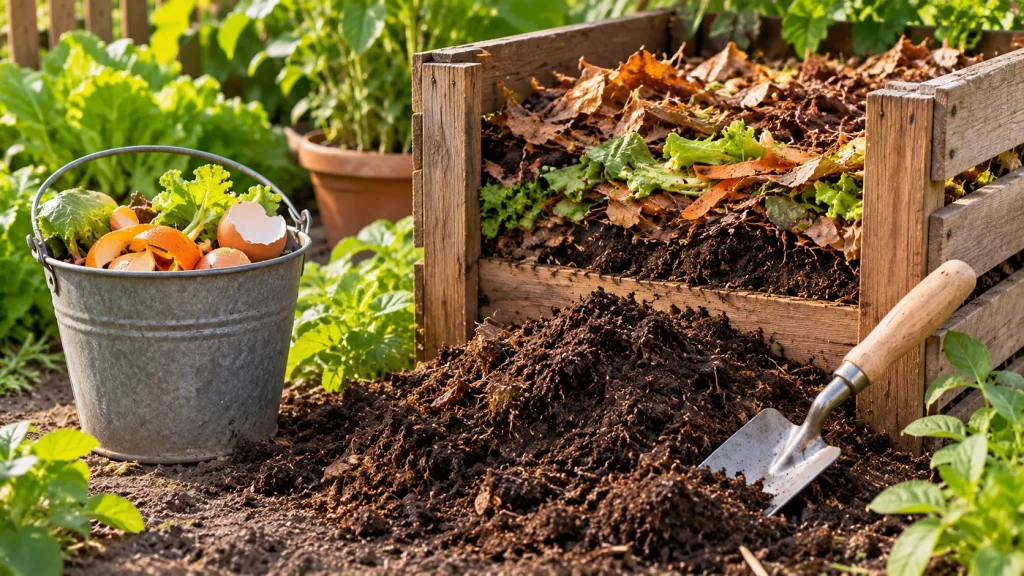
Adding suitable organic matter is one of the most widely recommended ways to improve the structure of clay-rich garden soil.
Organic matter supports soil organisms and contributes to the development of stable aggregates. Over time, this can help create more favorable spaces for air, water, and roots.
Well-Finished Garden Compost
Finished compost is often an excellent starting point for improving clay soil.
It contains decomposed organic material that can support soil biological activity and improve workability.
Suitable compost may also supply nutrients, so the amount applied should reflect the existing nutrient status of the soil.
Choose mature compost that has finished decomposing and is reasonably free from persistent weed seeds, unwanted chemical residues, and visible contamination.
Composted Bark
Composted bark can contribute coarse organic material that improves workability in certain heavy soils.
It is particularly useful where the objective is structural improvement rather than supplying a large amount of fertilizer.
Use a horticultural product suitable for soil improvement. Fresh wood chips are generally better used as a surface mulch rather than mixed in large amounts into a vegetable bed.
Well-Rotted Animal Manure
Properly composted animal manure can supply organic matter and nutrients.
However, manure composition and nutrient concentrations vary, and some materials may contain excessive soluble salts or persistent herbicide residues.
For edible gardens, use appropriately processed manure and follow relevant food-safety guidance. Avoid applying untreated manure indiscriminately around crops that will be eaten raw.
Manure should not automatically be considered safer or more effective than quality plant-based compost.
Shredded Leaves and Leaf Mould
Shredded leaves can be used as surface mulch, while well-decomposed leaf mould may contribute useful organic matter to suitable beds.
Whole leaves piled in dense, wet layers can mat together, so shredding or using an appropriate depth may improve their performance.
Collect healthy leaves where appropriate and avoid introducing serious plant disease problems into growing areas.
How Much Compost Should You Add to Clay Soil?
There is no single amendment rate suitable for every clay soil.
For a new vegetable or flower bed with poor structure, a surface layer of approximately 2.5–5 cm (1–2 inches) of suitable finished compost can be a practical initial amount to evaluate, with further additions guided by soil condition, nutrient levels, and local recommendations.
Where incorporation is appropriate, gently blend the material into the upper cultivated soil while the ground is workable. Avoid creating a concentrated pocket or sharply separated layer.
University extension guidance for some new, very clay-rich beds permits greater amounts, but these are site-specific recommendations and should not be used as a universal annual application rate.
Existing perennial beds and areas around trees may be better managed through suitable surface compost and organic mulch rather than repeatedly digging near established roots.
Do You Need to Add Organic Matter Every Year?
Organic matter gradually decomposes, so periodic replenishment is often helpful.
However, it is not necessary to apply increasingly large amounts regardless of soil condition.
Monitor soil structure, crop performance, compost quality, and nutrient levels. Maintaining an appropriate surface mulch may also contribute organic matter gradually.
Good to Know: Organic matter improves the arrangement and stability of soil particles; it does not remove the clay. Well-managed clay-rich soil can remain naturally fertile and moisture-retentive while becoming easier to cultivate and more supportive of healthy roots.
Why Mulching Is Especially Useful for Clay Soil
Mulching means placing a suitable protective material over the soil surface rather than mixing it into the ground.
For clay soil, mulching can help protect the surface from heavy rainfall, reduce moisture loss, moderate temperature changes, and support biological activity as organic material decomposes.
Protect the Soil From Surface Crusting
Heavy rain can break down exposed soil aggregates and contribute to surface crusting.
A suitable mulch layer reduces the direct impact of raindrops and helps protect the structure of the upper soil.
This can be particularly useful in vegetable beds that would otherwise contain large areas of bare soil.
Reduce Summer Drying and Cracking
Although clay retains substantial water, exposed clay-rich soil can become extremely hard during prolonged dry weather.
Organic mulch reduces direct sun and wind exposure at the soil surface, helping slow moisture loss.
This is particularly valuable around established shrubs, vegetables, and perennial plants in hot climates.
Apply Mulch at an Appropriate Depth
For many established planting beds, an organic mulch layer around 5–8 cm (2–3 inches) is a useful starting point, depending on the material and plants.
Suitable materials include shredded leaves, composted bark, clean straw, and wood chips in appropriate locations.
Keep mulch away from tree trunks, tender stems, and sensitive plant crowns.
Do not add a thick layer over already saturated ground without considering whether the soil needs time to dry.
Near emerging seedlings, use a lighter approach to avoid burying young growth.
How to Prevent Compaction and Improve Clay Soil Structure
Preventing further damage is often just as important as adding amendments.
Clay soil is particularly vulnerable to compaction when it is wet. Heavy traffic and poorly timed cultivation can collapse pore spaces and create dense layers that restrict water movement and root growth.
Avoid Digging When the Soil Is Wet
Do not assume that the soil is ready for cultivation simply because the weather is warm or a gardening calendar recommends spring preparation.
If clay sticks heavily to your tools and compresses into a wet, shiny mass, it may be too wet to work.
Wait until the soil becomes reasonably workable and crumbles more easily.
In some climates, autumn offers a more practical period for preparing heavy clay, while in others the timing follows local rainy and dry seasons.
Create Permanent Garden Paths
Walking repeatedly across a planting bed can compact the root zone, especially after rain.
Use designated paths, stepping stones, or sufficiently narrow beds that you can reach from the sides.
This reduces the need to step into the cultivated soil while planting, harvesting, or removing weeds.
Avoid Unnecessary Rototilling
Mechanical cultivation can temporarily loosen compacted soil, but frequent or poorly timed tilling may damage soil structure.
Rototilling wet clay is particularly damaging.
Repeated cultivation can also leave a compacted layer beneath the worked depth and disrupt developing soil aggregates.
Use cultivation only when there is a clear reason, and consider reduced-disturbance methods for established beds.
Encourage Biological Activity
Earthworms, soil microorganisms, plant roots, and fungi contribute to the formation and stability of soil aggregates.
Maintaining organic matter, reducing unnecessary disturbance, and keeping soil covered can help support these processes.
Improvements may be gradual, but they can contribute to more stable and workable soil over time.
Using Raised Beds, Mounds, and No-Dig Gardening on Clay Soil
Raised beds and reduced-disturbance gardening can be particularly useful where heavy clay remains too wet for planting during part of the growing season.
Raised Beds for Vegetables
Raised beds lift the growing area above the surrounding ground, allowing greater control over the growing medium.
They can also reduce the need to walk on cultivated soil and may provide an earlier planting opportunity in cool, wet climates.
Choose a suitable bed height based on the plants, native soil conditions, available materials, and whether the bed needs accessible working height.
A modest raised bed may be sufficient for some vegetables, while persistent waterlogging or accessibility needs may justify a deeper structure.
Use a suitable, well-drained growing medium rather than filling the bed with pure compost or ordinary dense clay.
If the underlying clay remains saturated for long periods, investigate where excess water can go. Raising the surface alone may not solve a severe drainage problem.
No-Dig Gardening
No-dig gardening generally involves maintaining the planting area without routine digging or turning of the soil.
Suitable finished compost and organic mulch are applied to the surface, where soil organisms gradually incorporate some of the organic matter.
This approach reduces repeated physical disturbance and can help preserve developing soil structure.
However, severely compacted or poorly drained sites may require initial corrective action before a low-disturbance system works effectively.
Planting on Slight Mounds
In suitable locations, slightly elevated planting mounds can reduce the period during which sensitive roots remain in saturated soil.
This can be useful for some shrubs and woody plants that cannot tolerate prolonged waterlogging.
Use locally appropriate planting advice, maintain a natural root flare where relevant, and avoid creating a narrow mound that dries too quickly or exposes roots.
Do not assume that a raised mound can overcome a persistently high water table or major site drainage problem in every situation.
How to Improve Drainage and Water Clay Soil Correctly
Clay soil can hold considerable water, but that does not mean it provides the ideal amount of moisture and oxygen at all times.
Managing drainage and irrigation together helps protect plant roots from both prolonged saturation and summer drought stress.
Investigate Persistent Waterlogging
Waterlogging can result from several interacting conditions:
- Compacted surface soil or subsoil.
- Dense clay with limited pore connectivity.
- A buried restrictive layer or construction debris.
- Low-lying ground where water collects.
- A high seasonal water table.
- Excessive irrigation or concentrated runoff from roofs and paved surfaces.
The correct solution depends on the cause. Adding compost may help soil structure, but it will not necessarily correct a high water table or an unsuitable drainage outlet.
Avoid Creating a Water-Holding Planting Hole
When planting into dense clay, a hole filled with highly contrasting, loose growing media may behave differently from the surrounding native soil.
If water enters more quickly than it can leave, the planting area may remain saturated for longer than expected.
Prepare planting holes according to the plant and local soil conditions, avoid compacted smooth-sided walls, and consider wider site improvement rather than concentrating amendments only in a small hole.
Where prolonged saturation is unavoidable, select appropriately tolerant plants or consider a suitable raised planting area.
Do Not Water by a Fixed Daily Schedule
Because clay retains moisture, established plants may need less frequent irrigation than comparable plants growing in fast-draining sandy soil.
However, actual watering needs depend on the crop, temperature, rainfall, root depth, and soil structure.
Check moisture below the surface at an appropriate root depth before watering.
If the root zone remains adequately moist, additional water may be unnecessary even when the surface looks dry.
Use Gentle, Controlled Irrigation
Applying water too quickly to clay soil may cause runoff before the moisture can infiltrate.
Where appropriate, drip irrigation or slower watering cycles can help deliver moisture to the growing area while reducing waste.
Adjust irrigation according to soil conditions rather than assuming that a long watering session always wets roots deeply.
When Is Professional Drainage Work Necessary?
Consider professional assessment when water regularly collects near buildings, remains on the surface for long periods, causes erosion, or creates persistent problems across a large area.
Drainage channels, subsurface systems, grading changes, or other engineered solutions may be appropriate in some cases.
These solutions require a suitable discharge location and must comply with local requirements. Do not direct runoff onto neighboring properties or undermine buildings.
Should You Add Gypsum, Lime, or Sand to Clay Soil?
Commercial soil-improving products are often promoted as quick fixes for heavy clay, but their effectiveness depends on the soil’s actual chemistry and structure.
Does Gypsum Improve Clay Soil?
Gypsum is calcium sulfate. Under certain soil conditions, it can help improve clay behavior by supplying calcium.
Its clearest established use is in the management of certain sodium-affected, or sodic, soils. Excess exchangeable sodium can cause clay particles to disperse and limit water infiltration.
In appropriate sodic soils, calcium from gypsum can help replace sodium on soil exchange sites, provided the displaced sodium can subsequently be leached through suitable drainage and water management.
However, many ordinary clay soils are not sodic and may already contain adequate calcium.
In these soils, gypsum may provide little or no structural improvement and can introduce unnecessary salts.
Some horticultural guidance recognizes that particular clay soils may respond to calcium amendments, but this is not evidence that all clay soils benefit from routine gypsum applications.
Better approach: Use a suitable soil analysis and local recommendations before applying gypsum. Do not treat it as a universal substitute for organic matter, drainage management, or preventing compaction.
Should You Add Lime?
Garden lime is primarily used to raise the pH of appropriately acidic soil.
It should not be applied simply because the soil contains clay.
If soil testing shows that the pH is too low for the intended plants, a suitable lime application may be recommended.
However, adding lime to soil that is already alkaline can make certain nutrients less available to plants.
Follow a soil test and appropriate local recommendations rather than applying lime by guesswork.
Will Adding Sand Improve Clay Soil?
Adding small quantities of sand to heavy clay is generally not an effective way to improve an ordinary garden bed.
Clay particles are extremely fine, and changing the overall texture of a clay-rich soil would require a substantial volume of appropriately sized mineral material.
Small or poorly proportioned additions of sand may produce an undesirable dense mixture rather than the open structure gardeners expect.
For most home gardens, adding organic matter, protecting the soil surface, and using raised beds where needed are more practical approaches.
Specialized engineered growing media may contain carefully specified sand or grit, but this does not mean that scattering a few bags of builder’s sand over heavy clay is useful.
Important Caution: Do not add gypsum, lime, sulfur, or large quantities of sand to clay soil without understanding the problem they are meant to solve. Soil amendments should be selected using soil conditions and appropriate testing, not because a product is advertised as a general clay-soil fixer.
What Plants Grow Well in Clay Soil?
Clay soil can support many productive and attractive plants. The best choices depend on drainage, local temperatures, sunlight, and whether the soil remains wet or becomes very dry during different seasons.
Vegetables for Improved Clay Soil
Many vegetables can grow successfully in clay-rich soil once drainage and soil structure are suitable.
Brassica crops such as cabbage, broccoli, and kale can perform well in fertile, moisture-retentive soil when roots have sufficient oxygen.
Beans, tomatoes, squash, and other warm-season vegetables may also grow productively in improved clay beds, provided waterlogging and compaction are avoided.
Root vegetables can be more difficult in hard, cloddy clay because their developing roots may become misshapen or restricted.
For carrots, parsnips, and other crops requiring a fine, loose seedbed, a suitable raised bed may provide more dependable results.
Flowers and Perennials
Many ornamental perennials tolerate clay-rich soil, including selected hardy geraniums, asters, daylilies, and other adaptable garden plants.
However, tolerance to clay does not necessarily mean tolerance to standing water.
Choose species according to whether the planting area drains adequately or remains wet for extended periods.
Shrubs and Trees
Some roses, viburnums, hydrangeas, and other ornamental shrubs can perform well in suitable clay-rich soil.
Many trees also grow successfully in clay soils, provided the species is matched to the actual drainage and local climate.
Avoid planting a species that requires very free drainage in a site that remains waterlogged for long periods.
Research the mature size, moisture tolerance, and root characteristics of trees before planting them close to buildings, walls, or underground services.
Plants That May Need Special Attention
Plants adapted to very freely draining soils, including many Mediterranean herbs, alpines, and drought-adapted species, may struggle in heavy clay that stays wet during winter or rainy periods.
These plants may perform better in suitable raised beds, containers, or specially prepared planting areas.
Consider soil moisture through the entire year rather than judging the site only during the dry season.
How to Improve a Clay Soil Garden: Step-by-Step Plan
A practical improvement plan helps you make changes in a sensible order without wasting effort on unnecessary amendments.
- Step 1 — Inspect the garden. Identify sticky, compacted, waterlogged, or severely dry areas. Note where healthy plants already grow well.
- Step 2 — Test the soil. Arrange appropriate pH and nutrient testing. Consider specialized tests if salinity or sodium-related problems are suspected.
- Step 3 — Check drainage. Observe water movement after rainfall and investigate areas that remain saturated.
- Step 4 — Wait for workable conditions. Avoid digging or walking over wet clay that sticks heavily to tools.
- Step 5 — Remove unwanted weeds. Manage persistent weeds and avoid fragmenting underground structures that can regrow.
- Step 6 — Add suitable organic matter. Use finished compost or other appropriate amendments in new beds where incorporation is justified.
- Step 7 — Avoid unnecessary deep cultivation. Loosen compacted soil only when needed, preserving good structure wherever possible.
- Step 8 — Create permanent paths. Keep foot traffic away from planting areas.
- Step 9 — Use raised beds where appropriate. Improve the growing area for vegetables or other plants sensitive to prolonged waterlogging.
- Step 10 — Cover the soil. Apply suitable organic mulch around established plants without burying stems or crowns.
- Step 11 — Plant suitable species. Match crop and ornamental choices to local moisture, sunlight, and temperature conditions.
- Step 12 — Monitor watering. Check moisture beneath the surface and avoid unnecessary irrigation.
- Step 13 — Observe improvements. Record changes in workability, drainage, root growth, and plant health over time.
A Seasonal Clay Soil Improvement Routine
Timing depends on local climate, but the following approach is useful in many temperate gardens.
Spring
- Wait until wet clay is workable before preparing beds.
- Check drainage after seasonal rainfall.
- Prepare suitable vegetable beds and raised growing areas.
- Apply organic matter or mulch when appropriate.
- Delay direct sowing where soil remains cold or saturated.
Summer
- Maintain suitable mulch to reduce moisture loss.
- Monitor soil moisture beneath the surface.
- Avoid repeatedly disturbing dry, hard soil.
- Watch for drought stress and restricted water infiltration.
- Keep established growing areas covered with healthy plants.
Autumn
- Assess the structure of finished vegetable beds.
- Prepare suitable areas when soil moisture allows.
- Use appropriate compost or leaf-based mulches.
- Consider cover crops that suit the climate and planting schedule.
- Inspect drainage before prolonged wet weather.
Winter or the Main Wet Season
- Keep unnecessary traffic away from saturated beds.
- Protect exposed soil from erosion and surface damage.
- Inspect areas where water accumulates.
- Plan repairs, drainage improvements, and future planting areas.
- Avoid cultivation while the soil is waterlogged or frozen.
In tropical or subtropical climates, adapt the same principles to local wet and dry seasons rather than using the conventional spring-to-winter calendar.
Clay Soil Improvement Methods Compared
This table summarizes useful approaches and their limitations. The best choice depends on the actual site problem.
| Method | Main benefit | Important limitation |
|---|---|---|
| Finished compost | Improves aggregation, biological activity, and soil structure | Nutrient content varies; excessive applications may create imbalances |
| Composted bark | Contributes bulky organic matter and improves workability | Use suitable processed material, not large amounts of fresh woody waste mixed into soil |
| Organic mulch | Protects the surface, conserves moisture, and gradually contributes organic matter | Does not immediately correct deep compaction or a high water table |
| Permanent paths | Reduces compaction from repeated foot traffic | Does not reverse existing severe compaction by itself |
| Raised beds | Provides more control over the root-growing zone | May not solve severe site-wide drainage problems |
| Cover crops | Protects exposed soil and contributes roots and organic material | Requires suitable species, timing, and management |
| Gypsum | Can assist reclamation of certain sodium-affected soils | Not a universal clay improver; testing and drainage are essential |
| Lime | Raises pH in soil that is appropriately acidic | Not needed simply because soil contains clay |
| Sand or grit | Useful in specially engineered media or limited site-specific applications | Large volumes may be needed; small additions can be ineffective or harmful |
| Drainage improvements | Can address persistent excess water where correctly designed | Requires investigation of water source, soil profile, and discharge location |
10 Common Mistakes When Improving Clay Soil
1. Digging Clay Soil While It Is Wet
Working saturated clay can collapse pore spaces and create large, dense clods.
Better approach: Wait for soil to become workable before cultivating, and use permanent paths to minimize compaction.
2. Adding Small Amounts of Ordinary Sand
A small amount of sand usually cannot meaningfully change the texture of heavy clay, and an unsuitable mixture may become denser.
Better approach: Prioritize suitable organic matter and site management rather than relying on untested sand additions.
3. Using Gypsum Without a Soil Diagnosis
Gypsum is often promoted as a quick solution for every kind of clay, but its benefits are strongly dependent on soil chemistry.
Better approach: Use appropriate testing and local guidance, especially when a sodium-related soil problem is suspected.
4. Applying Too Much Compost or Manure
Even useful organic materials can cause problems when applied in excessive amounts, particularly if they contain substantial nutrients or salts.
Better approach: Select appropriate amendments and use soil tests and plant needs to guide application.
5. Mixing Fresh Wood Chips Deep Into the Soil
Fresh woody material can create temporary competition for available nitrogen as microorganisms decompose it.
Better approach: Use suitable composted bark as an amendment and reserve coarse fresh wood chips mainly for appropriate surface mulching.
6. Ignoring Persistent Drainage Problems
Adding organic matter may improve soil structure, but it cannot always overcome a high water table or restrictive underground layer.
Better approach: Investigate persistent waterlogging and consider suitable raised beds or professional drainage assessment.
7. Walking Repeatedly on Planting Beds
Repeated footsteps can compact clay soil, especially when it is wet.
Better approach: Maintain dedicated paths and avoid stepping into the root-growing area.
8. Planting Into a Small Pocket of Loose Compost
Creating a sharply different growing medium inside a small hole surrounded by dense clay may result in uneven water movement and restricted root development.
Better approach: Improve wider planting areas where practical and choose an appropriate planting method for the soil and species.
9. Overwatering Because the Surface Looks Dry
The top of clay soil can dry while the deeper root zone remains adequately moist.
Better approach: Check moisture below the surface before watering and adjust irrigation to rainfall and plant needs.
10. Expecting Clay Soil to Change Immediately
Building stable soil structure through organic matter, roots, and biological activity takes time.
Better approach: Maintain consistent soil-covering and low-compaction practices, then assess progress over successive growing seasons.
Frequently Asked Questions About Improving Clay Soil
What is the fastest way to improve clay soil for gardening?
For a small new planting bed, preparing the soil when it is workable and incorporating suitable finished compost can help improve immediate workability. Raised beds provide another practical option where drainage is unsuitable. However, stable long-term soil improvement generally requires repeated good management rather than an instant treatment.
Is clay soil good for growing vegetables?
Yes. Clay soil can be fertile and retain useful nutrients and moisture. Many vegetables grow well in clay-rich soil when its structure and drainage are suitable. Hard, compacted, or waterlogged beds may require improvement, and some root crops benefit from a finer, looser growing medium.
What should I mix into clay soil to improve it?
Suitable finished compost, composted bark, and other appropriate organic materials are widely recommended. The amount and incorporation method depend on the soil’s existing structure, nutrient levels, and intended use. Surface mulching is often useful for established beds where digging would disturb roots.
Should I add sand to clay soil?
Usually not as a routine home-garden treatment. Changing heavy clay texture through sand addition generally requires very large quantities of suitably graded material. Small or poorly proportioned additions may not improve drainage and can make the soil harder to manage.
Does gypsum really break up clay soil?
Gypsum can be useful in certain sodium-affected soils where calcium is needed to replace excess sodium, provided appropriate drainage and leaching are possible. It is not a universal treatment for ordinary clay soils and may offer little benefit when sodium is not the cause of poor structure.
How much compost should I add to clay soil?
The amount depends on the soil, compost properties, and planting purpose. For some new garden beds, a surface application of around 2.5–5 cm (1–2 inches) can be an initial amount to assess, while other situations require different rates. Follow soil testing and local guidance, and avoid excessive annual nutrient accumulation.
How do I improve clay soil without digging?
Use appropriate surface applications of finished compost and organic mulch, maintain living plants or cover crops, and avoid walking on the beds. Soil organisms can gradually incorporate organic material. Severely compacted or waterlogged sites may still require additional corrective work.
Why does clay soil become hard like concrete in summer?
Clay-rich soil can shrink and become very hard as it loses moisture. Some clay minerals expand when wet and contract when dry. Compaction and poor structure can make the problem more severe. Suitable organic matter, mulch, and reduced soil disturbance may help improve growing conditions.
Can raised beds solve clay soil drainage problems?
Raised beds can provide a better growing environment for many vegetables and other plants by lifting their roots above the surrounding soil. However, they may not correct a high water table or severe site-wide drainage problem. Use a suitable growing medium and assess where excess water can move.
Is clay soil acidic or alkaline?
Clay soils can be acidic, neutral, or alkaline. Clay texture alone does not determine soil pH. Use a suitable soil test before adding lime, sulfur, or products intended to change acidity.
How long does it take to improve clay soil?
Some improvements in workability may be noticeable after preparing a bed with suitable organic matter, but stable improvements in structure and biological activity generally develop over multiple seasons. The rate depends on starting conditions, organic matter additions, climate, and management.
What can I grow in clay soil that drains poorly?
Choose plants specifically adapted to the actual moisture conditions of your site. Some ornamental shrubs and perennials tolerate heavy or periodically wet soil, while vegetables and plants requiring free drainage may need raised beds. Persistent standing water should be investigated before planting.
Final Thoughts
Clay soil may be sticky during wet weather and hard during dry periods, but it also has useful qualities. Its ability to retain moisture and nutrients can support productive gardens when the soil is managed appropriately.
The most effective improvements usually come from building better soil structure rather than trying to remove or replace the clay itself.
Suitable finished compost, organic mulching, permanent paths, and reduced soil disturbance can gradually support healthier root growth and make planting beds easier to manage.
Where drainage remains a serious limitation, raised beds or more comprehensive site improvements may be needed. Avoid assuming that gypsum, lime, or a small amount of sand will solve every clay-soil problem.
Check soil moisture and drainage before taking action, choose plants suited to local conditions, and make improvements gradually. With consistent care, clay-rich soil can become a reliable foundation for vegetables, flowers, shrubs, and a healthy garden.
For more advice on improving growing conditions, explore Gardenivo’s Soil & Watering guides. You can also visit Vegetable Gardening for crop-growing tips and Lawn & Garden Care for maintaining healthy outdoor spaces.
Further Reading and Horticultural References
- Royal Horticultural Society: Clay Soils — identifying heavy clay, managing seasonal soil conditions, adding organic matter, and choosing suitable plants.
- Royal Horticultural Society: Gardening on Wet Soils — checking drainage and managing persistently wet growing areas.
- Royal Horticultural Society: How to Mulch With Organic Matter — protecting soil surfaces, improving structure, and maintaining appropriate organic mulch.
- Royal Horticultural Society: Plants for Clay Soils — selecting garden plants adapted to clay-rich conditions.
- University of Maryland Extension: Soil Health, Drainage, and Improving Soil — soil health principles, drainage assessment, and clay-soil management.
- University of Maryland Extension: Soil Basics — differences between texture and structure, soil pore spaces, and nutrient retention.
- University of Maryland Extension: Organic Matter and Soil Amendments — compost, organic matter, soil structure, and suitable amendment practices.
- Colorado State University Extension: Choosing a Soil Amendment — comparing organic and inorganic amendments, salinity concerns, and soil-specific management.
- Colorado State University Extension: Soil Compaction — compaction, sand amendments, and limitations of gypsum in ordinary clay soils.
- Royal Horticultural Society: Soil Cultivation — timing cultivation, avoiding wet soil damage, and appropriate digging practices.