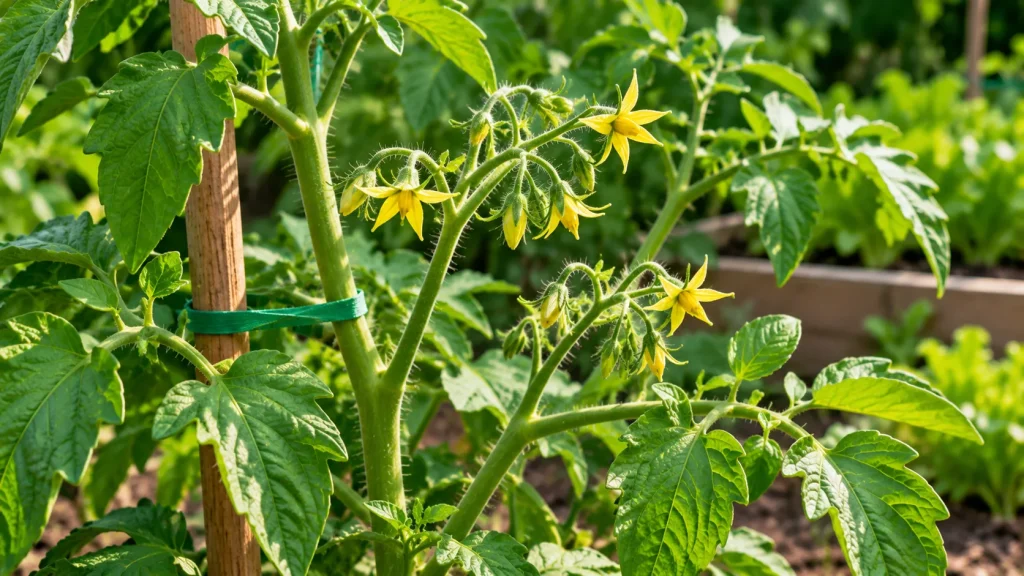
Why Are Tomato Leaves Curling?
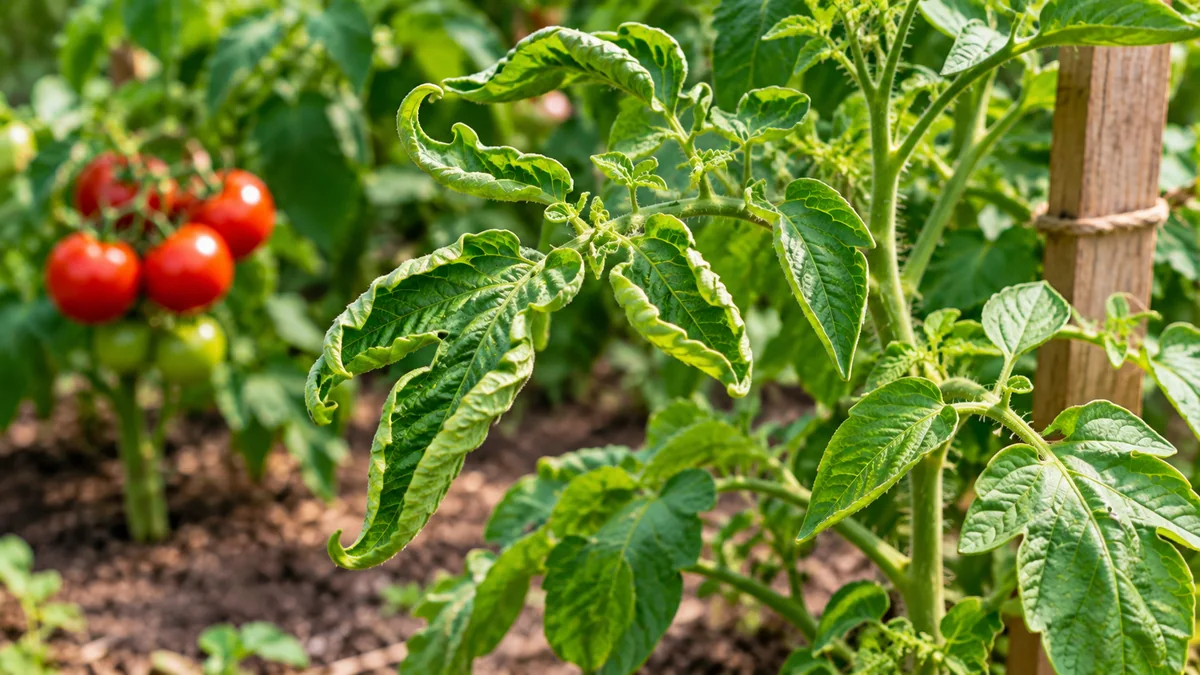
Tomato leaves curling upward, rolling inward, or becoming twisted can be alarming, especially when the plant was growing normally just a few days earlier. You may notice the lower leaves folding like small tubes, the newest leaves becoming narrow and distorted, or entire branches looking different from the rest of the plant.
Fortunately, curling tomato leaves do not always mean something is seriously wrong. One of the most common causes is physiological leaf roll, a response associated with hot weather, moisture stress, rapid growth, and sometimes heavy pruning. Affected leaves may look unusual, but the plant can continue growing and producing tomatoes normally. Before watering curled tomato plants, check the soil below the surface.
However, not all leaf curling is harmless. Aphids and tiny mites can damage developing leaves. Herbicide drift may cause new growth to become sharply twisted or narrow. Certain plant viruses can produce curling together with yellowing, stunting, and reduced fruit production.
The direction of the curl, which leaves are affected, and whether the plant is otherwise healthy provide important clues. Older leaves that roll upward but remain green and firm suggest a different problem from young leaves that become yellow, puckered, or severely distorted.
Understanding the cause matters because the solutions are very different. A plant with harmless physiological leaf roll may need nothing more than continued good care, while a plant affected by pests or suspected herbicide exposure requires investigation before any treatment is chosen.
In this guide, you’ll learn why tomato leaves curl, how to distinguish ordinary leaf rolling from serious problems, what to check when leaves curl upward or downward, and how to care for affected plants. You’ll also find practical advice for container tomatoes, greenhouse plants, watering, pruning, pest management, and preventing leaf problems in future crops.
Quick Answer: Why Are My Tomato Leaves Curling?
Tomato leaves most commonly curl because of physiological leaf roll, heat stress, inconsistent soil moisture, or sudden changes in growing conditions. If the leaves roll upward but remain green and the plant continues growing normally, the problem is often harmless.
However, curling accompanied by severe twisting, yellowing, stunting, visible pests, or damaged new growth may indicate another cause, including aphids, mites, herbicide exposure, or viral disease.
The most useful first step is to examine the entire plant rather than one unusual leaf.
- Older leaves roll upward and become leathery: Often physiological leaf roll associated with heat, moisture stress, or rapid growth.
- Leaves curl and the soil is very dry: Possible underwatering or drought stress.
- Leaves curl while the soil stays wet: Check drainage, root health, and possible waterlogging.
- New leaves curl around small insects: Check for aphids, mites, and other pests.
- Young leaves become narrow, twisted, or strap-shaped: Consider herbicide exposure or certain pests and diseases.
- Leaves curl with yellowing and severe stunting: Investigate possible viral disease or another major growing problem.
- Leaves roll after heavy pruning: Physiological stress may be contributing.
- Greenhouse leaves curl with blister-like patches: Consider edema associated with unfavorable moisture and humidity conditions.
According to University of Minnesota Extension, ordinary physiological tomato leaf roll usually does not noticeably reduce plant growth or yield. Once an affected leaf has rolled, it may remain rolled even after the weather improves.
Do not remove all curled leaves or apply fertilizer and pesticides simply because the foliage looks unusual. First determine whether the condition is harmless or whether other symptoms indicate a genuine problem.
Gardening Tip: Inspect the newest leaves and the plant’s overall growth. If the lower leaves are rolled but new growth is normal, the plant is vigorous, and flowers or fruits continue developing, physiological leaf roll is a strong possibility. Monitoring may be more useful than applying a treatment.
How to Identify Different Types of Tomato Leaf Curling
The phrase tomato leaf curl describes a symptom, not a single disease.
Different problems can make tomato leaves roll, twist, fold, become narrow, or develop an unusual texture.
Before attempting a fix, pay attention to four details: the direction of the curl, the age of the affected leaves, their color, and whether the plant’s growth has changed.
Tomato Leaves Curling Upward
Upward curling is particularly common in physiological leaf roll.
The edges of the leaflets may roll toward the upper surface, sometimes forming a tube-like shape.
Older, lower leaves are often affected first, and they may feel thicker or more leathery than normal.
However, upward curling can also occur with certain viruses or pest damage. Look for additional symptoms before deciding that the plant is healthy.
Tomato Leaves Curling Downward
Downward curling or cupping is less useful as a diagnosis by itself.
It may appear with changes in water balance, root problems, herbicide injury, or abnormal growth caused by other factors.
Check whether the leaves are simply bending downward, whether their edges are rolling, or whether new stems are actually twisting.
Direction alone cannot confirm the cause.
Young Tomato Leaves Twisting or Becoming Narrow
When the newest leaves become extremely narrow, twisted, puckered, or distorted, investigate causes beyond ordinary physiological leaf roll.
Herbicide exposure can produce narrow, strap-like leaves and bent growing tips.
Broad mites and certain viral diseases can also damage new growth.
The appearance of the youngest leaves is particularly important in distinguishing these conditions from ordinary leaf roll affecting older foliage.
Curling With Yellow or Mottled Leaves
If curled leaves also contain unusual yellow patches, a mosaic of light and dark green, or a pattern of yellowing between the veins, consider possible pests or disease.
Some tomato viruses cause these patterns, particularly when combined with stunted growth and reduced flowering.
However, nutrient deficiencies and other stresses can produce similar discoloration.
Plant symptoms alone may not be sufficient to identify the underlying problem.
Curling With Sticky or Speckled Leaves
Sticky residue on foliage may be honeydew produced by aphids or other sap-feeding insects.
Fine pale speckles, bronzing, or delicate webbing may indicate spider mite damage.
Turn affected leaves over and inspect their undersides carefully.
Identifying an actual pest is more reliable than assuming all curling is insect-related.
1. Physiological Leaf Roll: The Most Common Harmless Cause
Physiological leaf roll is a noninfectious disorder associated with environmental and growth-related stress.
It is especially common in tomato plants during hot weather and periods of changing soil moisture.
Some cultivars are naturally more likely to show this response than others.
What Does Physiological Tomato Leaf Roll Look Like?
University of Minnesota Extension describes several typical signs:
- Leaf margins roll upward toward the upper surface.
- Older or lower leaves are commonly affected first.
- The edges may meet or overlap, forming a tube-like shape.
- Affected leaves may become firm, thick, or leathery.
- The overall plant often remains healthy and productive.
- In more severe cases, rolling can spread beyond the lower foliage.
- Leaves that have rolled may remain in that shape even after conditions improve.
Unlike many serious leaf problems, ordinary physiological leaf roll is not usually associated with severe stunting, extensive mosaic yellowing, or grossly malformed new growth.
What Causes Physiological Leaf Roll?
The disorder is associated with several factors rather than a single cause.
- Hot, dry weather.
- Changes in root-zone moisture.
- Rapid vegetative growth.
- Heavy pruning of some tomato varieties.
- Environmental changes affecting plant water balance.
- Natural differences between cultivars.
The Royal Horticultural Society also identifies large differences between daytime and nighttime temperatures as a cause of tomato leaf curling.
In protected growing environments, unusually cool nights followed by warm days may produce noticeable leaf rolling even when the plant remains productive.
Does Physiological Leaf Roll Reduce Tomato Yield?
Typically, no.
University of Minnesota Extension states that physiological leaf roll does not noticeably reduce tomato plant growth or yield.
A tomato plant may therefore continue producing normal flowers and fruits while several older leaves remain rolled.
This is why correctly identifying the disorder is important. Removing healthy foliage or applying unnecessary treatments may create more stress than the leaf rolling itself.
How Do You Treat Physiological Leaf Roll?
There is no specific chemical treatment required for ordinary physiological leaf roll.
Continue appropriate watering, maintain suitable growing conditions, and avoid unnecessary heavy pruning.
Monitor new growth and overall productivity.
Do not expect every affected leaf to flatten completely. Previously rolled leaves may retain their shape even after the original stress has ended.
Good to Know: Curled tomato leaves do not necessarily need to be removed. If the plant is healthy and the curling is ordinary physiological leaf roll, those leaves can still contribute to photosynthesis. Removing large amounts of healthy foliage may expose fruits to sunscald.
2. Underwatering and Drought Stress Can Make Tomato Leaves Curl
Tomato plants need an adequate supply of water to support their leaves, stems, roots, flowers, and developing fruits.
When soil becomes excessively dry, plants may struggle to replace the water lost through their leaves.
Curling or rolling can be part of the plant’s response to unfavorable moisture conditions.
Signs of Underwatering
- Growing medium feels dry at root depth.
- Leaves droop or wilt during dry weather.
- Leaf edges roll or fold.
- The plant grows more slowly during prolonged drought.
- Flowers or small fruits may drop during severe stress.
- Container plants become noticeably lighter as the growing medium dries.
However, midday wilting does not always prove the soil is dry.
During extreme heat, leaves can temporarily lose firmness even when moisture is available in the root zone.
How to Check Soil Moisture Correctly
For a container tomato, insert your finger or a suitable probe beneath the surface.
For larger pots, check farther into the root zone because the surface may be dry while deeper growing medium remains moist.
For in-ground tomatoes, use a small trowel to assess moisture in the active root zone without unnecessarily damaging roots.
Water when moisture is insufficient for the plant rather than assuming that every curled leaf requires irrigation.
How to Water an Underwatered Tomato Plant
If the root zone is genuinely dry, apply water slowly enough for it to absorb.
Avoid pouring a large amount onto very dry potting mix so quickly that most of it runs around the rootball and out of the drainage holes.
For garden tomatoes, irrigate the root zone sufficiently and allow water to infiltrate the soil.
Continue checking moisture afterward and adjust future watering to prevent repeated severe drying.
Will the Leaves Straighten After Watering?
Leaves that are temporarily drooping because of water shortage may become firmer after the roots regain an adequate moisture supply.
However, leaves affected by established physiological leaf roll may remain rolled.
Judge recovery by the condition of new growth, plant vigor, and fruit production rather than expecting every older leaf to return to its original shape.
3. Overwatering and Poor Drainage Can Stress Tomato Roots
Although dry conditions are a frequent cause of tomato leaf problems, excessive watering can also damage plants.
Roots need access to oxygen as well as moisture.
When soil or potting mix remains saturated for prolonged periods, normal root function may be restricted.
Signs of Excessive Root-Zone Moisture
- Growing medium remains very wet for extended periods.
- Leaves droop despite moist soil.
- Lower leaves begin yellowing.
- Growth slows or becomes weak.
- Leaves may curl or become distorted alongside other stress symptoms.
- Roots may show discoloration or deterioration if root disease develops.
These symptoms overlap with other problems, so confirm soil conditions rather than assuming overwatering from leaf appearance alone.
Why Wet Soil Can Cause Wilting
Wilting is not always caused by a lack of water in the soil.
Roots damaged by prolonged saturation may be unable to absorb water properly even when the surrounding soil is wet.
This can produce symptoms that resemble underwatering.
Adding more water without checking drainage may worsen the problem.
How to Improve Drainage
For container tomatoes, check that drainage holes are functional and that the potting mix has suitable structure.
Do not leave ordinary pots standing in deep collected water for extended periods.
If the growing medium is persistently dense and poorly aerated, repotting into an appropriate mix may be necessary when the plant can tolerate the disturbance.
For garden beds, assess soil compaction, irrigation practices, and site drainage before future planting.
Do not add a thick layer of gravel beneath container potting mix as a substitute for proper drainage.
4. Temperature Changes, Heat, and Wind Can Cause Leaf Curling
Tomato plants respond to the environment around their foliage as well as conditions in the soil.
Sudden changes in temperature, strong wind, and extreme heat can affect normal leaf function.
High Summer Temperatures
Hot weather increases evaporative demand and can place considerable pressure on the plant’s water balance.
University of Maryland Extension identifies upward rolling of lower tomato leaves as a common occurrence during midsummer heat and moisture stress.
University of Minnesota Extension also describes hot, dry weather as a common trigger for physiological leaf roll.
When the plant remains healthy, this response usually requires no special treatment.
Large Day-to-Night Temperature Changes
The Royal Horticultural Society highlights fluctuations between daytime warmth and cool nights as another cause of leaf curling in tomatoes.
This can occur outdoors or in greenhouses that experience strong temperature swings.
The foliage may look dramatically rolled even though serious yield loss is unlikely from this condition alone.
Strong Wind and Dry Air
Wind increases the rate at which moisture evaporates from leaves and exposed growing media.
Containers positioned in very windy locations can dry rapidly.
Strong gusts may also damage stems or leaves directly.
Where practical, provide a suitable sheltered location without blocking necessary sunlight or airflow.
Managing Heat Stress Safely
- Maintain appropriate root-zone moisture.
- Use suitable organic mulch around garden tomatoes.
- Consider temporary light afternoon shade during severe heat.
- Avoid heavy pruning that exposes fruit suddenly to intense sunlight.
- Keep container plants away from unnecessarily hot reflective surfaces where possible.
- Provide appropriate greenhouse ventilation.
- Do not apply concentrated fertilizers or sprays in an attempt to force recovery.
Extreme heat may also cause tomato flowers to drop or prevent fruit set, even when physiological leaf roll itself is not damaging the harvest.
5. Heavy Pruning and Transplant Stress Can Trigger Tomato Leaf Roll
Tomato plants can change their growth patterns after roots or foliage are disturbed.
Leaf rolling sometimes appears during periods of rapid growth or after heavy pruning.
Why Heavy Pruning Can Contribute
Removing a large amount of foliage suddenly changes the balance between roots and aboveground growth.
University of Minnesota Extension identifies pruning and rapid growth as possible contributors to physiological leaf roll.
Some heavily pruned determinate tomato varieties can be especially prone to the condition.
Pruning should therefore be based on the variety and growing system rather than applied indiscriminately.
Should You Remove Suckers From Every Tomato Plant?
No.
Some indeterminate tomatoes benefit from selective training, especially when grown on supports in a limited space.
However, determinate varieties often produce fruit on a more limited arrangement of stems and branches.
Removing too many productive shoots may reduce potential yield.
Choose appropriate pruning methods for the cultivar rather than removing every side shoot automatically.
Transplant Shock
Recently transplanted tomatoes may experience stress while roots adjust to their new environment.
Possible contributors include root disturbance, strong sunlight after indoor growing, sudden wind exposure, unsuitable temperatures, and inadequate moisture.
A mild temporary change in leaf position may improve as the plant establishes.
However, continued severe distortion or worsening symptoms should be investigated rather than automatically attributed to transplant shock.
How to Reduce Transplant Stress
- Harden off indoor-grown tomato seedlings gradually.
- Transplant during suitable weather.
- Handle rootballs carefully.
- Water appropriately during establishment.
- Avoid unnecessary heavy pruning immediately after transplanting.
- Provide stable support for plants where needed.
- Monitor healthy new growth rather than repeatedly disturbing the roots.
6. Aphids, Mites, and Other Pests Can Curl Tomato Leaves
Insects and mites may damage developing tomato leaves while feeding on plant tissues.
The resulting curling or distortion can resemble environmental stress.
To distinguish pest damage, look for insects, webbing, feeding marks, sticky residue, or abnormal changes concentrated in young growth.
Aphids on Tomato Plants
Aphids are small, soft-bodied insects that may appear green, pink, brown, or nearly black depending on the species.
They often gather on tender stems and the undersides of young leaves.
Feeding by sufficiently large populations can cause curling, distortion, yellowing, or reduced vigor.
Aphids may also leave sticky honeydew on foliage.
How to Manage Aphids
Inspect the affected growth to confirm aphids are present.
Small populations may be reduced by natural predators such as lady beetles and other beneficial insects.
Where appropriate, gently dislodging aphids with water may help, provided the treatment does not damage delicate plants or leave foliage wet for prolonged periods.
Use pesticides only when justified and permitted for edible tomatoes, following the label and local regulations.
Spider Mites
Spider mites are very small arachnids that feed on plant cells.
Their feeding may cause tiny pale spots known as stippling.
Heavier infestations may produce yellowing, bronzing, and delicate webbing.
Distorted or unhealthy leaves may occur alongside these signs, especially as damage progresses.
Hot, dry weather can favor certain spider mite outbreaks.
Broad Mites
Broad mites are extremely small and can be difficult to identify without magnification.
They may damage the youngest tomato leaves, causing them to become twisted, puckered, stunted, or otherwise deformed.
University of Maryland Extension describes broad mite damage on high-tunnel tomatoes as involving curled and distorted new leaves, with severe infestations potentially causing bronzing and damaged growing points.
Because these symptoms can resemble herbicide injury or viral disease, accurate identification is important before treatment.
Whiteflies
Whiteflies are small sap-feeding insects that can occur on tomato foliage.
Some species can transmit important tomato viruses.
The presence of whiteflies alone does not confirm that a plant has a viral disease.
However, whiteflies combined with yellowing, severe curling of new leaves, and stunted growth should prompt closer investigation.
Why Accurate Pest Identification Matters
Aphids, spider mites, broad mites, and whiteflies require different approaches to management.
An insecticide that controls one pest may not adequately control another and could damage beneficial organisms.
Use suitable integrated pest management methods, encourage natural enemies, and apply treatments only after identifying the problem.
7. Herbicide Drift Can Cause Twisted and Curled Tomato Leaves
Tomatoes are especially sensitive to certain herbicides commonly used to control broadleaf weeds in lawns, agricultural land, and other areas.
Herbicide injury can produce dramatic distortion that looks different from ordinary physiological leaf roll.
What Does Herbicide Damage Look Like?
Symptoms associated with growth-regulating herbicides, including products containing 2,4-D or dicamba, may include:
- New leaves becoming narrow or strap-shaped.
- Twisting and bending of young stems.
- Unusually curled, cupped, or puckered new growth.
- Small, distorted developing leaves.
- Growth that appears abnormal compared with earlier foliage.
- More severe symptoms on the side nearest a possible exposure source.
- Similar damage appearing on other susceptible nearby plants.
University of Maryland Extension identifies strongly twisted or narrow young tomato leaves as characteristic symptoms of certain herbicide injuries.
However, broad mites and some viruses can produce similar distortions, so the symptoms are not sufficient for a confirmed diagnosis.
How Herbicides Reach Tomato Plants
Exposure may occur when weed-control spray moves away from the intended application site.
Under certain conditions, volatile formulations may also move through the air after application.
Contaminated soil amendments, manure, straw, or compost can be another concern when persistent herbicides have been used on the original plant material.
Investigate the history of nearby spraying and recently introduced growing materials when unexplained distortion appears.
What Should You Do if You Suspect Herbicide Exposure?
First, stop any ongoing exposure where this can be done safely and legally.
Document the affected leaves, surrounding plants, recent spraying, weather conditions, and any newly added soil amendments.
Do not apply extra fertilizer in an attempt to neutralize the herbicide.
Severe injury from some growth-regulating herbicides may not be reversible, and replacement can be more practical when time remains in the growing season.
Seek guidance from a local extension service or qualified plant diagnostic laboratory when the cause is uncertain.
Are Tomatoes Safe to Eat After Herbicide Exposure?
Do not assume fruit is safe simply because it looks normal.
Whether a crop can be consumed depends on the chemical, application circumstances, registered crop uses, and any relevant residue or harvest restrictions.
If exposure to an herbicide not labeled for tomatoes is suspected, seek appropriate local agricultural or regulatory advice before eating the fruit.
Washing does not guarantee removal of herbicide residues that may have entered plant tissues.
Important Caution: Severely twisted tomato growth may indicate herbicide exposure, broad mite damage, or viral disease. Do not diagnose the cause from leaf shape alone. Avoid spraying unknown chemicals or homemade mixtures, and do not consume produce with suspected unapproved herbicide exposure until qualified guidance has addressed the safety question.
8. Tomato Leaf Curl Viruses and Mosaic Diseases
Some tomato viruses cause curled or distorted foliage together with other significant growth problems.
These conditions must be distinguished from ordinary physiological leaf roll because their causes and management are different.
Tomato Yellow Leaf Curl Virus
Tomato yellow leaf curl virus, often abbreviated TYLCV, is an important tomato disease in regions where its insect vectors occur.
The virus is transmitted primarily through certain whiteflies, particularly members of the Bemisia tabaci species complex.
Typical symptoms may include:
- Upward and inward curling of leaf margins.
- Yellowing between leaf veins or along leaf edges.
- Leaves that remain smaller than expected.
- Shortened distances between growing nodes.
- Stunted or bushy-looking growth.
- Reduced flowering or poor fruit production when infection occurs early.
University of Georgia Cooperative Extension describes these symptoms in its guidance on whitefly-transmitted tomato viruses.
However, the same general symptoms can also occur with other diseases and environmental problems. Laboratory testing may be needed for reliable identification.
Tomato Mosaic Virus and Related Viruses
Tomato mosaic virus and tobacco mosaic virus can produce abnormal foliage, including mottling, distortion, or changes in leaf size.
Other tomato viruses may produce twisted leaves, stunting, and unusual fruit appearance.
The exact symptoms depend on the virus, tomato cultivar, and environmental conditions.
University of Minnesota Extension emphasizes that tomato viruses cannot be reliably distinguished by appearance alone and may require diagnostic testing.
How Viruses Differ From Physiological Leaf Roll
Physiological leaf roll frequently affects older leaves while the rest of the plant remains vigorous.
Viral problems are more concerning when curling is accompanied by abnormal new growth, pronounced yellow or mosaic patterns, stunting, and reduced fruit production.
However, neither set of symptoms is perfectly exclusive.
Use the entire symptom pattern and local disease history to decide whether testing is appropriate.
Can You Cure Tomato Leaf Curl Virus?
There is no fertilizer, general-purpose fungicide, or ordinary watering treatment that cures a tomato plant infected with a virus.
Management focuses on preventing spread, using suitable resistant varieties where available, controlling relevant vectors, and handling confirmed infected plants appropriately.
If infection is suspected, seek advice about testing and local management recommendations before removing plants unnecessarily.
Confirmed infected plants may need removal according to local extension guidance, especially where an insect vector could spread the virus to other tomatoes.
9. Nutrient Imbalances, Root Restriction, and Other Growing Problems
Not every abnormal tomato leaf can be explained by heat, insects, or disease.
Problems affecting the roots or the availability of nutrients can also change growth and leaf appearance.
Excess Fertilizer
Applying too much fertilizer can increase soluble salts around tomato roots.
Severe salt stress may restrict normal water absorption, damage roots, or contribute to leaf injury.
However, curling by itself is not reliable proof that a tomato plant has received excessive fertilizer.
Review recent applications, the growing medium, leaf color, and root-zone moisture before making changes.
Nutrient Deficiencies
Deficiencies in essential nutrients can cause yellowing, discoloration, slow growth, and abnormal development.
Some deficiency symptoms may occur alongside curling or distorted leaves.
However, there is no universal nutrient deficiency that explains all tomato leaf curling.
Use an appropriate soil or growing-medium assessment before adding fertilizers based on one symptom.
Root Restriction
Tomatoes grown in containers that are too small may become root-restricted.
This can make watering more difficult and reduce the resources available for vigorous growth.
A plant with severe root restriction may show wilting, reduced growth, and other stress-related symptoms.
Check pot size and root development instead of automatically applying more fertilizer.
Compacted or Poorly Aerated Soil
Dense, compacted soil can limit oxygen movement and restrict root expansion.
Roots may then struggle to provide enough moisture and nutrients for healthy foliage.
Improve soil structure and drainage as part of long-term growing management.
Avoid repeatedly digging around the roots of an established tomato plant merely to investigate curling leaves.
10. Why Are Tomato Leaves Curling in Pots and Containers?
Container-grown tomatoes are particularly sensitive to rapid changes in their growing environment.
They have a limited volume of growing medium and cannot extend their roots into surrounding soil to find additional moisture.
Containers Can Dry Quickly
A mature tomato plant with a large canopy may use considerable water during warm weather.
Small pots, fabric grow bags, and exposed containers can dry rapidly.
Repeated fluctuations between dry and wet conditions can contribute to physiological stress.
Check moisture within the pot rather than assuming a daily watering schedule will suit every container.
Dark Pots and Reflected Heat
Dark containers may absorb substantial solar heat, especially when placed against brick walls or on hot paving.
Excessive root-zone temperatures can increase plant stress.
Choose suitable pot placement and consider lighter-colored containers where intense reflected heat is a problem.
Do not move plants into heavy shade if doing so prevents adequate sunlight for flowering and fruit production.
Choosing a Suitable Container Size
The ideal pot depends on the mature tomato variety.
Certain dwarf and compact cherry tomatoes can be grown in relatively small containers when the cultivar is selected for that purpose.
For many standard tomatoes, approximately 19 liters (5 US gallons) is a practical minimum starting volume.
Vigorous indeterminate varieties may need substantially more root space.
Choosing a suitably generous container can reduce rapid moisture fluctuations, but the full wet weight must be considered on balconies and raised structures.
Use Appropriate Potting Mix
Use quality potting mix formulated for container vegetables.
Ordinary garden soil may become compacted in pots and cause drainage problems.
Ensure the pot has functional drainage holes and that collected runoff is managed safely.
Do Container Tomatoes Need Extra Fertilizer?
Container plants may eventually need supplementary nutrients because their growing medium has a limited supply.
However, feeding should be based on the crop’s needs and nutrients already present in the mix.
Overfertilizing does not cure physiological leaf roll and can worsen root stress.
11. Why Are Tomato Leaves Curling in Greenhouses?
Greenhouses and high tunnels create growing conditions that differ from outdoor gardens.
They can experience high humidity, intense daytime heat, cool nights, restricted airflow, and different moisture conditions.
Temperature Fluctuations
Small greenhouses may become very warm during the day and then cool considerably at night.
The Royal Horticultural Society identifies these fluctuations as an important contributor to tomato leaf curling.
Monitor both daytime and nighttime temperatures and provide appropriate ventilation or protection.
High Humidity and Edema
Edema, also spelled oedema, is a physiological disorder that can develop when water uptake and water loss become poorly balanced.
University of Maryland Extension describes greenhouse tomatoes developing blister-like or corky areas, sometimes alongside curled or distorted leaves.
High humidity, low airflow, and unfavorable transpiration conditions can contribute to this problem.
Do not assume all greenhouse leaf curling is edema. Look for the characteristic raised or corky tissue and assess the environment.
Poor Air Circulation
Limited air movement can allow moisture and humidity to remain high around foliage.
Appropriate greenhouse ventilation and plant spacing can improve growing conditions.
However, excessively strong airflow can also increase drying and stress.
Balance ventilation with suitable temperature and moisture management.
Pest Problems in Protected Growing
Whiteflies, aphids, spider mites, and broad mites can occur in protected tomato crops.
Because some pests are difficult to see, greenhouse gardeners should inspect the undersides of leaves and tender growing points regularly.
Use appropriate identification and integrated pest management rather than treating all curling as a fungal disease.
Tomato Leaf Curling Diagnosis Chart: Symptoms, Causes, and First Steps
This table can help identify the most likely starting point for investigating curled tomato foliage.
No individual symptom is completely diagnostic. Always consider the whole plant, local conditions, and recent changes in care.
| What you notice | Possible cause | What to check first |
|---|---|---|
| Lower green leaves roll upward and feel leathery | Physiological leaf roll | Heat, watering history, pruning, and healthy new growth |
| Leaves roll after hot, dry weather | Heat or moisture stress | Root-zone moisture and recent temperatures |
| Leaves curl and the soil is very dry | Underwatering | Moisture at the active root depth |
| Leaves droop while soil remains wet | Overwatering, poor drainage, or root damage | Drainage and root condition |
| Newest leaves are narrow and sharply twisted | Possible herbicide injury, broad mites, or disease | Recent sprays, growing media, and pest evidence |
| Leaves curl around small green or dark insects | Aphids | Young shoots and undersides of leaves |
| Leaves have pale speckles and fine webbing | Possible spider mites | Direct inspection for mites and feeding damage |
| New leaves are puckered, twisted, or bronzed | Possible broad mites | Growing tips and diagnostic magnification |
| Leaves curl upward with yellowing and stunted shoots | Possible tomato yellow leaf curl virus | Whiteflies, symptom progression, and diagnostic testing |
| Leaves have light and dark green mosaic patches | Possible mosaic virus or another disorder | Whole-plant symptoms and laboratory confirmation |
| Leaves curl after heavy pruning | Physiological stress | Pruning history and whether growth remains healthy |
| Newly transplanted leaves look stressed | Transplant shock or environmental change | Root disturbance, weather, and hardening-off history |
| Greenhouse leaves have corky blisters and curling | Possible edema | Humidity, watering, airflow, and tissue appearance |
| Container tomato curls and dries rapidly | Restricted root space or fluctuating moisture | Pot size, growing medium, and watering conditions |
Harmless Leaf Roll vs. More Concerning Distortion
| Feature | Common physiological leaf roll | Potentially more concerning condition |
|---|---|---|
| Leaves affected first | Often older, lower leaves | Frequently young growth, depending on the cause |
| Leaf appearance | Rolled upward, firm, sometimes leathery | Twisted, puckered, narrowed, mottled, or abnormally small |
| Color | Often remains healthy green | May include yellowing, mottling, bronzing, or damage |
| Plant growth | Often continues normally | May become stunted or distorted |
| Fruit production | Usually little or no noticeable reduction from the leaf roll itself | May decline depending on the underlying problem |
| Likely management | Good routine care and observation | Identification and cause-specific action |
How to Fix Curling Tomato Leaves: Step-by-Step Troubleshooting
Before changing fertilizer, watering, or pest treatments, follow this sequence to understand what is happening.
Step 1: Check Which Leaves Are Curling
Look at the oldest foliage near the bottom and the newest leaves at the growing tips.
If older leaves are rolled upward and the newest growth looks normal, physiological leaf roll becomes more likely.
If the newest leaves are severely twisted, yellow, narrow, or stunted, investigate further.
Step 2: Examine Leaf Color and Texture
Check whether the leaves remain green and firm or show unusual yellowing, mosaic patterns, blistering, bronzing, or dead patches.
These accompanying symptoms can help distinguish ordinary rolling from other problems.
Step 3: Assess Root-Zone Moisture
Check moisture below the surface using a suitable method.
If the soil is very dry, water appropriately.
If it is saturated, do not automatically add more water. Inspect drainage and possible root problems.
Step 4: Review Recent Weather
Consider recent hot spells, dry winds, cool nights, and sudden temperature changes.
Environmental changes often explain mild rolling in an otherwise productive tomato plant.
Step 5: Inspect for Pests
Check the undersides of affected leaves and inspect tender stems and growing tips.
Look for aphids, whiteflies, stippling, webbing, or signs of mites.
If very small pests are suspected, a magnifying lens or professional diagnostic assistance may be necessary.
Step 6: Review Sprays and New Growing Materials
Check whether lawn herbicides or weed-control products were used nearby.
Consider whether symptoms appeared after adding unfamiliar compost, straw, manure, or growing media.
Severely twisted new growth should prompt careful investigation of possible chemical exposure.
Step 7: Review Pruning and Transplanting
Think about whether the plant was recently transplanted, heavily pruned, moved into stronger sunlight, or exposed to wind.
These changes may help explain noninfectious leaf rolling.
Step 8: Check Fertilizer History
Review what fertilizer was used, how much was applied, and whether multiple products were combined.
Do not automatically add nutrients until a deficiency is reasonably supported.
Step 9: Assess Plant Growth and Fruit Production
Check whether stems are growing normally and flowers or fruits continue developing.
A healthy, productive plant with older rolled leaves is less concerning than a severely stunted plant with distorted new growth.
Step 10: Take Cause-Specific Action
For ordinary physiological leaf roll, maintain routine care and monitor the plant.
For confirmed moisture problems, correct watering or drainage.
For pests, identify the organism and choose appropriate management.
For suspected herbicide exposure or viral disease, seek reliable diagnosis and local guidance before making irreversible decisions.
Step 11: Monitor New Growth
After correcting a confirmed growing problem, watch the youngest developing leaves.
New growth may provide more useful evidence of recovery than older leaves that remain permanently rolled or damaged.
Take photographs over several days to compare changes without repeatedly handling or stressing the plant.
Will Curled Tomato Leaves Recover and Become Flat Again?
The answer depends on the cause and how much the leaf tissue has changed.
Recovery From Temporary Water Stress
Leaves that are temporarily drooping from moisture shortage may regain firmness after proper watering.
However, severe or repeated drought can cause lasting tissue damage.
Correcting moisture conditions supports future growth but does not guarantee that all existing leaves will look normal again.
Recovery From Physiological Leaf Roll
University of Minnesota Extension notes that leaves affected by physiological roll often remain rolled even after temperatures and moisture conditions improve.
Fortunately, this typically does not harm fruit production.
Do not judge the plant’s recovery only by whether the older leaves flatten.
Recovery After Pest Damage
Leaves that became distorted while growing may remain misshapen after the pest has been controlled.
Healthy new leaves can indicate that the plant is no longer experiencing the same damage.
However, pest presence should be checked rather than assuming the absence of new symptoms proves complete control.
Recovery After Herbicide Injury
Mild injury from certain exposures may allow some continued growth, but severe damage from growth-regulating herbicides can be lasting.
The recovery potential depends on the chemical, amount of exposure, plant condition, and remaining growing season.
Do not consume potentially affected produce until the relevant safety questions have been addressed by qualified guidance.
Recovery From Viral Diseases
A tomato plant infected with a systemic virus cannot be cured by watering, fertilizer, or pruning.
Appropriate management depends on the confirmed virus and local disease-control recommendations.
Correct identification is important because many noninfectious disorders can resemble viral symptoms.
How to Prevent Tomato Leaves From Curling in Future Crops
Not all leaf rolling can be prevented, especially when it is a natural response to weather or cultivar characteristics.
However, good growing practices can reduce avoidable stress and help prevent many more serious causes of leaf distortion.
Maintain Appropriate Soil Moisture
Check the root zone regularly and water according to plant needs.
Avoid allowing plants to become severely dry and avoid keeping roots continuously waterlogged.
Use suitable mulch around garden tomatoes when practical to reduce moisture fluctuations.
Choose Suitable Planting Conditions
Tomatoes generally need strong sunlight and appropriate warmth.
Choose planting dates that avoid exposing young plants to cold, damaging conditions.
In regions with extreme summer heat, consider variety selection and a growing calendar that allows plants to establish under favorable weather.
Avoid Unnecessary Heavy Pruning
Prune according to the cultivar and growing system.
Preserve enough healthy foliage to support photosynthesis and shade developing fruit.
Do not strip healthy leaves merely because some are rolled.
Prevent Herbicide Exposure
Avoid using broadleaf lawn herbicides where spray drift or other exposure could affect edible tomatoes.
Follow all product restrictions and avoid spraying during unsuitable windy conditions.
Use only trustworthy sources of compost, mulch, and manure, particularly when the history of herbicide treatment may be relevant.
Inspect Plants for Pests
Regularly examine young leaves, stems, and leaf undersides.
Early identification can make pest management easier and reduce the likelihood of extensive damage.
Encourage beneficial organisms and avoid unnecessary broad-spectrum pesticides that may disrupt natural pest control.
Use Healthy Transplants and Suitable Varieties
Choose vigorous, healthy young tomato plants without unusual distortion or severe stunting.
Where particular viral diseases are common, consider cultivars with resistance appropriate to the local disease pressure.
Remember that resistance to one virus does not guarantee resistance to all tomato viruses.
Use Appropriate Container and Greenhouse Practices
Provide enough root volume, quality potting mix, and working drainage holes for container tomatoes.
In greenhouses, monitor temperature fluctuations, airflow, and humidity.
Do not assume that an enclosed growing space automatically provides more favorable conditions than the outdoors.
12 Common Mistakes When Tomato Leaves Start Curling
1. Assuming All Leaf Curling Means Disease
Physiological leaf roll is common and usually does not reduce yield.
Better approach: Check the age, color, and texture of the affected leaves, along with overall plant health.
2. Watering Automatically Whenever Leaves Curl
Curling may occur even when the root zone contains adequate moisture.
Better approach: Check moisture before watering.
3. Ignoring Persistently Wet Soil
Waterlogged roots may cause wilting and poor growth.
Better approach: Inspect drainage and avoid repeatedly saturating the growing medium.
4. Removing Every Curled Leaf
Healthy rolled leaves can continue contributing to plant growth.
Better approach: Leave healthy foliage in place unless there is a specific reason to remove it.
5. Pruning Too Aggressively
Heavy pruning can contribute to physiological stress and remove productive foliage.
Better approach: Follow cultivar-specific pruning guidance.
6. Applying Fertilizer Without Diagnosing the Problem
Fertilizer does not cure ordinary physiological leaf roll, herbicide injury, or viral infection.
Better approach: Review nutrient needs and growing conditions before feeding.
7. Ignoring Twisted New Growth
Severe distortion of young leaves may indicate a more significant problem.
Better approach: Investigate herbicide exposure, pests, and viral symptoms instead of assuming harmless leaf roll.
8. Spraying Pesticides Without Identifying a Pest
Unnecessary treatments may damage beneficial organisms and fail to address the real cause.
Better approach: Identify the pest and use suitable integrated pest management.
9. Overlooking Herbicide Drift
Tomatoes can be very sensitive to some lawn and agricultural herbicides.
Better approach: Review recent spray activity and the history of added growing materials.
10. Using Containers That Are Too Small
Restricted roots can make plants more vulnerable to moisture and temperature fluctuations.
Better approach: Choose suitable pot volume for the mature cultivar.
11. Ignoring Greenhouse Humidity and Ventilation
Poor environmental balance may contribute to physiological disorders such as edema.
Better approach: Monitor temperature, moisture, airflow, and humidity rather than focusing only on watering.
12. Expecting Old Leaves to Become Perfectly Flat
Leaves affected by physiological roll may remain rolled even after the original stress disappears.
Better approach: Monitor healthy new growth, plant vigor, and fruit production instead of the appearance of individual older leaves.
Frequently Asked Questions About Tomato Leaves Curling
Why are my tomato leaves curling upward?
Upward curling of older tomato leaves is often physiological leaf roll associated with hot weather, moisture stress, or rapid growth. If the plant remains healthy and productive, the condition is usually harmless. However, curling with yellowing, stunting, or abnormal young growth may require investigation.
Why are my tomato leaves curling downward?
Downward curling can occur with different growing problems, including abnormal water balance, root stress, herbicide injury, and other causes. The direction alone is not enough for a diagnosis. Check whether the leaves are twisted, whether new growth is affected, and whether other symptoms are present.
Is tomato leaf curl a disease?
Not necessarily. Physiological leaf roll is a common noninfectious condition. However, certain viruses and pests also cause curled or distorted leaves. Leaf color, new growth, plant vigor, and additional symptoms help determine whether closer investigation is needed.
Can heat cause tomato leaves to curl?
Yes. Hot, dry weather can contribute to physiological leaf roll. Tomatoes may roll older leaves upward during periods of environmental stress, even while continuing to grow and produce fruit normally.
Can overwatering cause tomato leaves to curl?
Excessive watering can cause root stress and abnormal growth, sometimes accompanied by leaf curling or wilting. However, curling alone does not prove overwatering. Check root-zone moisture, drainage, and other symptoms before changing irrigation.
Can underwatering cause tomato leaves to curl?
Yes. Drought stress can cause leaves to roll or wilt when roots cannot supply enough water. Check the growing medium at root depth and water appropriately when necessary. Previously rolled leaves may not become flat again even after moisture improves.
Should I remove curled leaves from my tomato plant?
Usually not when the leaves are green and healthy and the problem is ordinary physiological leaf roll. They can still support the plant through photosynthesis. Remove foliage only for an appropriate reason, such as confirmed disease management or severely dead tissue, using suitable pruning practices.
Why are the new leaves on my tomato plant twisted?
Severely twisted, narrow, or puckered new growth may result from herbicide exposure, broad mites, certain viruses, or other abnormal growing conditions. Inspect for pests and review recent sprays or newly added soil amendments. Consider professional diagnosis if symptoms are severe or progressing.
What is tomato yellow leaf curl virus?
Tomato yellow leaf curl virus is a plant virus transmitted by certain whiteflies. It may cause upward curling, yellowing, small leaves, stunted shoots, and reduced fruit production. Other conditions can resemble its symptoms, so laboratory confirmation may be necessary. There is no chemical cure for an infected plant.
Can herbicide drift cause tomato leaf curling?
Yes. Tomatoes are sensitive to certain broadleaf herbicides, including products containing 2,4-D or dicamba. Exposure may cause young leaves to become narrow, twisted, cupped, or distorted. Review recent chemical use and seek qualified guidance if exposure is suspected.
Will curling tomato leaves affect fruit production?
Ordinary physiological leaf roll generally does not noticeably reduce tomato yield. However, severe drought, root damage, pests, herbicide injury, or viral diseases may affect plant growth and fruit production. Identify the cause rather than judging the harvest risk from leaf shape alone.
How long does it take for curled tomato leaves to recover?
Recovery depends on the cause. Temporarily wilted leaves may regain firmness when moisture conditions improve. Leaves affected by physiological roll or developmental damage may remain curled. Monitor healthy new growth and overall plant performance rather than expecting an exact recovery time.
Final Thoughts
If your tomato leaves are curling, the first thing to determine is whether the plant is showing ordinary physiological leaf roll or signs of a more serious problem.
Physiological leaf roll is especially common during hot weather, changing moisture conditions, and periods of rapid growth. It often begins in the older lower leaves, which roll upward and may become leathery. In many cases, the plant remains healthy and continues producing tomatoes normally.
For these plants, no special treatment is needed beyond maintaining suitable growing conditions and avoiding unnecessary stress.
However, curling accompanied by severe distortion of new growth, yellow mottling, stunting, sticky residue, or obvious pest damage requires closer inspection. Aphids, mites, herbicide injury, and certain viral diseases can all produce abnormal tomato foliage.
Check soil moisture before watering, review recent weather and pruning, and inspect leaf undersides for pests. If new leaves are sharply twisted or the plant is severely stunted, investigate possible chemical exposure or disease before applying treatments.
Container gardeners should pay particular attention to rapid drying, restricted root space, and reflected heat. Greenhouse growers should monitor temperature fluctuations, humidity, airflow, and the possibility of edema.
Do not remove healthy leaves, add fertilizer, or spray pesticides simply because the foliage looks curled.
Remember that older leaves may remain rolled even after conditions improve. Healthy new growth, continued flowering, and normal fruit development are often more useful signs of recovery.
With careful observation and appropriate growing practices, you can distinguish harmless tomato leaf rolling from problems that deserve attention and give your plants the best chance of continuing to grow productively.
For more guidance, explore Gardenivo’s Vegetable Gardening guides. You can also visit Plant Problems & Solutions for diagnosing unusual foliage, Soil & Watering for root-zone moisture and drainage, and Small-Space Gardening for container tomato care.
Further Reading and Horticultural References
- University of Minnesota Extension: Tomato Disorders — physiological leaf roll, typical symptoms, effects on yield, and management.
- University of Maryland Extension: Leaf Curling on Vegetables — heat and moisture stress, aphids, herbicide injury, and viral symptoms.
- University of Maryland Extension: Key to Common Problems of Tomatoes — diagnosing curled leaves, root problems, pests, and disease-related symptoms.
- Royal Horticultural Society: Tomato Leaf Problems — temperature fluctuations, aphids, leaf distortion, and physiological disorders.
- University of Minnesota Extension: Tomato Leaves Curled or Distorted — illustrated diagnostic comparisons involving leaf roll, herbicides, pests, and viruses.
- University of Maryland Extension: Herbicide Damage on Vegetables — identifying herbicide-related distortion and understanding recovery limitations.
- University of Maryland Extension: Broad Mites on High Tunnel Tomatoes — young-leaf distortion, mite identification, and pest management.
- University of Maryland Extension: Mites in Home Gardens — spider mites, broad mites, feeding symptoms, and integrated management.
- University of Georgia Cooperative Extension: Whitefly-Transmitted Plant Viruses in South Georgia — tomato yellow leaf curl virus, whitefly transmission, stunting, and yellowing.
- University of Minnesota Extension: Tomato Viruses — distinguishing viral symptoms, diagnostic testing, and prevention of spread.
- University of Maryland Extension: Edema Problem in High Tunnel Tomatoes — greenhouse humidity, blistering, and abnormal leaf growth.
- Royal Horticultural Society: How to Grow Tomatoes — watering, feeding, pruning, container growing, and routine plant care.