Growing Cucumbers in Containers
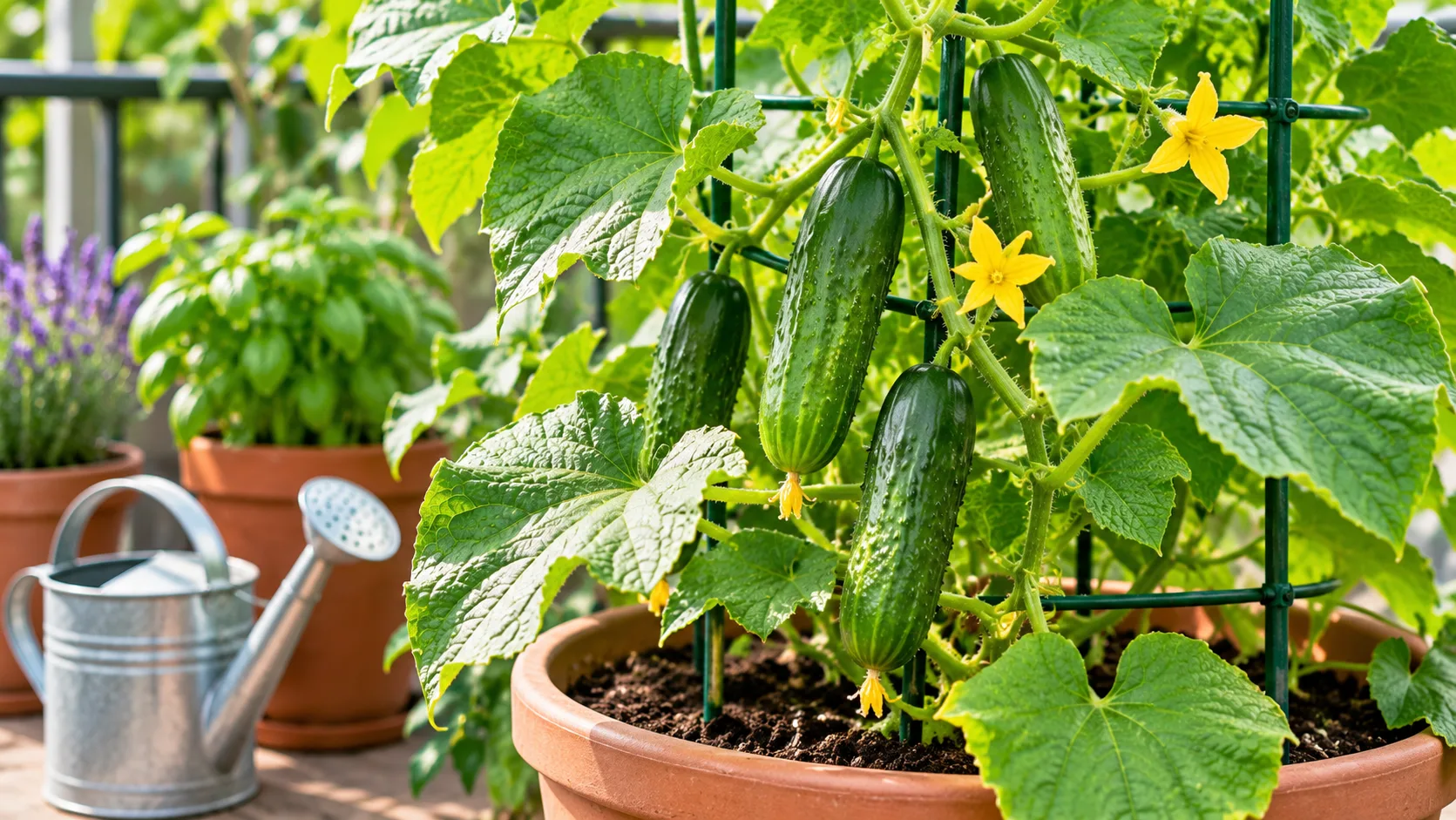
Growing cucumbers in containers is a practical way to enjoy fresh, crisp vegetables when you do not have enough space for a traditional garden bed. With a suitable pot, quality growing medium, plenty of sunlight, and a reliable watering routine, cucumber plants can produce a rewarding harvest on a patio, balcony, terrace, or small backyard.
Cucumbers are naturally vigorous plants. Many varieties produce long vines that spread across the ground or climb supports using slender tendrils. However, compact bush varieties and vertical growing methods make it possible to grow cucumbers in considerably smaller spaces.
The main challenge is providing enough root space and moisture. Cucumbers grow quickly during warm weather and can use substantial amounts of water, especially when flowering and developing fruit. A container that is too small may dry rapidly, while a pot with inadequate drainage can leave roots saturated. If water pools in the cucumber pot, check the drainage holes and growing mix.
Pollination can also affect the harvest. Standard outdoor cucumber varieties usually produce separate male and female flowers, and insects help transfer pollen between them. Some specialist greenhouse and seedless varieties, however, produce fruit without pollination. Understanding which type you are growing can prevent confusion when flowers appear but fruits fail to develop.
The good news is that cucumber container gardening does not need to be complicated. By selecting an appropriate cultivar, using a sufficiently large pot, installing a stable trellis when needed, and maintaining steady growing conditions, beginners can avoid many common problems.
This guide explains how to grow cucumbers in containers from seed or young plants, including the best pot sizes, growing media, sunlight requirements, watering methods, fertilizer needs, trellising, pollination, and harvesting. You will also learn how to troubleshoot yellow leaves, wilting vines, misshapen fruit, bitterness, and other issues.
Quick Answer: How Do You Grow Cucumbers in Containers?
To grow cucumbers in containers, choose a compact bush variety or a cucumber suitable for trellising. Use a pot with functional drainage holes and at least approximately 19 liters (5 US gallons) of growing volume for many varieties. Plant in a quality potting mix, provide six to eight hours or more of direct sunlight, and water regularly to maintain appropriate moisture.
Cucumbers are warm-season plants. They should be planted outdoors only after frost danger has passed and the growing medium is sufficiently warm. For reliable establishment, a temperature of at least approximately 18°C (65°F) in the root zone is a useful starting point.
Most vining cucumbers benefit from a strong trellis or other suitable support. Compact bush types may require less support, although their mature plant size should still be checked.
Follow these essential steps:
- Choose a bush, compact, patio, or suitable climbing cucumber variety.
- Select a sufficiently large, stable container with drainage holes.
- Fill with quality, well-draining container potting mix.
- Position the pot in a warm location with plenty of direct sunlight.
- Sow seeds or transplant healthy seedlings when temperatures are suitable.
- Allow enough root and foliage space for the mature plant.
- Install a strong trellis early if growing a climbing variety.
- Monitor moisture frequently, especially during hot weather.
- Feed appropriately as the plant grows and begins fruiting.
- Check whether your variety requires insect pollination.
- Inspect leaves, stems, and fruit regularly for pests and disease symptoms.
- Harvest cucumbers promptly when they reach the appropriate size.
A productive cucumber plant needs a balance of warmth, sunlight, water, nutrients, and root oxygen. Excessive watering cannot compensate for poor drainage, and extra fertilizer cannot replace insufficient sunlight or a container that is too small.
Gardening Tip: For your first container cucumber plant, choose one compact variety and grow it in a generous pot rather than trying to fit several plants into one small container. This makes watering, training, and identifying problems considerably easier.
Best Cucumber Varieties for Container Gardening
One of the most important decisions is choosing the right variety.
Cucumbers belong to the species Cucumis sativus. They vary considerably in vine length, fruit size, growth habit, pollination requirements, and disease resistance.
Some varieties are better suited to compact containers, while others are more productive when grown vertically on sturdy supports.
Bush Cucumbers
Bush cucumber varieties have a more compact growth habit than traditional long-vining cucumbers.
They are often a practical choice for patios, small terraces, and other areas where space is limited.
However, the word bush does not mean the plant has a tiny root system or can grow productively in any small pot.
Compact plants still need enough growing medium to supply moisture and nutrients during fruit development.
Look for seed-packet descriptions such as bush, dwarf, compact, patio, or suitable for containers.
Vining Cucumbers
Traditional vining cucumbers can produce long stems that climb a trellis or spread along the ground.
These varieties can still be grown in containers when there is sufficient root volume and stable vertical support.
Training a vine upward saves floor space and can help keep developing fruit away from wet soil.
However, tall plants can catch wind, making pot stability especially important on exposed patios and balconies.
Mini Cucumbers
Mini cucumbers produce relatively small fruits that are often harvested while young and tender.
They are useful for fresh snacks, salads, and regular small harvests.
However, small fruit size does not always indicate a compact plant. Some mini cucumbers have vigorous climbing vines.
Read the mature plant dimensions and recommended growing method before purchasing seeds.
Pickling Cucumbers
Pickling varieties generally produce shorter fruits suited to harvesting at relatively small sizes.
They can also be eaten fresh when the variety and fruit quality are appropriate.
Some pickling cucumbers are compact, while others require substantial support or growing space.
Do not assume that all pickling varieties are naturally bush-type plants.
Seedless and Greenhouse Cucumbers
Some specialist greenhouse cucumbers are parthenocarpic, which means they can develop fruit without pollination.
These varieties can be useful in protected growing environments where insect pollination is limited.
However, pollination may cause seed development or irregular fruit in some parthenocarpic varieties.
They are not automatically suitable for every outdoor location. Choose cultivars specifically recommended for your growing system and follow the seed supplier’s instructions.
Examples of Cucumber Cultivars
Named cultivars commonly mentioned in university and horticultural guidance include:
- ‘Spacemaster’: A relatively compact cultivar often selected for smaller growing spaces.
- ‘Marketmore’: A traditional outdoor slicing type; typically grown on a suitable support or with room to spread.
- ‘Boston Pickling’: A pickling cucumber variety commonly grown for smaller harvested fruits.
- ‘Mini Munch’: A small-fruited greenhouse cucumber listed by the Royal Horticultural Society.
- ‘Carmen’: A greenhouse cucumber cultivar grown for relatively long fruits.
These examples are not interchangeable. Check the exact cultivar’s vine size, disease resistance, pollination requirements, and growing environment before choosing it for a container.
What Size Container Do Cucumbers Need?
Cucumbers grow quickly and develop an extensive root system relative to many small herbs or salad greens.
An undersized container can restrict root growth, dry out quickly, and make it difficult to maintain enough moisture during fruit production.
Is a 5-Gallon Pot Big Enough for Cucumbers?
For many suitable cucumber varieties, a container of approximately 19 liters (5 US gallons) is a practical minimum starting point.
University of Maryland Extension lists five gallons as a minimum container volume for cucumbers.
However, larger containers may support more root development and provide a greater reserve of water and nutrients.
Some compact cultivars may be suitable for smaller specialized pots, while vigorous vines can benefit from containers larger than five gallons.
Container Width and Depth Matter Too
Total volume is important, but pot shape also matters.
The Royal Horticultural Society recommends a cucumber container at least approximately 30 cm (12 inches) wide and deep.
A broad, stable container can be easier to manage than a very tall, narrow pot with the same volume.
It may also be less likely to tip when a climbing cucumber catches wind.
How Many Cucumber Plants Per Pot?
For beginners, one cucumber plant per suitably sized container is usually the simplest arrangement.
Multiple plants may share a much larger container or a growing bag specifically designed for that purpose.
However, planting two or three vigorous cucumber vines into a small five-gallon pot can create competition for root space, water, nutrients, and light.
Follow the cultivar’s recommended plant density and the container manufacturer’s guidance.
Choosing Container Materials
Several container types can work well:
- Plastic pots: Relatively lightweight, available in many sizes, and often retain moisture longer than porous containers.
- Fabric grow bags: Provide good aeration but may dry more quickly during warm, windy weather.
- Terracotta pots: Attractive and porous but heavier and often need more frequent moisture checks.
- Purpose-designed self-watering planters: Can help provide consistent moisture when correctly managed.
- Large growing bags: Can accommodate more than one cucumber plant if the product is designed with sufficient volume and spacing.
Whatever material you choose, make sure the container is stable, suitable for edible plants, and able to drain excess water appropriately.
Special Considerations for Balconies
A large cucumber container can become heavy after watering.
On elevated balconies, consider the combined weight of the wet growing medium, pot, plant, trellis, and stored water.
Confirm building permissions and structural load limits before installing substantial containers.
Do not attach trellises to balcony railings or external walls without approved, structurally suitable fixings.
What Is the Best Soil for Growing Cucumbers in Containers?
Container cucumbers grow best in a suitable growing medium that retains useful moisture while allowing excess water to drain.
Healthy roots need access to both water and oxygen.
Use a High-Quality Potting Mix
For most beginners, a good commercial potting mix formulated for vegetable containers is a practical choice.
Suitable mixes may contain coconut coir, composted bark, peat-free alternatives, perlite, and other materials that improve growing-medium structure.
The ideal mix should absorb water reasonably well while retaining enough air space to support healthy roots.
Check whether the product already includes starter or controlled-release fertilizer.
Avoid Heavy Garden Soil Alone
Ordinary garden soil may become compacted inside pots, particularly when it contains substantial clay.
Compaction can restrict drainage and reduce oxygen availability around the roots.
Garden soil may also contain weed seeds or organisms that affect plant health.
Use a container-specific growing medium rather than filling ordinary pots with unmodified garden soil.
Do Cucumbers Need Compost?
Finished compost can contribute organic matter and nutrients, but it should not automatically make up the entire container filling.
Commercial potting mixes often include composted ingredients already.
Excessive additions of nutrient-rich compost may increase soluble salts or create an unsuitable moisture balance.
Follow the growing-medium supplier’s recommendations rather than adding large amounts of compost without checking the product’s composition.
Drainage Holes Are Essential
Most ordinary cucumber pots should have functional drainage holes.
Without suitable drainage, excess water can accumulate around roots and create oxygen-deficient conditions.
Do not allow the pot to remain submerged in a deep saucer of collected water for extended periods.
Check that drainage openings are not blocked by the ground or underlying surfaces.
Should You Add Gravel at the Bottom of a Pot?
No. Adding a thick gravel layer beneath finer potting mix does not improve drainage through the growing medium.
Instead, it can reduce usable root space and cause water to remain suspended in the finer mix above the coarse layer.
Use a suitable potting medium throughout the root zone and ensure drainage openings remain functional.
How Much Sunlight and Warmth Do Container Cucumbers Need?
Cucumbers are warm-season plants that generally perform best when temperatures are consistently suitable for active growth.
Provide Strong Direct Sunlight
Cucumbers usually require at least six hours of direct sunlight daily.
University of Maryland Extension notes that eight to ten hours of direct sunlight may be preferable for strong growth and production.
A bright area with only one or two hours of direct sun may not provide enough energy for a productive cucumber crop.
Observe the actual light reaching your container before choosing its position.
Wait for Warm Growing Conditions
Cucumbers are sensitive to frost and grow poorly in cold soil.
A root-zone temperature around 18°C (65°F) or warmer is a useful minimum starting point for sowing and outdoor establishment.
Seed germination can be faster under warmer conditions within the range recommended by the seed supplier.
Do not assume that a sunny afternoon means nighttime conditions are suitable for leaving tender seedlings outdoors.
Can Excessive Heat Harm Cucumbers?
Yes. Although cucumbers enjoy warmth, very high temperatures can interfere with flowering, pollen performance, and fruit development.
Extreme heat can also increase water demand and cause wilting or aborted flowers.
Containers positioned against reflective walls or dark paving may experience additional heat around their roots.
During heatwaves, monitor moisture carefully and consider suitable temporary protection if plants are experiencing severe stress.
Do not place cucumbers in deep shade where they cannot receive enough light for productive growth.
When Is the Best Time to Plant Cucumbers in Containers?
The best time to plant depends on your climate, local frost dates, seasonal rainfall, and temperature patterns.
Cucumbers should be grown during periods when warm conditions support steady growth without prolonged damaging heat or cold.
Temperate Climates
In regions with cold winters, cucumbers are generally planted outdoors during late spring or early summer after frost danger has passed.
Seeds can be started indoors approximately three to four weeks before the expected transplanting date.
Starting too early is often unnecessary because cucumber seedlings grow quickly and do not respond well to prolonged root restriction.
Warm and Subtropical Climates
In warmer regions, cucumbers may be grown during a longer part of the year.
However, prolonged summer heat and intense rainfall can make some planting periods less favorable.
Choose a suitable local growing window that provides warmth without exposing the crop to repeated extreme conditions.
Can You Grow Cucumbers in Winter?
Outdoor winter growing is generally unsuitable where temperatures become too cold.
Protected cucumber production may be possible in a properly managed heated greenhouse with sufficient light, temperature control, and suitable pollination arrangements.
However, a typical indoor windowsill rarely provides enough light and space for a productive mature cucumber vine.
How to Start Cucumbers From Seed for Containers
Cucumbers can be direct-sown in their final containers or started in small individual pots before transplanting.
Both approaches can work, but cucumber roots are sensitive to unnecessary disturbance.
Option 1: Sow Directly Into the Final Pot
Direct sowing is a simple option when outdoor growing conditions are already warm enough.
- Prepare the final container with suitable potting mix.
- Check that the growing medium is sufficiently warm.
- Moisten the mix evenly without saturating it.
- Sow seeds at the depth recommended on the packet, often approximately 1–2.5 cm (½–1 inch), depending on the variety and guidance.
- Cover lightly with growing medium.
- Maintain appropriate warmth and moisture until seedlings emerge.
- Thin extra seedlings carefully, leaving the desired number of healthy plants.
When thinning cucumber seedlings, cutting unwanted seedlings near the soil surface may be safer than pulling them out and disturbing the roots of the plant you want to keep.
Option 2: Start Seeds Indoors
Starting indoors can be useful when outdoor soil is still too cold.
Sow into clean individual seed-starting pots with suitable growing medium.
Provide warmth and adequate moisture until the seeds germinate.
Once seedlings emerge, provide strong light to prevent stretched, weak stems.
Avoid leaving the seedlings in small pots for too long.
How Long Do Cucumber Seeds Take to Germinate?
Under favorable growing conditions, cucumber seeds commonly germinate within approximately six to ten days.
Cool growing media may delay emergence or produce less reliable results.
If nothing has emerged, check seed age, soil temperature, moisture, and planting depth before assuming that all seeds have failed.
Hardening Off Cucumber Seedlings
Indoor-grown seedlings need time to adjust to outdoor sunlight, wind, and temperature changes.
Gradually introduce plants to suitable outdoor conditions over approximately one week, or longer if the weather requires it.
Begin in a sheltered location and increase exposure progressively.
Do not expose young cucumbers to frost or severe cold during the process.
How to Plant Cucumbers in Containers: Step-by-Step Guide
Once you have chosen a suitable cucumber variety and final container, follow this process to establish the plant successfully.
Step 1: Select the Growing Location
Choose a sunny, reasonably sheltered place where the plant can receive enough direct sunlight.
Consider water access and the space needed for the mature vine and its support.
Step 2: Prepare the Container
Use a stable pot of suitable volume, preferably at least approximately 19 liters (5 US gallons) for many common container cucumbers.
Ensure the drainage holes are open.
Place the container on a safe, level surface.
Step 3: Add Suitable Potting Mix
Fill the container with quality growing medium formulated for container vegetables.
Moisten very dry growing media as required, but avoid waterlogging or heavy compaction.
Leave enough space beneath the rim for controlled watering.
Step 4: Sow or Transplant the Cucumber
For direct sowing, follow the seed-packet depth and thin seedlings appropriately after emergence.
For a transplant, remove the plant carefully from its original pot and avoid disturbing the rootball.
Position it at approximately the same planting depth as before, gently settle the medium, and water it in.
Step 5: Install the Support
If growing a climbing variety, install a sturdy trellis or appropriate support early.
It should be strong enough for the mature vine and developing fruit.
Check its stability before stems become heavy.
Step 6: Monitor Moisture
Water when the root zone needs moisture and allow excess water to drain.
New transplants should not be allowed to dry severely while their roots establish.
Avoid leaving water trapped in saucers beneath ordinary pots.
Step 7: Guide Early Vine Growth
As stems lengthen, guide tendrils toward the trellis.
Use soft ties when needed, leaving enough room for stem growth.
Avoid tightly binding stems or forcing them into sharp bends.
Step 8: Monitor Flowering and Fruit
Check whether the variety requires pollination.
Maintain suitable water and nutrient availability while fruits develop.
Inspect leaves regularly and harvest fruit at the appropriate size.
How to Grow Cucumbers Vertically in Containers
Vertical growing is one of the most useful techniques for container cucumber gardening.
Instead of allowing stems to spread across the patio, you can guide them upward on a sturdy support.
Benefits of Using a Trellis
- Uses less horizontal growing space.
- Keeps developing fruit off the potting-medium surface.
- Can make harvesting easier.
- Allows foliage to spread vertically rather than covering the patio.
- Can improve access for plant inspection and training.
- May help reduce prolonged contact between fruit and wet surfaces.
A trellis does not remove the need for adequate root volume or watering.
Choosing a Trellis
Suitable supports include strong garden mesh, trellis panels, framed netting, and purpose-designed cucumber supports.
Many vining cucumbers can climb supports around 1.2–1.8 m (4–6 feet) high, although some cultivars grow longer and may require further training.
The appropriate height depends on the plant’s growth habit, available space, wind exposure, and support stability.
How to Train Cucumber Vines
Cucumber vines use curling tendrils to attach themselves to nearby objects.
Guide growing tips toward the support and allow the tendrils to attach naturally.
Soft plant ties can help hold early stems in place.
Inspect the support frequently because rapidly growing vines can become tangled or move away from their intended direction.
Does Every Cucumber Need a Trellis?
No. Compact bush varieties may grow successfully without a tall support, depending on their growth habit.
However, many traditional vining varieties benefit substantially from vertical training.
Follow the cultivar’s intended growing method and provide adequate space even if no trellis is used.
Trellis Safety on Balconies
Container-grown cucumber vines can catch significant wind once their foliage becomes large.
On elevated balconies, do not rely on unstable lightweight frames or unauthorized railing attachments.
Confirm that any support is safely installed and approved for the location.
How Often Should You Water Cucumbers Growing in Containers?
Proper watering is one of the most important parts of growing cucumbers in pots.
Cucumber plants produce substantial foliage and may use considerable moisture when developing fruit.
Because containers hold a limited amount of growing medium, moisture can change more quickly than in a traditional garden bed.
Keep the Growing Medium Evenly Moist
The aim is to provide a suitable and reasonably consistent supply of water around the roots.
Avoid allowing the potting mix to become severely dry during flowering and fruit development.
However, continually saturated conditions can restrict oxygen and damage roots.
Even moisture means adequate water without prolonged waterlogging.
Check Below the Surface
Use your finger or a suitable moisture probe to check conditions beneath the top layer of growing medium.
For larger containers, assess moisture deeper in the active root zone rather than relying only on the appearance of the surface.
Water when the medium is becoming too dry for healthy growth.
Do Container Cucumbers Need Daily Watering?
During hot, sunny, or windy weather, some container-grown cucumber plants may need watering every day.
However, daily watering is not universally necessary.
A large pot in mild weather may remain moist longer than a small fabric grow bag in strong afternoon sun.
Check moisture frequently and adjust irrigation to the actual needs of the plant.
Water at the Base of the Plant
Whenever practical, direct irrigation toward the potting medium rather than repeatedly soaking the leaves.
Wet foliage can contribute to certain diseases under favorable environmental conditions.
Water slowly enough to moisten the root zone and allow excess water to drain.
Can Self-Watering Containers Help?
Purpose-designed self-watering planters can help maintain a more consistent moisture supply when used correctly.
However, their reservoir capacity, growing medium, and irrigation system need to match the cucumber plant’s water demand.
Monitor the reservoir and growing-medium moisture rather than assuming the system will regulate itself indefinitely.
Should You Mulch Container Cucumbers?
A modest layer of suitable organic mulch can help reduce evaporation from exposed growing medium.
Keep mulch away from the immediate stem base and avoid using material that restricts air movement or drainage.
In exposed balconies, choose mulch that will not readily blow away.
Continue checking soil moisture beneath the mulch.
Good to Know: A cucumber plant may wilt temporarily during extremely hot weather even when the root zone contains adequate moisture. Check the growing medium before adding water. If the plant is wilting despite persistently wet conditions or does not recover when temperatures moderate, investigate root damage, disease, and other causes.
How to Fertilize Container Cucumbers for Healthy Growth and Fruit
Container cucumbers need a sufficient nutrient supply to support rapid vine growth, flowering, and fruit development.
However, excessive fertilizer can cause root injury or nutrient imbalances.
Check the Potting Mix Before Adding Fertilizer
Some commercial potting mixes include starter or controlled-release fertilizer.
Read the product label to understand whether additional nutrients are needed during the initial growing period.
Do not combine multiple fertilizers automatically when the growing medium already contains sufficient nutrients.
Feeding During Active Growth
When supplementary nutrients become necessary, use a fertilizer suitable for container vegetables.
The Royal Horticultural Society recommends regular liquid feeding for container cucumbers during active growth, commonly around every 10–14 days with appropriate products, with feeding adjusted when plants begin flowering.
This is an example of a horticultural schedule, not a requirement to use extra fertilizer if your growing medium already contains a suitable controlled-release supply.
Follow the chosen product’s label instructions and avoid exceeding recommended concentrations.
Feeding During Flowering and Fruiting
When plants begin flowering and producing fruit, their nutrient requirements change.
A suitable balanced or fruiting-crop fertilizer may help maintain production when nutrients are otherwise insufficient.
However, a fertilizer with a high potassium content is not automatically required in every growing system. The correct product depends on existing nutrient supply and the growing medium.
Excess nitrogen can encourage vigorous leaves and stems without necessarily improving fruit yield.
Signs That Nutrient Management May Need Attention
Possible indicators include slow growth, unusual leaf discoloration, reduced production, or signs of salt buildup.
However, these symptoms can also result from insufficient sunlight, unsuitable temperature, root restriction, or moisture problems.
Investigate the growing conditions before applying additional fertilizer.
Cucumber Pollination: Male Flowers, Female Flowers, and Fruit Set
One of the most common concerns among beginner cucumber gardeners is seeing flowers but very few developing cucumbers.
Understanding cucumber flower types can help explain what is happening.
How to Identify Male Cucumber Flowers
Male cucumber flowers usually grow on relatively slender stems and do not have a miniature cucumber directly behind the flower.
Standard cucumber plants often produce male flowers before female flowers appear.
These early male flowers may fall off naturally after opening.
This does not necessarily mean the plant has a problem.
How to Identify Female Cucumber Flowers
Female flowers have a small swelling behind the petals that resembles a miniature cucumber.
This swelling is the ovary, which can develop into a full-sized fruit under suitable conditions.
In ordinary pollination-dependent varieties, pollen must reach the female flower for normal fruit development.
Do Cucumbers Need Bees?
Many common outdoor cucumber varieties depend on insects to move pollen between male and female flowers.
Bees are important pollinators for these crops.
Poor weather, low insect activity, or inappropriate pesticide use during flowering can reduce pollination.
Insufficient pollination may cause misshapen cucumbers or small developing fruits that stop growing and drop.
Can You Hand-Pollinate Cucumbers?
For ordinary pollination-dependent varieties, hand pollination can be useful when insect activity is very limited.
Identify a newly opened male flower and female flower.
Using a suitable clean, soft brush or the male flower itself, gently transfer pollen from the male flower’s pollen-bearing structures to the receptive center of the female flower.
Morning is often a practical time because cucumber flowers are commonly open and receptive then.
However, do not hand-pollinate parthenocarpic varieties unless the seed supplier specifically recommends it.
What Are Gynoecious Cucumbers?
Gynoecious cucumber varieties produce mostly or entirely female flowers.
They may produce high yields because a larger proportion of their flowers can become fruits.
However, being gynoecious does not automatically mean the variety can produce fruit without pollination.
Some gynoecious seed packets include seeds of a normal pollen-producing variety to provide the required male flowers.
Always check whether the cultivar is pollination-dependent or parthenocarpic.
What Are Parthenocarpic Cucumbers?
Parthenocarpic varieties can develop fruits without fertilization.
They are often grown in greenhouses or protected structures where pollinating insects are limited.
In some varieties, pollination can cause seeds to develop or fruit to become irregularly shaped.
Follow the cultivar’s growing instructions rather than treating all cucumber flowers identically.
Do Container Cucumbers Need Pruning?
Not every container cucumber requires the same pruning method.
The need for pruning depends on whether the plant is a compact bush variety, a traditional outdoor vine, or a specialist greenhouse cultivar.
Bush Cucumbers Usually Need Less Training
Compact varieties are selected for a more manageable growth habit.
Many can grow productively without aggressive pruning.
Remove clearly dead or diseased foliage when appropriate, but avoid unnecessary heavy removal of healthy leaves.
Training Long Vines
Vining cucumbers may need regular guidance onto a trellis.
Some growing systems pinch the main growing tip or selected side shoots to manage plant size and encourage appropriate branching.
However, the correct method depends on the cultivar and whether the crop is grown outdoors or in a greenhouse.
Do not remove growing tips simply because a generic pruning video recommends it for every cucumber variety.
Avoid Removing Too Many Leaves
Leaves supply energy through photosynthesis and help shade developing fruit.
Excessive pruning can reduce the plant’s ability to support a good crop.
Use clean tools, avoid damaging healthy stems, and follow variety-specific training guidance.
When and How to Harvest Cucumbers Grown in Pots
Harvesting at the correct stage helps maintain fruit quality and encourages many cucumber plants to continue producing.
How Long Do Cucumbers Take to Grow?
Many cucumber varieties reach their first harvest approximately 50–65 days after sowing under favorable growing conditions.
However, the exact time varies by cultivar, temperature, sunlight, and growth rate.
Always check whether the seed packet’s days-to-maturity estimate is measured from sowing or transplanting.
Harvest Cucumbers Before They Become Overripe
Most common green cucumbers are harvested before they become fully mature in a botanical sense.
Overmature fruits may become yellowish, develop tougher skin and larger seeds, or lose desirable texture.
Harvest when the fruit reaches the expected size and appearance for its cultivar.
Cucumber Harvest Sizes
Actual harvest sizes vary considerably:
- Mini cucumbers: Often harvested around 8–10 cm (3–4 inches), depending on the cultivar.
- Small slicing cucumbers: Often harvested around 15 cm (6 inches).
- Standard slicers: Frequently harvested around 20–25 cm (8–10 inches).
- Pickling cucumbers: Harvested at smaller sizes suited to the intended product and cultivar.
These sizes are examples, not universal standards. Some specialist cucumbers are naturally much longer or shorter.
How Often Should You Harvest?
During productive warm weather, check cucumber plants frequently.
Some varieties may need harvesting every day or two when fruits are growing rapidly.
Leaving oversized fruits on the plant can divert resources from further production.
Regular picking helps maintain a more consistent harvest from productive varieties.
Use Clean Scissors or Pruners
Cut the fruit stem cleanly with appropriate scissors or pruners.
Do not pull or twist forcefully, as this can damage the vine.
Handle cucumbers carefully and refrigerate harvested fruits appropriately to help maintain quality.
Why Are My Cucumbers Bitter?
Cucumber bitterness is associated with naturally occurring compounds called cucurbitacins.
Genetics and stressful growing conditions, including extreme temperature or inconsistent moisture, can influence bitterness.
Choosing varieties bred for reduced bitterness and maintaining suitable growing conditions can help.
If a cucumber tastes unusually or intensely bitter, stop eating it and discard it. High levels of cucurbitacins can cause gastrointestinal illness, and cooking does not reliably eliminate the risk.
Important Caution: Do not eat cucumbers that taste unusually or intensely bitter. High cucurbitacin levels can cause illness, and cooking does not make such produce reliably safe. Also avoid applying pesticides not specifically approved and labeled for edible cucumbers, and follow all harvest restrictions on any permitted treatment.
Container Cucumber Growing Charts and Timeline
The following comparison tables summarize important growing decisions. Use them as practical starting points while following cultivar-specific guidance.
Cucumber Types for Container Growing
| Cucumber type | Growth habit | Support considerations | Suitable use |
|---|---|---|---|
| Compact bush | Shorter, more contained growth | May need limited support | Small patios and beginner container gardens |
| Traditional slicing vine | Long, vigorous stems | Strong trellis usually helpful | Sunny patios with vertical growing space |
| Mini-fruited varieties | Compact or vigorous, depending on cultivar | Check seed packet | Frequent small cucumber harvests |
| Pickling varieties | Varies by cultivar | May need trellising | Smaller fruits for pickling or fresh use |
| Parthenocarpic greenhouse types | Frequently vigorous vines | Often trained vertically | Suitable protected growing systems without required pollination |
Cucumber Growing Requirements at a Glance
| Growing factor | Practical recommendation |
|---|---|
| Container volume | At least approximately 19 liters (5 US gallons) for many varieties; larger where appropriate |
| Pot dimensions | Approximately 30 cm (12 inches) wide and deep or more |
| Number of plants | One plant per standard individual container is a useful beginner approach |
| Sunlight | At least 6 hours of direct sun; often best with 8 or more |
| Growing temperature | Warm, frost-free conditions suitable for the cultivar |
| Seed-starting temperature | Generally 18°C (65°F) or warmer in the medium, with warmer temperatures often improving germination |
| Potting medium | Quality, well-draining, moisture-retentive container mix |
| Watering | Keep appropriate root-zone moisture; check frequently during heat |
| Support | Stable trellis for most vigorous vining varieties |
| Fertilizer | Supplement as needed, considering nutrients already in the mix |
| Pollination | Required for many outdoor varieties; not required for parthenocarpic cultivars |
| Harvest | Often approximately 50–65 days from seed, depending on cultivar and conditions |
Cucumber Growing Timeline From Seed to Harvest
| Stage | Typical timing or condition | Important action |
|---|---|---|
| Choose seeds | Before the warm growing season | Select a suitable compact or vining cultivar |
| Start indoors | Approximately 3–4 weeks before outdoor planting, if needed | Use individual pots and avoid excessive early sowing |
| Seed germination | Often 6–10 days under favorable conditions | Provide suitable warmth and moisture |
| Seedling growth | Following emergence | Provide adequate light and avoid root disturbance |
| Harden off | Before moving indoor-grown seedlings outside | Introduce outdoor conditions gradually |
| Final container planting | After frost danger and when growing medium is warm | Plant into suitable potting mix and provide support |
| Vine development | During warm active growth | Train stems and monitor water and nutrients |
| Flowering | Variety and weather dependent | Understand pollination requirements |
| Fruit development | After successful fruit set | Maintain consistent growing conditions |
| First harvest | Often around 50–65 days from seed | Pick when fruits reach cultivar-appropriate size |
Common Pests and Diseases Affecting Container Cucumbers
Growing cucumbers in containers can help with garden organization, but it does not eliminate insects or plant diseases.
Regular inspections can help identify problems before they spread across the plant.
Cucumber Beetles
Cucumber beetles may feed on leaves, stems, and flowers.
In regions where bacterial wilt is present, some cucumber beetles can also transmit the disease.
Inspect plants early and use suitable integrated pest management practices.
Appropriate insect barriers can sometimes protect young plants, but covers must be managed according to pollination requirements once flowering begins.
Aphids
Aphids are small sap-feeding insects that may collect on tender shoots and the undersides of leaves.
They can cause distorted growth and sometimes leave sticky honeydew on foliage.
Identify the insects before treatment, and avoid unnecessary applications that could affect beneficial insects.
Spider Mites
Spider mites can cause pale stippling, leaf deterioration, and fine webbing during heavier infestations.
Hot, dry conditions can favor some spider mite problems.
Check the undersides of leaves and confirm the pest before selecting a management method.
Powdery Mildew
Powdery mildew is a fungal disease that can produce white, powder-like growth on cucumber leaves.
Infected foliage may gradually yellow, deteriorate, or stop supporting healthy growth.
Choose resistant varieties where available, avoid overcrowding, and maintain suitable growing conditions.
Pruning away every healthy leaf is not an appropriate prevention strategy.
Bacterial Wilt
Bacterial wilt can cause cucumber vines to wilt and decline even when moisture is available.
In affected regions, the disease may be spread by cucumber beetles.
There is no simple fertilizer or watering treatment that cures an infected plant.
Identify the problem accurately and follow local guidance for disposing of infected plants and managing insect vectors.
Viral Diseases
Cucumbers may also be affected by plant viruses that produce mottled leaves, distorted growth, stunting, and unusual fruit appearance.
Cucumber mosaic virus is one example.
Symptoms can resemble other problems, so confirm the diagnosis before taking major action.
Plant viruses are not cured by adding fertilizer or using ordinary fungal disease sprays.
Pest Treatment and Pollinator Safety
Many cucumber varieties depend on insect pollination, so broad or unnecessary pesticide use can interfere with fruit production.
Identify pests before treatment and prioritize suitable cultural, physical, and integrated pest management measures.
If a pesticide is justified, use only a product legally approved and labeled for the edible crop, and follow all instructions concerning application, pollinator protection, and harvesting.
Cucumber Container Gardening Problems and Solutions
If your cucumber plant is struggling, investigate the growing environment before applying fertilizer or other treatments.
| Problem | Possible cause | What to check first |
|---|---|---|
| Cucumber leaves turn yellow | Moisture problems, root stress, nutrient imbalance, aging, or disease | Drainage, root-zone moisture, leaf pattern, and recent care |
| Leaves wilt and soil is very dry | Underwatering or rapid moisture loss | Moisture throughout the rootball |
| Leaves wilt while soil remains wet | Possible root damage, oxygen shortage, or wilt disease | Drainage, root health, and whether wilting spreads |
| Flowers fall without fruit | Normal early male flowers or stress-related flower drop | Whether female flowers are present and weather conditions |
| Small cucumbers shrivel or fall off | Poor pollination, extreme temperatures, or moisture stress | Variety type, flower activity, weather, and moisture |
| Cucumbers develop uneven shapes | Incomplete pollination or environmental stress | Pollinator activity and growing conditions |
| Plants grow leaves but little fruit | Insufficient light, unsuitable temperatures, nutrient imbalance, or pollination limitations | Sunlight, flowering pattern, and fertilizer history |
| Fruit tastes bitter | Genetics or environmental stress influencing cucurbitacin levels | Variety, heat, moisture, and fruit condition; discard intensely bitter fruit |
| White powder appears on leaves | Possible powdery mildew | Leaf appearance and presence of fungal growth |
| Leaves develop pale speckles or fine webbing | Possible spider mites | Undersides of leaves and direct pest evidence |
| Leaves develop irregular yellow mottling | Possible virus, nutrient problem, or another cause | Leaf distortion, insect presence, and symptom progression |
| Potting mix dries rapidly | Small container, heat, wind, or large root system | Pot volume, exposure, growing medium, and root condition |
| Fruits turn yellow and become oversized | Overmaturity in many green-fruited cultivars | Expected harvest stage for the variety |
12 Common Mistakes When Growing Cucumbers in Containers
1. Choosing the Wrong Cucumber Variety
Some cucumbers develop large vines that require substantially more growing space than compact cultivars.
Better approach: Choose a variety suited to the container and intended support system.
2. Using a Container That Is Too Small
Restricted root volume can make water and nutrient management difficult.
Better approach: Provide sufficient growing volume for the mature plant, using a generous container where possible.
3. Planting Too Many Cucumbers in One Pot
Overcrowded plants compete for root space, moisture, nutrients, and light.
Better approach: Begin with one plant per ordinary individual container unless the growing system is designed for more.
4. Using Dense Garden Soil
Ordinary heavy soil can become compacted in pots and restrict drainage.
Better approach: Use quality container potting mix.
5. Ignoring Drainage Holes
Excess water may accumulate around cucumber roots.
Better approach: Use functional drainage openings and prevent ordinary pots from standing in stagnant water.
6. Growing Cucumbers in Too Much Shade
Low sunlight can reduce healthy growth and fruit production.
Better approach: Provide at least six hours of direct sunlight, preferably more where suitable.
7. Allowing Severe Drying During Fruiting
Cucumbers use substantial moisture while developing leaves and fruit.
Better approach: Monitor moisture frequently and avoid repeated root-zone drought.
8. Overwatering Without Checking Soil
Prolonged saturation can damage roots and cause wilting even when water is plentiful.
Better approach: Check the root zone before watering and maintain suitable drainage.
9. Using an Unstable Trellis
Large vines and developing fruits can make weak supports unstable.
Better approach: Install a sturdy, properly secured trellis early in the growing period.
10. Misunderstanding Cucumber Pollination
Standard varieties, gynoecious varieties, and parthenocarpic cucumbers do not all have the same pollination needs.
Better approach: Identify the cultivar’s flowering type and follow the seed supplier’s guidance.
11. Applying Too Much Fertilizer
Excess nutrients may contribute to salt injury or overly vigorous foliage growth.
Better approach: Consider nutrients already in the growing medium and follow appropriate fertilizer rates.
12. Waiting Too Long to Harvest
Overripe cucumbers may become yellow, tough, or oversized, and leaving them on the vine can reduce continued production.
Better approach: Check fruits frequently and harvest at the correct size for the variety.
Frequently Asked Questions About Growing Cucumbers in Containers
Can cucumbers grow successfully in containers?
Yes. Cucumbers can grow well in suitably sized containers when provided with warm weather, sufficient sunlight, quality potting mix, adequate water, appropriate nutrients, and support for varieties that produce vigorous vines.
What is the best container size for cucumbers?
A container of at least approximately 19 liters (5 US gallons) is a practical starting point for many cucumber varieties. A pot around 30 cm (12 inches) wide and deep is another useful guideline. Vigorous varieties may need larger containers.
How many cucumber plants can I grow in a 5-gallon pot?
One cucumber plant is generally the simplest starting arrangement in a five-gallon container. Larger growing systems may accommodate multiple plants, but crowding several vigorous vines into a small pot can restrict root space and make watering difficult.
What cucumbers are best for pots?
Compact bush, dwarf, patio, and container-suitable cultivars are useful choices for small spaces. Vining cucumbers can also grow in pots when enough root volume and stable trellis support are available. Check the mature plant size and pollination requirements before purchasing seeds.
Do cucumbers need a trellis when grown in containers?
Many vigorous vining cucumbers benefit from a sturdy trellis because it saves floor space and helps keep fruit off the growing medium. Compact bush varieties may require less support, depending on their growth habit.
How much sunlight do container cucumbers need?
Cucumbers generally need at least six hours of direct sunlight each day, and eight or more hours can support strong production when temperatures are suitable. Very shaded areas are usually less productive for this warm-season crop.
How often should I water cucumbers in pots?
Water according to root-zone moisture, weather, and plant size. During hot weather, some container cucumbers may need daily watering, but others may remain adequately moist longer. Aim for reasonably consistent moisture without prolonged waterlogging.
Do cucumber plants need fertilizer in containers?
Many container cucumbers benefit from supplemental feeding during active growth and fruit production. However, some potting mixes already contain fertilizer. Follow suitable product instructions and avoid excessive applications.
Why does my cucumber plant have flowers but no fruit?
Standard cucumbers often produce male flowers first, which normally fall without developing into fruit. Later, female flowers can form cucumbers if pollination is successful. Poor pollinator activity, unsuitable temperatures, and other stress can reduce fruit set. Parthenocarpic cultivars develop fruit without pollination.
Why are my container cucumber leaves turning yellow?
Possible causes include overwatering, underwatering, root restriction, nutrient imbalance, natural leaf aging, pests, or disease. Check the growing medium, drainage, sunlight, and the pattern of yellowing before making changes.
Why are my cucumbers bitter?
Cucumber bitterness can result from natural genetic differences and environmental stress, including extreme temperatures and irregular moisture. Certain varieties are bred for reduced bitterness. Discard cucumbers that taste unusually or intensely bitter rather than attempting to make them safe through cooking.
How long do cucumbers take to grow from seed to harvest?
Many common cucumber varieties reach harvest approximately 50–65 days after sowing under suitable conditions. Exact timing depends on cultivar, temperature, sunlight, and growing practices. Check the seed packet for the variety’s expected maturity.
Final Thoughts
Growing cucumbers in containers is a practical option for gardeners who want fresh produce without dedicating a large area to traditional vegetable beds.
The most important starting decisions are choosing a suitable variety, providing enough root space, and positioning the container where the plant can receive sufficient sunlight and warmth.
Compact bush varieties can make small-space gardening easier, while traditional vines can produce good harvests when trained onto strong, stable trellises.
Use quality potting mix with functional drainage holes and avoid crowding too many plants into one container. A generous pot provides more room for root development and can make moisture management more reliable.
During flowering and fruit development, monitor water and nutrient needs carefully. Cucumbers benefit from reasonably consistent moisture, but saturated roots can be just as problematic as severe drought.
Pay attention to pollination requirements, especially if flowers appear without fruit. Standard outdoor cucumbers usually depend on insects to transfer pollen, while specialist parthenocarpic cultivars can produce fruit without pollination.
Inspect the plants regularly for pests, disease symptoms, and changes in growth. Avoid treating every yellow leaf or wilting stem with additional water or fertilizer before identifying the underlying cause.
Finally, harvest cucumbers when they reach the appropriate size for the cultivar. Picking regularly can help maintain fruit quality and encourage continued production during favorable weather.
With the right container, growing conditions, and a manageable care routine, even a small sunny patio or balcony can support a productive cucumber plant.
Explore more practical advice in Gardenivo’s Vegetable Gardening guides. You can also visit Small-Space Gardening for container and balcony growing ideas, Soil & Watering for moisture and drainage guidance, and Seasonal Gardening for choosing appropriate planting periods.
Further Reading and Horticultural References
- Royal Horticultural Society: How to Grow Cucumbers — cucumber varieties, container dimensions, supports, watering, feeding, greenhouse growing, and harvest timing.
- University of Maryland Extension: Growing Vegetables in Containers and Salad Tables — minimum container volumes, potting mixes, drainage, sunlight, and container crop care.
- University of Maryland Extension: Growing Cucumbers in a Home Garden — planting temperatures, variety selection, days to maturity, pollination, and crop care.
- University of Minnesota Extension: Growing Cucumbers in Home Gardens — soil, transplanting, watering, cucumber beetles, pollination, and causes of bitterness.
- Utah State University Extension: How to Grow Cucumber in Your Garden — planting, warm soil, variety selection, mulching, watering, and harvesting.
- University of Maryland Extension: Key to Common Problems of Cucumbers — identifying cucumber pests, wilting, powdery mildew, poor pollination, and fruit disorders.
- University of Minnesota Extension: Fruits and Vegetables That Require Pollination — pollination-dependent and parthenocarpic cucumber varieties.
- Oregon State University Extension: Grow Your Own Cucumbers — crop management, harvesting, bitterness, and common growing issues.
- Poison Control: Toxic Squash Syndrome — safety guidance for produce with unusually intense bitterness caused by cucurbitacins.