Best Vegetables to Grow in Containers
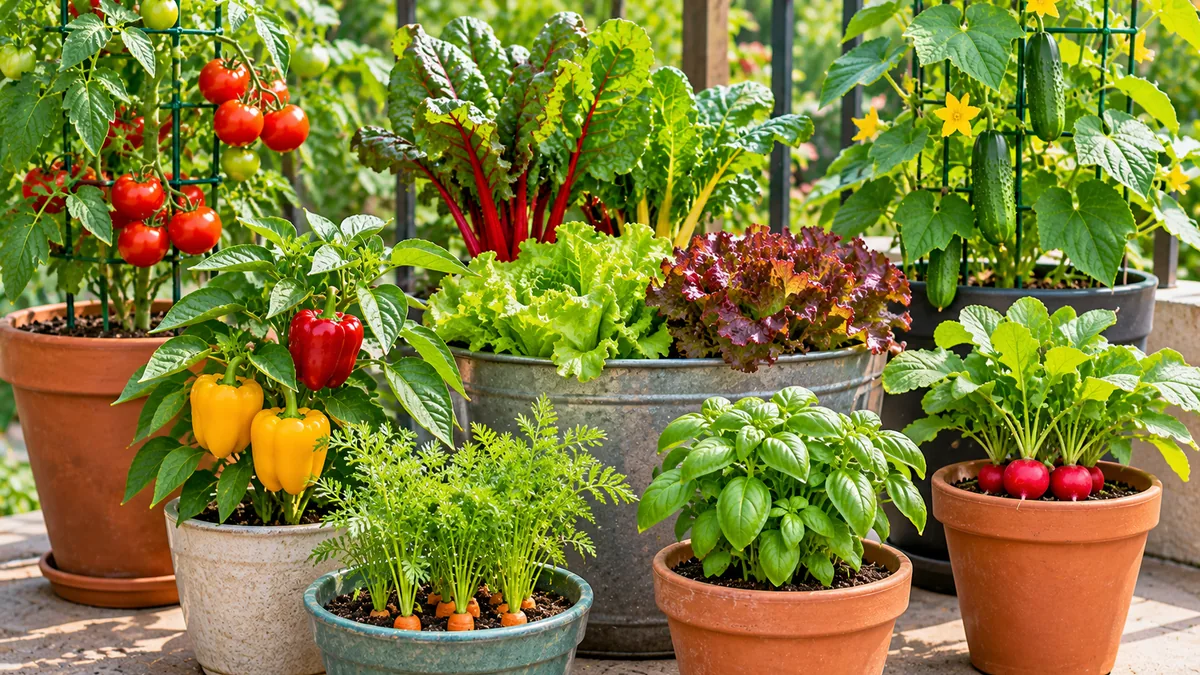
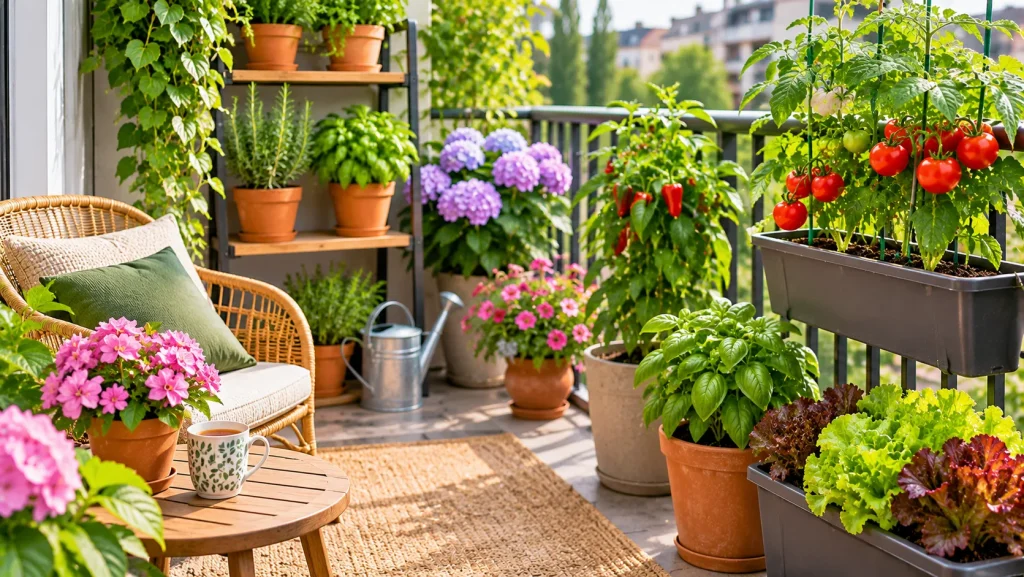
Growing vegetables in containers is an excellent way to enjoy fresh produce without a traditional garden. A sunny balcony, small patio, doorstep, or compact backyard can provide enough space for vegetables such as lettuce, radishes, peppers, beans, and even tomatoes.
Container gardening also gives you more control over the growing environment. You can choose suitable potting mix, position plants according to their sunlight requirements, and move manageable containers when conditions change.
However, not every vegetable is equally easy to grow in a pot. Some crops have shallow roots and need relatively little space, while others develop large root systems, vigorous climbing stems, or substantial fruiting growth. A small container that works for salad leaves may not provide enough room for a mature tomato or cucumber plant. For a vining crop, see how to grow cucumbers in containers, including how to choose a pot and support.
Watering is another important consideration. Container plants cannot extend their roots freely through surrounding garden soil, so their available moisture and nutrients are limited. Small pots may dry rapidly during hot weather, while poorly draining containers can remain saturated and damage roots.
The key to success is choosing vegetables suited to your available sunlight, growing season, and container size. Compact, bush, and dwarf varieties can make small-space gardening easier, especially for beginners.
In this guide, you’ll discover 15 of the best vegetables to grow in containers, including leafy greens, root vegetables, and productive fruiting crops. You’ll also learn how to select pots, prepare growing media, manage watering and fertilizer, support climbing vegetables, and avoid common mistakes.
Quick Answer: What Are the Best Vegetables to Grow in Containers?
Some of the best vegetables for container gardening are leaf lettuce, spinach, arugula, Swiss chard, radishes, carrots, bush beans, compact tomatoes, peppers, and bush cucumbers.
These crops can grow successfully in suitable pots when they receive enough sunlight, root space, moisture, and nutrients.
For beginners, leafy vegetables and quick-growing root crops are often particularly rewarding because they generally need less support and occupy less space than large fruiting vegetables.
If you have a sunny location and enough space for larger containers, compact tomatoes, peppers, and cucumbers can also produce worthwhile harvests.
Here are 15 useful container crops to consider:
- Leaf lettuce.
- Spinach.
- Arugula or rocket.
- Swiss chard.
- Kale.
- Radishes.
- Carrots.
- Beets or beetroot.
- Bush beans.
- Peas.
- Compact cherry tomatoes.
- Peppers.
- Bush cucumbers.
- Compact eggplants or aubergines.
- Potatoes.
Most fruiting vegetables benefit from approximately six to eight hours of direct sunlight each day. Some cool-season leafy crops can grow with around three to five hours of direct sunlight when temperature and other conditions are suitable.
Start with just a few crops that match your climate and growing space. A manageable collection of healthy containers is often more productive than an overcrowded garden.
Gardening Tip: If this is your first container vegetable garden, start with leaf lettuce, radishes, and bush beans. These crops provide useful experience with sowing, watering, thinning, and harvesting before you move on to larger plants such as tomatoes or cucumbers.
How to Choose Vegetables for Container Gardening
Before buying seeds or seedlings, consider how much space, sunlight, and time you can give your vegetable garden.
Choose Compact, Bush, or Dwarf Varieties
Many vegetable crops are available in varieties developed for smaller growing spaces.
Seed packets may use descriptions such as bush, dwarf, patio, compact, or container suitable.
For example, a compact determinate tomato may be easier to maintain in a pot than a vigorous indeterminate variety that continues growing and producing long stems throughout the season.
Bush cucumbers and bush beans can also be more manageable than large climbing varieties, although some compact crops still need support.
Match Root Size to Container Volume
A vegetable’s mature root system is important when choosing a pot.
Leafy vegetables and radishes can be grown in relatively shallow or small containers when plants have sufficient spacing.
Large fruiting vegetables usually benefit from substantially more growing volume.
Do not choose pot size based only on the size of the seedling when you buy it.
Consider the Time Until Harvest
Some crops offer relatively quick results, while others occupy containers for several months.
Many radish varieties can be harvested within several weeks under favorable conditions. Salad leaves can also provide early harvests.
Tomatoes, peppers, and eggplants need a longer growing period and suitable temperatures to produce ripe fruit.
Growing a mixture of fast and slow crops can make a small garden more interesting throughout the season.
Think About What You Actually Eat
The best vegetables to grow are often those you regularly use in meals.
Fresh salad leaves, herbs, peppers, and cherry tomatoes may be especially convenient because you can harvest small quantities when needed.
If your household rarely eats a particular vegetable, there may be little benefit in dedicating valuable container space to it.
15 Best Vegetables to Grow in Containers
The following vegetables can be grown in suitable pots, troughs, or grow bags. Some are particularly beginner-friendly, while others require more space, sunlight, and maintenance.
1. Leaf Lettuce
Leaf lettuce is one of the easiest vegetables to grow in a small container garden.
It develops relatively shallow roots, and many varieties can be harvested by taking suitable outer leaves while allowing the remaining plant to continue growing.
Leaf lettuce works well in window boxes, wide shallow planters, and salad-growing containers.
Growing conditions: Cool to mild temperatures, suitable sunlight, and consistently available soil moisture.
Container advice: Choose a wide container with enough room for the expected number of plants. A shallow planter may be suitable for baby salad leaves, while mature heads need more spacing and root volume.
Harvesting tip: Use clean scissors to harvest suitable leaves, avoiding damage to the growing center when repeat harvests are intended.
During hot weather, many lettuce varieties may bolt, become bitter, or produce lower-quality leaves. Grow them during suitable cooler periods where possible.
2. Spinach
Spinach is a useful container vegetable for cooler growing seasons.
Its leafy growth can be managed in appropriately sized planters, and young leaves may be harvested before they reach full maturity.
Spinach generally performs best when temperatures are moderate to cool. Hot conditions and long days can encourage flowering and reduce the quality of the harvested leaves.
Growing conditions: Suitable direct sunlight, cool weather, moist but well-drained growing medium.
Container advice: Use a reasonably wide planter that allows suitable spacing between plants.
Harvesting tip: Harvest healthy outer leaves where appropriate or collect the crop according to the variety and intended use.
3. Arugula or Rocket
Arugula, also called rocket, is a leafy vegetable valued for its distinctive peppery flavor.
It can be grown in relatively compact containers and may provide a useful harvest during favorable cool growing conditions.
Arugula is well suited to salad boxes and mixed leafy-green planters.
Growing conditions: Cool to mild weather, adequate moisture, and sufficient light.
Container advice: A shallow-to-medium planter with adequate surface area can work well for baby leaves.
Harvesting tip: Harvest tender leaves while plants are actively growing. Leaves may become stronger in flavor as conditions encourage flowering.
Successive small sowings can provide a steadier supply than planting a large quantity all at once.
4. Swiss Chard
Swiss chard is a colorful leafy vegetable that can produce repeated harvests over a suitable growing period.
Its leaves and stalks are edible, and some varieties have attractive red, yellow, orange, or white stems.
Chard plants become larger than many baby salad greens, so give them enough space to develop.
Growing conditions: Bright light, appropriate moisture, and temperatures suited to the variety.
Container advice: A container with at least approximately 7.5 liters (2 US gallons) of volume can be a starting point for suitable plantings, but bigger plants or multiple plants may need more.
Harvesting tip: Remove mature outer leaves gradually while preserving the central growing area.
5. Kale
Kale can be a productive choice for container vegetable gardens during suitable growing seasons.
It produces edible leaves that can often be harvested over an extended period.
However, kale can become a substantial plant, particularly when grown for mature leaves rather than baby greens.
Growing conditions: Suitable sunlight, consistent root-zone moisture, and adequate nutrients during active growth.
Container advice: Use a generous pot for mature kale or grow baby kale in a suitably sized shallow planter.
Harvesting tip: Harvest suitable lower leaves while allowing the top growing point to continue producing new foliage.
Inspect leaves regularly for caterpillars and other pests that commonly affect cabbage-family vegetables.
6. Radishes
Radishes are among the best crops for beginner container gardeners who want relatively quick results.
Many small, round varieties mature quickly and require less rooting depth than long carrots or large root vegetables.
They can be grown in troughs, wide pots, and other suitable containers.
Growing conditions: Cool to mild temperatures, adequate light, and consistent moisture.
Container advice: Choose a container deep enough for the selected variety and wide enough for correct spacing.
Harvesting tip: Harvest roots when they reach a suitable size. Leaving many varieties in the pot too long can reduce quality.
Thin seedlings when necessary. Overcrowding can prevent roots from developing properly.
7. Carrots
Carrots can grow well in containers when the growing medium is loose and the container is deep enough for the selected variety.
Short, round, or compact carrot varieties are especially convenient for pots.
Long carrot varieties generally require deeper containers to avoid restricted root development.
Growing conditions: Suitable sunlight, evenly managed moisture, and loose, well-draining growing medium.
Container advice: Check the expected mature root length before selecting a pot. Short carrots can be grown in shallower containers than long-rooted types.
Harvesting tip: Thin seedlings carefully and harvest when the roots reach the size appropriate for the variety.
Avoid compacted media, hard clods, and overcrowding that can cause irregular root growth.
8. Beets or Beetroot
Beets are a useful option for container gardening because both their roots and tender leaves can be edible.
Compact globe varieties are often easier to manage in pots than very large-rooted types.
Growing conditions: Suitable cool to mild weather, good light, and evenly managed soil moisture.
Container advice: Select a planter deep enough for normal root development and allow adequate spacing.
Harvesting tip: Harvest beet roots when they reach a useful size for the cultivar. Large, overmature roots may become less tender.
Some beet seeds are actually clusters that may produce several seedlings, making thinning particularly important.
9. Bush Beans
Bush beans are a good choice for gardeners who want a productive warm-season crop without managing a very tall climbing structure.
Unlike pole beans, bush varieties generally develop a more compact growth habit.
They still need sufficient root space, sunlight, and growing-medium moisture during flowering and pod development.
Growing conditions: Warm temperatures, strong sunlight, and suitable moisture.
Container advice: A pot of approximately 7.5 liters (2 US gallons) can be a minimum starting point for a suitable compact planting, while wider containers support more plants.
Harvesting tip: Pick pods regularly when they reach the desired tender stage. Frequent harvesting can support continued pod production in suitable varieties.
Follow spacing instructions rather than crowding many seedlings into a small container.
10. Peas
Peas are useful cool-season vegetables that can grow in appropriately sized containers.
Compact pea varieties and edible-pod types can be particularly attractive for small spaces.
Some pea plants need trellises, netting, or other supports as they grow.
Growing conditions: Cool to mild temperatures, suitable sunlight, and consistent growing-medium moisture.
Container advice: Use a suitably deep and stable planter with sufficient root space and appropriate support for the cultivar.
Harvesting tip: Pick peas according to the type being grown. Snow peas, snap peas, and shelling peas have different ideal harvest stages.
Protect the plants from excessive heat, which may reduce flowering and pod quality.
11. Compact Cherry Tomatoes
Cherry tomatoes are among the most popular fruiting crops for container gardens.
Compact and dwarf varieties can produce useful harvests in relatively small spaces, provided they receive adequate sunlight, nutrients, moisture, and support.
However, tomato varieties vary greatly. A small patio tomato and a vigorous indeterminate cherry tomato may have very different root-space and support requirements.
Growing conditions: Approximately six to eight hours or more of direct sunlight, appropriate warmth, and consistent root-zone moisture.
Container advice: Some dwarf cherry tomatoes can grow in containers of approximately 7.5 liters (2 US gallons), but larger pots are often preferable. Standard tomatoes commonly need at least around 19 liters (5 US gallons), and vigorous types can benefit from substantially more.
Harvesting tip: Pick fruit when it reaches the appropriate color and maturity for the cultivar.
Install suitable support early, and avoid major moisture fluctuations that can contribute to fruit-quality problems.
12. Peppers
Sweet peppers and many chili peppers are well suited to sunny container gardens.
Compact cultivars can be particularly useful on patios and balconies, while larger pepper plants need more space and may require support.
Growing conditions: Warm weather, approximately six to eight hours of direct sunlight, and suitable root-zone moisture.
Container advice: A pot around 19 liters (5 US gallons) is a practical starting point for many full-sized pepper plants. Certain compact cultivars can be grown in smaller pots according to specific growing guidance.
Harvesting tip: Peppers may be harvested at different color stages depending on the variety and intended use.
Protect plants from temperatures that are too cold or excessively hot during flowering, as unsuitable conditions can reduce fruit set.
13. Bush Cucumbers
Cucumbers are productive warm-season vegetables, and selected bush or compact varieties are particularly useful in containers.
Unlike vigorous sprawling cucumber varieties, compact types may require less growing space.
However, some still benefit from suitable supports or a trellis.
Growing conditions: Warm temperatures, strong sunlight, adequate moisture, and suitable nutrients during fruit production.
Container advice: Start with a container of at least approximately 19 liters (5 US gallons) for a suitable bush cucumber, with larger volumes providing more root space when needed.
Harvesting tip: Pick cucumbers at the size recommended for the variety, often while the fruits are young and tender.
Frequent harvesting helps prevent oversized fruits from remaining on the plant and may support continued production.
14. Compact Eggplants or Aubergines
Eggplants are attractive warm-season vegetables that can perform well in sufficiently large containers.
Compact varieties and smaller-fruited cultivars can be useful where space is limited.
The plants often need sustained warmth, sufficient sunlight, and a reliable supply of water and nutrients.
Growing conditions: Strong sunlight, warm temperatures, and consistent root-zone moisture.
Container advice: A pot of approximately 19 liters (5 US gallons) is a useful minimum starting point for many eggplants, with larger containers appropriate for vigorous plants.
Harvesting tip: Harvest fruit at the appropriate size while the skin and flesh retain the characteristics recommended for the cultivar.
Provide support when developing fruits make stems heavy, and avoid overcrowding.
15. Potatoes
Potatoes can be grown in large containers and fabric grow bags, making them an interesting option for gardeners with limited ground space.
However, they can be more demanding than lettuce or radishes because they need sufficient growing volume, appropriate moisture, and management of developing tubers.
Choose suitable seed potatoes rather than relying on ordinary supermarket potatoes, which may carry diseases or have been treated to suppress sprouting.
Growing conditions: Suitable temperatures for the variety, strong light, sufficient root space, and consistent moisture during active growth.
Container advice: A large, stable grow bag or deep pot is useful. The number of seed potatoes should match the volume of growing medium.
Harvesting tip: Harvest according to whether you are growing early potatoes or a main-season crop, following variety-specific guidance.
Keep developing tubers covered appropriately to reduce light exposure. Do not eat green, damaged, or suspiciously bitter potatoes because elevated glycoalkaloids can pose a health risk.
Container Size Chart for Popular Vegetables
The following table provides practical minimum starting volumes for selected vegetables. Container recommendations vary by cultivar, expected yield, plant number, and growing conditions.
These volumes are based on University of Maryland Extension’s vegetable container guidance. Larger containers can often provide more stable moisture and additional space for vigorous plants.
| Vegetable | Approximate minimum starting volume | Important consideration |
|---|---|---|
| Leaf lettuce | 0.5 US gallon (1.9 L) | Use wider planters for multiple plants |
| Radishes | 1 US pint (0.47 L) for a small planting | Allow enough depth and spacing for roots |
| Carrots | 2 US gallons (7.6 L) | Depth must match carrot root length |
| Beets | 0.5 US gallon (1.9 L) | Wider pots are useful for multiple plants |
| Swiss chard | 2 US gallons (7.6 L) | Mature plants need adequate leaf and root space |
| Bush beans | 2 US gallons (7.6 L) | Plant numbers depend on container width |
| Cherry tomatoes | 2 US gallons (7.6 L) for suitable compact cultivars | Larger pots often improve stability and root space |
| Standard tomatoes | 5 US gallons (19 L) | Vigorous cultivars may need much more space |
| Peppers | 5 US gallons (19 L) | Compact cultivars may have different requirements |
| Bush cucumbers | 5 US gallons (19 L) | Consider support and fruiting water demand |
| Eggplants | 5 US gallons (19 L) | Choose a stable pot for mature plants and fruit |
| Summer squash | 10 US gallons (38 L) | Requires considerable space even in compact forms |
A tiny container can support a few radishes or salad leaves, but it should not be treated as suitable for every vegetable simply because the seedling initially fits.
When space permits, a slightly more generous container is often easier to manage for long-season fruiting crops.
How Much Sunlight Do Container Vegetables Need?
Sunlight is one of the main factors determining which vegetables can grow successfully in a particular location.
Full-Sun Crops
Tomatoes, peppers, eggplants, cucumbers, and other warm-season fruiting vegetables generally need approximately six to eight hours or more of direct sunlight for good growth and production.
If a balcony or patio receives only a few hours of direct sun, these crops may grow foliage but produce limited fruit.
However, intense reflected heat can also stress plants, so sufficient sunlight must be balanced with suitable temperatures.
Vegetables for Partial Sun
Some cool-season vegetables, including lettuce, spinach, arugula, and certain Asian greens, can perform with approximately three to five hours of direct sunlight when other conditions are suitable.
They still require useful light for healthy growth, and production may decline in deep shade.
In hot regions, gentle morning sunlight and some afternoon protection can be beneficial for heat-sensitive leafy crops.
Observe the Actual Growing Area
Watch the intended container location throughout the day and estimate how many hours of direct sun it receives.
Remember that nearby buildings, fences, balconies, and trees can create changing shade patterns.
Moving containers to a better location can help, but large filled pots can be heavy, so consider accessibility and safety before relying on frequent repositioning.
Choosing the Best Containers and Ensuring Good Drainage
Container size, shape, and material all influence how roots develop and how quickly the growing medium dries.
Plastic Pots
Plastic pots are lightweight, relatively affordable, and widely available.
They generally retain moisture longer than porous unglazed terracotta because less water evaporates through their walls.
Choose sturdy containers designed for outdoor growing and ensure that drainage holes remain open.
Fabric Grow Bags
Fabric grow bags can be useful for tomatoes, peppers, potatoes, and other vegetables.
They allow air to reach the outer growing medium and may encourage branching of roots through a process known as air pruning.
However, fabric bags may dry more quickly than nonporous containers, especially in hot, windy locations.
Monitor moisture carefully and choose strong bags suitable for the filled weight.
Window Boxes and Troughs
Long, narrow containers are particularly useful for salad leaves, radishes, arugula, and certain herbs.
They offer useful planting surface area without occupying the same space as several separate round pots.
However, the depth must still suit the crop, especially when growing carrots or larger vegetables.
Drainage Holes Are Essential
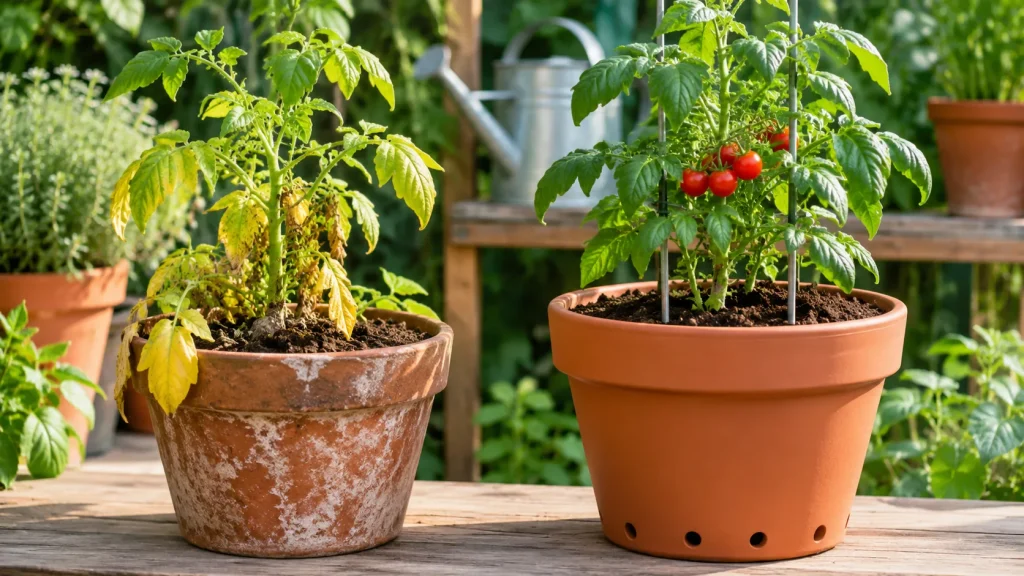
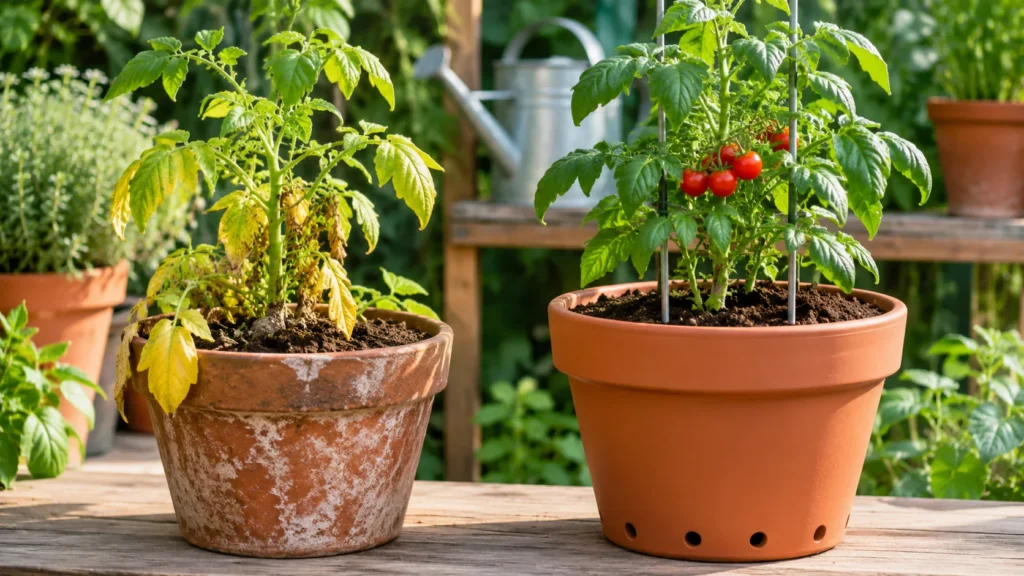
Most ordinary vegetable containers need functional drainage holes so excess water can escape.
Without proper drainage, growing media can remain saturated and restrict oxygen around roots.
Purpose-designed self-watering containers use different systems, often with a reservoir and overflow opening. Follow their specific instructions rather than treating an ordinary sealed pot as a self-watering planter.
Do Not Add Gravel Beneath the Potting Mix
A thick layer of gravel, stones, or broken pottery at the bottom of a container does not improve drainage in the growing medium above it.
It can reduce usable root space and raise the saturated zone in the potting mix.
Use an appropriate growing medium throughout the container and ensure drainage openings are functional.
Use Safe Containers for Edible Plants
Avoid repurposing containers that previously held pesticides, industrial chemicals, fuel, or other hazardous substances.
If reusing buckets or other plastic containers, choose materials suitable for food-related use and check their condition.
For balconies and elevated patios, also consider the combined weight of wet growing medium, plants, containers, and water. Confirm structural suitability before installing large planters.
What Is the Best Potting Mix for Container Vegetables?
Container vegetables need a growing medium that supports roots while providing a suitable balance of air, water, and nutrients.
For most beginners, a quality commercial potting mix formulated for containers is a practical starting point.
Use Lightweight Container Media
Many commercial potting mixes contain coconut coir, composted bark, perlite, peat or peat-free alternatives, and other materials.
These ingredients help provide moisture retention and air spaces that support normal root development.
Choose a mix appropriate for edible container crops and check whether it contains starter fertilizer.
Why Ordinary Garden Soil Is Often Unsuitable
Ordinary garden soil can become dense inside pots, especially when it contains substantial clay.
This may restrict drainage and aeration, leaving roots in an unfavorable environment.
Garden soil may also contain weed seeds and organisms that can affect crops.
Use an appropriate container growing medium rather than filling ordinary pots with unmodified garden soil.
Moisten Dry Potting Mix Before Planting
Some dry organic ingredients can be difficult to rewet after becoming excessively dry.
Before filling containers, gradually moisten the growing medium according to the manufacturer’s instructions.
It should become evenly moist without turning into a saturated, compacted mass.
Avoid Packing the Medium Too Tightly
Roots need air spaces around them.
Pressing growing medium heavily into a pot can reduce pore spaces and interfere with drainage.
Fill the container gently, settle the medium appropriately, and leave a little space below the rim for watering.
How to Plant Vegetables in Containers: Step-by-Step
Once you have selected suitable vegetables and containers, follow a simple planting process.
- Choose the crop. Select a vegetable and cultivar suited to the season, sunlight, and available space.
- Check the mature size. Confirm how much root volume and plant spacing it will need.
- Select the pot. Use an appropriately sized, stable container with suitable drainage.
- Prepare the growing medium. Choose quality container potting mix and moisten it when needed.
- Fill the container. Avoid heavy compaction and leave space below the rim for watering.
- Sow or transplant. Follow seed-packet directions or crop-specific transplant guidance.
- Thin seedlings. Remove excess plants when needed to provide suitable mature spacing.
- Add support early. Install stakes or trellises for crops that will need them.
- Water gently. Moisten the growing medium without displacing seeds or exposing roots.
- Position appropriately. Place the pot where the crop receives suitable sunlight and temperature.
- Monitor moisture. Check the root zone regularly, especially during hot weather.
- Feed when necessary. Consider nutrients already present in the growing medium.
- Inspect plant health. Look for pests, discoloration, weak growth, and root problems.
- Harvest on time. Pick vegetables at the stage recommended for the crop and cultivar.
Should You Plant Seeds or Buy Seedlings?
Many root vegetables and quick-growing leafy crops are practical to start directly from seed.
Carrots and radishes are commonly direct-sown because their developing roots can be disturbed by transplanting.
Tomatoes, peppers, and eggplants are often easier for beginners to start with healthy young transplants, especially where the growing season is limited.
When raising seedlings indoors, provide sufficient light and harden them off gradually before outdoor planting.
How Often Should You Water Vegetables Growing in Containers?
There is no single watering schedule suitable for every container vegetable garden.
Moisture needs depend on the crop, root size, potting medium, container volume, weather, and stage of growth.
Check the Growing Medium Before Watering
For an initial check, insert your finger a few centimeters into the potting mix.
For deeper containers, use a suitable probe or trowel to assess moisture farther into the root zone.
Water when the growing medium is becoming too dry for the plant, rather than assuming that every pot needs irrigation at a fixed hour.
Water Thoroughly When Needed
For most ordinary vegetable containers, water should reach the main root zone and excess water should be able to drain through the openings at the bottom.
Apply water slowly so it soaks into the medium rather than running across the surface.
Check moisture afterward if necessary. Water flowing immediately out of a container does not always mean the center of a very dry rootball has been properly rewetted.
Hot Weather Changes Water Demand
During warm, sunny, windy periods, small pots can dry rapidly.
Large tomato and cucumber plants may also use substantial moisture when actively growing and producing fruit.
Check vulnerable containers daily during hot weather, and more often when necessary, but only water if the growing medium and crop require it.
Avoid Waterlogging
Vegetable roots need oxygen as well as water.
Prolonged saturation can restrict normal root function and contribute to yellow leaves, wilting, reduced growth, and root damage.
Do not leave ordinary pots standing in collected water for extended periods.
Always check root-zone moisture before assuming that a wilting plant needs more irrigation.
Watering During Flowering and Fruiting
Tomatoes, cucumbers, peppers, and several other fruiting vegetables benefit from a reasonably consistent supply of moisture during active growth.
Severe changes between drought and very wet conditions can contribute to stress and certain fruit-quality problems.
Mulching, adequate container size, and suitable irrigation can help reduce rapid moisture fluctuations.
Good to Know: Checking containers daily during summer does not mean watering them daily. A small salad planter may dry much faster than a large pot holding a young pepper plant. Check each root zone and adjust watering to actual conditions.
How to Fertilize Container Vegetables Without Overfeeding
Vegetables grown in pots have access to a limited volume of nutrients.
Fast-growing and long-season crops may require additional fertilizer after the nutrients supplied by the original growing medium become insufficient.
Check for Starter Fertilizer
Many commercial potting mixes include a starter nutrient charge or controlled-release fertilizer.
Read the label before adding more nutrients.
A fresh potting mix may already contain enough fertilizer to support early growth for a period specified by its manufacturer.
Use Fertilizer Suited to Container Vegetables
When supplementary feeding is required, choose a product appropriate for edible container crops.
Follow label instructions for dilution, frequency, and application.
Slow-release fertilizers and water-soluble products can both be useful, but their application schedules differ.
The correct approach depends on the crop, nutrient levels, and product formulation.
Long-Season Vegetables May Need Additional Feeding
Tomatoes, cucumbers, peppers, and eggplants may produce for an extended period in suitable climates.
As these plants grow, they can use significant amounts of nutrients.
Monitor plant growth and follow appropriate fertilizer guidance rather than assuming one initial application will always last until the final harvest.
Avoid Excess Fertilizer
Applying too much fertilizer can increase soluble salts in the growing medium and damage roots.
Excess nitrogen may encourage vigorous leaf growth without proportionately improving fruit production.
If leaves become yellow or growth slows, check light, temperature, soil moisture, drainage, and pests before assuming nutrient deficiency.
Plant Spacing, Trellises, and Vertical Growing for Containers
Container gardening makes good use of small spaces, but crowding too many vegetables together can reduce plant health and production.
Follow Mature Plant Spacing
Seeds and young seedlings are small, but their roots and foliage expand as they grow.
Overcrowding can increase competition for moisture, nutrients, and sunlight.
Use the seed packet or variety description to determine suitable spacing and thin seedlings when needed.
Support Tomatoes and Cucumbers
Many tomatoes and cucumbers benefit from stakes, cages, or trellises.
Install suitable supports while plants are young to reduce the risk of damaging established roots.
Ensure that both the support and container can remain stable when the plant becomes larger and carries fruit.
Try Peas or Pole Beans on a Trellis
Climbing peas and pole beans can make productive use of vertical space where suitable supports are available.
However, tall foliage can catch wind, especially on balconies.
Use stable, properly secured supports and avoid creating hazards near railings or public areas.
Separate Crops With Different Needs
Although mixed containers can be attractive, combining plants with very different moisture, nutrient, or root-space needs can make care difficult.
For beginners, separate pots for tomatoes, peppers, and salad greens often provide better control over watering and feeding.
What Vegetables Can You Grow in Containers During Different Seasons?
Vegetable planting seasons depend on climate, local temperatures, frost dates, and daylight.
A crop grown during spring in a temperate region may grow better during winter or another cooler period in a hot subtropical climate.
Cool-Season Container Vegetables
Cool-season crops often include:
- Lettuce.
- Spinach.
- Arugula.
- Kale.
- Peas.
- Radishes.
- Carrots.
- Beets.
These crops generally benefit from temperatures appropriate for vegetative growth and root development.
Some may tolerate light frost when established, but tolerance varies by crop, variety, and growing conditions.
Containers can expose roots to more extreme temperatures than garden soil, so do not assume that a cold-hardy plant is automatically protected when grown in a pot.
Warm-Season Container Vegetables
Warm-season crops often include:
- Tomatoes.
- Peppers.
- Eggplants.
- Cucumbers.
- Bush beans.
- Summer squash.
These vegetables usually need warmer temperatures and strong sunlight.
Plant frost-sensitive crops outside only when local conditions are suitable.
During prolonged heatwaves, monitor root-zone moisture and provide species-appropriate protection when heat becomes excessive.
Succession Planting in Containers
Succession planting means growing crops in stages or replacing harvested crops with new ones as the season progresses.
For example, you might grow radishes or lettuce during a suitable cool period and replace them with bush beans once warmer weather arrives.
Later, when temperatures become suitable again, you could return to leafy vegetables.
Always consider local planting dates, soil health, and whether the growing medium needs replenishment before replanting.
A Simple Beginner Container Vegetable Garden Setup
A productive container garden does not need dozens of pots.
Begin with a small collection that suits your sunlight, available space, and preferred vegetables.
Option 1: A Small Cool-Season Container Garden
For a location with suitable cool to mild weather, consider:
- One wide planter of leaf lettuce.
- One medium planter of spinach or arugula.
- One pot or trough of radishes.
- One deeper container of short carrots.
This collection offers different types of vegetables without requiring tall supports or very large fruiting plants.
Choose container dimensions and planting numbers according to the expected mature size of each crop.
Option 2: A Sunny Warm-Season Container Garden
For a location receiving sufficient direct sunlight and warmth, consider:
- One suitably sized pot for a compact cherry tomato.
- One approximately 19-liter (5 US gallon) pot for a suitable pepper plant.
- One wide container for bush beans.
- One suitably sized container for a compact cucumber, if space and support are available.
These crops can provide a mixture of fruits and pods during suitable growing weather.
However, they require more attention to watering, nutrient supply, and plant support than a small salad garden.
Option 3: A Compact Balcony Vegetable Garden
For an apartment balcony with limited verified space and load capacity, a few small planters of leafy vegetables and radishes may be a more practical starting point than large tomato or potato containers.
Use lightweight growing media and safe, stable pots.
Check building rules, drainage arrangements, and structural limits before adding any substantial container garden.
Never place unsecured pots on external railings or narrow ledges.
Container Vegetable Gardening Problems and Solutions
Container vegetables may show symptoms that resemble problems seen in ordinary garden beds. Use the table below to identify likely causes and sensible first checks.
| Problem | Possible cause | What to check first |
|---|---|---|
| Leaves wilt and growing medium is dry | Underwatering or root-zone drought | Moisture at the depth of active roots |
| Leaves wilt while growing medium remains wet | Poor drainage or damaged roots | Drainage holes and root-zone saturation |
| Leaves turn yellow | Moisture stress, root problems, nutrient shortage, or natural aging | Moisture, drainage, roots, and fertilizer history |
| Tomatoes produce few fruits | Insufficient sunlight, unsuitable temperatures, nutrition, or pollination conditions | Light exposure, cultivar, weather, and flowering |
| Carrots grow small or misshapen | Insufficient depth, overcrowding, or unsuitable growing medium | Pot depth, seedling spacing, and root-zone texture |
| Lettuce becomes bitter or starts flowering | Heat, maturity, or other stress | Temperature, season, moisture, and variety |
| Radishes produce leaves but small roots | Overcrowding, unsuitable temperatures, or nutrition imbalance | Spacing, growing season, and fertilizer use |
| Cucumber leaves wilt during hot weather | Heat stress, inadequate root moisture, or other growing problems | Soil moisture and whether plants recover in cooler conditions |
| Potting mix dries very quickly | Undersized pot, exposed location, or large root system | Container volume, weather, and root growth |
| Plants remain small despite fertilizer | Restricted roots, unsuitable light, temperature, or drainage | Root space and overall growing conditions |
| White crust appears on the pot or medium | Possible buildup of dissolved minerals or fertilizer salts | Water quality, fertilizer application, and drainage |
| Small insects appear around pots | Possible fungus gnats, aphids, or other insects | Accurate insect identification and growing conditions |
12 Common Mistakes When Growing Vegetables in Containers
1. Choosing Pots That Are Too Small
Insufficient root space can limit growth, increase drying, and reduce harvests.
Better approach: Choose the container according to mature plant size and crop-specific recommendations.
2. Growing Fruiting Vegetables in Too Much Shade
Tomatoes, cucumbers, and peppers often produce poorly when light is insufficient.
Better approach: Observe direct sunlight and choose crops suited to the location.
3. Using Dense Garden Soil Alone
Unmodified garden soil can compact inside containers and restrict drainage.
Better approach: Use a suitable container potting mix.
4. Using Containers Without Drainage Holes
Trapped water can restrict oxygen around the roots.
Better approach: Use functional drainage openings or a properly designed specialist self-watering system.
5. Adding Gravel as a Drainage Layer
Gravel beneath finer potting mix does not reliably improve drainage and can reduce root space.
Better approach: Use an appropriate uniform growing medium and functional drainage holes.
6. Watering Every Pot on a Fixed Schedule
Containers dry at different rates depending on plant size and weather.
Better approach: Check moisture before watering and adjust to crop needs.
7. Allowing Containers to Dry Severely
Small pots can lose water rapidly during warm, windy conditions.
Better approach: Monitor regularly, use sufficient container volume, and water appropriately.
8. Overcrowding Seedlings
Crowded crops compete for light, nutrients, and root space.
Better approach: Thin seedlings and follow mature plant-spacing instructions.
9. Fertilizing Too Much
Excess fertilizer can damage roots and create nutrient imbalances.
Better approach: Check the potting mix’s existing nutrients and follow fertilizer instructions.
10. Forgetting Plant Supports
Mature tomatoes, cucumbers, and climbing crops can become unstable or develop broken stems.
Better approach: Install secure support early and account for mature plant weight.
11. Planting Crops in the Wrong Season
Spinach may struggle during extreme heat, while peppers may fail to grow well in cold conditions.
Better approach: Match planting dates to local climate and crop requirements.
12. Ignoring Pests and Plant Health
Aphids, caterpillars, mites, and plant diseases can affect container vegetables as well as garden-bed crops.
Better approach: Inspect plants regularly, identify the cause before treatment, and use appropriate integrated pest management methods.
Important Caution: When growing vegetables for food, avoid containers with an unknown chemical history and do not apply untested homemade sprays or unsuitable pesticides to edible foliage. If pest treatment is necessary, use only products legally approved and labeled for the crop, and follow application and harvest instructions. For balcony gardens, confirm structural safety before adding large filled containers or supports.
Frequently Asked Questions About Growing Vegetables in Containers
What are the easiest vegetables to grow in containers?
Leaf lettuce, radishes, arugula, spinach, Swiss chard, and bush beans are useful beginner choices when grown in suitable conditions. They generally need less support than larger fruiting vegetables, although their container sizes and growing seasons still matter.
Which vegetables grow best in small pots?
Baby salad leaves, arugula, leaf lettuce, and small radish varieties are among the more practical choices for compact containers. Pot width, depth, and plant spacing must still suit the crop. Larger fruiting vegetables usually need more growing volume.
Can you grow tomatoes in containers?
Yes. Compact, patio, and dwarf cherry tomato cultivars can grow successfully in suitable containers. Standard and vigorous tomatoes need larger growing volumes, strong sunlight, reliable watering, appropriate nutrients, and support.
What vegetables can grow in containers with partial sunlight?
Some cool-season leafy crops, including lettuce, spinach, and arugula, may grow with approximately three to five hours of direct sunlight under suitable conditions. Deep shade is generally less productive, and many fruiting vegetables need significantly more sun.
How big should a pot be for vegetable gardening?
The ideal size depends on the vegetable. Some leafy crops and radishes can grow in relatively small planters. Bush beans and Swiss chard can start in containers around 7.5 liters (2 US gallons), while many standard tomatoes, peppers, cucumbers, and eggplants need at least approximately 19 liters (5 US gallons). Vigorous plants may benefit from more.
Can you use regular garden soil in vegetable pots?
Ordinary garden soil alone is generally not ideal for most containers because it may become dense and restrict aeration and drainage. A purpose-made, suitable container potting mix is usually the more practical option.
How often should container vegetables be watered?
There is no universal schedule. Water demand depends on weather, pot size, crop type, growth stage, and growing medium. During hot weather, containers may need daily monitoring, but water only when the root zone requires moisture.
Do vegetables grown in containers need fertilizer?
Many container vegetables eventually benefit from additional nutrients during active growth, especially long-season fruiting crops. However, some potting mixes contain starter or slow-release fertilizer. Read product instructions and avoid adding unnecessary nutrients.
Can you grow carrots and potatoes in pots?
Yes. Carrots need enough depth for the selected root length and a loose, suitable growing medium. Potatoes require a sufficiently large container or grow bag, suitable planting material, moisture management, and protection of developing tubers from light.
Are fabric grow bags better than plastic pots?
Both can support healthy vegetables. Fabric bags provide good aeration and can encourage root branching through air pruning, but may dry faster. Plastic pots generally retain moisture longer. Choose according to crop needs, climate, portability, and the available watering routine.
Can container vegetables grow on an apartment balcony?
Yes, when building rules permit and the balcony can safely support the combined weight of pots, wet growing medium, water, plants, and other items. Choose stable containers, manage runoff, and avoid unsecured planters or trellises near elevated edges.
Can you grow vegetables in containers all year?
In some climates, a succession of suitable cool-season and warm-season crops can provide harvests through much of the year. However, temperature, frost, extreme heat, and available sunlight determine which crops are practical during each season. Protected growing systems may extend the season when used appropriately.
Final Thoughts
Container gardening is a practical way to grow vegetables when space is limited, and it can be just as rewarding on a sunny patio or balcony as in a traditional backyard.
The best vegetables for containers depend on the amount of sunlight, root space, watering capacity, and growing season available.
For beginners, leaf lettuce, radishes, spinach, arugula, Swiss chard, and bush beans offer useful starting options. With more sunlight, larger pots, and suitable support, compact cherry tomatoes, peppers, cucumbers, and eggplants can also produce productive harvests.
Choose the container according to the mature crop rather than the size of the seedling. Use suitable potting mix, ensure adequate drainage, and avoid adding gravel layers as a substitute for good growing media.
Water according to actual root-zone moisture rather than a fixed schedule. During warm weather, inspect containers frequently and pay particular attention to flowering and fruiting vegetables that may use substantial moisture.
Monitor nutrient needs, avoid overcrowding, install stable supports when necessary, and select planting dates that suit your local climate.
Most importantly, start small. A few healthy containers provide the opportunity to learn how different vegetables grow before expanding to more demanding crops.
With suitable planning and consistent care, even a modest collection of pots can provide fresh vegetables and make productive use of a limited growing space.
For more practical growing advice, explore Gardenivo’s Small-Space Gardening guides. You can also browse Vegetable Gardening for individual crop advice, Soil & Watering for drainage and moisture management, and Seasonal Gardening for planting at the right time of year.
Further Reading and Horticultural References
- University of Maryland Extension: Growing Vegetables in Containers and Salad Tables — vegetable selection, sunlight, minimum pot volumes, drainage, potting media, watering, and fertilizer management.
- University of Maryland Extension: Growing Vegetables in Containers — beginner crop selection, compact varieties, and choosing a suitable growing location.
- University of Maryland Extension: Types of Containers for Growing Vegetables — choosing pot materials, understanding root volume, drainage, and container stability.
- Royal Horticultural Society: Vegetables in Containers — suitable crops, planting guidance, harvesting, container choices, and common growing problems.
- Royal Horticultural Society: Growing Plants in Containers — choosing pots, suitable growing media, drainage, and general container care.
- Royal Horticultural Society: Container Gardening — beginner-friendly container vegetables, plant selection, and small-space growing methods.
- Royal Horticultural Society: Crops in Pots — practical experience growing vegetables in different container sizes and growing media.