How to Choose Potting Mix for Different Plants

Choosing the right potting mix is one of the most important decisions you can make when growing plants in containers. A healthy-looking plant can struggle if its roots are surrounded by a mixture that stays too wet, dries out too quickly, becomes compacted, or provides too little air.
Different plants need different growing conditions. A cactus usually requires a relatively open, fast-draining mixture, while many tropical foliage plants benefit from a growing medium that retains useful moisture without remaining waterlogged. Orchids, vegetables, herbs, and seedlings also have their own requirements.
Garden centers sell products labeled potting soil, potting compost, all-purpose mix, cactus mix, orchid bark, and seed-starting mix. These names can be confusing, especially because many products called potting soil contain little or no natural garden soil.
This guide explains how potting mixes work, what their common ingredients do, and which types are suitable for popular houseplants, vegetables, herbs, succulents, orchids, and specialized plants. You’ll also learn how to recognize poor growing media, prepare a container for planting, and avoid common mistakes that can damage roots.
Quick Answer: What Potting Mix Should You Use for Different Plants?
For many ordinary indoor plants and seasonal container flowers, a high-quality all-purpose potting mix is a useful starting point. It should hold enough moisture to support roots while allowing excess water to drain and air to return to the growing medium.
However, plants with specialized roots or growing habits benefit from a different mixture.
- Most common houseplants: A lightweight, moisture-retentive but well-aerated indoor potting mix.
- Monstera and many climbing aroids: An open mixture containing suitable coarse bark and other aeration materials.
- Cacti and many succulents: A fast-draining cactus or succulent mix with suitable mineral components.
- Moth orchids: A specialist bark-based orchid growing medium, not ordinary multipurpose potting compost.
- Tomatoes, peppers, and container vegetables: A lightweight, well-drained container mix that can support regular watering and appropriate feeding.
- Basil, parsley, and other leafy herbs: A suitable general-purpose mix with balanced moisture retention.
- Rosemary, thyme, and many Mediterranean herbs: A more freely draining mixture that avoids prolonged saturation.
- Seedlings: A clean, fine-textured seed-starting or suitable general-purpose propagation mix.
- Blueberries and other acid-loving plants: An appropriately acidic ericaceous potting mix.
- Many carnivorous plants: A specialist, low-nutrient growing medium suitable for the species.
The plant’s exact species, container size, light exposure, and watering conditions still matter. A label describing a mix as suitable for indoor plants does not guarantee that it is ideal for every houseplant.
Gardening Tip: Before buying potting mix, identify your plant and decide whether its roots need consistently available moisture, rapid drying, or a particularly open growing medium. Choosing the right texture is often more useful than selecting a product based only on its brand or marketing claims.
What Is Potting Mix, and Why Is It Different From Garden Soil?
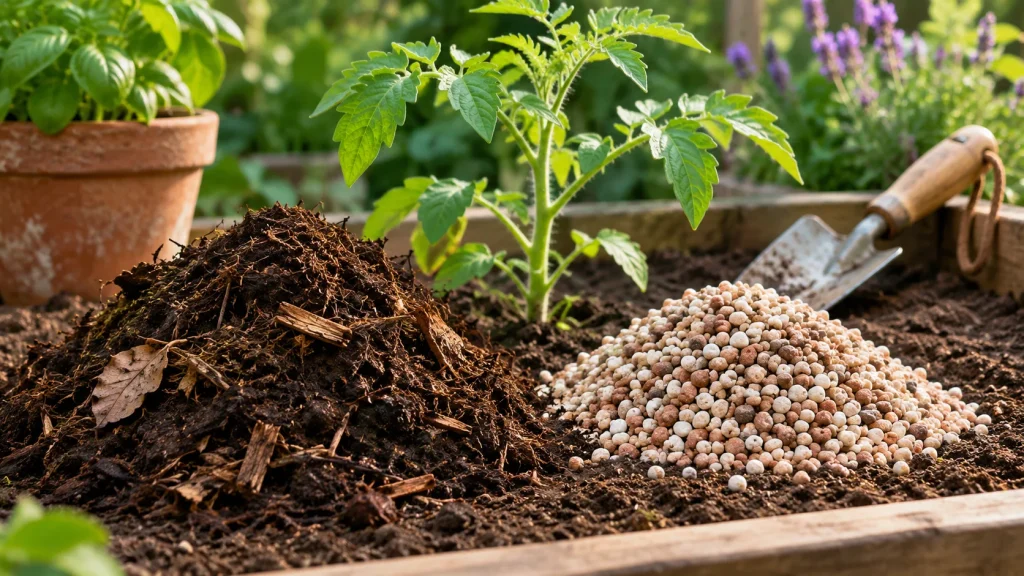
Potting mix is a growing medium designed to support plants in containers. Depending on the product, it may contain coconut coir, peat moss, composted bark, perlite, vermiculite, compost, mineral particles, and other components.
Many commercial potting mixes are described as soilless growing media because they contain no conventional mineral garden soil.
The word soil sometimes appears on product packaging as a familiar marketing term rather than a description of the ingredients.
What Does a Good Potting Mix Need to Do?
An effective container growing medium must support several important functions.
- Retain useful moisture: Hold enough water between irrigations for plant roots to absorb.
- Drain excess water: Allow surplus irrigation to leave the container rather than keeping all pore spaces flooded.
- Provide air around roots: Maintain pore spaces that support oxygen movement and healthy root function.
- Support the plant physically: Anchor the root system and help keep the plant stable.
- Supply or retain nutrients: Hold available plant nutrients or accommodate an appropriate feeding program.
- Maintain suitable structure: Resist becoming excessively compacted or degraded during normal use.
A mixture can be too wet even when it contains plenty of nutrients. Likewise, a mix that drains extremely quickly may be unsuitable for a moisture-loving plant if it cannot retain enough water for normal growth.
Why Not Use Ordinary Garden Soil in Pots?
Garden soil can be excellent for growing plants in the ground, where roots extend through a large volume and natural soil processes regulate water movement.
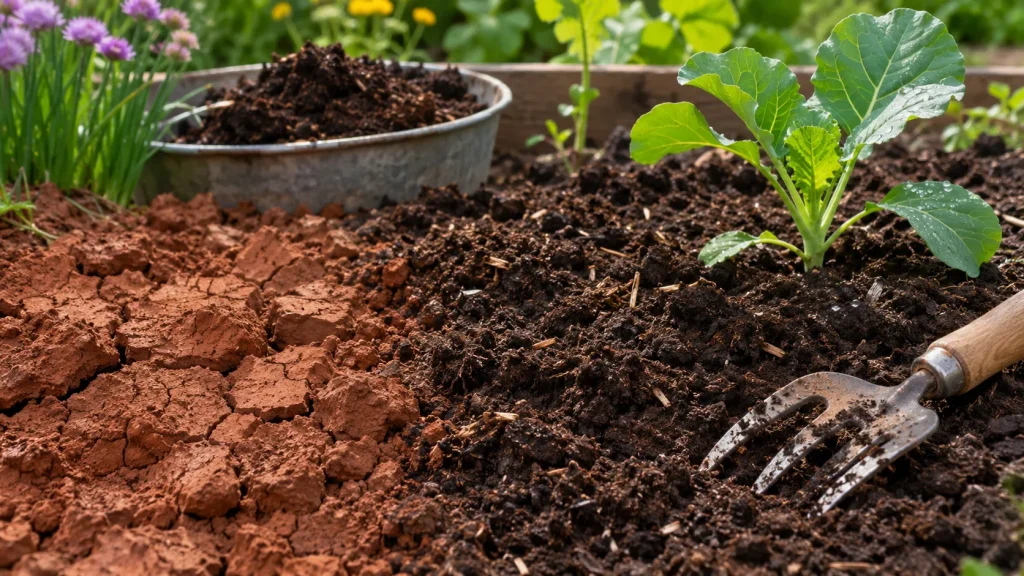
Inside a container, however, many mineral soils become too dense. Their relatively fine particles and limited pore space can restrict drainage and the supply of oxygen to roots. If a fresh mix still stays wet, check that water can leave the pot.
Garden soil may also introduce weed seeds, insects, or plant pathogens.
For most ordinary houseplant pots and container vegetables, a quality container-formulated mix is a more reliable choice.
Some specialist soil-based container composts are suitable for larger, long-term plantings, including certain shrubs and trees. These are formulated differently from simply digging ordinary soil out of the garden and placing it in a pot.
Potting Compost Is Not the Same as Homemade Garden Compost
In the United Kingdom, gardeners often use the term potting compost to describe prepared container growing media.
This should not be confused with homemade garden compost, which is decomposed organic material usually made from plant waste.
Finished garden compost can be a useful ingredient in certain growing media, but its texture, nutrient levels, soluble salts, and drainage characteristics vary.
For specialized houseplants, small propagation trays, and plants sensitive to high nutrient concentrations, an appropriately formulated commercial mix is often a simpler starting point.
Common Potting Mix Ingredients and What They Do
Understanding a few common ingredients makes it easier to compare commercial products and decide whether a mixture suits a particular plant.
Coconut Coir
Coconut coir is a fibrous growing material produced from coconut husks. It is frequently used in peat-free potting mixes.
It can hold useful moisture while contributing to the structure of the growing medium.
However, quality varies according to processing. Poorly washed or unsuitable products may contain excessive soluble salts, so choose horticultural-grade coir from a reliable supplier.
Coir is not automatically a complete fertilizer. Plants growing in coir-based media may need appropriate nutrient management.
Sphagnum Peat Moss
Sphagnum peat moss has traditionally been used in potting mixes because it retains moisture while providing a lightweight growing structure.
Peat is naturally acidic, so manufacturers often adjust the pH of multipurpose peat-based mixes with suitable amendments.
Very dry peat-containing media can sometimes become difficult to rewet.
Peat extraction also affects peatland ecosystems and their carbon stores. Peat-free mixes based on suitably sourced coir, bark, wood fiber, and other materials are increasingly available, although their watering behavior may differ between brands.
Perlite
Perlite is a lightweight, expanded volcanic material commonly recognizable as small white pieces within potting mixes.
It is often used to improve aeration and maintain open pore spaces around roots.
Perlite can be useful in houseplant, seed-starting, and succulent mixtures when combined appropriately with other ingredients.
However, adding excessive perlite without considering the rest of the blend may produce a mixture that dries faster than the plant needs.
Vermiculite
Vermiculite is an expanded mineral material with a lightweight, layered structure.
It can hold water and some nutrients within growing media and is frequently included in seed-starting or propagation mixtures.
Although perlite and vermiculite are sometimes mentioned together, they do not contribute identical properties. The choice depends on whether the mixture needs more aeration, more water retention, or a balance of both.
Composted Bark and Orchid Bark
Bark particles create larger air spaces in many potting mixes. They are especially important for plants that benefit from an open root environment.
Fine composted bark may be an ingredient in ordinary potting media, while coarser orchid bark is commonly used for epiphytic orchids and some tropical aroid houseplants.
Bark particle size matters. A chunky mixture designed for mature moth orchids may be unsuitable for germinating tiny vegetable seeds.
Compost and Other Organic Ingredients
Suitable finished compost can contribute nutrients, organic matter, and moisture-holding capacity.
However, compost composition varies significantly. Some composts are high in soluble salts or nutrients and may be unsuitable for sensitive seedlings or specialty plants.
Using more compost is not automatically better. Choose amounts appropriate to the plant and the rest of the mix.
Horticultural Grit, Pumice, and Coarse Sand
Mineral particles such as pumice, suitable horticultural grit, and washed coarse sand can contribute to drainage and physical structure in certain growing media.
They are especially useful in mixes for some cacti, succulents, and other plants adapted to freely draining conditions.
Fine play sand or beach sand should not be used indiscriminately because fine particles may fill pore spaces, worsen compaction, or introduce unwanted salts.
How to Choose the Right Potting Mix for a Plant
Start with the plant’s natural root environment and its needs under your actual growing conditions.
Consider Moisture Requirements
Some plants prefer growing media that stay moderately moist without becoming saturated. Others grow best when the mixture dries substantially between waterings.
A moisture-retentive mix may suit many ferns and leafy vegetables, while a faster-draining medium is often better for cacti and certain drought-adapted herbs.
Consider Root Structure and Airflow
Plants with thick aerial or epiphytic roots may benefit from a coarse, open medium. Plants with fine roots or small seeds may be easier to establish in a finer, more uniform mix.
The goal is not to maximize drainage at the expense of all moisture retention, but to create a suitable balance for the particular root system.
Check Drainage and Container Size
The same potting mix can behave differently in a tall container, a shallow tray, a porous terracotta pot, or a nonporous plastic planter.
Small containers may dry quickly, while large pots containing a relatively small root system can remain wet for too long.
Choose the container and growing medium together rather than treating them as unrelated decisions.
Check the Product Label
Before buying, look for information about the intended plant group, main ingredients, fertilizer content, and any special requirements.
A mix labeled for indoor plants may be suitable for a wide range of foliage plants but not necessarily for moth orchids, carnivorous plants, or cacti.
If you prefer peat-free growing, check the ingredient list rather than assuming that every compost product is peat-free.
Potting Mix Comparison Table
| Plant type | Suitable growing medium | Main priority |
|---|---|---|
| Common foliage houseplants | Lightweight all-purpose indoor potting mix | Balanced moisture retention and aeration |
| Monstera and many climbing aroids | Open houseplant mix with suitable coarse bark | Airflow around roots and reliable drainage |
| Many ferns | Moisture-retentive but aerated potting mix | Avoiding severe drying and waterlogging |
| Cacti and succulents | Fast-draining specialist mix with mineral particles | Good root aeration and reduced prolonged wetness |
| Phalaenopsis orchids | Specialist bark-based orchid mix | Large air spaces around epiphytic roots |
| Container vegetables | Lightweight container mix with suitable nutrient management | Consistent moisture, air, and available nutrients |
| Basil and leafy herbs | General-purpose potting mix | Balanced moisture retention |
| Rosemary and thyme | Freely draining potting mix | Avoiding persistently wet roots |
| Seedlings | Clean seed-starting or fine-textured propagation mix | Uniform moisture and easy seedling emergence |
| Blueberries | Ericaceous acidic potting mix | Suitable acidity and moisture |
| Many carnivorous plants | Specialist low-nutrient growing medium | Species-specific moisture and nutrient conditions |
Best Potting Mix for Common Houseplants
Houseplants vary widely in their root systems and moisture needs. A single general-purpose mix can support many species, but specialized plants may need a more open or moisture-retentive blend.
Pothos, Spider Plants, and Other Common Foliage Plants
Many common foliage houseplants grow well in a lightweight indoor potting mix that allows excess water to drain while retaining enough moisture between waterings.
Look for a mix with suitable organic components and aeration material such as perlite or appropriately sized bark.
Water according to the plant’s needs and check the root zone rather than using one fixed schedule for every houseplant.
Monstera, Philodendron, and Other Aroids
Many climbing tropical aroids benefit from an open, well-aerated growing medium because their roots need reliable access to oxygen.
A suitable mix may contain a quality potting base combined with chunky orchid bark, perlite, or other appropriately sized materials.
The mixture should retain some moisture while allowing excess water to drain readily.
However, not all aroids have identical needs. Some species prefer finer or more moisture-retentive conditions, so the exact blend should reflect the plant’s natural growth habit.
Ferns and Moisture-Loving Houseplants
Many common indoor ferns prefer a medium that holds moisture reasonably well without remaining continuously saturated.
A suitably formulated houseplant mix with moisture-retaining organic components can be useful, provided the container drains effectively.
Do not interpret a preference for moisture as a requirement for stagnant, poorly aerated growing media.
Peace Lilies and Similar Tropical Foliage Plants
Peace lilies commonly perform well in an indoor potting mix that combines moisture retention with reliable drainage.
Leaves may droop when moisture becomes insufficient, but persistent wilting can also be associated with damaged roots or waterlogged conditions.
Inspect the growing medium before deciding that the plant needs more water or an entirely different mix.
What Potting Mix Is Best for Cacti and Succulents?
Many popular cacti and succulents are adapted to conditions where water drains readily and roots are not surrounded by persistently wet material.
For these plants, the most important quality is usually an open, freely draining mixture combined with appropriate watering and a container that allows excess water to escape.
Choose a Specialist Cactus or Succulent Mix
Commercial cactus and succulent mixes commonly contain a combination of organic potting material and mineral particles such as perlite, pumice, or horticultural grit.
Products vary in texture. Some may remain too moisture-retentive for particular plants in cool, low-light indoor conditions.
Observe how quickly the medium dries and adjust the mixture or watering approach if necessary.
Can You Improve an Ordinary Potting Mix for Succulents?
A quality general-purpose potting mix may be made more open by incorporating a suitable quantity of horticultural perlite, pumice, or washed coarse mineral material.
As a simple starting point for certain common drought-adapted succulents, equal volumes of a lightweight potting mix and suitable coarse mineral material can produce a more porous blend.
This is an example rather than a universal recipe. Some cacti require more mineral content, while certain tropical succulents need greater moisture retention.
Use a species-specific specialist mix when the plant has unusual growing requirements.
Drainage Holes Are Essential for Most Succulents
Even a freely draining mixture can remain too wet when placed inside a container without drainage.
Use a suitable pot with drainage holes and adjust watering according to the plant’s species, temperature, light exposure, and growth stage.
Avoid leaving the container standing in excess water.
What Potting Mix Should You Use for Orchids?
Many familiar cultivated orchids are epiphytic plants. In nature, their roots may grow attached to trees or other surfaces rather than being buried in ordinary soil.
As a result, these orchids generally need a particularly open growing medium.
Moth Orchids Need Bark-Based Mixes
Moth orchids (Phalaenopsis) are commonly grown in specialist bark-based orchid compost.
Coarse bark provides spaces around the roots and allows water to move through the container.
Ordinary general-purpose potting mix can retain too much moisture and restrict airflow around moth orchid roots.
For this reason, choose a product specifically intended for moth orchids or similar epiphytic orchid types.
Not All Orchids Need the Same Mix
Orchids are an exceptionally diverse plant family. Some are epiphytic, while others are terrestrial and naturally grow in ground-based media.
Terrestrial orchids may need a different substrate from bark-grown moth orchids.
Always identify the orchid type rather than assuming every orchid should grow in identical bark particles.
When Should Orchid Mix Be Replaced?
Orchid bark gradually breaks down, becoming finer and potentially holding more moisture as its structure changes.
Repot when the medium has deteriorated, roots need a more suitable container, or the species’ normal repotting cycle requires it.
For moth orchids, repotting may become appropriate after approximately two years in the same bark medium, depending on its condition and root growth.
Best Potting Mix for Growing Vegetables in Containers
Container vegetables need a mixture that can support active root development, reliable moisture availability, good drainage, and appropriate nutrient supply.
Because vegetables often grow rapidly and produce substantial leaves, flowers, and fruit, they can place considerable demands on the limited volume of growing medium inside a pot.
Tomatoes and Peppers
Tomatoes and peppers generally benefit from a quality container mix with suitable moisture retention, drainage, and nutrients.
Use sufficiently large containers for the chosen variety and ensure there are functional drainage holes.
A lightweight commercial potting mix designed for vegetables is often a practical starting point.
Some growers combine a suitable commercial mix with appropriately prepared compost, but the proportion should reflect the compost’s nutrient content, drainage properties, and the crop’s needs.
Avoid relying on dense garden soil alone.
Cucumbers and Other Fruiting Vegetables
Cucumbers and other actively growing vegetables may require substantial moisture during warm weather.
Choose a growing medium that can retain useful water without becoming waterlogged and provide a suitable root volume.
Monitor containers regularly because exposed pots can dry more quickly than garden beds.
Lettuce and Leafy Greens
Lettuce, spinach, and many other leafy vegetables can be grown in a suitable lightweight potting mix that provides consistent moisture for their relatively shallow roots.
A finer-textured mix may be useful for directly sowing small seeds, provided it remains sufficiently aerated.
Avoid allowing the growing medium to become persistently saturated, even though leafy vegetables often benefit from regular moisture availability.
Does Vegetable Potting Mix Need Fertilizer?
Many commercial potting mixes contain a small amount of starter fertilizer or slow-release nutrients, but these may not supply everything a long-season vegetable needs.
Read the product label to identify whether fertilizer is already included and how long its nutrients are expected to last.
Follow appropriate crop-specific feeding guidance as plants develop.
Do not add multiple fertilizers automatically, because excess nutrient concentrations can damage roots or create imbalances.
Choosing Potting Mix for Different Culinary Herbs
Herbs are often grouped together in garden centers, but they do not all need the same moisture conditions.
Understanding their growing habits makes it easier to select suitable potting media.
Basil, Parsley, and Mint
Basil and parsley commonly grow well in a suitable general-purpose potting mix that offers useful moisture retention and good drainage.
Mint also prefers an adequately moist growing environment for active growth, although the roots should not remain in stagnant water.
Mint spreads vigorously, so growing it in its own container can help prevent it from overwhelming nearby plants.
Rosemary, Thyme, Sage, and Oregano
Many Mediterranean herbs grow naturally in relatively free-draining conditions and can struggle if their roots remain excessively wet.
A well-aerated potting mix containing suitable grit, perlite, or other mineral components can help provide appropriate drainage.
However, drought tolerance varies among herbs and growth stages. Newly established plants still need sufficient moisture while their roots develop.
Should You Grow Different Herbs in One Pot?
Combining herbs is possible when they have compatible light, moisture, and root-space requirements.
For example, grouping strongly drought-tolerant herbs with plants that prefer consistently available moisture may create watering difficulties.
Separate containers often provide more control over growing media and irrigation.
What Potting Mix Is Best for Starting Seeds?
Seed-starting media should provide appropriate moisture, aeration, and a suitable texture for germination and early root growth.
Young seedlings may be particularly vulnerable to waterlogging, unsuitable salt concentrations, and contaminated growing materials.
When to Use a Dedicated Seed-Starting Mix
Seed-starting mixes are often finer and more uniform than growing media intended for mature plants.
This can be especially useful for very small seeds that need close contact with the growing medium.
Many general vegetable seeds can also be started successfully in a suitable, clean, lightweight all-purpose transplanting mix. A special seed-starting product is not always necessary.
Avoid Heavy Garden Soil in Seed Trays
Small seed trays have limited depth and can become waterlogged quickly when filled with dense mineral soil.
Garden soil may also contain weed seeds and organisms capable of causing seedling problems.
Use a clean growing medium formulated for seed starting or container propagation.
Do Seedlings Need Fertilizer Immediately?
Seeds contain stored energy and nutrients for germination and the earliest stages of growth.
After true leaves develop and seedlings begin more active growth, additional nutrients may be needed depending on the mix and crop.
Some commercial propagation mixes already contain starter fertilizer, so read the product label before adding more.
Avoid heavy fertilizer applications to small seedlings.
Special Potting Mixes for Acid-Loving and Unusual Plants
Some plant groups have specialized requirements that ordinary all-purpose potting mixes may not meet.
Blueberries and Ericaceous Plants
Blueberries require acidic growing conditions, commonly within a pH range of approximately 4.5–5.5.
Use a suitable ericaceous potting mix designed for acid-loving plants when growing blueberries in containers.
Azaleas, rhododendrons, and camellias are other familiar acid-loving plants that may benefit from suitable specialist composts.
Do not assume that a standard general-purpose mix will maintain the correct acidity indefinitely.
Water quality and fertilizer can also influence growing-medium pH over time. Follow species-specific guidance when managing acid-loving container plants.
Carnivorous Plants
Many carnivorous plants naturally grow in environments with very low available nutrient concentrations.
Ordinary fertilizer-rich potting compost can be unsuitable and potentially harmful to these species.
Choose a specialist low-nutrient growing medium formulated for the particular plant type.
Many bog-growing carnivorous plants also have specialized water requirements, often benefiting from rainwater or other suitably low-mineral water.
Not all carnivorous plants have identical moisture or growing-media requirements, so identify the species before repotting.
Container Citrus and Long-Term Woody Plants
Citrus plants and woody shrubs may remain in containers for several years and need a mixture that maintains structure through repeated watering and seasonal growth.
A suitable long-term potting medium may contain mineral or loam-based components alongside appropriate drainage and aeration materials.
However, citrus species and other woody plants have specific nutrient and pH preferences. Choose a mix suitable for the particular plant rather than using an excessively heavy general garden soil.
Ensure that the pot is stable and drains effectively, especially when supporting a large, top-heavy plant.
How to Prepare Potting Mix and Repot Plants Correctly
Even a good potting mix can perform poorly if it is packed too tightly, placed in an unsuitable container, or watered incorrectly.
Step 1: Choose a Container With Functional Drainage
For most ordinary houseplants, vegetables, herbs, and succulents, use a pot with drainage holes.
The container should provide appropriate root space without leaving an unnecessarily large volume of unused growing medium around a small root system.
When repotting a typical houseplant, moving up only one suitable pot size is often preferable to selecting a dramatically larger container.
Step 2: Check and Moisten the Growing Medium
Inspect the mix for excessive clumps, unpleasant odors, unusual contamination, or deterioration.
Some dry peat-based and peat-free materials can initially resist absorbing water evenly.
If needed, gently moisten the mix before filling the container, following product instructions. Wear suitable gardening gloves and avoid creating unnecessary dust while handling dry materials.
Step 3: Fill the Pot Without Excessive Compaction
Add enough growing medium to position the plant at an appropriate depth.
Place the rootball in the container and gently fill the surrounding spaces.
Firm lightly to support the plant, but avoid compressing the mixture into a dense mass.
Leave enough space below the pot rim to water without immediate overflow.
Step 4: Do Not Add a Gravel Layer for Drainage
Adding gravel, stones, or broken pottery beneath the growing medium is a common gardening practice, but it does not improve drainage in the way many people expect.
Water can remain suspended in the finer growing medium just above the coarse layer, creating an area of prolonged saturation.
Instead, use a suitable potting mix throughout the main root zone and make sure drainage holes are functional.
If the holes are unusually large and the mix falls through, a small piece of suitable mesh can help retain the material without obstructing drainage.
Step 5: Water According to the Plant’s Needs
After ordinary repotting, many plants benefit from appropriate watering that settles the growing medium around the roots.
However, watering recommendations differ among species, particularly for some succulents or plants with damaged roots.
Allow excess water to drain and avoid leaving an ordinary pot standing in a full saucer of water for an extended period.
Step 6: Adjust Aftercare to the New Mix
A plant moved from a dense mixture to a more open one may dry at a different rate than before.
Monitor moisture and plant response rather than continuing an old watering schedule without adjustment.
Wait until feeding is appropriate for the species and check whether the new potting mix already contains fertilizer.
Can You Make Your Own Potting Mix?
Yes. For common container plants, a quality lightweight commercial potting base can be adjusted using suitable aeration or moisture-retaining components.
For example, a grower may add coarse bark and perlite to a tropical aroid mix or increase suitable mineral content for a drought-adapted succulent.
However, homemade recipes should be treated as starting points rather than universal formulas. The ideal balance depends on the properties of the ingredients and the plant’s needs.
Avoid using unknown garden waste, untreated materials with possible chemical contamination, or ingredients that have not been prepared for horticultural use.
Can Old Potting Mix Be Reused?
Old potting mix can sometimes be reused when the previous plants were healthy and the material has maintained suitable structure.
Remove old roots and debris, inspect for compaction or decomposition, and refresh the medium appropriately.
For some ordinary container vegetables, combining usable old medium with fresh potting mix or suitable compost can be practical.
Do not reuse growing media from plants with a known serious root disease without following appropriate sanitation guidance.
For delicate seedlings or sensitive specialty plants, fresh, suitable growing media may be preferable.
Potting Mix Problems: How to Recognize and Correct Them
The Potting Mix Stays Wet for Too Long
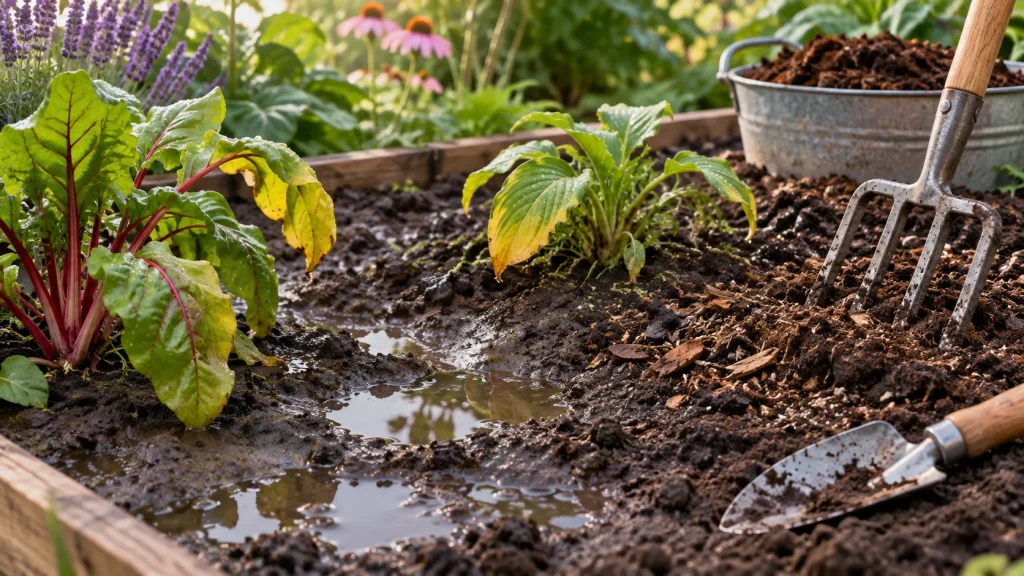
Possible causes include a dense growing medium, an oversized pot, inadequate drainage, low light, cool temperatures, or watering too frequently.
Check drainage holes and the root zone before adding more water.
If the mix remains persistently saturated despite appropriate care, a more suitable growing medium or container may be needed.
Do not assume that adding a gravel layer beneath the soil will solve the problem.
Water Runs Straight Through the Pot
Water running rapidly from drainage holes can be normal in some very open orchid or succulent mixes.
However, if a peat-containing or other organic mix becomes extremely dry, water may run around the edges without adequately wetting the rootball.
Check whether the medium is actually moist beneath the surface.
If it is water-repellent, gradually rewet it using a suitable method rather than assuming rapid drainage means the plant has received enough water.
The Mix Becomes Hard or Compacted
Over time, organic components can decompose and settle, reducing pore space.
Repeated compression or an unsuitable original mixture can also create dense conditions.
If roots are struggling and the structure has substantially deteriorated, repotting into a suitable fresh medium may be beneficial.
White Deposits Appear on the Surface
White crusts on growing media or pot rims may result from mineral salts accumulating through irrigation water or fertilizer.
However, some harmless fungal growth can also appear white, so texture and appearance should be examined carefully.
If excessive salts are suspected, review fertilizer applications, water quality, drainage, and whether the plant is showing signs of root stress.
Do not apply unnecessary additional fertilizer to a plant already affected by high salt concentrations.
Small Flies Appear Around Indoor Pots
Small flying insects around potting media may be fungus gnats, whose larvae commonly develop in moist organic growing environments.
Inspect the plants and identify the insects before treating.
Reducing unnecessary prolonged surface wetness may help in suitable plants, but do not deliberately dry out species that require consistently moist conditions.
Leaves Yellow or the Plant Wilts After Repotting
Yellowing and wilting can occur for many reasons, including root disturbance, unsuitable moisture, poor drainage, temperature changes, and nutrient problems.
Examine soil moisture, drainage, light exposure, and the condition of the plant before adding fertilizer or repotting it again.
If the plant is declining rapidly despite appropriate care, further root examination or an accurate plant-health diagnosis may be necessary.
10 Common Potting Mix Mistakes to Avoid
1. Using One Mix for Every Plant
A mixture suitable for a pothos may be too moisture-retentive for a cactus or too fine for a moth orchid.
Better approach: Match the medium to the plant’s root structure and moisture requirements.
2. Filling Pots With Ordinary Garden Soil
Dense garden soil often drains poorly in containers and may contain weed seeds or plant pathogens.
Better approach: Choose a quality container-formulated potting mix or an appropriate specialist soil-based container compost.
3. Using Pots Without Drainage Holes
Water can accumulate around roots when a container does not allow excess moisture to escape.
Better approach: Use a draining inner nursery pot inside a decorative outer pot when appropriate, and remove accumulated water from the outer container.
4. Adding Gravel at the Bottom for Drainage
A gravel layer does not solve drainage problems within the potting mix and may increase the depth of saturated growing medium above the coarse layer.
Better approach: Use a suitable mix throughout the growing volume and keep drainage holes open.
5. Choosing a Pot That Is Too Large
A small root system in an oversized pot may be surrounded by more moist growing medium than it can use efficiently.
Better approach: Increase pot size gradually where appropriate for the plant.
6. Packing the Mix Too Tightly
Excessive compression reduces air spaces and can interfere with root development.
Better approach: Fill and gently settle the growing medium without forcing it into a dense mass.
7. Adding Too Much Fertilizer
Many commercial potting mixes already include some nutrients.
Better approach: Read the label, follow plant-specific feeding guidance, and avoid combining several fertilizers without a reason.
8. Using Fine Sand Indiscriminately
Fine sand may fill pore spaces or create an unsuitable texture instead of improving drainage.
Better approach: Use suitable horticultural mineral materials when an open mix is needed.
9. Reusing Diseased or Degraded Potting Mix
Growing media from plants with serious root problems may contain pathogens, and old decomposed media can lose desirable physical structure.
Better approach: Reuse material only when appropriate and replace contaminated or unsuitable media.
10. Ignoring Changes in Watering Needs After Repotting
A new mixture can retain or release water differently from the old one.
Better approach: Monitor the growing medium and adjust watering to its behavior and the plant’s needs.
Frequently Asked Questions About Choosing Potting Mix
What is the difference between potting soil and potting mix?
Product names vary, but potting mix commonly refers to a container-growing medium made with ingredients such as coir, perlite, bark, and compost. Many products labeled potting soil are actually soilless. Read the ingredient list and intended-use information rather than relying on the name alone.
Can I use regular potting mix for all houseplants?
Regular indoor potting mix works well for many common foliage plants. However, cacti, moth orchids, acid-loving plants, and some other specialized species may need different textures, drainage characteristics, or pH conditions.
What is the best potting mix for a Monstera?
Monstera generally benefits from an open, well-draining mixture that still retains some moisture. Suitable coarse bark and other aeration ingredients can help create useful air spaces around the roots. Follow species-specific guidance and adjust for indoor growing conditions.
Do succulents need a special potting mix?
Many popular succulents grow best in a freely draining mixture that avoids prolonged saturation. A specialist cactus or succulent mix is a practical starting point, although the exact mineral and organic balance should reflect the species and growing environment.
Can orchids grow in normal potting soil?
Many common epiphytic orchids, including moth orchids, should not be grown in dense multipurpose potting soil. They usually need a specialist bark-based growing medium. Other terrestrial orchid species have different requirements.
Can I grow tomatoes in ordinary garden soil inside a pot?
Garden soil alone is generally too dense for container vegetable production. A lightweight, well-drained growing medium designed for containers is usually more reliable. Use a suitably sized container and provide appropriate water and nutrients throughout the growing season.
Is peat-free potting mix suitable for houseplants?
Yes. Many peat-free mixtures can support healthy houseplant growth when they are formulated for the intended species. Different ingredients may influence water retention, drainage, and feeding requirements, so monitor the mix and follow suitable product guidance.
Should I add perlite to potting mix?
Perlite can help improve aeration in certain mixtures, especially those needing more open pore space. However, it is not essential in every potting mix, and excessive quantities may reduce moisture retention more than the plant can tolerate.
Does putting gravel in the bottom of a pot improve drainage?
No. A gravel layer beneath finer growing medium does not reliably improve drainage and may leave saturated material immediately above the coarse layer. Functional drainage holes and an appropriate growing medium are the better approach for ordinary potted plants.
Can I reuse potting mix from last year?
Sometimes. If the previous plants were healthy and the mix remains structurally suitable, it may be refreshed for certain ordinary container plantings. Avoid reusing material associated with serious root disease, excessive salt accumulation, or severe decomposition.
What potting mix should I use for seedlings?
A clean, lightweight seed-starting or suitable all-purpose propagation mix is generally appropriate. Fine-textured media can be helpful for very small seeds, while larger vegetable seeds may establish successfully in a quality general-purpose transplanting mix.
Why is my plant wilting after I changed the potting mix?
Possible causes include root disturbance, inadequate moisture, waterlogging, unsuitable container size, temperature stress, or a new mix with different watering characteristics. Check the root-zone conditions and recent care changes before treating the symptoms.
Final Thoughts
Choosing the right potting mix begins with understanding how a plant’s roots grow and how much moisture they need.
Many common houseplants and container vegetables grow well in lightweight, balanced potting mixes, while cacti, succulents, orchids, and acid-loving plants may need specialized growing media.
Ingredients such as coconut coir, perlite, vermiculite, bark, compost, and mineral grit each contribute different properties. The most useful combination is the one that provides suitable water retention, drainage, aeration, and nutrient availability for the plant.
Always consider the container itself. Drainage holes, pot size, and container material affect how the growing medium behaves, and a gravel layer at the bottom cannot compensate for an unsuitable mixture.
Once you have chosen a suitable mix, monitor the plant and adjust watering and feeding as it develops. Healthy roots depend on consistent, appropriate conditions rather than on one supposedly perfect recipe.
For related advice, explore our Soil & Watering guides. You can also browse Small-Space Gardening for container-growing advice and Vegetable Gardening for growing edible plants in pots.
Further Reading and Horticultural References
- University of Maryland Extension: Growing Media (Potting Soil) for Containers — functions of growing media, ingredients, suitable vegetable mixes, and reuse.
- Royal Horticultural Society: A Guide to Compost Mixes for Houseplants — choosing materials for different indoor plant root systems.
- Royal Horticultural Society: Growing Plants in Containers — selecting suitable potting compost, containers, and long-term growing media.
- Royal Horticultural Society: Ten Top Tips for Peat-Free Success — choosing peat-free mixes and adjusting care to their properties.
- University of Minnesota Extension: Cacti and Succulents — freely draining growing media and succulent root care.
- Royal Horticultural Society: How to Grow Phalaenopsis — specialist bark-based growing media for moth orchids.
- University of Maryland Extension: Starting Vegetable Seeds Indoors — seed-starting media, nutrients, hygiene, and seedling development.
- Royal Horticultural Society: How to Grow Blueberries — acidic compost and appropriate container growing conditions.
- Royal Horticultural Society: How to Grow Carnivorous Plants — specialist low-nutrient media and plant-specific water requirements.
- University of Illinois Extension: Container Drainage Options — drainage holes, moisture management, and why gravel layers do not improve drainage.
- University of Illinois Extension: Soil for Container Gardens — appropriate textures, growing-media components, and differences between container soil and garden soil.
- Royal Horticultural Society: How to Make Your Own Potting Mix — selecting and combining suitable growing-media ingredients.